Health & WellnessS


Beaker

Invisible pollutants and the tipping point for endocrine disruption

momma data
© momma data
How the introduction and inundation of hundreds if not thousands of chemicals have literally changed-and damaged-the bodies and brains of millions of people.

This is the story of how our physical environments in every community are currently under siege from endocrine-disrupting chemicals in our midst.

This is the story of how the introduction and inundation of hundreds if not thousands of chemicals have literally changed-and by that I mean damaged-the bodies and brains of millions of people.

Comment: Endocrine Disruptors: What are they & how you can avoid them


Take 2

Biosludged: Documentary reveals EPA allows spraying of highly toxic sewage sludge on food crops

Biosludge
© naturalnews.com
Unbeknownst to the vast majority of Americans, the federal government has quietly given the green light for companies to take treated sewage and spread it all over America's food crops as "fertilizer."

It's a form of "recycling" that the U.S. Environmental Protection Agency (EPA) claims is completely safe, but that a whistleblower has revealed is actually anything but.

In the newly released documentary film Biosludged, which is set to be released through Brighteon Films on November 28, viewers will be given full access to all of the dirty details behind the so-called "biosludge" industry, and the insidious threat that it represents to the future of public health.

Comment: Study: Sludge-based fertilizer may be causing human illnesses


Birthday Cake

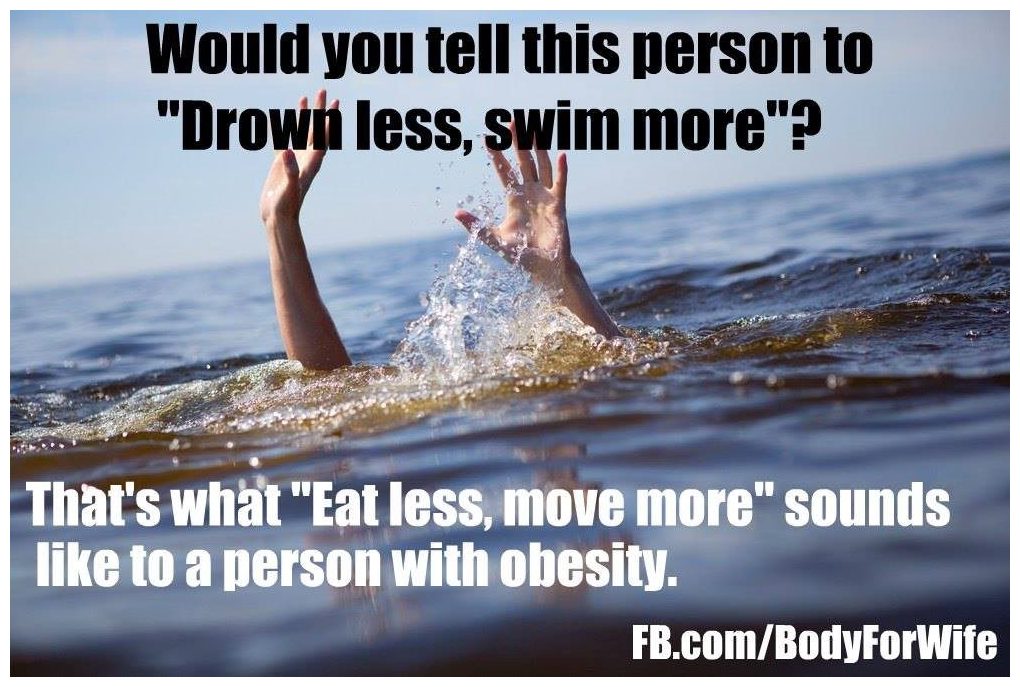
The 'CICOpaths' - Who's to blame for fat-shaming?

Drown less, swim more!
© FB.com/BodyForWife
The main reason why obesity is such an emotionally charged issue is simply that it has become entangled with all kinds of aspersions on a person's willpower and character. It is completely different from almost every other disease because there is always the unspoken accusation that you did it to yourself. There is always the feeling that you could have done something about it if you weren't such a weak willed glutton. Many physicians unconsciously engage in 'fat shaming' because they believe that this gives patients extra 'motivation' to lose weight. As if the whole world was not reminding them every single day. So, who deserves the blame? The 'Calories In Calories Out' (CICO) crowd - those physicians and researchers who have strenuously and constantly cried that 'A calorie is a calorie' or 'It's all about calories' or 'Eat Less, Move More'. Because what they actually mean, but don't say is 'It's all your fault'. The CICO crowd took the disease of obesity and instead of treating it with compassion and understanding infused it with personal shame. I'm here to tell you that it's all just a huge pack of lies fed to us by their corporate backers.

If you develop breast cancer, for example, nobody secretly thinks that you should have done more to prevent it. Nobody condescendingly tells you to 'get with the program'. If you have a heart attack, you simply don't face those hidden accusations. Obesity has become a disease singularly unique in its association with shame. The CICOpaths imply that it's all your fault and if you weren't such a loser and just listened to them, you, too could look like Brad Pitt or Julia Roberts. It's not true. They're really just trying to deflect the blame for the obesity epidemic from their own horrible dietary advice they've peddled for decades.

This CICO belief stems from a foundational error in logic. We have understood the problem of obesity as a fundamental imbalance of energy, calories. This is a crucial, crucial mistake. I've argued in my book, The Obesity Code that this obsessive fixation on calories is incorrect. Let's think about this. Up until the 1970s, there was little obesity. Yet people had virtually no idea how many calories they ate. They also had virtually no idea how many calories they burn. Exercise was not something you did for fun. Yet, without effort people all around the world lived without obesity. They largely ate whatever they wanted when they were hungry, and didn't eat when they weren't.

Syringe

Italian scientists protest funding for vaccine-safety investigation

vaccine protest Turin Italy
© Nicolò Campo/LightRocket/GettyA rally in Turin, Italy against a 2017 law that makes 10 vaccines mandatory for children.

The National Order of Biologists made a €10,000 donation to a group that questions the safety of vaccines.


Some scientists in Italy are up in arms over a donation from the organization that oversees the nation's professional biology qualification to an advocacy group that opposes the country's policy of mandatory childhood vaccination.

The news comes as Italian politicians debate whether to continue with the mandatory vaccination policy, which was introduced in 2017 and requires parents to provide proof of ten routine vaccinations when enrolling their children in nurseries and preschools.

The group, Corvelva, announced that it had received €10,000 (US$11,350) from the Italian National Order of Biologists (ONB) on 26 October and says that it plans to use the money for research that investigates the safety and efficacy of commonly used vaccines.

Comment: It's rather telling that an independent initiative to simply test vaccines is met with so much resistance. Why on earth would scientists be so opposed to the idea of gathering more data? Could they be hiding something?

See also:


Microscope 2

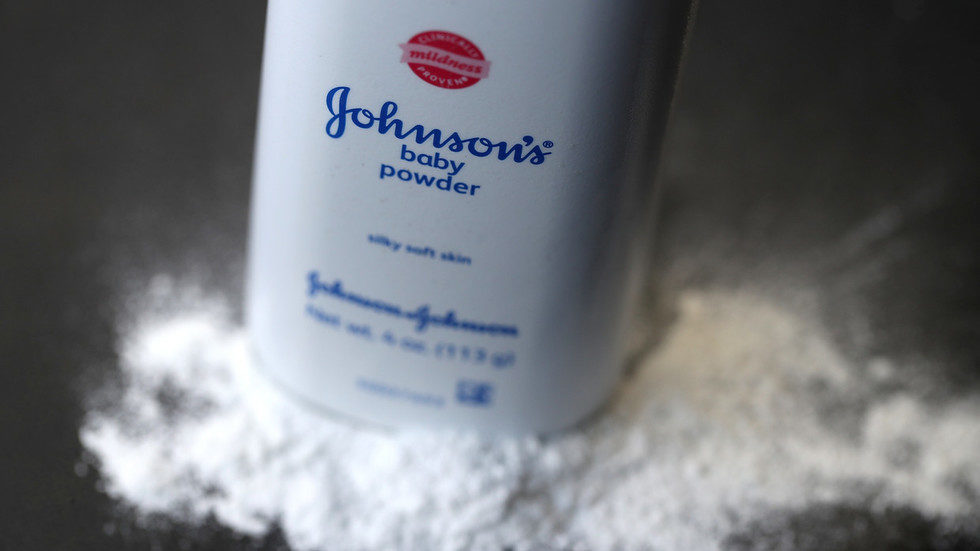
Hidden 'for decades': Johnson & Johnson may have known about carcinogenic asbestos in baby powder since 1971

Johnson's baby powder
© Agence France-Presse / Justin Sullivan
Johnson & Johnson knew "for decades" that their talcum baby powder contained asbestos and worked to conceal it from federal regulators and the public, an investigation by Reuters has found.

J&J stock plunged 8 percent to $136.10 after Reuters reported that the company knew about asbestos in its products since the 1970s. Its the biggest loss in 16 years.

The Reuters report says that J&J failed to inform the Food and Drug Administration (FDA) that at least three tests from three different labs carried out between 1972 and 1975 had found asbestos in the brand's iconic baby powder product. In one case, the levels of asbestos were reported as "rather high."

Comment: You'd think a company making a product for babies for so long would find a way to deal with the possible contamination of asbestos. It just goes to show that massive pharmaceutical companies really care more about their bottom line than the health of those using their products. Shameful!

See also:


Apple Red

Vegan diets are adding to malnutrition in wealthy countries

vegan menu
© mdbildes/Shutterstock
Hidden hunger affects over two billion people, globally. The cause is a chronic lack of essential micronutrients in the diet, such as vitamins and minerals. The effects of these nutritional deficiencies may not be seen immediately, but the consequences can be severe. They include lower resistance to disease, mental impairment and even death.

While many of the cases of hidden hunger are found in developing countries, this phenomenon is also a growing public health concern in developed countries. For example, iodine deficiency is the most common cause of preventable mental impairment and the UK ranks seventh among the ten most iodine-deficient nations. And data from the US shows that more than one in four children lacks calcium, magnesium or vitamin A, and more than one in two children are deficient in vitamin D and E.


There are several causes of hidden hunger in developed countries. The consumption of cheap, energy dense, nutritionally poor and heavily processed foods, particularly by poorer members of society, is a major factor. Even when fresh produce is consumed, there appears to be fewer micronutrients available than was once the case. This is due to issues such as soil health, caused by poor agricultural management and climate change.

Comment: Vegans need to learn that you cannot nourish yourself on ideology. It may be an uncomfortable truth, but humans need animal foods to be able to function. Abandoning animal products for whatever reason is misguided and will inevitably compromise health.

See also:


Rose

'Young miracle': Baby recovers from second-deadliest Ebola outbreak in Congo

Baby recovers from Ebola
© AP
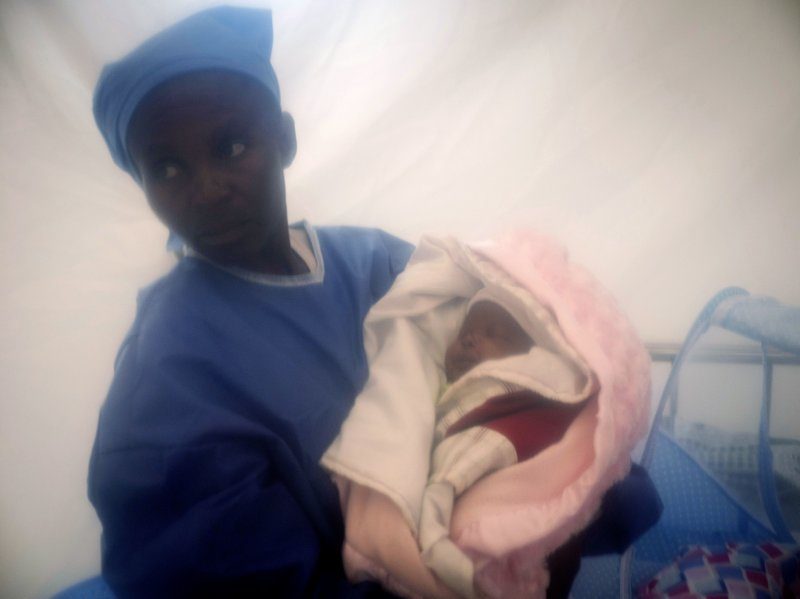
They call her the "young miracle." A baby who was admitted to an Ebola treatment center just six days after birth has now recovered from the virus.

Congo's health ministry calls the baby the youngest survivor in what is now the world's second-deadliest Ebola outbreak.

The ministry late Thursday tweeted a photo of the infant, swaddled and with tiny mouth open in yawn or squall, surrounded by caregivers who watched over her 24 hours a day for weeks.

The baby's mother, who had Ebola, died in childbirth, the ministry said.

The infant was discharged from the treatment center in Beni on Wednesday. "She went home in the arms of her father and her aunt," the ministry said.


Shopping Bag

What do Americans think about food additives & GMOs?

GMO foods
About half think they're unhealthy; the other half aren't especially concerned

Everybody eats-which is, of course, why food science stands out among scientific fields for its direct relevance to everyday citizens. Food serves as a source of nourishment, a means to achieving better health and a centerpiece of social gatherings.

Food is also undergoing constant change, as new technologies raise ongoing questions for consumers looking to make "safe" choices for their long-term health. A new Pew Research Center report shows an American public that is closely divided over two broad types of food technologies: additives, and genetically modified (GM) crops or other GM ingredients. What's more, a closer look at these public divides tell a larger story about how Americans assess science.

Eye 1

Censoring information for the greater good? The new internet police protecting you from freedom of thought and speech

internet
Before the Internet was launched in 1992, our thoughts, values and beliefs were informed by our family and friends and by the books, magazines and newspapers we read and by what we heard on radio and saw on television. If we wanted to communicate with each other we would pick up the telephone, write a letter or meet face to face.

The Internet changed everything.

The World Wide Web gave us electronic access to free, uncensored information on our computers, tablets and cell phones and the ability to instantly share that information with each other. It connected us together in a virtual public square, where we could do our own research and talk about our personal experiences, and express what we think and believe and how we feel about important issues that affect our lives.

There are three billion people on the Internet communicating with each other. 1 Except for the printing press created in the 15th century, there is no other single means of communication that has had as profound an impact on freedom of thought and speech as the World Wide Web.

Yes, the Internet has changed everything. And, now, everyone needs to know how the Internet is changing.

SOTT Logo Radio

SOTT Focus: The Health & Wellness Show: Water, Water Everywhere But Not a Drop to Drink

triclosan
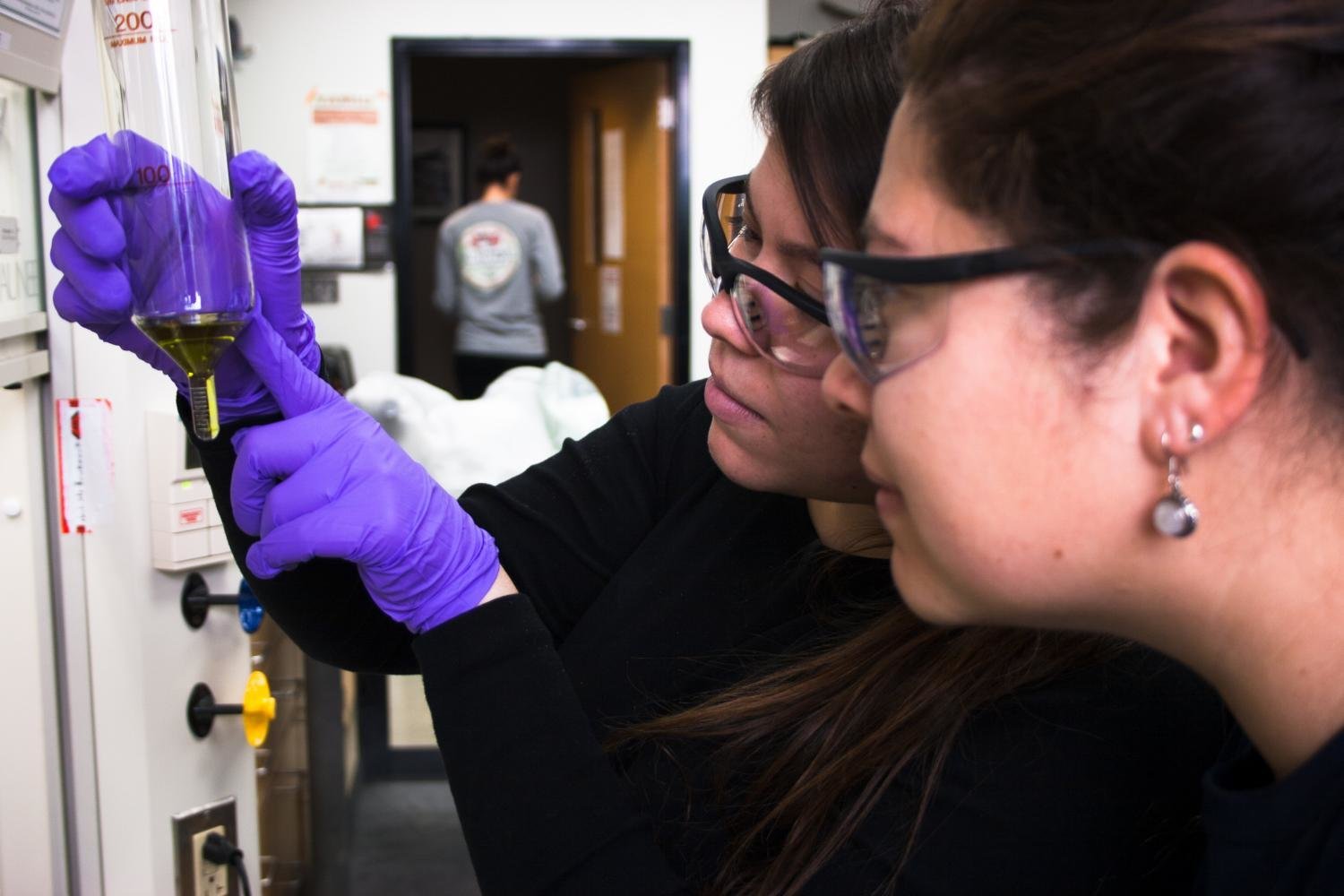
© Monica Mendez.Students Karen Vallejo (background) and Ashley Garcia (foreground) examine triclosan extracts from plant tissues.
Water is the transparent, tasteless, odorless, and nearly colorless chemical substance that is the main constituent of Earth's streams, lakes, and oceans. It also happens to be the main constituent fluid of most living organisms and an absolutely essential part of life. No known life form, including humans, can possibly survive without it. But what happens when our water becomes so polluted it's actually less harmful to go without?

Heavy metals, fracking chemicals, pharmaceutical waste, industrial pollutants, microplastics, agricultural chemicals, dangerous micro-organisms - it seems there's no limit to the amount of toxic stuff we find in our water. Gone are the days of pristine streams and clean lakes you could directly drink from. Now we need complicated filter systems just to get a drinkable glass of what we all need to live. And we in the modernized world are the lucky ones!

Join us on this episode of The Health and Wellness Show as we talk about this vital resource that the human race has managed to mess up for the entire planet. Is there a way out of this madness?

And stay tuned for Zoya's Pet Health Segment, where she talks about how to get your cat to drink more water.

Running Time: 01:14:06

Download: MP3