Health & WellnessS


Brain

The truth about low-protein, high-carb diets and brain aging

muffin


Should you pass on the meat and reach for the muffins instead?


A new study conducted at the University of Sydney and published in the journal Cell Reports is inspiring headlines around the world, like this one:

"Low-protein, high-carb diet may help ward off dementia"

In the study, scientists compared diets containing different amounts of protein and carbohydrate to a low-calorie diet. Their results suggested that diets lower in protein and higher in carbohydrate may, in some cases, provide subtle brain benefits similar to the benefits seen with calorie restriction. The researchers concluded, "A very low-protein, high-carbohydrate diet may be a feasible nutritional intervention to delay brain aging."

Comment: The dishonesty in the reporting of nutritional science, both from the media and the researchers themselves, is at such an epic level at this point it's a wonder anyone at all believes what the media has to say about diet. Everyone is much, much better off doing their own research and taking cautious experimental approaches with what they find. The message given to the masses has an agenda, and it isn't to get the population any healthier.

See also:


Cupcake Choco

Canada: Immigrant and refugee children at risk of health problems due to western diet

canned food
© CBCFood security, being able to access nutritional meals when needed, is a factor in the diets of immigrant and refugee children.


36% of refugee children and 23% of immigrant children were also lacking sufficient zinc in diets


Newcomers to Saskatchewan are finding out that western diets may be more affordable, but they're not necessarily the healthiest.

A study at the University of Saskatchewan looked at 300 children between the ages of three and 13 whose families were either refugees or immigrants in Regina and Saskatoon.

"The diet quality in newcomer children is not that good," said Dr. Hassan Vatanparast, a professor at the university's School of Public Health.

Comment: Much like the declining health of nations who adopt western diets, those coming from other nations who immerse themselves in the dietary habits of the west start to suffer the health consequences. Recent immigrants would benefit from, at the very least, trying to maintain their previous diets rather than relying on western convenience foods.

See also:


Sun

Let there be light! Scientists find brain circuit that could explain seasonal depression

light receptors
© Omikron /Getty Images/Science SourceBefore light reaches these rods and cones in the retina, it passes through some specialized cells that send signals to brain areas that affect whether you feel happy or sad.
Before light reaches these rods and cones in the retina, it passes through some specialized cells that send signals to brain areas that affect whether you feel happy or sad.

Omikron /Getty Images/Science Source

Just in time for the winter solstice, scientists may have figured out how short days can lead to dark moods.

Two recent studies suggest the culprit is a brain circuit that connects special light-sensing cells in the retina with brain areas that affect whether you are happy or sad.

When these cells detect shorter days, they appear to use this pathway to send signals to the brain that can make a person feel glum or even depressed.

"It's very likely that things like seasonal affective disorder involve this pathway," says Jerome Sanes, a professor of neuroscience at Brown University.

Sanes was part of a team that found evidence of the brain circuit in people. The scientists presented their research in November at the Society for Neuroscience meeting. The work hasn't been published in a peer-reviewed journal yet, but the researchers plan to submit it.

Comment: One wonders whether there was ever an evolutionary reason for this, such as helping slow the person down during darker (and colder) days, or whether it's due to a drastic change in the environment and these genes have yet to catch up, or whether it's a genetic defect of some kind; either way, clearly our biology and the way our society is structured are at odds. One way to help cope is to be aware of your light exposure and try to use it to your advantage: Is Artificial Light at Night Making You and Your Kids Fat & Sick?

Also check out SOTT radio's: The Health & Wellness Show: Seeing the Light with Dr. Alexander Wunsch


Brain

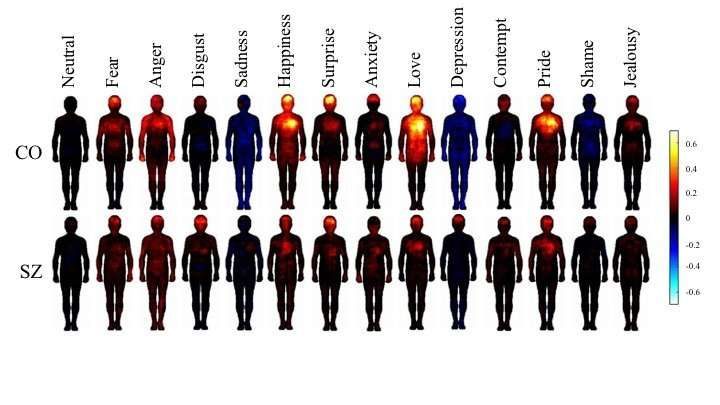
Body maps show schizophrenia may effect how one experiences emotion

emotion body map
© Sohee ParkThis graphic compares body maps of the control group (top) and of people with schizophrenia (bottom).
Colorful figures of the human body are helping Vanderbilt University researchers understand how people experience emotion through their bodies and how this process is radically altered in people with schizophrenia.

Sohee Park, Gertrude Conaway Vanderbilt Professor of Psychology, and Ph.D. student Lénie J. Torregrossa compared individuals with schizophrenia with matched control participants, asking each to fill in a "body map" in a way that correlates to the way they physically experience emotion. They used a computerized coloring task to locate where participants feel sensations when they experience, for example, anger or depression.

The outcomes differed radically between groups, with the control group showing distinct maps of sensations for 13 different emotions, indicating specific patterns of increased arousal and decreased energy across the body for each emotion. However, in individuals with schizophrenia, there was an overall reduction of bodily sensation across all emotions.

Comment: Because this was based on self-reporting, could it be that people with schizophrenia do have the same physical sensations as the control group but are unable to feel them? Or are they just unable to convey their experience of them? Or could it be it be that they actually do experience them differently?

See also:


Cupcake Pink

Souring on Sweet: The U.S. appetite for sugar has skyrocketed

sweet
Americans are eating too much of the sweet stuff, and a staggering portion of it is coming from drinks like soda.

Public-health researchers agree: The evidence is clear that Americans consume way too much sugar, that sugar contributes to weight gain, and that rising rates of obesity in the United States will lead to significant health problems in the future. What's much less clear is what to do about it. In this special, first-ever two-part episode of Gastropod, we tell the story of how sugary beverages-soda, in particular-became Public Health Enemy No. 1. Why are politicians and scientists targeting soda? Why have most attempts to pass soda taxes failed? And do these taxes even work to reduce consumption and obesity?

Today, the average American eats a lot of sugar. Exactly how much is a little tricky to pin down-even different government departments publish different numbers. But even conservative estimates show that we're eating far too much for good health. A couple hundred years ago, we might have eaten two pounds of added sugar in an entire year, while today we are eating that much, on average, in only two weeks. Children, in particular, are sugar fiends and, as Julie Mennella at the Monell Chemical Senses Center points out, from the age of 2, an American child is more likely to eat a manufactured sweet on any given day than a piece of fruit. Our current food system is awash in added sugars-in candy, cookies, and ice cream, but also in less obvious foods, such as bread, crackers, and ketchup. But, as Barry Popkin, an economist and a nutritionist at the University of North Carolina at Chapel Hill, told us, "We can't ban them-we can't ban food!"


Comment: Why sugar is called the 'White death'

Take a look at the sugar consumption trends over the past 300 years:
  • In 1700, the average person consumed about 4 pounds of sugar per year.
  • In 1800, the average person consumed about 18 pounds of sugar per year.
  • In 1900, individual consumption had risen to 90 pounds of sugar per year.
  • In 2012, more than 50% of all Americans consume 1/2 pound of sugar per day - translating to a whopping 180 pounds of sugar per year!


Water

Why there is no such thing as 'safe' tap water

water

Despite being at the top of the global food chain and industrial developmental ladder, the United States has a poor track record for delivering uncontaminated drinking water to the public. Even the nicest restaurants are guilty of serving you directly from the tap. It's time to get real about the 'tap water problem,' one of the most significant vectors of toxicity of our age...


Water is life, as the saying goes. And it's more than just a poetic phrase. Water is so intrinsically connected to life, if you counted all the molecules in the human body, 99% of them would be water!

On average, a human life can be sustained for up to three weeks without food, but a person won't survive more than a few days without water. Under extreme conditions, an adult can lose around one liter of water per hour, all of which needs to be readily replaced to maintain a healthy fluid balance. So, what could be more important than consuming high quality, non-contaminated water?

Comment: The Health & Wellness Show: Water, Water Everywhere But Not a Drop to Drink


Cow

Eating animals ensures better health

Joel Salatin
Health coach and personal trailer Alex Fergus offers up 8 reasons why vegan and vegetarian diets "easily ruin your body."
  1. Hard to get enough protein. Yes, you can get protein from beans, but it's not as complete or satiating. It's like saying broccoli has vitamins. Yes it does, but to get enough you need to eat 5 pounds a day. Anybody doing that?
  2. Plants have lower quality protein and what protein is there has undesirable side effects. You don't need a whoopee cushion for embarrassment.
  3. Plants lack specific amino acids like proline and taurine.
  4. You can't get enough high quality fats like CLA and DHA.
  5. Plants lack essential minerals, especially calcium, iron, and zinc.
  6. Plants lack absorbable vitamins K, D, A, B12. The B vitamins are known as the emotional stabilizers; they keep us from flying off the handle at the top end and going into depression on the lower end. Crackers, taco chips and donuts are not the way to stay emotionally stable. And if I have to eat my weight in broccoli, I'm definitely going to go nuts.
  7. Plants don't contain the 4Cs--creatine, choline, carnitine, and carnosine.
  8. A non-meat diet may make you feel good initially, primarily because such a shift also often includes cutting out junk food. But eventually it comes back to bite you.

Comment: This article, while short and concise, covers the basics of the nutrition one would be missing when sticking to a vegan diet. Readers wishing to go into more detail should see the articles below:


Beaker

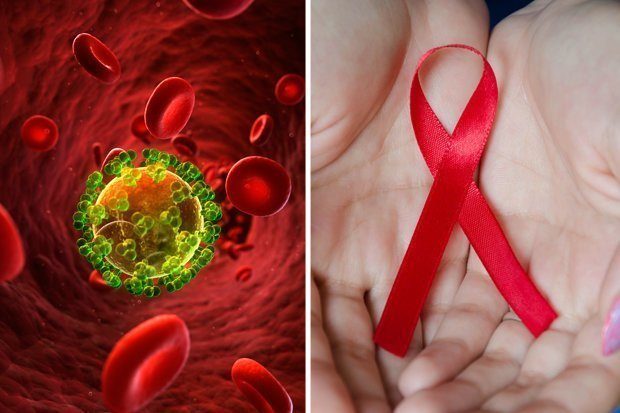
Scientists succeed in destroying HIV infected cells, suggest it will lead to a 'cure' for AIDS

HIV AIDs
© Getty
Teams at the Institut Pasteur in Paris announced on Thursday they had succeeded in their work to destroy cells infected with HIV.

Their work, published in the scientific journal Cell Metabolism, offers hope of a cure for AIDS patients.

Up to now, there has been no cure for AIDS, but instead, the disease has been treated by antiretrovirals.

These drugs block the infection and have saved many lives since they were discovered in the 90s, but they do not eliminate HIV cells from the body.


Comment: Far from saving lives, antiretrovirals are not only ineffective but have actually shortened lives. In the period 1988 through 1996, there were 235,000 recorded AIDS deaths. AZT caused more than 96 percent of these deaths. See: Questioning the HIV-AIDS hypothesis


Patients are forced to take antiretrovirals for life because the drugs do not destroy the reserves of the infection stored in immune Cd4 T cells.

Comment: While the HIV/AIDS hypothesis has been a boon to BigPharma, it has unnecessarily caused the deaths of thousands:


Shoe

Just 6 months of walking may reverse cognitive decline, study says

walking
Worried about your aging brain? Getting your heart pumping with something as simple as walking or cycling just three times a week seems to improve thinking skills, new research says. Add a heart-healthy diet, and you maximize the benefits, possibly shaving years off your brain's functional age, according to the study published Wednesday in the journal Neurology.

"Our operating model was that by improving cardiovascular risk, you're also improving neurocognitive functioning," said lead study author James Blumenthal, a clinical psychologist at Duke University. "You're improving brain health at the same time as improving heart health."

Comment: So there's a few take homes from this article. First, regardless of one's current age or fitness level, there's something they can do to improve their life. Second, it doesn't take much to make a significant difference, if it's done consistently. Thirty-five minutes of non-strenuous walking three times a week is something almost everyone can do right away. No gym membership or fancy equipment required. At the same time, taking those walks in nature can be more recharging and reconnecting than doing it inside on a treadmill while watching a screen, so it would compound the positive benefits of walking. Third, changing one's diet or increasing one's physical activity levels by themselves are good, but when doing those things together it has an even greater impact. So if one were to also change how they interact with those around them, how they relate to themselves, etc., and made these changes in tandem then there's no telling how much better one's life could be.

If one starts where they are and takes what steps they can manage with the intent of just continuing to take that next step, then over time they can improve their life and by extension improve the lives of those around them in ways they may have never thought possible.


Cookies

Junk food cravings linked to lack of sleep, study suggests

fast food counter
© Jack Taylor/Getty ImagesThe study showed tired participants were willing to pay more for a snack than those who had rested.
Having even one night without sleep leads people to view junk food more favourably, research suggests.

Scientists attribute the effect to the way food rewards are processed by the brain. Previous studies have found that a lack of shuteye is linked to expanding waistlines, with some suggesting disrupted sleep might affect hormone levels, resulting in changes in how hungry or full people feel.

But the latest study suggests that with hormones may have little to do with the phenomenon, and that the cause could be changes in the activity within and between regions of the brain involved in reward and regulation.

Comment: The connection between lack of sleep and poorer health a relatively established at this point, but working out the minutiae is interesting. If a lack of sleep actually increases our value of unhealthy food, how else might it be changing our perception towards less-than-healthy behaviors?

See also: