Earth ChangesS


Snowflake

Over a metre of snow dumped on Okanagan highways in British Columbia

SNOW PASS
The Coquihalla and Allison Summit were hit the hardest

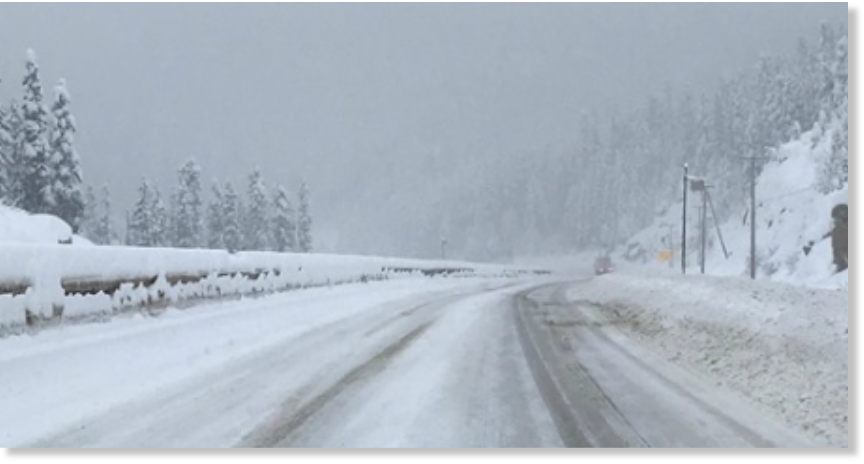
The winter storm that blew through the Okanagan and the B.C. interior last week dumped more than a metre of snow on the Connector, the Coquihalla, Highway 1 and other mountain passes, according to Environment Canada.

At the height of the storm, the weather agency recorded between five and 10 centimetres of snow accumulating an hour, something that is very rare according to Environment Canada meteorologist Bobby Sekhon.

"I wouldn't say that that was very normal," said Sekhon. "Keeping that rate up for a 12-hour stretch was quite exceptional."

Snowflake

Several resorts in the Alps post 1 metre plus weekend snowfall totals

Tignes, Les Arcs and Orelle (Behind Val Thorens in the 3 Valleys) are amongst resorts to report more than a metre (40 inches) of snowfall between Friday and Monday after another snowy weekend in the Alps.

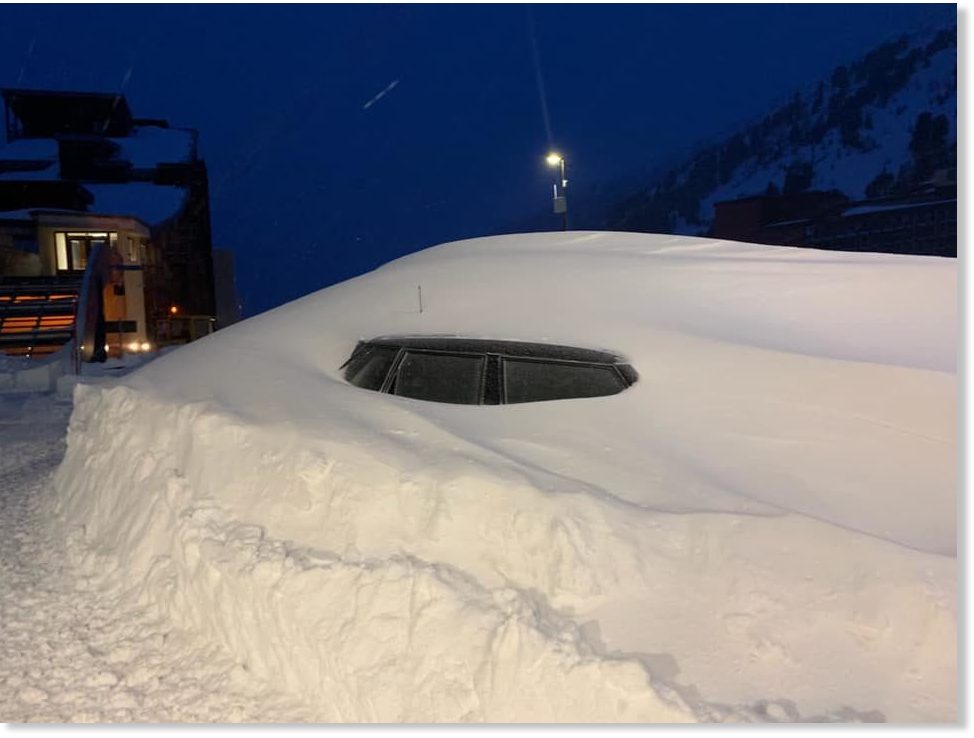
Up at Arc 2000 the metre of snowfall, more than half of which arrived in the past 24 hours, was car burying stuff...

car buried by snow
Resorts across the Alps as well as in the Dolomites and Pyrenees, have been publishing big snowfall totals, with many posting 40-60cm accumulations. Although lower valleys (down to about 1000 metres) have still got above freezing temperatures the snow has also been accumulating down to resort level at traditional village resorts, as well as at the purpose-built altitude, although conditions are still best high up.


Cloud Precipitation

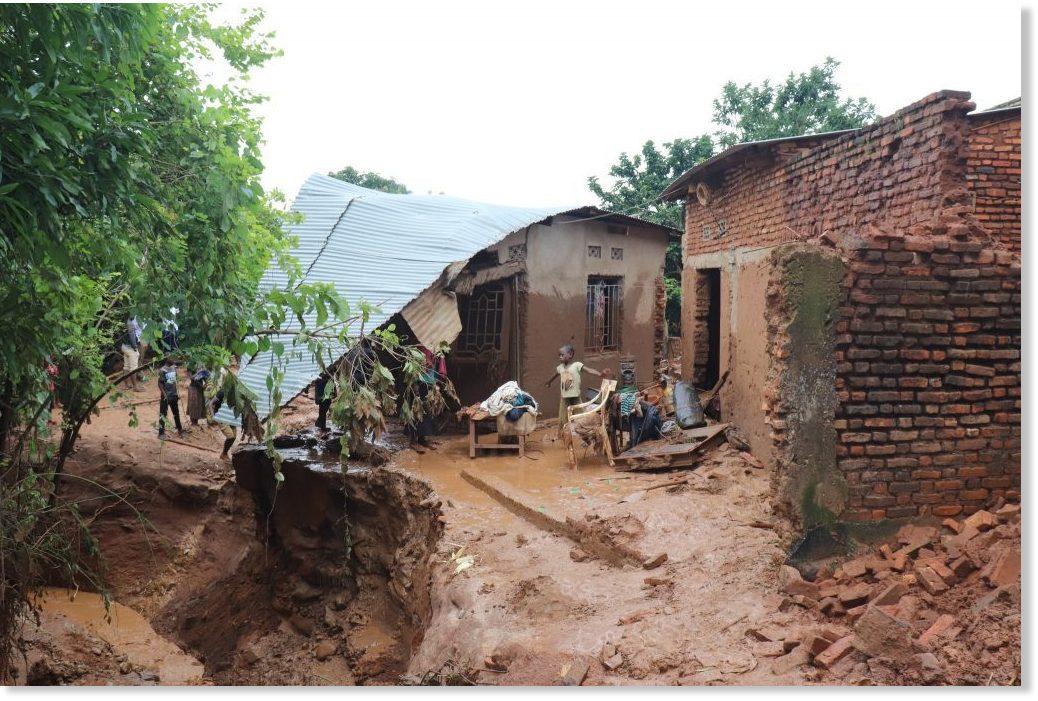
At least 14 killed by flash floods in Burundi

Floods damaged or destroyed dozens of homes in Bujumbura, Burundi, 21 to 22 December 2019.
© Government of BurundiFloods damaged or destroyed dozens of homes in Bujumbura, Burundi, 21 to 22 December 2019.
At least 14 people have died and 33 injured after torrential rain caused flash flooding in the city of Bujumbura, Burundi.

According to Burundi Red Cross, torrential rains and strong winds caused human and material damage in Bujumbura and surrounding areas on the night of 21 December, 2019.

As of 22 December the provisional damage assessment was 14 fatalities and 33 injured. Around 50 houses were completely destroyed and 40 others severely damaged. Over 130 other homes were flooded and in total around 1,200 people (219 households) were affected.


Seismograph

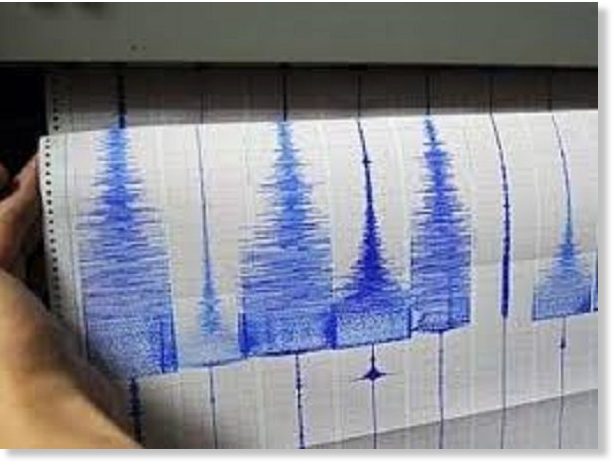
Shallow 6.3 magnitude earthquake in British Columbia, Canada - now 6 quakes in the region since Monday

Graph
Another earthquake off Vancouver Island has struck with a magnitude of 6.2 Tuesday night.

The quake follows a series of at least six earthquakes Monday, but this is the most significant shock since.

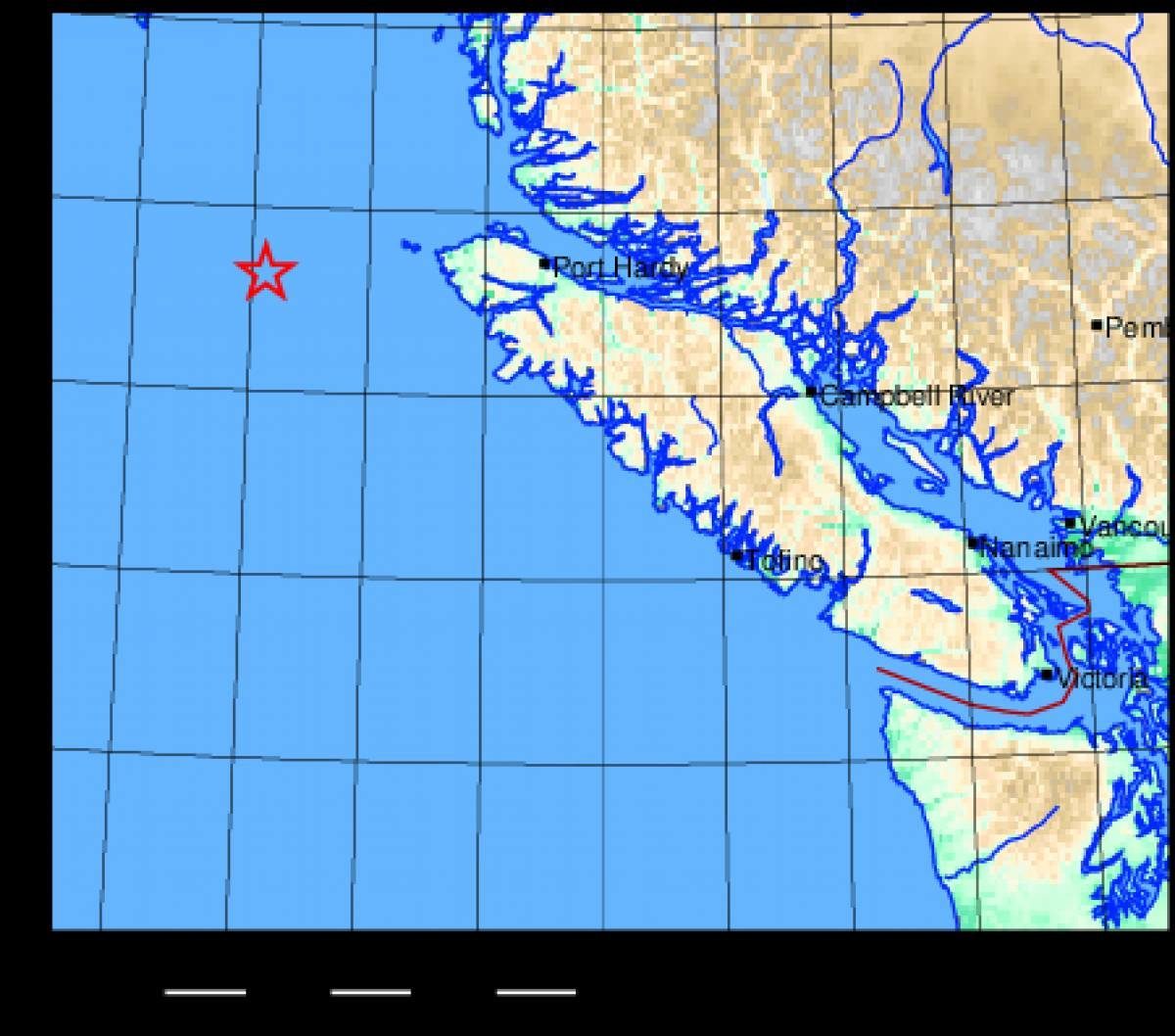
Tuesday night's quake was located 188 kilometers off Port Hardy, at the tip of Vancouver Island around 7:30 p.m.

Comment: Five earthquakes, including two 6.0-magnitude quakes, strike off Vancouver Island, British Columbia, Canada


Seismograph

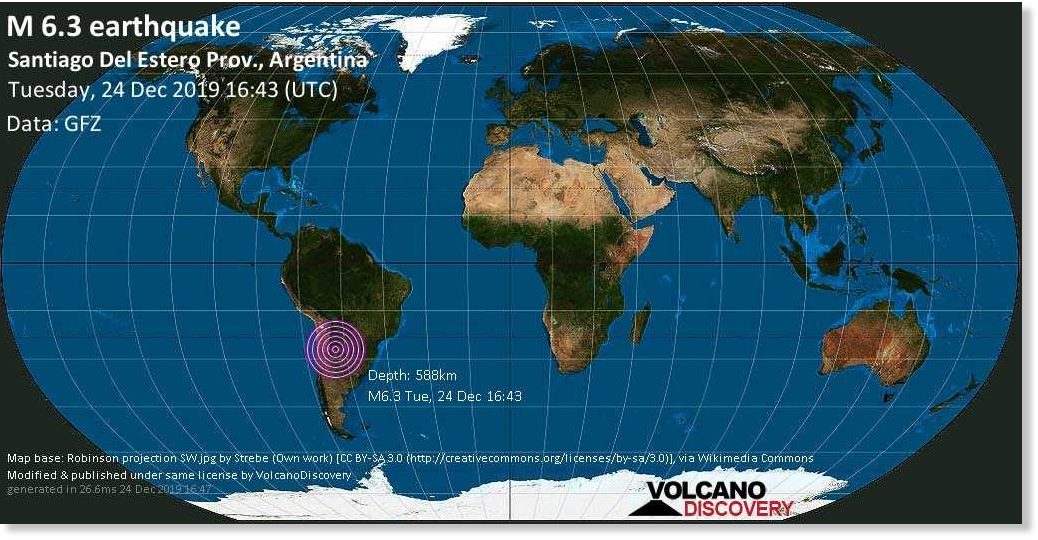
Strong mag. 6.0 earthquake - Santiago Del Estero Province, Argentina

quake map
Date & time: Tuesday, 24 December 2019 16:43 UTC
Magnitude: 6.0
Depth: 563.0 km
Epicenter latitude / longitude: 26.96°S / 63.37°W (Argentina)
Nearest volcano: Antofagasta de la Sierra (419 km)
Primary data source: GFZ
Estimated released energy: 6.3*10^13 J (17.5 GWh / 15080 tons of TNT / 0.9 atomic bombs equivalent)

Seismograph

Shallow magnitude 6 earthquake strikes Colombia - Buildings shake in Bogota

Graph
A large earthquake was reported in the South American country of Colombia Tuesday afternoon, shaking buildings in the capital, Bogota.

The U.S. Geological Survey said the 6.0 magnitude quake struck at 2:03 p.m. EST, and was centered some 100 miles south of Bogota near the town of Lejanias. It struck at a depth of 6.2 miles. Sixteen minutes later, a 5.8 aftershock was measured nearby, the USGS also said.

As the shaking from the main quake ended, sirens sounded in the city of Bogota.


Blue Planet

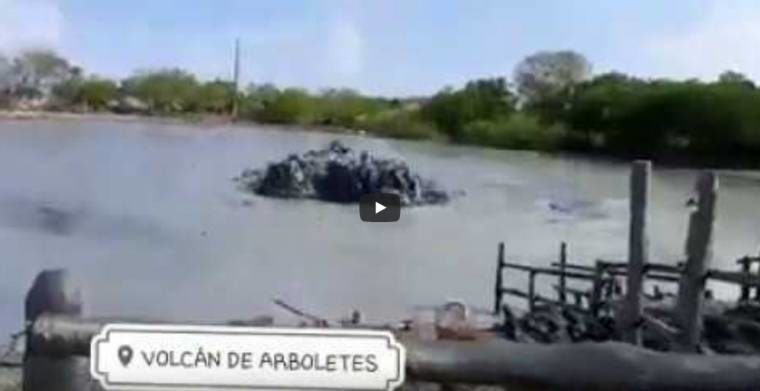
Strong outgassing Arboletes mud volcano in Colombia

arboletes mud volcano
On December 19, 2019, unusual activity was recorded at Arboletes mud volcano in Colombia. Some powerful degassing occurred in the middle of the crater sending bubbles of gas to the surface.

I don't know if such powerful bubbling is only a sign of an imminent eruption of it is an explosion itself:

In any cases, I wouldn't like living in one of those 'houses' in the vicinity of that Colombian mud volcano.

According to experts, this phenomenon is normal and occurs once a month, or every two to three months - they actually don't know.

The mud volcano is located in the Santa Fe de la Plata corregimiento and has had eruptions in 2006 and 2010.

Comment: A viewer of the video reports notes:
The reporter says that the outgassing is normal and happens once or twice every month or two, as it's been happening for the last 30 years or so, but that social media picked up the video and that's why it became news. He kind of protests too much, which I think it's because, as he says himself, it wouldn't be good for local tourism if people got worried and scared. He says that tourists were already bathing in there the same day, and that the event lasted for around a minute. That according to experts it's actually good that there is a regular release of gasses (he doesn't say why, but I assume it's because the accumulation of gasses could result in a much larger event). So nothing to worry about, he says.
See also:


Snowflake

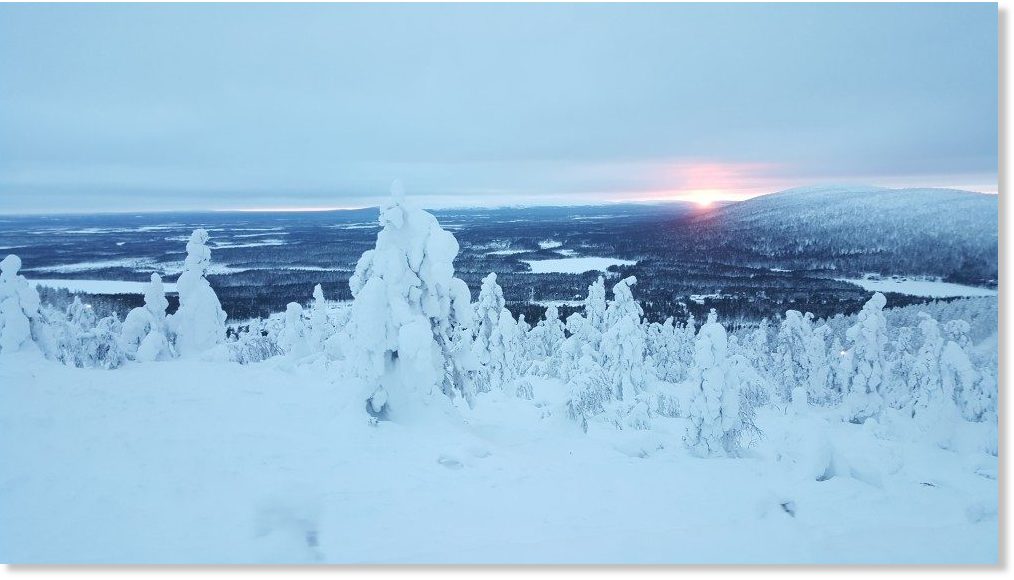
Record Christmas snow cover in Finnish Lapland

Sunset in snow-covered Lapland.
© Thomas NilsenSunset in snow-covered Lapland.
Many Lapland residents will spend this Christmas enjoying record snow cover, according to data from the Finnish Meteorological Institute, FMI.

The institute said that snow hit record depths in areas such as Pokka in Kittilä, Tähtelä in Sodankylä and Saariselkä in Inari.

In Pokka, powder is nearly 80 centimetres deep, while in Tähtelä and Saariselkä snow cover is around 70 centimetres. Except for coastal areas, most of the north has been blanketed by at least 50 centimetres of snow.

FMI said that this Christmas will be slightly warmer than usual in Lapland, with the mercury hovering around zero degrees Celsius in southern Lapland and a few degrees below freezing further north.

Seismograph

Five earthquakes, including two 6.0-magnitude quakes, strike off Vancouver Island, British Columbia, Canada

Vancouver island quakes
© EARTHQUAKES CANADA
While the region northwest of Vancouver Island's northern end experiences frequent seismic activity, it has been particularly active today.

A series of four offshore earthquakes took place this morning, ranging from 5.1- and increasing in intensity to two 6.0-magnitude quakes.

A fifth earthquake has also recently hit at 3:38 p.m.

Earthquakes Canada measured it as a 4.8-magnitude quake while the U.S. Geological Survey initially reported it as 4.9-magnitude temblor before before reassessing it as 4.7-magnitude.

According to Earthquakes Canada, it struck at a depth of five kilometres (three miles) and the epicentre was located 168 kilometres (104 miles) west of Port Hardy, 336 kilometres (209 miles) west of Campbell River, and 508 kilometres (316 miles) northwest of Vancouver.

Like the other quakes, there aren't any reports of damage and none are expected, and there also isn't a tsunami threat from this event.

Comment: Vancouver Island overdue for the big one


Nebula

Best of the Web: Stunning iridescent clouds snapped above skies of Siberia's Belukha mountain

Svetlana Kazina
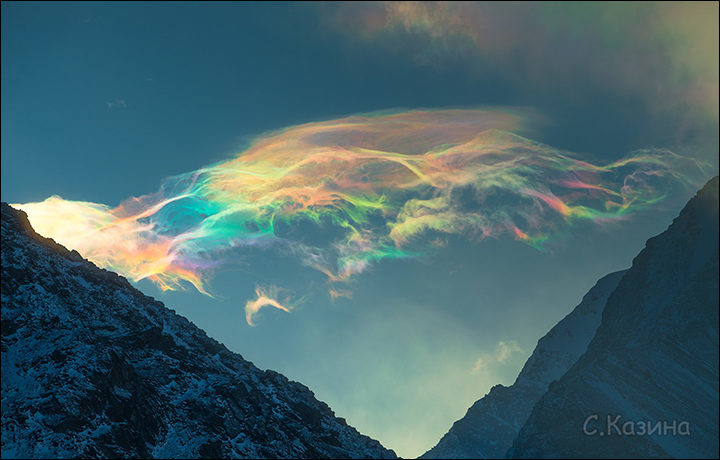
© Svetlana Kazina"The clouds in my photos are so thin that they look more like lace."
Local photographer Svetlana Kazina caught a rare natural phenomenon on camera.

"The clouds in my photos are so thin that they look more like lace" - Svetlana Kazina

Svetlana Kazina, who lives in the Altai Mountains, snapped these breathtaking pictures of the glowing sky over Belukha mountain, Siberia's highest peak (4,506 metres/14,783ft).

Belukha Mountain, literally 'whitey' in Russian, is the highest peak of the Altai Mountains in Russia. Located in the Altai Republic, Belukha is a three-peaked mountain massif that rises along the border of Russia and Kazakhstan, just a few dozen miles north of the point where this border meets with the border of China.

The images show thin clouds resembling soap bubbles in colours.

Iridescent clouds, also known as rainbow clouds, occur when sunlight scatters through water droplets in the atmosphere.

Comment: 'Rare' and wondrous sights in the skies are becoming ever more common on our changing planet. Their 'iridescence' is thought to be the result of ice crystals, typically seen in polar stratospheric clouds, also called nacreous cloud. The phenomenon is named after the Greek goddess Iris, goddess of rainbows and messenger of Zeus and Hera to the mortals below... Also check out SOTT radio's: As well as SOTT's monthly Earth Changes Summary - November 2019: Extreme Weather, Planetary Upheaval, Meteor Fireballs: