Secret HistoryS


Archaeology

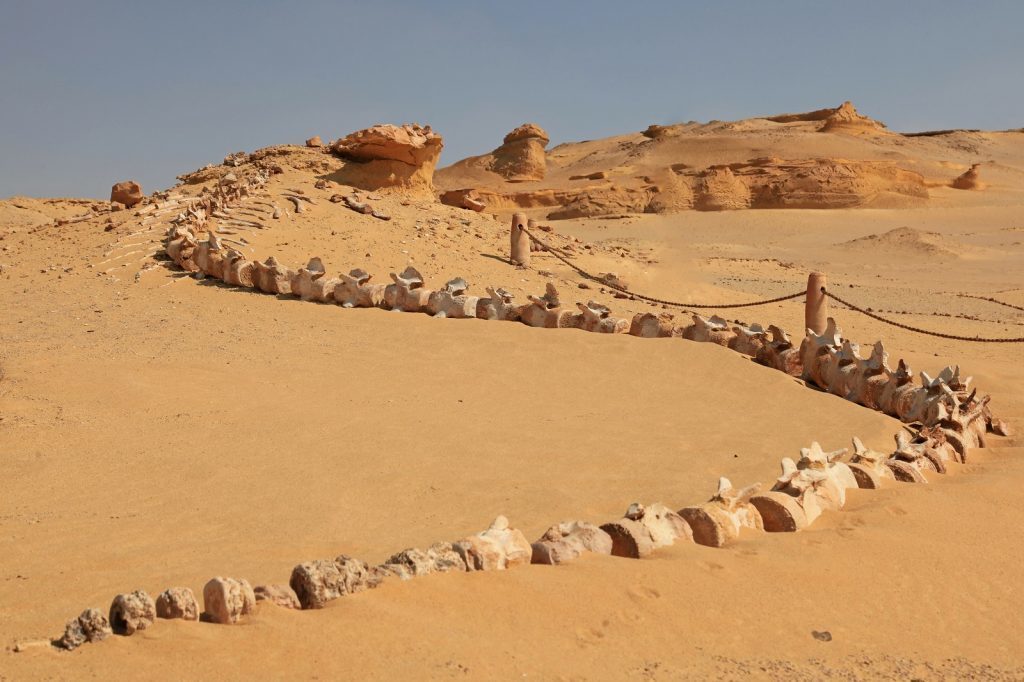
Egypt's fascinating 'Valley of the Whales'

whale fossils egypt
© ShutterstockWadi El Hitan, the Valley of the Whales
There is an ancient Egyptian desert, once a vast ocean, that guards the secret of one of the most remarkable transformations in the evolution of life on planet Earth.

Egypt is known as the land of Pyramids, Pharaohs, and golden sands. Countless treasures have been excavated from beneath Egypt's sands, revealing a treasure trove of a time long gone. Archeologists have discovered pyramids, temples, entire cities and treasures whose value is incalculable. But there's more to Egypt than the Sphinx, the Pharaohs, and its incredible pyramids, and there is more to this wonderful land than the Valley of Kings.

Some 160 kilometers southwest of the Pyramids at the Giza plateau is a treasure trove of history. There aren't any pyramids, temples or mummies buried there, but it is nonetheless a site of great importance. In fact, Wadi El Hitan was designated a UNESCO World Heritage Site in 2005.

The reason? hundreds of fossils of some of the earliest forms of whales, the archaeoceti (a now extinct sub-order of whales) lie buried beneath the desert sand.

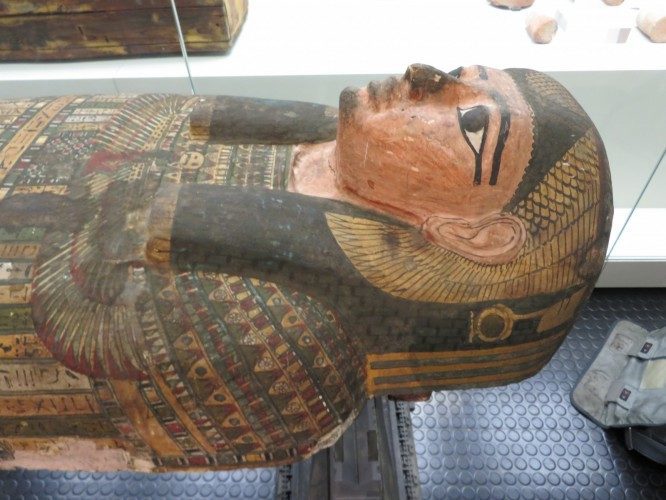
Pharoah

Surprising revelations about Egyptian mummy Takabuti and her death

Takabuti
Takabuti, the famous ancient Egyptian mummy on display at the Ulster Museum, suffered a violent death from a knife attack, a team of experts from National Museums NI, University of Manchester, Queen's University Belfast and Kingsbridge Private Hospital have revealed.

The team, whose findings are made public on the 185 year anniversary of Takabuti's unwrapping in 1835, also show that her DNA is more genetically similar to Europeans rather than modern Egyptian populations.

The team show Takabuti had an extra tooth - 33 instead of 32 - something which only occurs in 0.02% of the population and an extra vertebrae, which only occurs 2% of the population.

And Takabuti's heart, previously thought to have been missing, was identified by the state of the art technology used by the researchers as intact and perfectly preserved.

Comment: Just who were some of these Egyptian elite? The Golden Age, Psychopathy and the Sixth Extinction

See also:


Dig

Usa̧klı Höyük: Earliest mosaic in the world found in Turkey - Was this the center for the cult of the "storm god"?

mosaic
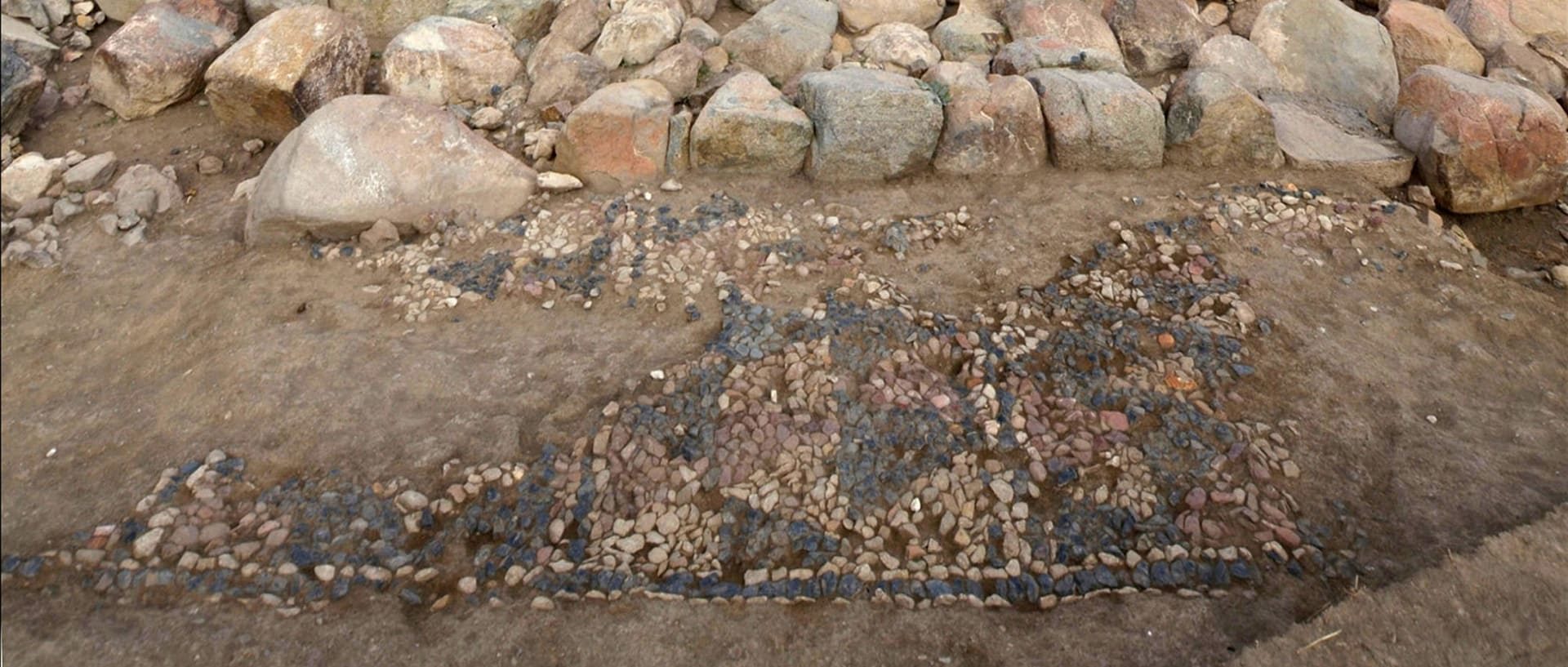
© Usa̧klı Höyük Archaeological ProjectThe stone mosaic floor is in the foreground
A crude tiled floor laid down in geometric patterns, unearthed in a preclassical Hittite town in central Turkey, is the earliest-known mosaic in the world, reports Anacleto D'Agostino of the University of Pisa. Moreover, he adds, the settlement where the mosaic was found may be the lost Hittite city of Zippalanda.

Discovered during the excavation of prehistoric Usakli Hoyuk, the multichromatic patterned surface is in the courtyard of a public building - which archaeologists interpret to be a temple to the Storm God, D'Agostino writes in Antiquity, published by the Cambridge University Press. Made of stones of varying size and shape, the Late Bronze Age floor is also the earliest-known rendition in rock of geometric patterns.

The later mosaics that most people are more familiar with are "pebble mosaics" made of unworked small, round stones, or tile mosaics made of small, flattened cubic or rectangular tiles.

Comment: See also: And check out SOTT radio's:


Treasure Chest

2,600 year old princely tomb of Iron Age mystery man packed with grave goods and chariot discovered in Italy

prince tomb italy
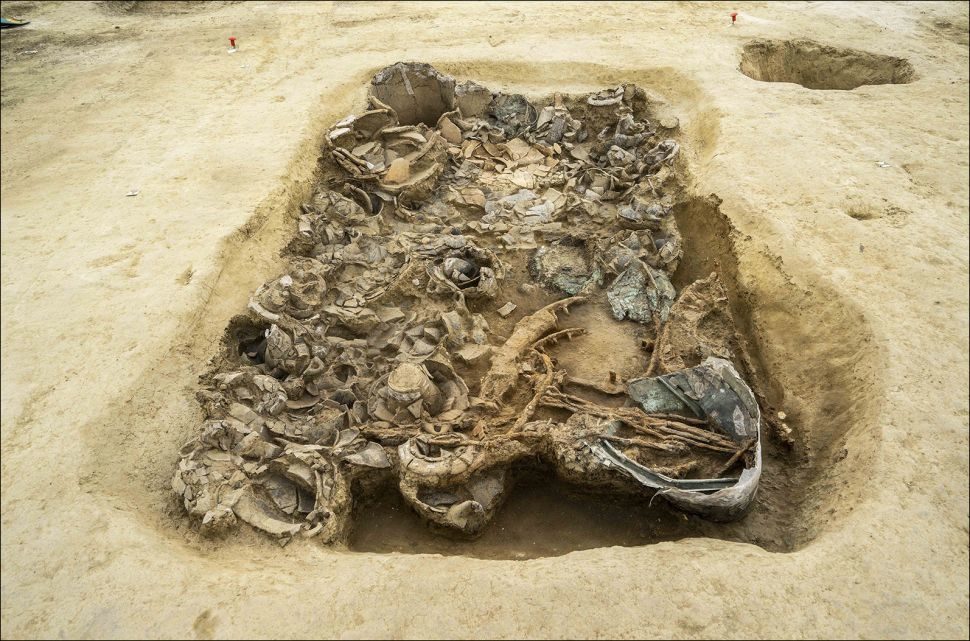
© Photograph by Pierluigi Giorgi, copyright Antiquity Publications LtdThe rich assemblage of grave goods indicates that the person buried here held a high status.
Archaeologists have found the remains of an entire iron-wheeled war chariot in a newly discovered Iron Age tomb in central Italy, a new study finds.

The lavish tomb is also brimming with other riches, including a stash of weapons, a bronze helmet and vessels made of bronze and clay.

The body of the chariot's owner, however, is long gone.

At the time of burial, the person — likely a man, based on the war-related grave goods — was likely buried under a large mound of dirt that rose above the ground like a giant gumdrop. If his body was placed near the surface, "it would have had little chance of surviving the centuries of subsequent ploughing that have removed all traces of any above ground mound," study researcher Federica Boschi, a senior assistant professor of methods of archaeological research at the University of Bologna in Italy, wrote in the study.

Comment: See also: Also check out SOTT radio's: MindMatters: America Before: Comets, Catastrophes, Mounds and Mythology


Info

437 million years old scorpion fossil found

Scorpion Fossil
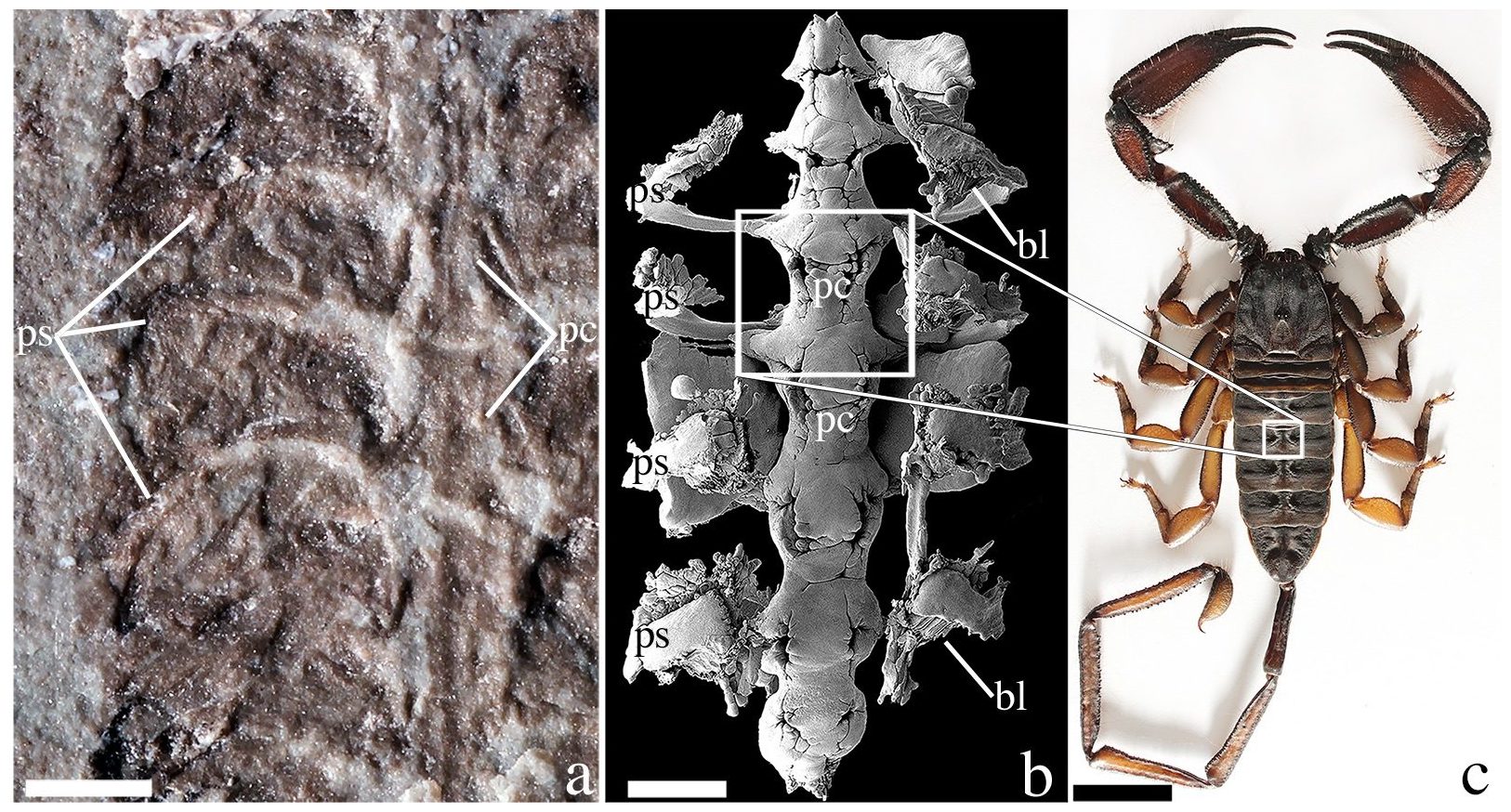
© Andrew WendruffThe fossil (left) was unearthed in Wisconsin in 1985. Scientists analyzed it and discovered the ancient animal's respiratory and circulatory organs (center) were near-identical to those of a modern-day scorpion (right).
Columbus, Ohio — Scientists studying fossils collected 35 years ago have identified them as the oldest-known scorpion species, a prehistoric animal from about 437 million years ago. The researchers found that the animal likely had the capacity to breathe in both ancient oceans and on land.

The discovery provides new information about how animals transitioned from living in the sea to living entirely on land: The scorpion's respiratory and circulatory systems are almost identical to those of our modern-day scorpions — which spend their lives exclusively on land — and operate similarly to those of a horseshoe crab, which lives mostly in the water, but which is capable of forays onto land for short periods of time.

The researchers named the new scorpion Parioscorpio venator. The genus name means "progenitor scorpion," and the species name means "hunter." They outlined their findings in a study published today in the journal Scientific Reports.

"We're looking at the oldest known scorpion — the oldest known member of the arachnid lineage, which has been one of the most successful land-going creatures in all of Earth history," said Loren Babcock, an author of the study and a professor of earth sciences at The Ohio State University.

"And beyond that, what is of even greater significance is that we've identified a mechanism by which animals made that critical transition from a marine habitat to a terrestrial habitat. It provides a model for other kinds of animals that have made that transition including, potentially, vertebrate animals. It's a groundbreaking discovery."

The "hunter scorpion" fossils were unearthed in 1985 from a site in Wisconsin that was once a small pool at the base of an island cliff face. They had remained unstudied in a museum at the University of Wisconsin for more than 30 years when one of Babcock's doctoral students, Andrew Wendruff — now an adjunct professor at Otterbein University in Westerville — decided to examine the fossils in detail.

Propaganda

"Hitler's professional agent": Declassified CIA docs detail Ukraine's "national hero" Stepan Bandera's war crimes

Bandera
Statue of Stepan Bandera in Lvov
Following up on this news item from Novorosinform, your volunteer translator searched for and found the relevant documents. Read them here..

And I follow up with a translation of the news article which was the starting point:

The CIA has declassified documents on Bandera's atrocities and aiding Hitler

Near Kiev, a priest called an APU militant a "fratricide" and drove his family out of the temple

The CIA has published in open access a report on the activities of the Nazi collaborator and war criminal Stepan Bandera, who is called "Hitler's professional agent." This was reported by the TV channel "Star".

Comment: See also:


People

Two megalithic groups in Spain found to have different diets, child-rearing and burial practices

Basque
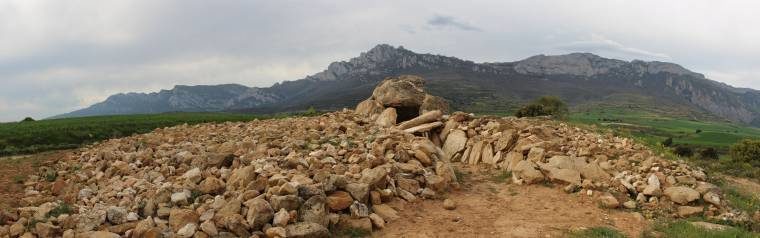
© Javier OrdoñoAlto de la Huesera megalithic grave (Basque Country, northern Spain), one of the sites analyzed in the study.
A team of researchers from the U.K., Belgium and Spain has found evidence that two groups of people in Late Neolithic Europe living approximately 5,500 years ago belonged to two distinct communities. In their paper published in the journal Science Advances, the group describes their study of isotopes from two burial sites and what they found.

Several years ago, scientists studying the remains of two groups of Late Neolithic people living within four to six kilometers of one another in what is now the Rioja Alavesa region in Spain concluded that the two groups were actually just one group — they suggested the distance between the two groups was due to status and wealth. The researchers had come to this conclusion because of the way the two groups buried their dead. Those that lived in the foothills used caves. Those in the valley created megalithic gravesites. In this new effort, the researchers found evidence that suggests the two groups were actually separate communities.

Comment: It's interesting to learn just how differently the daily lives of the two groups living in such close proximity of each other must have been, but then similar findings correlating geographic location and health were documented by Dr Weston A Price even up to recent times.

Judging from the results, the cave folk had the more optimal diet and child weaning practices, and, so one wonders, just what compelled the valley folk to eat more carbohydrates and stop weaning earlier?

What's also significant is that the researchers demonstrate that those eating a higher carbohydrate diet suffered worse health overall - and similar proofs are abundant throughout health and historical research - which makes it all the more incredible that governments worldwide continue to recommend high carbohydrate diets for optimal health when, evidently, this is not the case:


Microscope 1

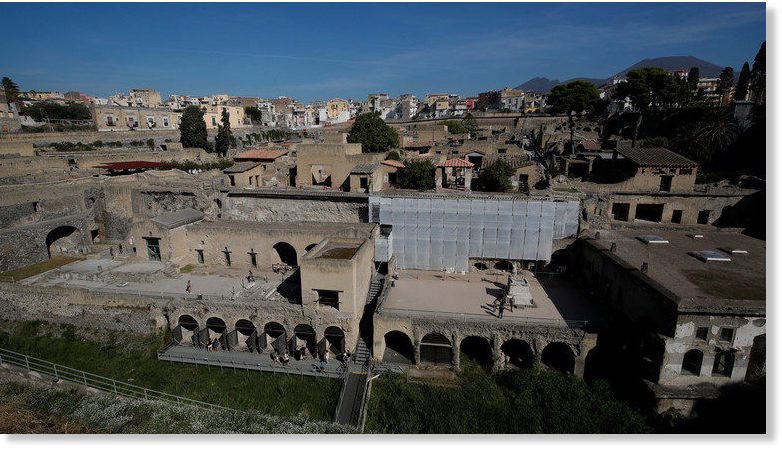
Mt Vesuvius victim's brain 'turned to glass' as hundreds more baked to death - studies

Herculaneum
© REUTERS/Ciro De LucaHerculaneum
The A.D. 79 eruption of Mount Vesuvius, destroyer of Pompeii, also decimated the neighboring seaside town of Herculaneum. There, scores of people died more slowly than once thought, according to a new study.

When Vesuvius erupted, hundreds of Herculaneum residents fled to a nearby beach and perished while trying to escape; some experts previously concluded that the intense heat of melted rock, volcanic gases and ash, known as pyroclastic flows, vaporized the victims instantly.

However, new evidence gathered from the victims' bones suggests that their fate was grimmer — and more lingering. Researchers estimated that temperatures of the pyroclastic flows were likely low enough that death wouldn't have been mercifully instantaneous for people on the beach. Instead, the volcano's victims would have suffocated to death on toxic fumes while trapped in oven-like boathouses, researchers recently reported.

Comment: More on the findings from RT:
A new study by Italian experts, published in the New England Journal of Medicine, examined the remains of one man in Herculaneum and found that he was inflicted with such extreme temperatures that his brain melted, with the organ later cooling into a kind of glass which was found coating the surface of his exploded skull.


Info

Ancient genomes point to unique population of hunter-gatherers

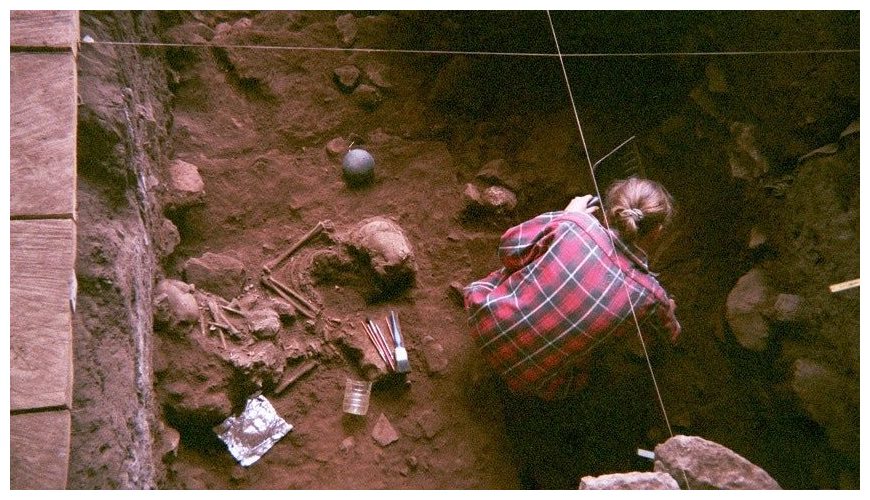
Excavation in Cameroon
© ISABELLE RIBOTExcavation of a double burial at the Shum Laka rock shelter containing the remains of two boys who lived around 8000 years ago.
Remains from an ancient gravesite in Cameroon have opened a window into the world of the people who lived in western central Africa before farming and herding became widespread.

Africa is the ancient homeland of our species, and the genetic diversity across the continent is unmatched anywhere else on the planet, yet only a handful of sites bearing human fossils have successfully yielded ancient DNA, which is essential for grasping the genetic make-up of prehistoric Africans.

DNA rapidly degrades in tropical conditions and burials were rare prior to the Iron Age, which started around 1500 BCE in Africa.

"There's a tremendous amount of genetic diversity in the past in Africa that we have not been able to see by sampling modern populations," says archaeologist Mary Pendergrast from Saint Louis University, Spain, one of the lead authors of a paper in the journal Nature.

That's where the Shum Laka rock shelter comes in. The site, which lies in the Grassfields region of western Cameroon and bears clear signs of use by human foragers from as long as 30,000 years ago, is unique, says Pendergrast.

Eighteen people, mostly children, were buried there during two periods - 8000 and 3000 years ago respectively. Both communities were hunter-gatherers, and by the later time period they were using pottery and relying heavily on fruit picked from nearby forest trees.

These time points "book-end" an important transition period from the late Stone Age to the Iron Age, says Pendergrast, during which humans took up farming and herding.

Info

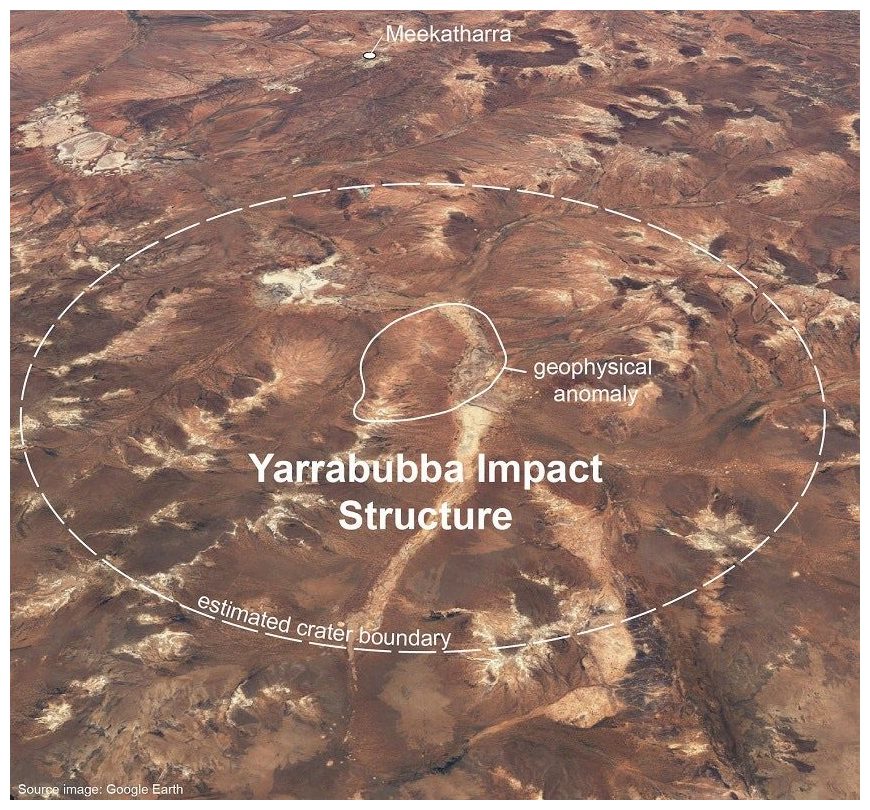
Yarrabubba is Earth's oldest known impact crater

Yarrabubba Crater
© Google Earth
Evidence that the 70-kilometre wide Yarrabubba crater in outback Western Australia may be the Earth's oldest known meteorite impact structure has been presented in the journal Nature Communications.

Dated at 2.229 billion years, 200 million years older than the next known asteroid strike at Vredefort Dome in South Africa, the impact coincides with the end of a deep freeze known as early Snowball Earth and could have contributed to the ice thawing.

After this time period there are no rock records of large glacial deposits for 400 million years, says lead author Timmons Erickson from NASA Johnson Space Centre, Houston, US.

"Because of this, we were interested in seeing the role that an impact crater could have had during a time of global glaciations and whether an impact could release enough water vapour, a strong greenhouse gas, to significantly warm the planet."

Calculating the impact of the meteorite on an icy continent, they found that it could have sent half a trillion tonnes of water vapour into the atmosphere, thereby contributing to the global ice melt.

This highlights why the timing of "extraterrestrial bombardment" is important, as the authors write, so its effects on the Earth's environment can be understood.

To date, the historical impact record is fragmented, making it hard to understand how meteorites affect the planet - apart from the Chicxulub asteroid that triggered the last mass extinction and could explain the ocean's acidification.