
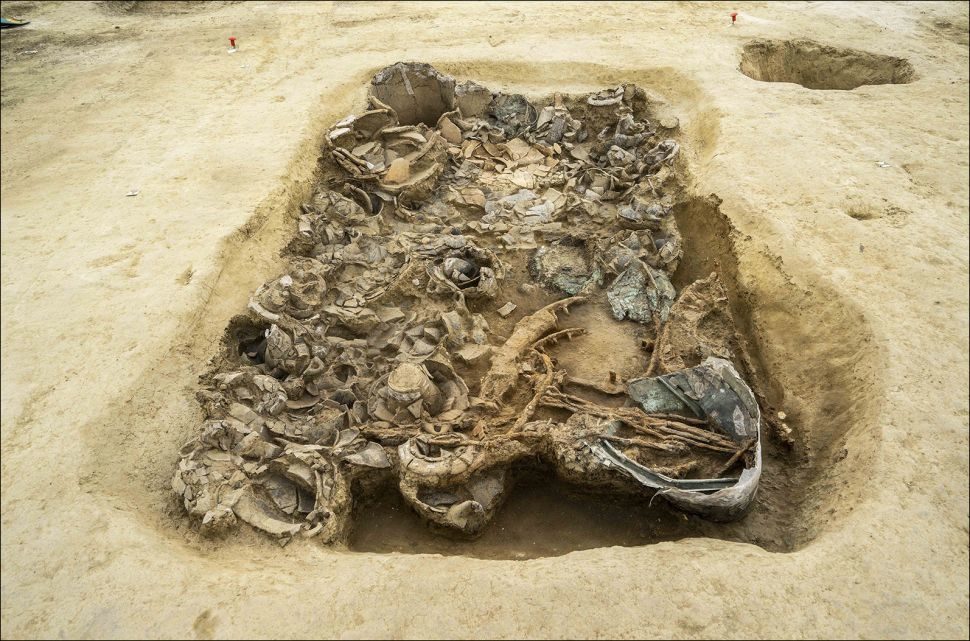
© Photograph by Pierluigi Giorgi, copyright Antiquity Publications LtdThe rich assemblage of grave goods indicates that the person buried here held a high status.
The lavish tomb is also brimming with other riches, including a stash of weapons, a bronze helmet and vessels made of bronze and clay.
The body of the chariot's owner, however, is long gone.
At the time of burial, the person — likely a man, based on the war-related grave goods — was likely buried under a large mound of dirt that rose above the ground like a giant gumdrop. If his body was placed near the surface, "it would have had little chance of surviving the centuries of subsequent ploughing that have removed all traces of any above ground mound," study researcher Federica Boschi, a senior assistant professor of methods of archaeological research at the University of Bologna in Italy, wrote in the study.
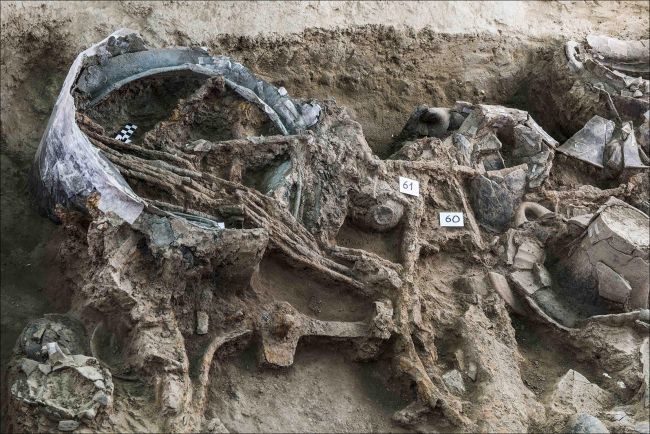
© Pierluigi Giorgi, copyright Antiquity Publications Ltd.A bronze bucket (known as a situla), a bundle of iron skewers and pieces of the chariot wheels.
The burial goods are so swanky, she began referring to the site as the "princely tomb," Boschi said.
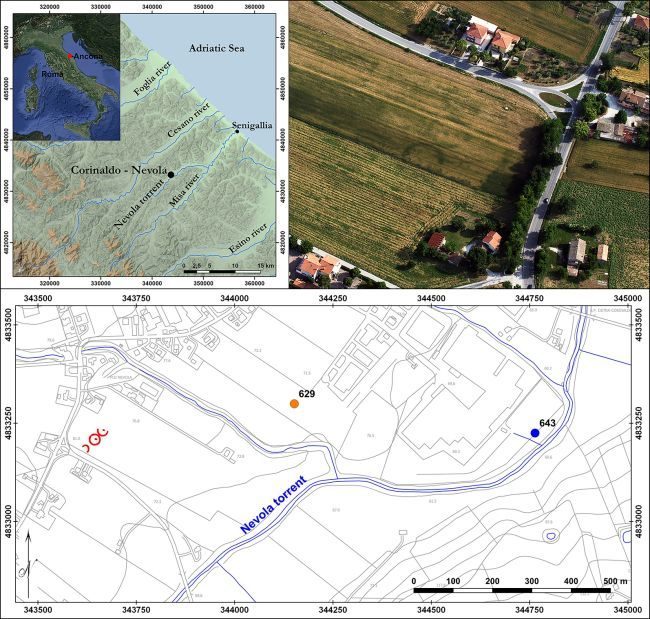
© Photograph and maps by F. Boschi, copyright Antiquity Publications LtdThe maps (top left) show where the burial was discovered. An aerial survey (top right) shows the crop marks that clued archaeologists into the discovery. Finally, the bottom map shows the crop circles in red.
This bird's-eye view showed the remains of large, circular ditches. This seemed peculiar, so Boschi and her colleagues began doing groundwork. At first, they used electrical resistance, which puts electrical currents into the ground and monitors for anomalies in how current flows through the soil. The team also used magnetic surveys to detect if any metal artifacts were lurking underground.
These surveys hinted that something was buried under the ditches. Soon after the archaeologists began digging, they found the tomb and its treasures, Boschi said.
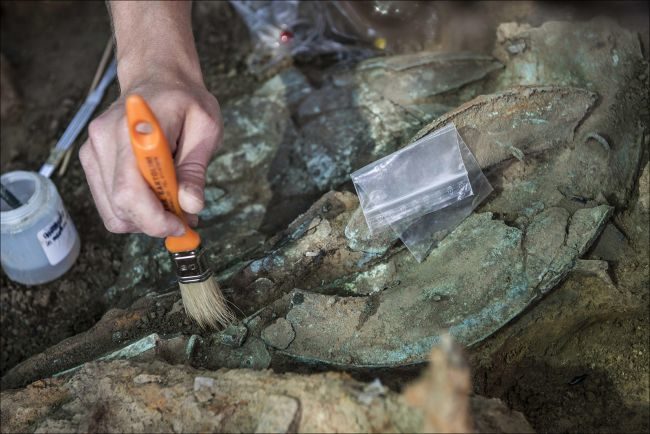
© Photograph by Pierluigi Giorgi, copyright Antiquity Publications LtdAn archaeologist cleans the bronze helmet found in the Iron Age burial.
The tomb dates to the seventh century B.C., so it likely belonged to the Piceni culture, a group of Iron Age people who lived along the Adriatic coast of Italy. Evidence, including the artifacts from this burial, indicate that the Piceni were warlike, according to Encyclopedia Britannica. In 268 B.C., Rome annexed their land.
It's a "rare event" to find such an opulent grave from the Iron Age, Boschi said. Its grave goods, size and the fact that it was once likely covered with an earthen mound "speak to us about a Piceni leader, a person which gathered political, military and economic power," she said.
Going forward, archaeologists plan to study the hundreds of objects within the burial. The study was published online today (Jan. 23) in the journal Antiquity.



Comment: See also:
- Iron age chariot and horses buried in East Yorkshire look as if they were 'leaping upwards from the grave'
- Scythian tomb with 3 generations of warrior women unearthed in Russia
- Oldest of its kind: Ancient icy tomb of Scythian prince discovered in Siberia
- Iron Age Celtic woman wearing fancy clothes buried in tree coffin in Switzerland
- Gold artifacts found in Scythian grave mounds support claims of ancient Greek historian
Also check out SOTT radio's: MindMatters: America Before: Comets, Catastrophes, Mounds and Mythology