Secret HistoryS


Sun

Beach-combing Neanderthals dove for shells

shell
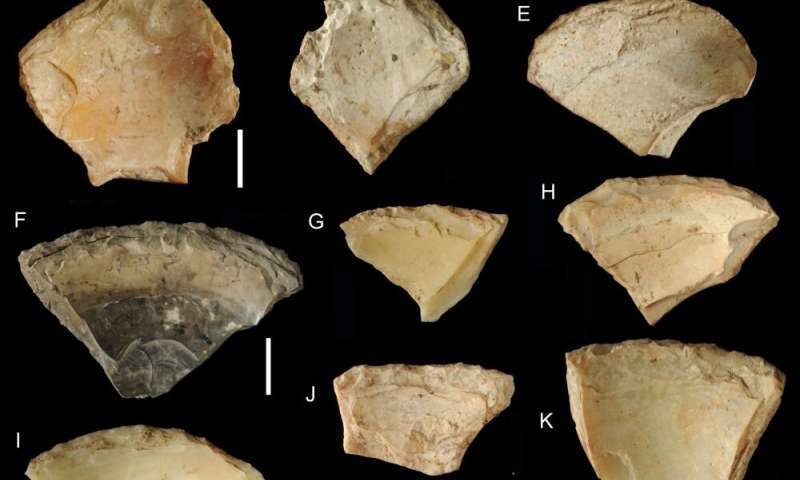
© Villa et al., 2020General morphology of retouched shell tools, Figs C-L are from the Pigorini Museum.
Did Neanderthals wear swimsuits? Probably not. But a new study suggests that some of these ancient humans might have spent a lot of time at the beach. They may even have dived into the cool waters of the Mediterranean Sea to gather clam shells.

The findings come from Grotta dei Moscerini, a picturesque cave that sits just 10 feet above a beach in what is today the Latium region of central Italy.

In 1949, archaeologists working at the site dug up some unusual artifacts: dozens of seashells that Neanderthals had picked up, then shaped into sharp tools roughly 90,000 years ago.

Now, a team led by Paola Villa of the University of Colorado Boulder has uncovered new secrets from those decades-old discoveries. In research published today in the journal PLOS ONE, she and her colleagues report that the Neanderthals didn't just collect shells that were lying out on the beach. They may have actually held their breath and went diving for the perfect shells to meet their needs.

Comment: See also:


Info

Mystery of early Neolithic house orientations solved

Early Neolithic settlement near Vráble in Slovakia
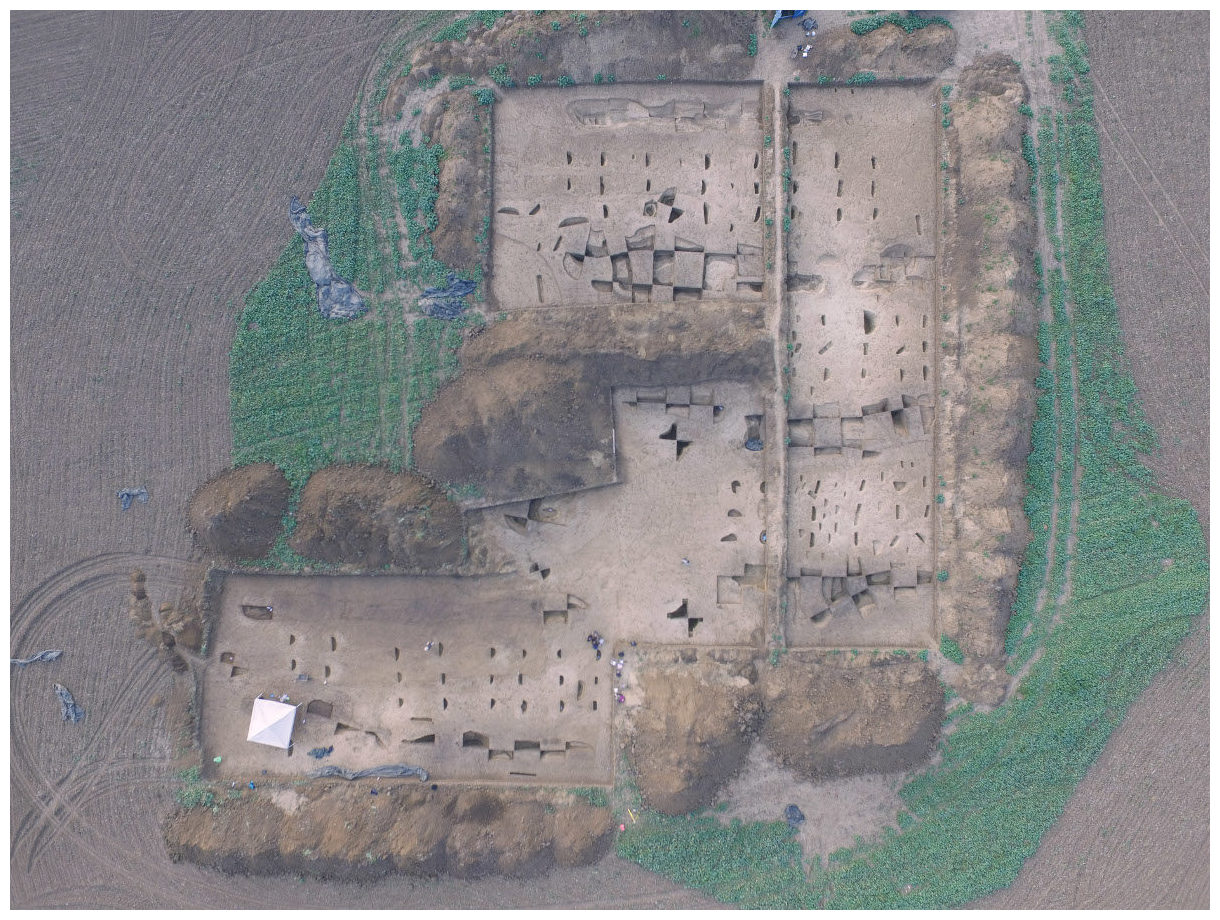
© Nils Müller-ScheeßelAerial photo of the excavation area of an Early Neolithic settlement near Vráble in Slovakia.
Human behaviour is influenced by many things, most of which remain unconscious to us. One of these is a phenomenon known among perception psychologists as "pseudo-neglect". This refers to the observation that healthy people prefer their left visual field to their right and therefore divide a line regularly left of centre.

A study published on Friday, 10.01. in the online magazine PLOS ONE now shows for the first time what effect this inconspicuous deviation had in the prehistoric past. A Slovak-German research team has investigated the alignment of early Neolithic houses in Central and Eastern Europe. Scientists of the Collaborative Research Centre (CRC) "Scales of Transformation" of Kiel University (CAU) and the Slovakian Academy of Sciences were able to prove that the orientation of newly built houses deviated by a small amount from that of existing buildings and that this deviation was regularly counterclockwise.

Archaeologist Dr. Nils Müller-Scheeßel, who coordinated the study within the CRC, says: "Researchers have long assumed that early Neolithic houses stood for about a generation, i.e. 30 to 40 years, and that new houses had to be built next to existing ones at regular intervals. By means of age determination using the radiocarbon method, we can now show that the new construction was associated with a barely perceptible rotation of the house axis counterclockwise. We see "Pseudoneglect" as the most likely cause of this."

Nuke

Atoms for Peace vs. Atoms for War may be the only fix for Iran-US relations

Atoms for Peace stamp
© USPO
War hawks in Israel and Washington have been quick to denounce Iran's nuclear power ambitions for years with the repeated excuse that "Iran has so much oil that nuclear energy is irrelevant for them - unless they wanted to build an Islamic Bomb!"

Hogwash. As we shall come to see, not only has Iran's Supreme Leader Ayatollah Khamenei created a 2003 fatwa declaring nuclear weapons forbidden under Islamic Law, but Iranian leaders were already calling for the need to transition to a new and superior form of energy in order to escape the geopolitical constraints of oil politics over 70 years ago... ironically through the help of the USA!

On December 8, 1953 a speech was delivered at the United Nations by President Dwight D. Eisenhower which has come to be known as his Atoms for Peace speech. As flawed as Eisenhower was as a political leader, this speech did provide a valuable gateway out of the unwinnable Cold War logic of Mutually Assured Destruction that had officially begun with the Soviet Union's first detonation of their own atomic bomb in 1949.

Map

Columbus' claims of invading Caribs from South America not a myth, but were they cannibals?

Caribs
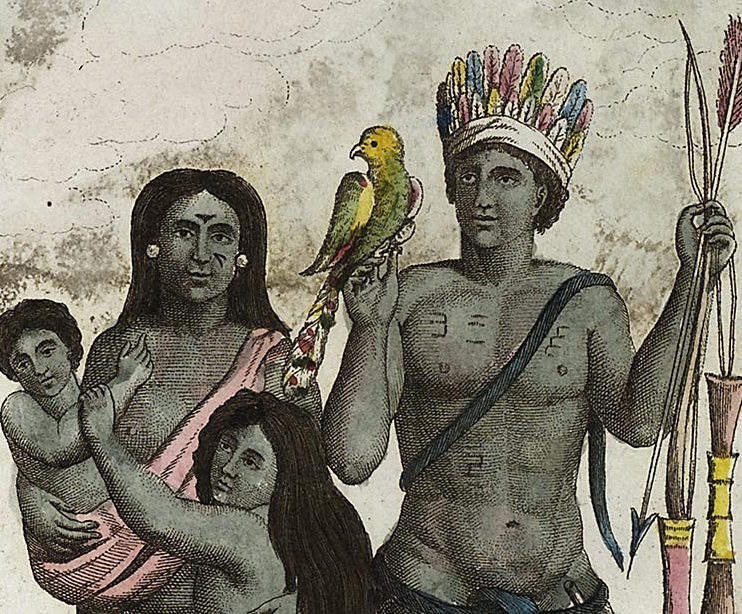
© Public domain imageCaribs hailed from the Northwest Amazon, and archaeologists long believed they never expanded north of the Lesser Antilles.

Detail from a painting by John Gabriel Stedman.
Christopher Columbus' accounts of the Caribbean include harrowing descriptions of fierce raiders who abducted women and cannibalized men - stories long dismissed as myths.

But a new study suggests Columbus may have been telling the truth.

Using the equivalent of facial recognition technology, researchers analyzed the skulls of early Caribbean inhabitants, uncovering relationships between people groups and upending longstanding hypotheses about how the islands were first colonized.

One surprising finding was that the Caribs, marauders from South America and rumored cannibals, invaded Jamaica, Hispaniola and the Bahamas, overturning half a century of assumptions that they never made it farther north than Guadeloupe.

"I've spent years trying to prove Columbus wrong when he was right: There were Caribs in the northern Caribbean when he arrived," said William Keegan, Florida Museum of Natural History curator of Caribbean archaeology. "We're going to have to reinterpret everything we thought we knew."

Comment: It's notable that during the time frames mentioned in the study for the migration of the Caribs appears to have coincided with climatic upheaval elsewhere in the Americas. As noted in Did Drought Kill the Mayans?
According to their analyses, one of the most severe periods of drought occurred between 897 and 922, the researchers reported in the journal Geophysical Research Letters, just as the Terminal Classic period came to an end. Another 19-year drought around 1150 coincided with the fall of the Toltec state, which was the dominant civilization of central Mexico at the time.
See also: Also check out SOTT radio's: MindMatters: America Before: Comets, Catastrophes, Mounds and Mythology


Info

Java Man not so old after all says new research

Sangiran H. erectus skull
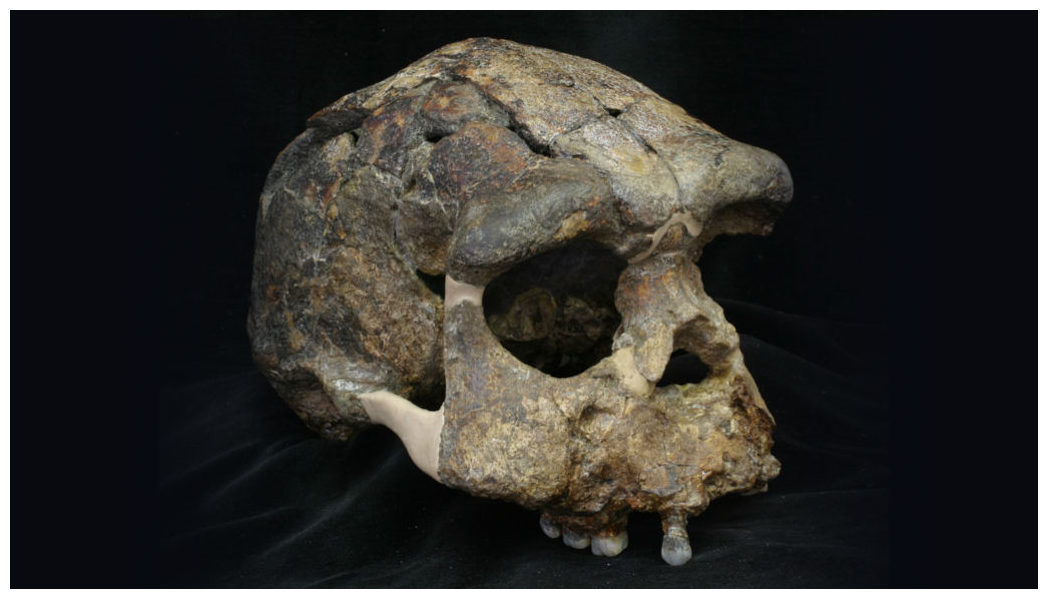
© HISAO BABA/NATIONAL MUSEUM OF NATURE AND SCIENCE.The most complete cranium of Javanese Homo erectus so far found.
The oldest human remains in Southeast Asia aren't as old as we thought they were.

An Indonesian-Japanese team of scientists has overturned a decades-old estimate of Homo erectus remains from Central Java in Indonesia, shaving off several hundred thousand years from the age of the globe-trotting hominin, the first to disperse out of Africa.

The new estimate, published in the journal Science, puts Homo erectus at the fossil-rich Sangiran dome by around 1.3 million years ago, and certainly no earlier than 1.5 million years ago

That's at least 300,000 years younger than a long-standing estimate from the 1990s, which suggested the oldest Homo erectus remains at Sangiran could be up to 1.8 million years old.

The age has remained controversial, though, because some studies have come up with much younger estimates for Homo erectus at Sangiran, ranging from 1.3 to 0.6 million years old.

To figure out whether the fossils were older or younger, Shuji Matsu'ura from the National Museum of Nature and Science in Tsukuba City, Japan, and colleagues used two separate dating techniques not previously used at the site.

Star of David

How a hilltop became the incubator for Israeli settler violence

Jewish settler
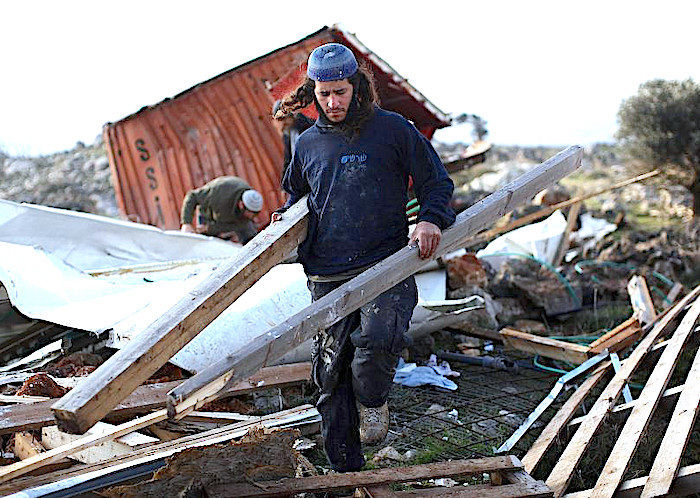
© Kobi Gideon/Flash90Jewish settler clears rubble from demolition by IDF, Mitzpe Yitzhar, West Bank
On Oct. 16, 2019, masked settlers from Yitzhar and its surrounding outposts assaulted Israeli and American-Jewish activists who were assisting Palestinians with their olive harvest, among them an 80-year-old rabbi. Three days later, settlers in the same area attacked Palestinians farming their land. For the following two days, Yitzhar residents also attacked Israeli Border Police troops, part of a running series of altercations after the military arrested a settler suspected of setting fire to a plot of Palestinian-owned land.

This spasm of violence — which took place during the Jewish holiday of Sukkot — was one of many that occurred throughout the occupied West Bank in the last few months of 2019. Assaults on Palestinians and Israeli security forces, and vandalism of Palestinian property, including arson, were reported in Gush Etzion, Hebron, Bat Ayin, Hizma, and beyond. Although there has been, according to the Israeli Defense Ministry, an overall drop in the number of hate crimes by settlers this year compared to 2018, their scale and level of violence is increasing.

Yitzhar is located in the northern West Bank (generally referred to in Israel as "Samaria"), where settlers tend to cluster in hilltop outposts dotted around Palestinian population centers. This part of the occupied territories is particularly prone to settler violence, yet it is no accident that Yitzhar has been at the heart of the latest extended bout of settler aggression.

Russian Flag

Now twenty years later, how did Putin do it?

Putin
© Sputnik/KJN
Twenty years ago a not very well-known Vladimir Putin published an essay "Russia at the turn of the millennium". It was printed in Nezavisimaya Gazeta and at the Russian government website. The only copy that I can find on the Net in English now is here but I will be referring to the official English translation and Russian text that I downloaded at the time.

Putin had been Prime Minister for about five months and, when Yeltsin resigned the day after the publication of this essay, he became Acting President. Since that day his team has been running Russia. It is reasonable to regard this essay as his program and, on its twenty-year anniversary, appropriate to see how well he (and his team - it's not a one-man operation) have done.

I concluded that he outlined four main projects:
  • Improve the economy.
  • Re-establish central control.
  • Establish a rule of law.
  • Improve Russia's position in the world.

Comment:


Padlock

Padlock among finds at Lair of Glenshee Pictish homestead

pictish homestead
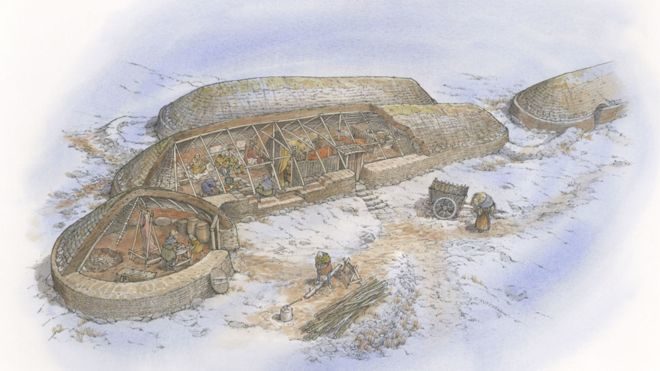
© Chris MitchellA reconstruction of the homestead in Glenshee
An early Medieval padlock was among the finds made by archaeologists at a Pictish settlement in Perthshire.

Lair in Glenshee was the location of a Pictish homestead with turf-roofed stone and timber buildings dating to around 500 to 1000 AD.

Perth and Kinross Heritage Trust, supported by other organisations, has spent five years excavating the site.

Archaeologists believe the padlock was used to keep valuables and personal belongings safe.

Comment: See also:


Snowflake

Recurring, natural climate change: 9th century Viking runestone records fears of '3-year-long winter'

Rök stone
© Alfredo Dagli OrtiRex/ShutterstockThe Rök stone in Sweden bears the longest runic inscription in the world.
One of the world's most famous runestones is now believed to have been erected by Vikings fearing a repeat of a previous cold climate crisis in Scandinavia, a study has concluded.

The Rök stone, raised in the ninth century near Lake Vättern in south central Sweden, bears the longest runic inscription in the world, with more than 700 runes covering its five sides.

It is believed to have been erected as a memorial to a dead son, but the exact meaning of the text has remained elusive, as parts are missing and it contains different writing forms.

Comment: Extreme shifts in climate have had untold impacts on civilizations throughout history, and we're seeing similarly ominous changes even in our time: Also check out SOTT radio's:


Pocket Knife

1.8 million years ago early humans engineered optimized stone tools

quartzite
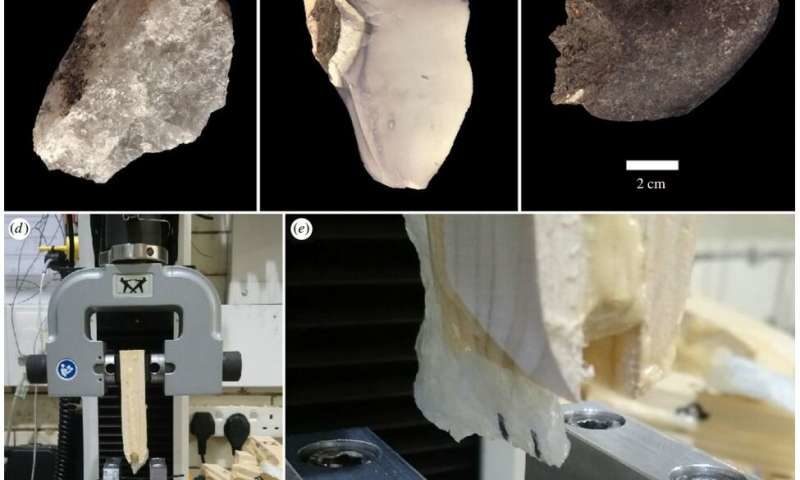
© Journal of The Royal Society Interface (2020). DOI: 10.1098/rsif.2019.0377Representative flakes made from quartzite (a), chert (b) and basalt (c). The Instron 3345 tensile testing machine used during the controlled cutting tests (d). A quartzite flake, prior to being used to cut, is clearly depicted, along with the metal framework and PVC tubing (e).
Early Stone Age populations living between 1.8 - 1.2 million years ago engineered their stone tools in complex ways to make optimised cutting tools, according to a new study by University of Kent and UCL.

The research, published in the Journal of Royal Society Interface, shows that Palaeolithic hominins selected different raw materials for different stone tools based on how sharp, durable and efficient those materials were. They made these decisions in conjunction with information about the length of time the tools would be used for and the force with which they could be applied. This reveals previously unseen complexity in the design and production of stone tools during this period.

The research was led by Dr. Alastair Key, from Kent's School of Anthropology and Conservation, and is based on evidence from mechanical testing of the raw materials and artefacts found at Olduvai Gorge in Tanzania — one of the world's most important sites for human origins research.

Comment: A recent paper showed that Neanderthals were fresh meat eaters - not vegetarians, nor scavengers - and particularly of herbivores, so there is at least evidence that, at a much, much later period anyway - 43,740-42,720 cal. y BP according to the paper - scavenging wasn't to be the primary source of nutrition. The point being that, as this discovery, and many others have revealed, perhaps not all these early humans were as simple minded or primitive as was once thought.

See also: