
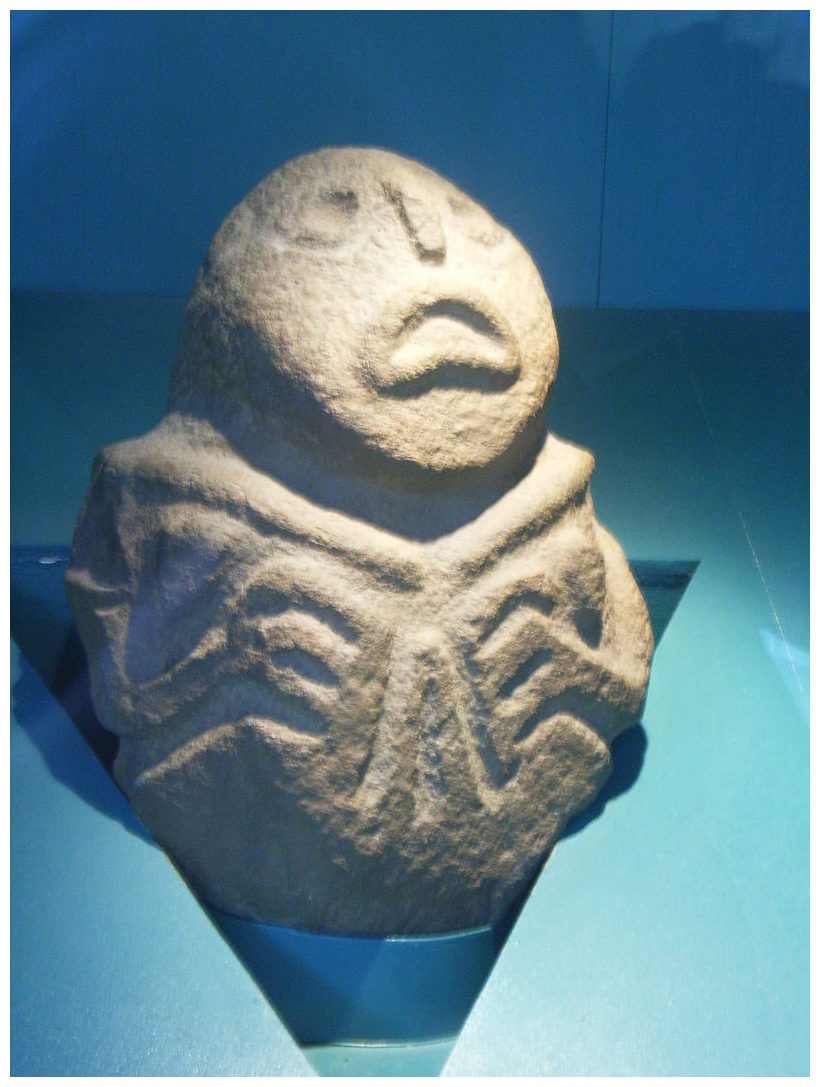
© Prehistory DecodedCommon Lepinski Vir stone sculpture, often interpreted as representing a human-fish hybrid.
Lepinski Vir is best known for being a gateway site between Neolithic Anatolia and Mesolithic Europe. Essentially, the 'Anatolian farmers' who migrated or invaded Europe after the 8.2 kiloyear event (around 6200 to 6300 BC) appear to have used this route. It is one of the very first European sites to have adopted agriculture, thereby entering the Neolithic age.
Before the main phase of occupation at Lepinski Vir, from 6200 to 5900 BC, a few small Mesolithic settlements on this site are known over the preceding few thousand years.
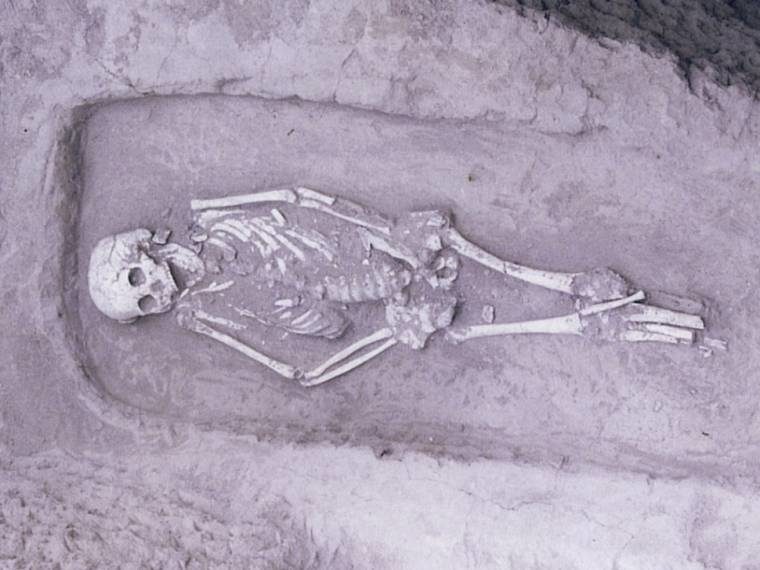
However, the main phase of occupation is quite different to these earlier settlements. Apart from adopting agriculture, they built trapezoidal plan, or 'fan' shaped, houses with stone floors in which various animal remains have been found. These are usually interpreted as grave goods, accompanying burials under the floors of houses, like at Catalhoyuk.
The most interesting thing for us are the species used in these graves. According to a paper by Vesna Dimitrijevic in 2008, the most common animal species remains found inside these houses are: boar, deer and dog. Fish remains are also common, but these are harder to quantify. However the other thing Lepinski Vir is known for are its fish sculptures - see image left. So we can presume that the fish was an important symbol, and not just an important food source, for these people.












Comment: It's fascinating that similar findings have also been reported at Bamburgh Castle in England, which was noted by researchers as the center of a 'Northumbrian enlightenment', hosting visitors from as far as North Africa. It would appear there are some interesting similarities shared between the two societies from the organisation and possible societal structure organization, over vast distances, and, although the dating is not completely clear, it is possible they were extant at the same time. It's particularly notable that, despite leaving a mark in the archeological record, we otherwise know very little about them.
See also: