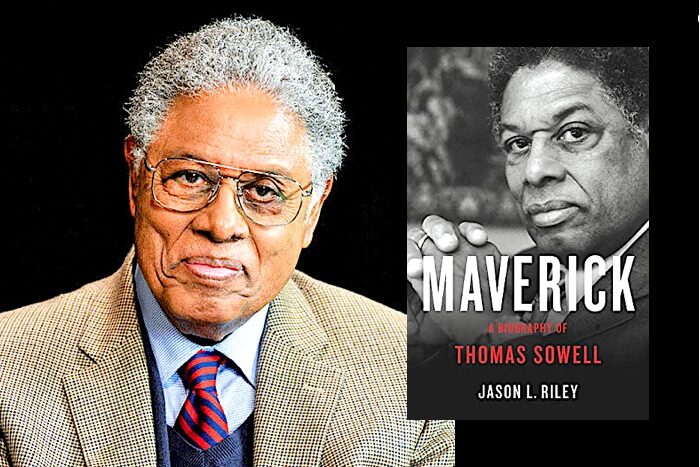
© Rod Searcey/Basic BooksThomas Sowell
Thomas Sowell is an icon. And, now, he has a biographer. While Sowell himself has written, by my count, 43 books, Jason Riley's 2021
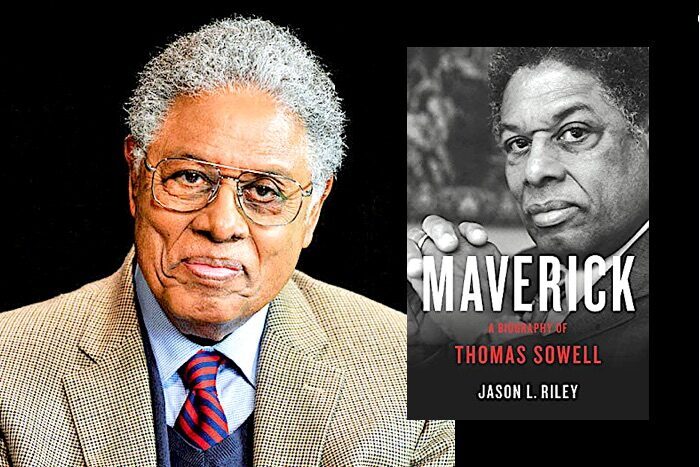
Maverick seems remarkably to be the first-ever major press biography of the heterodox African-American giant. Riley's book sums up most of the key themes of Sowell's thought, including the Anointed and Constrained visions of human behavior, the fact that the plain existence of racism does not explain most differences in group performance, and the idea of quantitative culturalism as an alternative to both "critical race theory" and genetic determinism.
Sowell's biographer also sums up two factual story-lines critical to an understanding of the man:
how growing up outside the national elite allowed Sowell to become a truly innovative thinker, and how he (no doubt aided by revenues from all those books) remained a genuinely independent voice throughout his career — a conservative who never ran for office, rarely endorsed mainstream GOP candidates, and
openly detested both Barack Obama and Donald Trump. All of the points just mentioned are well worth summarizing here, and Riley's book is well worth reading.
Perhaps Sowell's most famous idea, a massive influence on my own thought, was
the idea of the "conflict of visions." One of the defining features of upper-middle class life in the modern era has been the idea that a degreed elite, often trained in such novel new fields as Post-Colonial Studies and Feminist Psychology, has a moral duty to guide society forward. This manifests itself all the time, from the necessity of wearing COVID-19 masks outdoors to the importance of allowing puberty-blocking drugs for young teenagers: trust the in-field experts,
they always know best.
Against this, Sowell famously proposed the alternative idea of trusting in common sense, or the shared wisdom of the intelligent crowd — what Psychology professor Gad Saad calls "nomological networks of cumulative evidence."






















Comment: See also: