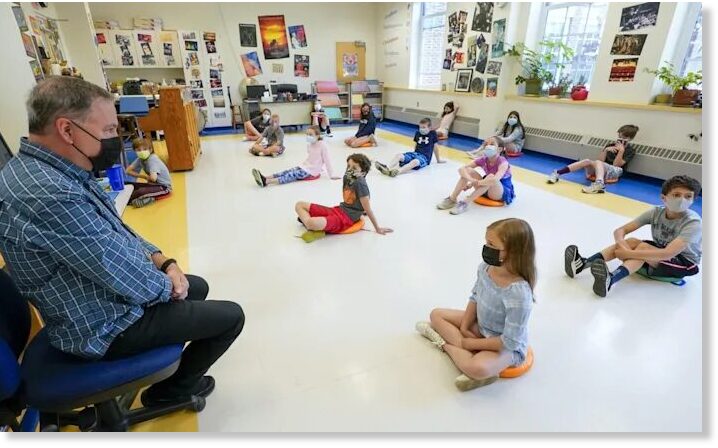
The National Education Association will debate whether to demand mandating COVID-19 vaccines
for all students and staff returning to school in person this fall, a polarizing move that would apply to 3 million teachers.
"The NEA will call for mandatory safe and effective COVID-19 vaccinations and testing for all students and staff before returning to face-to-face instruction in the fall,
subject to medical exceptions in accordance with existing law,"
according to the organization's annual meeting agenda.
Federal regulators have only authorized a single vaccine, the two-dose Pfizer vaccine, for children 12 through 15. The Moderna and Johnson & Johnson vaccines, with two shots and one shot, respectively, have been authorized for adults 18 and older. Moderna has already announced its vaccine is 100% effective in protecting children 12 through 17 against infection. Trial results also showed an efficacy of 93% after just one dose. Johnson & Johnson has also begun similar trials in children in the same age range.
The Pfizer vaccine, meanwhile, was
granted emergency use authorization to be administered to children on May 10, after a study of more than 2,200 young people found that the shots were 100% efficacious and produced a "robust antibody response."
Comment: Let the lawsuits begin! Any such mandatory orders will likely conflict with those states like Florida who have
banned mandatory vaccination efforts. Then it will be a battle of wills, in the courtrooms largely, which could just mean that major employers will have to pay major fines, while keeping their mandatory vaccine policies in place. The Borg is not so easy to escape.













Comment: See also: