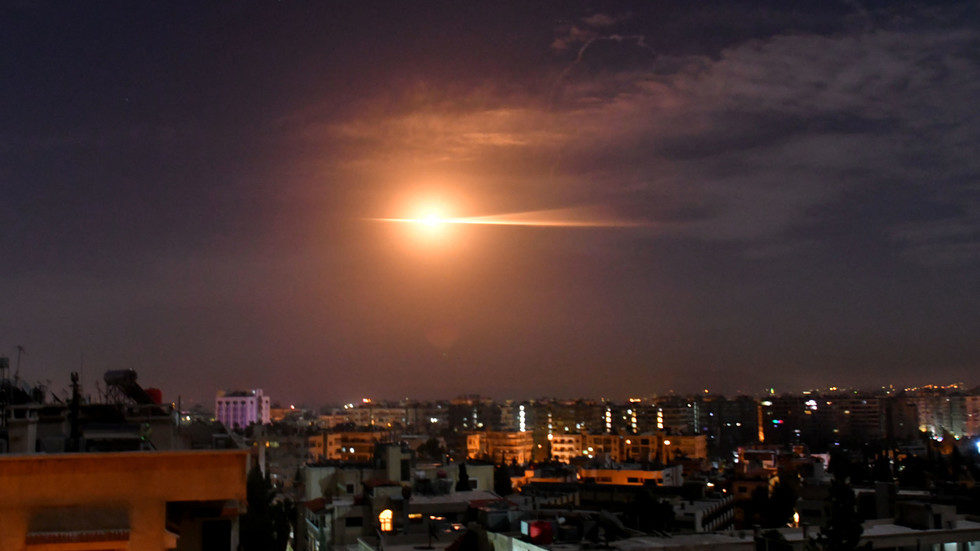
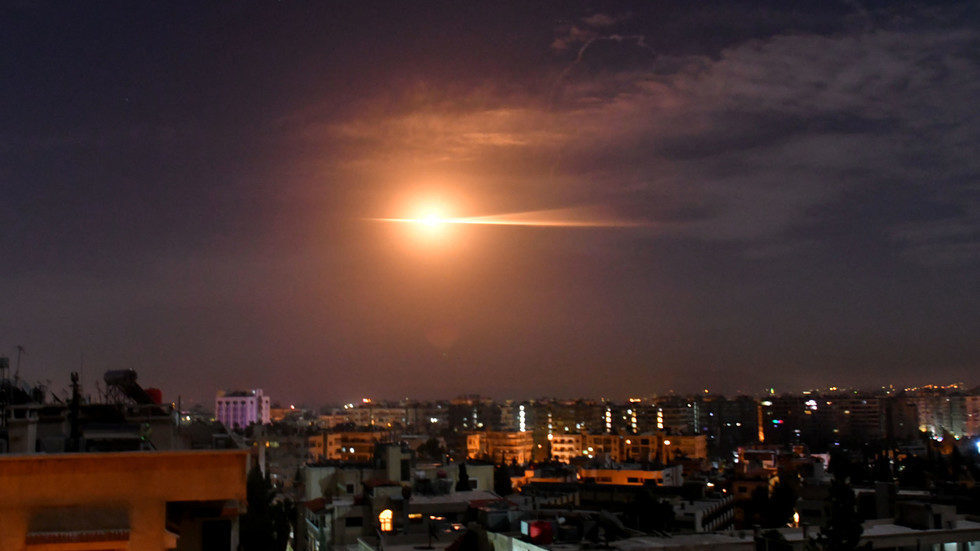
© Global Look Press /ZUMA Press/ Ammar SafarjalaniSyria's air defense missile, responding to a missile strike, is seen in the sky over Damascus, capital of Syria.
Four members of Iran's Islamic Revolutionary Guard Corps and three Syrian soldiers were killed in airstrikes around Damascus late Thursday night which Syria attributed to Israel, according to a Britain-based Syrian civil war monitor.
At approximately 11:45 p.m., incoming missiles struck five weapons depots near Damascus International Airport, including an attack on a military position south of the Syrian capital, the al-Arabiya news channel reported, citing unidentified sources.
The attack came hours after a shipment — reportedly of munitions — arrived at the airport from Tehran, according to flight data.The Syrian Observatory for Human Rights monitor reported that in total seven people were killed in the strikes, four of them from the IRGC and three from the Syrian military.
Both Syria and the Observatory said Israel was behind the strike. The Israeli military did not comment on the matter, in accordance with its long-standing policy of neither confirming nor denying such operations abroad.
Asked about Israel's alleged involvement in a Friday morning interview to Radio Haifa, Prime Minister Benjamin Netanyahu said:
"I don't comment on one operation or another."I don't know what happened at night. Maybe it was the Belgian air force," he quipped.













Comment: More on the Fyre Festival scam: