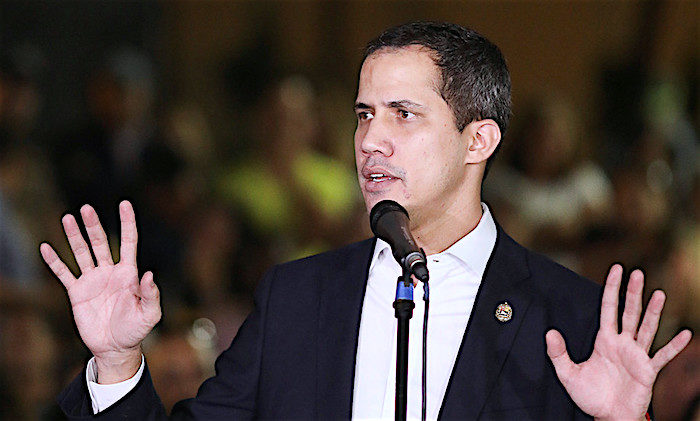
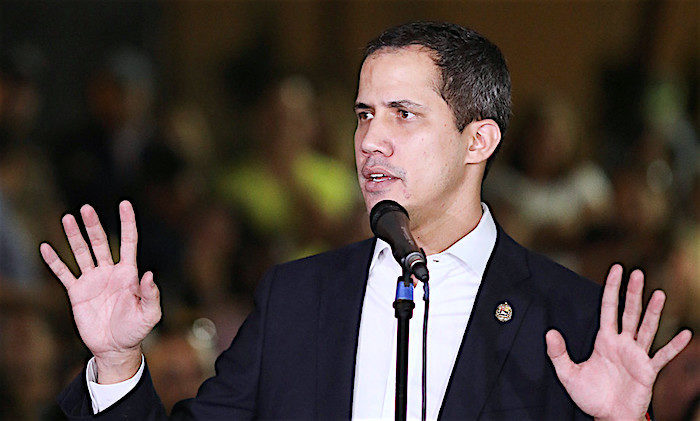
© Reuters/Manaure QuinteroPretender Juan Guaido
The arrest of self-appointed 'interim' president of Venezuela Juan Guaido's uncle on explosives smuggling charges
has been spun as a 'kidnapping' - or even 'revenge' for Guaido's State of the Union stunt - by credulous MSM.
Juan José Marquez, uncle to thrice-failed coup leader Guaido, was arrested on Tuesday after returning to Caracas from Lisbon, where he had been accompanying his relative on a world tour to shore up support for the latter's flagging efforts to depose Venezuelan President Nicolas Maduro.
While Marquez was charged with smuggling "dangerous materials" -
a stash of C4 explosives concealed in flashlight batteries and perfume capsules - into the country, sympathetic media have lined up behind Guaido's explanation for the arrest. Marquez, Guaido insisted, had been
"forcibly disappeared by the dictatorship" in a "cowardly move" meant to intimidate the wannabe leader. Vice President Diosdado Cabello poured cold water on that theory.
"He's detained, not forcibly disappeared, he's detained for bringing prohibited substances onto a flight," the statesman explained on his Wednesday night TV program, showing
photos of the explosives and a bulletproof vest - also contraband - allegedly taken off Marquez after he went through immigration control at Caracas airport. The supposedly apolitical uncle,
whose wife insisted he was an airplane pilot who merely accompanied Guaido for protection, was also in possession of an electronic file with information about "operations against Venezuela" and contact information for a US secret service agent, Cabello said.















Comment: Bojo reshuffles cabinet, Chancellor quits, Northern Ireland & environment minster among notable sackings