Puppet MastersS


Bad Guys

The Catherine principle for negotiating with Turks: Let the arms do the talking

putin
Between 11:30 Moscow time on Thursday and 14:00, President Vladimir Putin spent two and a half hours talking with the Turkish President, Recep Tayyip Erdogan, with interpreters present but no one else, and including lunch and toilet breaks. The two presidents then spent three hours and twenty minutes in talks with delegations of their officials before appearing at 17:22 for another sixteen minutes in front of the press. The Turkish clock for the negotiations counted 5 hours 40 minutes; the Kremlin clock, six hours.

The outcome was a document entitled "Additional Protocol to the Memorandum on Stabilization of the Situation in the Idlib De-escalation Area". This comprises an agreement of three paragraphs amounting to ten lines, and a preamble of four paragraphs repeating what professionals call boilerplate; that's to say, points with which everyone agrees in principle, and no one in practice.

The difference between the amount of time and effort expended and the outcome isn't between the mountain and the molehill. It is the result of the Russian side applying the brief script dictated to Putin by the Defence Minister Sergei Shoigu, the Foreign Minister Sergei Lavrov, and the General Staff led by General Valery Gersasimov, and confirmed the day before by the Security Council.

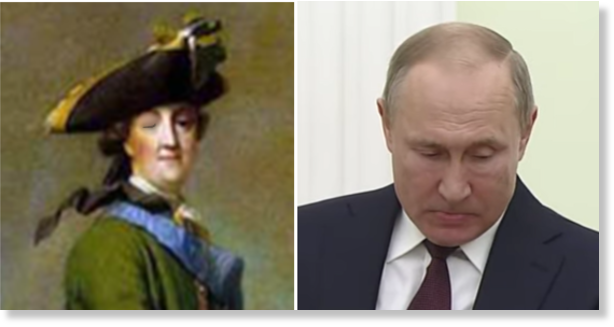
The script is dictated by the principle of the tsarina, Empress Catherine II, during the Turkish-Russian wars of 1768 to 1792. The principle is that nothing the Turks say they agree to or sign can be relied upon; and that everything the Turks can't achieve with their army will be tested again and again, until and unless they are defeated by the battle of arms and the defence of territory by more force than the Turks can overcome. The corollary of the Catherine principle is that the new agreement between Putin and Erdogan cannot last for long. Because both sides know this, their heads were in the down position, their eyes averted, for longer than has ever been recorded at their summit meetings before.
Comment: See also:


Bad Guys

Defense secretary Esper: US-Taliban peace deal seeing 'mixed' results

Mark Esper
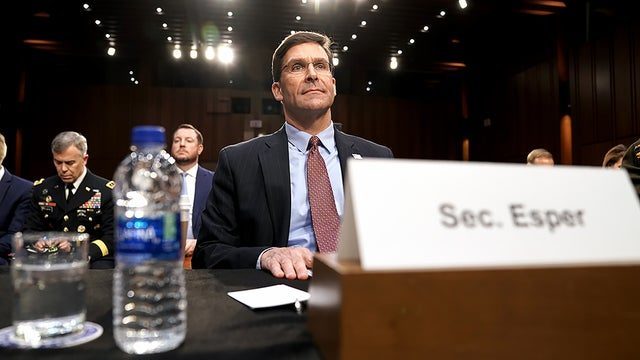
© Greg NashU. S. Defense Secretary Mark Esper
Defense Secretary Mark Esper said Wednesday the United States has seen "mixed" results in the first days of a peace deal with the Taliban.

Esper's comments to the Senate Armed Services Committee come after the U.S. military conducted its first airstrike since the Trump administration signed the deal, which U.S. Forces Afghanistan said was a response to a Taliban attack on an Afghan military checkpoint.

"The results so far have been mixed," Esper said. "The Taliban are honoring their piece in terms of not attacking U.S. and coalition forces but not in terms of sustaining the reduction in violence."

Comment: So it appears the Taliban are doing their best to make good on a preliminary gesture of good will. Will the Deep State in the Pentagon attempt to thwart the process?

The latest attempt to broker a peace in Afghanistan has been dragging on for nearly two years. Only time will tell if the US is truly tired of its pointless operations there, and make some significant moves to prove it is serious about leaving the country.


Arrow Down

War averted: Russia & Turkey reach deal on Idlib, but does it mean peace is on the horizon?

Military
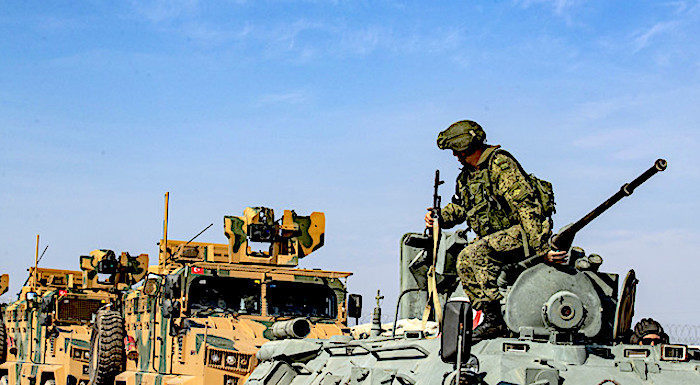
© AFP/Delil SouleimanRussian (front) and Turkish military vehicles drive on a joint patrol in Syria's north-eastern Hasakeh province on November 1, 2019.
After a new agreement with Russia dispelled the specter of a major conflict arising from the recent escalation of tensions in Syria's Idlib, RT finds out whether it will be a lasting solution for Ankara and Damascus.

Damascus had launched an offensive in the northwestern province of Idlib against armed groups, which Ankara had supported as well as launching a military operation of its own. However, a heated standoff between the Syrian Army and Turkey seems to have been avoided. This was all thanks to the diplomatic efforts of Moscow and Ankara, which led to a new agreement on the troubled province following nearly six hours of negotiations on Thursday.

The conflict had threatened to spiral out of control at any minute, dragging both adversaries - as well as Syria's allies in Moscow and possibly even Turkey's NATO partners - into an all-out war.

Every side got what it wanted

The deal appears to do even more than prevent a war, since pretty much every side involved in the latest flare-up achieved most of its goals, short-term ones, at least. For Moscow, averting the disaster was a victory in itself, Vitaly Naumkin, president of the Institute of Oriental Studies of the Russian Academy of Sciences, told RT:
"The primary goal that... meets Russia's interests is putting an end to the fighting and removing a threat of a major war that could break out between Damascus and Ankara, in which Russia could end up being involved."

Comment: See also:

Putin and Erdogan's ceasefire agreement in Idlib: What we know so far in five points


Putin

Putin and Erdogan's ceasefire agreement in Idlib: What we know so far in five points

PutinErdo
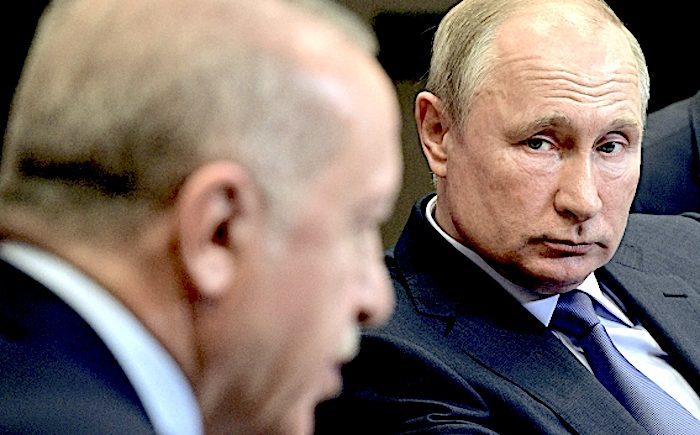
© Sputnik/Alexey DruzhininRussian President Putin • Turkish President Erdogan
Turkish President Recep Tayyip Erdogan has come to Moscow on Thursday to hold talks with his Russian counterpart Vladimir Putin over recent escalations in Syria's Idlib province. The tensions in the area have recently led to the deaths of over 30 Turkish soldiers, prompting Ankara to target Syrian troops in response.

Russian President Vladimir Putin and his Turkish counterpart Recep Tayyip Erdogan announced after six hours of bilateral talks on 5 March that they have negotiated a preliminary agreement to resolve the ongoing conflict in northwestern Syria.

Here is the list of main points which the two major regional players have agreed upon:
  • A ceasefire in Syria's Idlib province will start at 00:01 on 6 March.
  • Russia and Turkey will start joint patrols on the M4 highway in Syria. The patrolling will take place from the settlement of Tronba, located 2km west of the strategic town of Saraqib, to the settlement of Ain al Havr.
  • A 12-km security corridor for Syria's Idlib province will be established to the north and to the south of the highway. "The specific parameters of the functioning of the security corridor will be agreed upon by the Ministry of Defense of the Russian Federation and the Turkish Republic within seven days", Russian Foreign Minister Sergei Lavrov said.
  • Both countries agreed on efforts to prevent further aggravation of the humanitarian situation in Syria.
  • All additional protocols to the document will come into force from the moment of its signature on 5 March.

Comment: Turkey-Russia relationship to continue, despite current situation
"We are now experiencing the moment in our relations when they reached their peak. This, without doubt, applies to the defense industry, and trade relations, and so on," President Recep Tayyip Erdogan told Vladimir Putin. "We believe that the biggest task is to promote and develop our relations. I believe that we will succeed in this matter."

Putin was also of the opinion that Turkey-Russia ties should be preserved, whatever challenges arise. "We need to talk through the whole current situation so it won't repeat itself and won't harm our relations," he said, adding that Russia "treasures" its ties with Ankara.

During the Thursday meeting, Putin expressed his condolences over the death of Turkish troops in Syria, describing the loss as "a big tragedy." He stressed that the Syrian Army had been unaware of the Turkish forces' location, which the Russian defense ministry had earlier said were not supposed to be in the area, according to Ankara's own memo.
Turkey's excuse for invasion of Idlib
Attributed to the Syrian military, the airstrike prompted Turkey to deploy thousands of troops, tanks and drones into Idlib. The Turkish army also declared any Syrian military asset a legitimate target. As Putin acknowledged during the meeting, the situation in Idlib reached its boiling point. "Now the situation in the well-known zone in Idlib has become so grave that it certainly requires our personal conversation."

Erdogan in turn hailed the importance of the meeting as the whole world "has eyes on Moscow." He believes that "the steps that will be taken today and our decisions will undoubtedly ease the situation."

While the much-awaited meeting started seamlessly, the developments on the ground showed some cracks in Turkey-Russia ties. As Ankara demanded that Russia press President Bashar Assad into halting hostilities in Idlib, Moscow accused Turkey of failing to act on its promise to clear the 'de-escalation zone' of jihadist groups.
Goal is to prevent escalation to an all-out-war
The leaders of Russia and Turkey have agreed a ceasefire plan for Syria's Idlib and security measures for the troops stationed there to prevent the escalation in the militant-infested province from spiraling into an all-out war.


The document, signed after the negotiations, underlined that both Moscow and Ankara remained committed to maintaining the territorial integrity and sovereignty of Syria.

Both leaders acknowledged that the conflict in the country has no military solution and that it was up to the Syrians alone to decide the fate of their country. It was also agreed to facilitate efforts to prevent the humanitarian crisis in Idlib, while also creating conditions for the refugees to return to their homes.

Turkey pledged in a 2018 agreement with Russia that it would separate terrorist elements from the so-called "moderate rebels" occupying Idlib — a commitment which Moscow says has not been honored.
Erdogan loses on all his demands
President Tayyip Erdogan of Turkey and President Vladimir Putin of Russia had a 160 minute long talk under 4 eyes and another round with their relevant staff. The parties agreed on a new ceasefire in Idleb governorate.
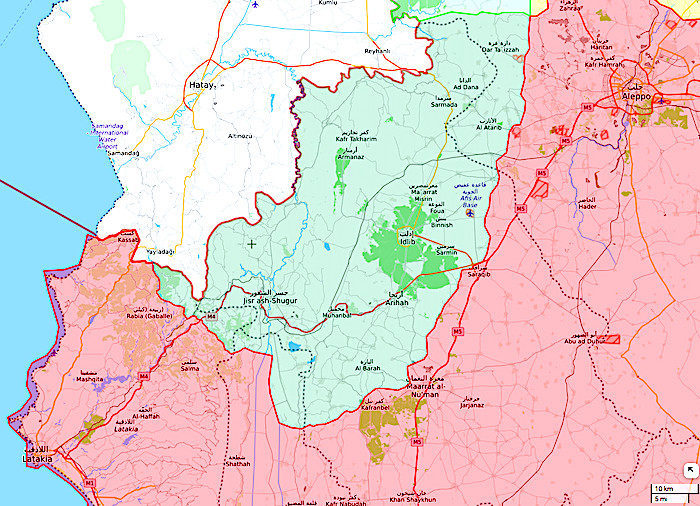
Idleb map
© Unknown
The aim of the current Syrian army operation is largely fulfilled. The M4 and the M5 highways will be free of Jihadis and open to traffic.

This ceasefire is unlikely to hold over a longer period. But it brings a useful pause for the Syrian army that will allow it to recover a bit and to take care of its men and equipment.

This for now also ends the Turkish thread to attack the Syrian army and to reconquer all areas it had liberated over the last months.

Erdogan, who had made many demands, saw none of them fulfilled. The agreement will cost him political points within his party.

ErdoPutin meeting
© Unknown@Hevallo @Hevallo - 18:08 UTC · Mar 5, 2020
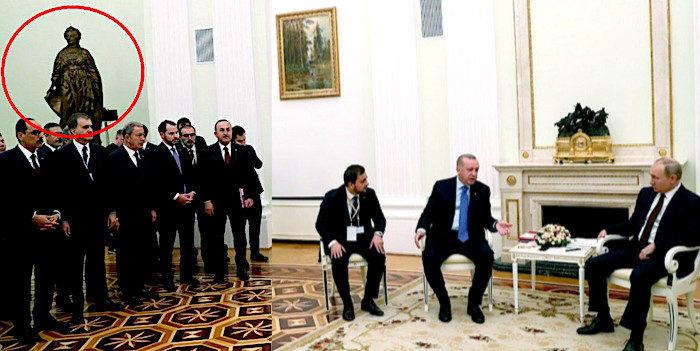
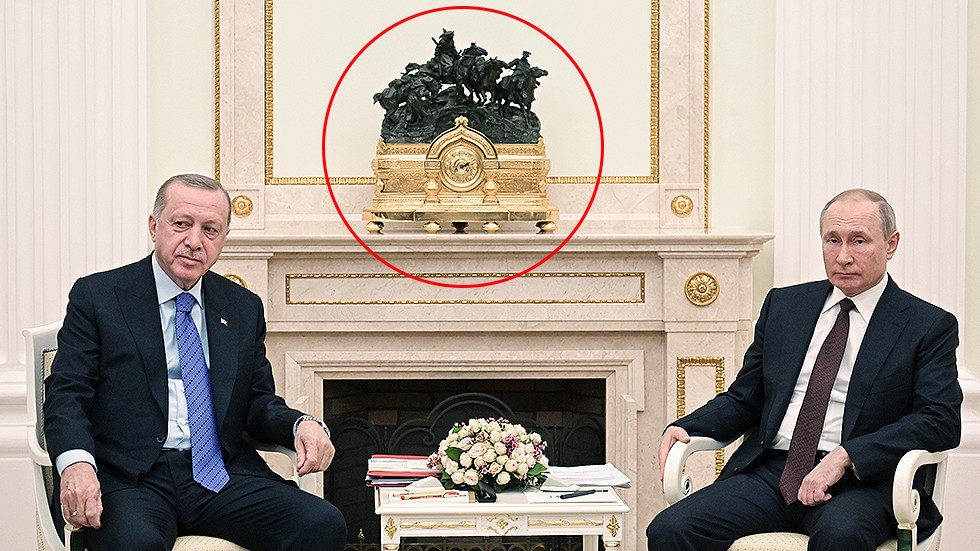
Best thing for me from the Moscow meeting between Erdogan and Putin was the subservient stature of the Turkish delegation in front of Putin and standing under the statue of Catherine the Great who defeated the Turks several times during the XVIII century.


Russian Flag

The Russians troll? Erdogan talk held in room holding art piece commemorating Ottoman defeat by Russia

erdogan putin ottoman defeat sculpture
© Sputnik / Sergey GuneevRussian President Vladimir Putin and Turkish President Recep Tayyip Erdogan during a meeting on March 5, 2020
Some believe the Kremlin wanted to rattle Turkey's President by placing him next to a work of art depicting a crushing Ottoman defeat at the hands of the Russians, but Vladimir Putin's spokesman says it was pure coincidence.

Recep Tayyip Erdogan visited Moscow on Thursday to discuss with the Russian President ways to deescalate tensions in Syria's Idlib province. When Putin and his guest were briefing the media, a clock was visible on the mantelpiece behind their backs. The instrument is decorated with a bronze group sculpture called 'Crossing the Balkans'.

Made by artist Eugene Lanceray in 1880, the work shows Russian troops crossing over the Balkan Mountains during the Russian-Turkish war a few years prior. The war, incidentally, ended in a humiliating defeat for the Ottomans, who lost control over large swathes of their Balkan territories.

Comment: Inadvertant or not, you have to admire the symbolism. Erdogan had best take care in the next few months.


Brain

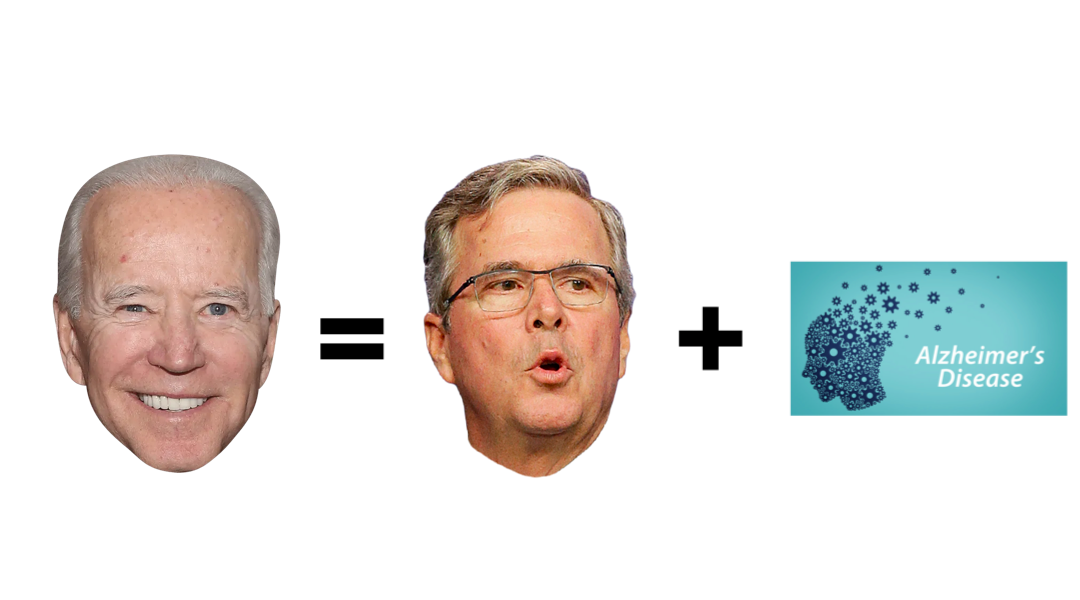
Best of the Web: Stop calling it a "stutter": Here are dozens of examples of Biden's dementia symptoms

biden alzheimer's
It's very bizarre and dissonant how there are currently two separate and non-overlapping lines of criticism going on against the campaign of establishment-anointed Democratic presidential candidate Joe Biden. There are the perfectly accurate criticisms regarding the right-wing, militaristic policy positions of the politician Joe Biden used to be, and then there are the equally accurate criticisms of Biden's handlers and Democratic Party leadership for wheeling out the dementia-addled husk of a man he currently is to run for the world's most powerful elected office.

These two debates do not interweave, because they are not relevant to one another. It doesn't matter what political positions a dementia victim once had; what matters is taking care of him and keeping him away from hazards, like sharp objects and nuclear launch codes. It's impossible to know what actual political convictions still remain held within a mind that can no longer lucidly string thoughts together anyway.

I hate doing this. I hate repeatedly writing about the obvious and undeniable fact that an old man is exhibiting obvious and undeniable symptoms of incipient dementia. It isn't fun, and it doesn't feel good. But the alternative is laying down and allowing the Democratic party and its allied media to gaslight people into believing it's not a thing, as they are doing currently.

Comment: With the extensive (probably not exhaustive) list above, the fact that Biden supporters are trying to pass this off as a 'stutter' is jaw-dropping. The man clearly has a cognitive issue; glaringly obvious when one compares his recent gaffes to how articulate he was only a few short years ago. This man is not fit for office, and the fact that they've hauled him out as the favored candidate makes it increasingly likely that, in order to prevent Bernie from becoming president, the DNC is willing to sacrifice the presidency.

See also:


Eye 1

US threatening to okay annexation if Palestinians don't resume negotiations

David Friedman
© David Azagury/US Embassy JerusalemPrime Minister Benjamin Netanyahu (L) and US Ambassador to Israel David Friedman (2nd-L) at the northern West Bank settlement of Ariel on February 24, 2020.
Senior White House officials were quoted Thursday by an Israeli television network as saying that they intended to green-light Israeli annexation of swaths of West Bank land within months if the Palestinians don't return to the negotiating table.

According to Channel 13, the sources said they intend to go ahead with the implementation of the peace plan unveiled earlier this year by US President Donald Trump's administration.

They reportedly stressed that this would happen even if fourth successive Knesset elections are called following another deadlocked vote this week. They added that both contenders for the premiership, the incumbent Benjamin Netanyahu and challenger Benny Gantz, know that Trump's presidency marks a unique opportunity.

Comment: See also:


Arrow Up

Final Israeli election results: Netanyahu fails to reach Parliamentary majority for third time

Israel election
© AP Photo / Oded Balilty
The preliminary results in Monday's elections showed that Likud won 35 seats in the Knesset, followed by the Blue and White coalition with 32. This is the third time in less than a year that neither party has managed to win a clear majority.

Israeli Prime Minister Benjamin Netanyahu's Likud party appears to be the largest party, the country's election results indicate, Haaretz reported.

However, the votes show that the Netanyahu-led bloc failed to secure a 61-seat majority to form a government and was closely followed by Benny Gantz's Kahol Lavan party, reports say.

The Netanyahu-led bloc won 58 seats, followed by Ganz's bloc with 55. Likud remains at 36 seats, as does Kahol Lavan with 33, and the Joint List with 15.

Comment: See also:


Star of David

US to sell Pegasus tanker jets to Israel, allowing its fighters to reach Iran's territory

pegasus
© Wikipedia / Ken Fielding
Tel Aviv repeatedly threatened that it would take any necessary steps to prevent Iran from developing nuclear weapons. In turn, Tehran repeatedly denied seeking to build them, despite declaring the destruction of Israel as one of its goals.

The US State Department has greenlit the sale of eight KC-46A Pegasus tanker aircraft to Israel along with spare parts and supporting equipment for $2.4 billion. If the deal passes the US Congress, Tel Aviv can expect to receive its first jets in 2023.

The State Department also noted that the aerial tankers will not only boost Israel's national security posture, but will also be of great help to the US itself.
"[This sale] supports the foreign policy and national security of the United States by allowing Israel to provide a redundant capability to U.S. assets within the region, potentially freeing US assets for use elsewhere during times of war", the State Department announced.

Magnify

Best of the Web: Iraq's Hezbollah accuses high-ranking officials of working with US to assassinate Qassem Soleimani


Comment: Although the following claim is that it was the Iraqis who colluded with the Americans to off Soleimani, it's hard to imagine this happening without the Iranians knowing...


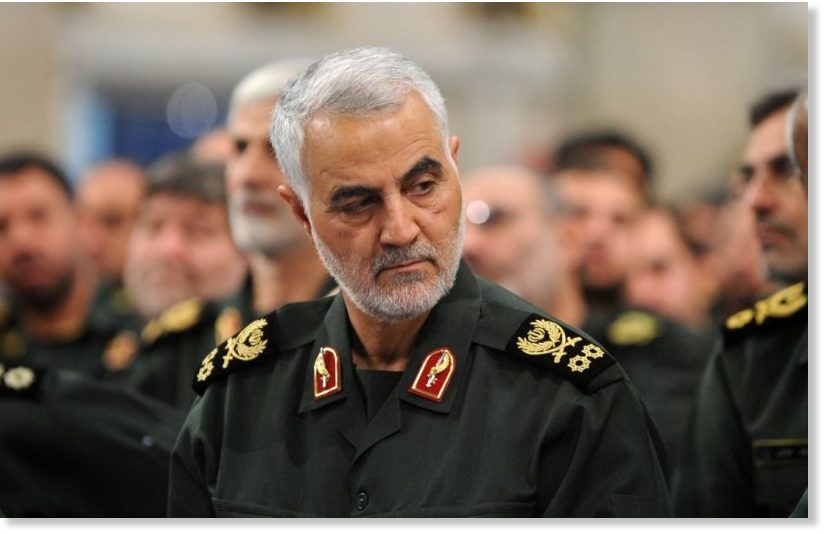
Qassem Soleimani
© Press Office of Iranian Supreme Leader/Anadolu Agency/Getty ImagesIranian Quds Force commander Qassem Soleimani
Kata'ib Hezbollah in Iraq hinted at the involvement of high-ranking officials in the assassination of the commander of the Quds Force, Major-General Qassem Soleimani, and the deputy commander of the Popular Mobilization Forces, Abu Mahdi Al-Muhandis, on January 3rd.

In a statement, Kata'ib Hezbollah accused "one of the ministers in Iraq with the intelligence chief of assisting in the killing of Soleimani and Al-Mohandis," and expressed its readiness to provide evidence to the former prime minister, Adel Abdul-Mahdi, exclusively.

They said in statement posted on their official website, "There is no doubt that Al-Kazemi (intelligence chief) was involved in the killing of the leaders," adding that "this historical crime was done with the knowledge of one of the three ministers that facilitated this cowardly act."

Comment: Kata'ib Hezbollah's suspicions are well-founded. Iran's response to the assassination was very... 'stage-managed', shall we say: much fiery rhetoric but not much in the way of a surprise counter-attack against the US. It remains to be seen what if any evidence this organization will present to the former Iraqi PM and perhaps make public, but in the meantime, we note that the issue has become very quiet since the world apparently stood 'on the brink of WW3' back in early January. Additionally, the Iranians have said nada about the downing of the Ukraine Airlines plane, which seemed pretty obviously, to us, to have been the result of its air defense system being tricked into doing so.

It's as if the Iranian leadership just wanted it all to... die down and go away.