Puppet MastersS


Attention

War between West, Russia no longer hybrid, but real, says Lavrov

SLavrov
© Russian Foreign Ministry/TASSRussian FM Sergey Lavrov
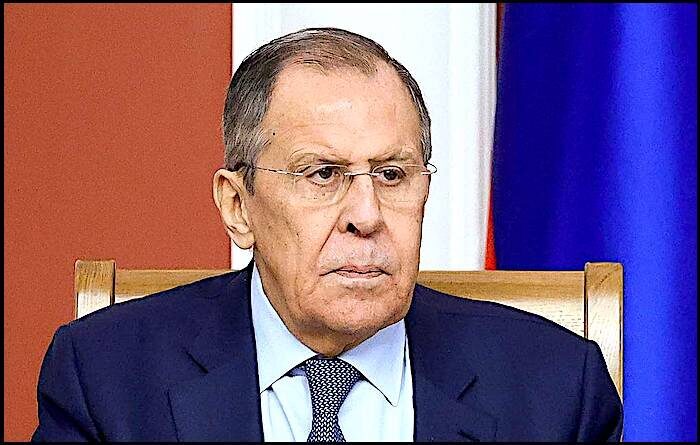
What is going on in Ukraine is no longer a hybrid war, but a real war between the West and Russia, Russian Foreign Minister Sergey Lavrov said on Monday at a press conference following talks with South African Foreign Minister Naledi Pandor.
"When we talk about what is going on in Ukraine, we are talking about the fact that this is no longer a hybrid war, but a real one the West has been preparing for a long time against Russia, trying to destroy everything Russian: from language to culture, which has been in Ukraine for centuries, and forbidding people to speak their native language.

"In Ukraine, this is all common practice. Both the former president [of Ukraine, Pyotr] Poroshenko and the current one [Vladimir] Zelensky, who were elected under the slogan of establishing peace, immediately after being elected turned into war presidents, Russophobe presidents."

Comment: Governments are elected to serve the people. Most do not.


Arrow Up

Why US-China trade is on track to break records despite all the politics

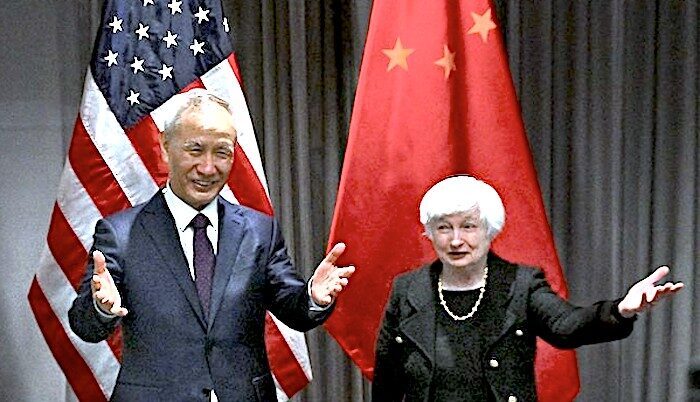
Yellen/LiuHe
© Sebastien Bozon/AFPUS Treasury Secretary Janet Yellen • Chinese vice-premier Liu He • January, 2023
Chinese Vice Premier Liu He and US Treasury Secretary Janet Yellen met in Switzerland last week to manage differences and "prevent competition from becoming anything ever near conflict."

It was the highest-ranking contact between the two sides since their respective presidents met last November - and it couldn't be at a better time. Amid all the talk of decoupling, the importance of the US-China relationship looms large.

According to a recent Bloomberg report, trade between the US and China is on track to break records despite heavy talk from Washington politicians of decoupling from the Asian powerhouse. The report says this is "a signal of resilient links between the world's top economies amid the heated national security rhetoric in Washington."

Federal government data through November 2022 shows that imports and exports last year will add up to an all-time high, or at least come very close. We won't have the complete picture from the US side until February - but Beijing's full-year figures show a record trade balance of $760 billion.

Despite the administration of President Joe Biden's 'Buy American' plan and trade protectionist policies like the Inflation Reduction Act, all signs are pointing to increased trade with China. That is also despite the trade war initiated by his predecessor, former president Donald Trump, and several ongoing World Trade Organization (WTO) disputes.

Hiliter

Germany is rewriting history to blame Russia for its own bad decisions

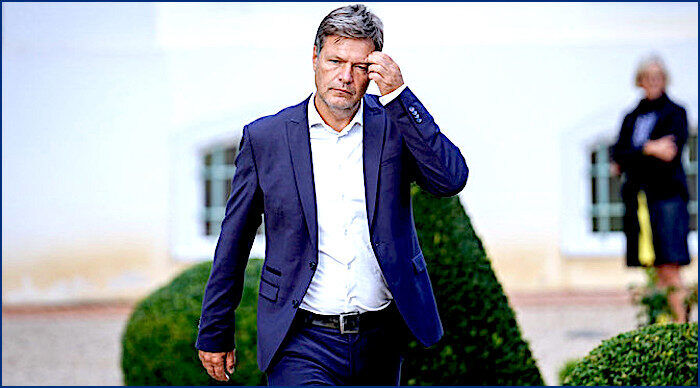
Habeck
© Kay Nietfeld/picture alliance/Getty ImagesFederal Minister Economy and Climate Protection Robert Habeck
The German town of Brunsbuttel, near Hamburg, received a new floating liquefied natural gas (LNG) terminal on Friday, another step in the country's search to replace the gas supplies it now can't get from Russia.

Small protests in the vicinity of the port held by locals unhappy with the new facility belied the official fanfare. Meanwhile, wider criticism has been levelled against Berlin's efforts to boost gas imports by both land and sea, which climate activists believe to be very environmentally unfriendly.

German Vice Chancellor and Federal Minister for Economic Affairs and Climate Action Robert Habeck, of the Green Party, said:
"The new terminal was necessary because half of the gas supply to Germany stopped, because [Russian President Vladimir] Putin has cut it off. Now the supply has been stopped completely and it will not come back to us."
Except that's not how it all went down.

Comment: Self-inflicted, revealing incompetence and bias, Germany should never have closed down its viable sources of energy including cheap Russian gas. It will now 'pay' for its mistakes.
Germany is a long way from fully substituting Russian pipeline gas supplies with liquefied natural gas (LNG), estimates by the country's Economy Ministry show.

According to a document published on the Bundestag website, Germany imported 55 billion cubic meters (bcm) of Russian natural gas in 2021. The document also shows that Germany's new Floating Storage and Regasification Units (FSRUs), which are currently being installed in a number of ports to allow the import of LNG, may reach a similar capacity no sooner than in 2026.

By 2030, those capacities are projected to increase to 76.5 bcm, or about 80% of total German gas consumption in 2021. However, the ministry notes that even once the terminals go online, the global LNG market may not have enough capacity to cover additional demand, which could push these dates further.

The ministry notes that the country's gas storage facilities are currently well-filled, and there is no immediate danger of gas shortages. However, it acknowledges that once the stores run dry later this year and the time comes to refill them for the next heating season, Germany may face shortages. According to calculations by the Oxford Institute for Energy Studies, Germany faces a supply gap of around 30 bcm of gas this year, and the FRSUs are projected to produce less than half of this volume by the end of 2023.

Christian Leye, a Bundestag Left Party representative, told Bloomberg:
"The truth is, there won't be enough in the next three to four years of LNG production capacity in the world to meet the growing demand. So the unspoken strategy is that Germany will continue to pay crazy prices and other, less rich countries go empty-handed."
A problem is the cost of LNG imports, which is estimated to be four times more expensive than Russian pipeline deliveries. Germany may also face supply constraints if the Netherlands goes through with recently announced plans to shut down the Groningen gas field, the region's largest gas deposit.


Beaker

Moscow's special op exposed Pentagon's biolab scheme in Ukraine, says key Russian MP

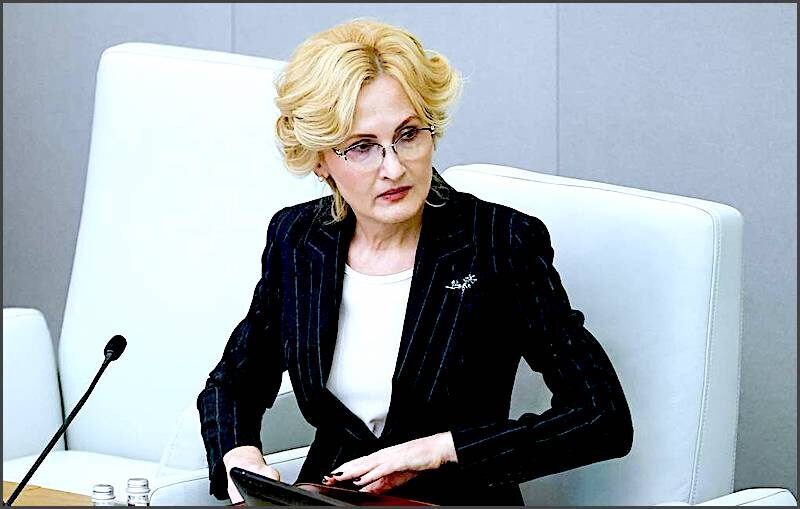
Yarovaya
© Anton Novoderezhkin/TASSRussian State Duma Deputy Speaker Irina Yarovaya
The Pentagon's clandestine biological project was laid bare primarily thanks to Russia's special military operation and the work of the commission, Irina Yarovaya, co-chair of the parliamentary panel - looking into the work of US biolabs in Ukraine and Deputy Speaker of the State Duma, said on Monday.

At a meeting of the commission, she said:
"The disclosure of the Pentagon's secret and very hazardous biological project in Ukraine became possible first of all due to the special military operation and our investigation. And we see that this has sparked enormous interest, including public interest in the United States itself.

"The task of the commission is to set forth all the evidence that has been investigated in a reasoned, consistent and systematic way, which fully confirms the unsound military-biological project run by the US in Ukraine as part of a larger, dangerous and aggressive plan for the military-biological colonization of the world."

Comment: See also:


Attention

Can you smell what the Year of the Rabbit is cooking?

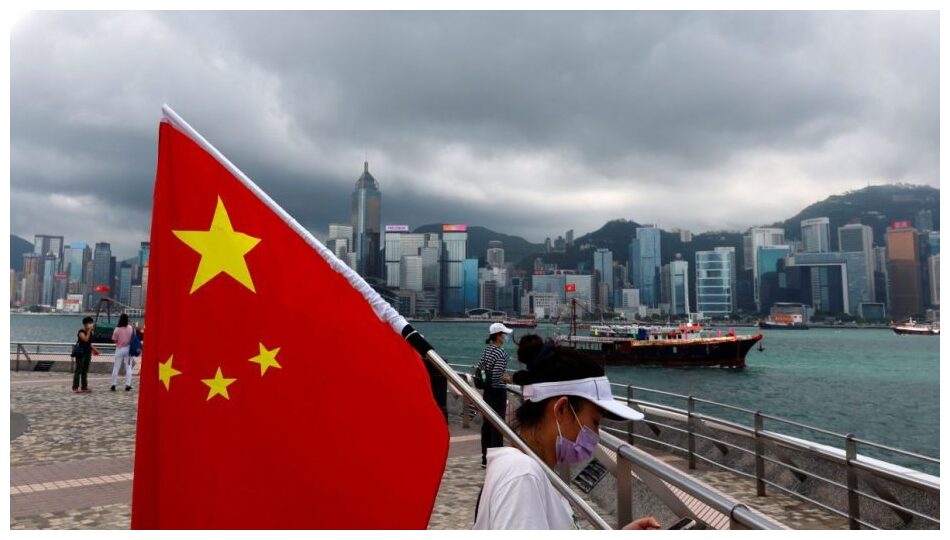
Chinese City
© REUTERS/Tyrone Siu
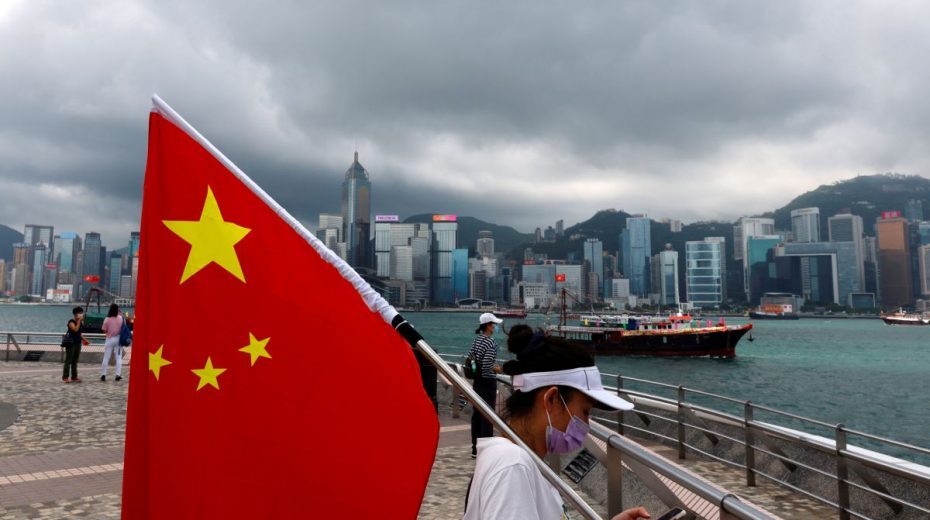
Liu He studied economics at Renmin University in China and got a Master's from Harvard. Since 2018, he's one of China's Vice Premiers - along with Han Zheng, Sun Chunlan, and Hu Chunhua. He's a Director of the Central Financial and Economic Affairs Commission and heads the China Financial Stability and Development Committee. Anyone around the world who wants to know what will drive China's economy in the Year of the Rabbit must pay attention to Liu He.

Davos 2023 has come and gone: an extended exercise in Demented Dystopia with peaks of paroxysm. At least a measure of reality was offered by Liu He's address. A limited but competent analysis of what he said is infinitely more useful than torrents of barely disguised Sinophobic "research" vomited by U.S. Think Tankland.

Liu He pointed to some key numbers for the Chinese economy in 2022. Overall 3% growth may not be groundbreaking; but what matters is value-added for high-tech manufacturing and equipment manufacturing going up by 7.4% and 5.6% respectively. What this means is that Chinese industrial capacity continues to move up the value chain.

Trade, predictably, reigns supreme: the total value of imports and exports reached the equivalent of $6,215 trillion in 2022; that's an increase of 7.7% over 2021.

Liu He also made it clear that improving the wealth of Chinese citizens remains a key priority, as enounced in the 2022 Party Congress: the number of middle class Chinese, by 2035, should jump from the current 400 million to an astonishing 900 million.

Liu He pointedly explained that everything about Chinese reforms revolves around the notion of establishing "a socialist market economy". This translates as "let the market play a decisive role in resources allocation, let the government play a better role." That has absolutely nothing to do with Beijing privileging a planned economy. As Liu He detailed, "we will deepen SOE [State-Owned Enterprises] reform, support the private sector, and promote fair competition, anti-monopoly and entrepreneurship."

China is reaching the next level, economically: that translates as building, as fast as possible, an innovation-driven commercial base. Specific targets include finance, tech, and greater productivity in industry, as in applying more robotics.

On the fin-tech front, a resurgent Hong Kong is bound to play an extremely important role starting by 2024 - most of it in consequence of several Wealth Management Connect mechanisms.

Enter, or re-enter the key role of the Guangdong-Hong Kong-Macao Greater Bay Area - one the key development nodes of 21st century China.

What is known as the Greater Bay Area's Wealth Management Connect is a set up that allows wealthy investors from the nine mainland cities that compose the area to invest in yuan-denominated financial products issued by banks in Hong Kong and Macao - and vice-versa. What this means in practice is opening up mainland China's financial markets even further.

So expect a new Hong Kong boom by 2025. All those dejected by the collective West's morass, start making plans.

No Entry

US defense industry unprepared for war with China

fighter jets china
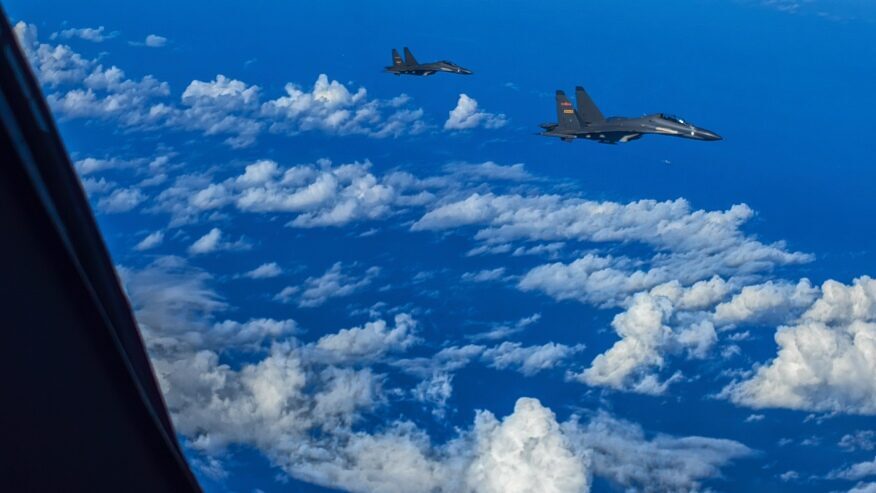
© XinhuaIn this photo released by Xinhua News Agency, fighter jets of the Eastern Theater Command of the Chinese People’s Liberation Army (PLA) conduct a joint combat training exercises around the Taiwan Island on Aug. 7, 2022.
The U.S. defense industry is "not adequately prepared" for "a protracted conventional war" with an enemy such as China, according to a think tank study published Monday.

The Center for Strategic and International Studies (CSIS) ran a war games simulation that found that the U.S. would likely be depleted of some of its munitions, including long-range, precision-guided ones, in less than a week of war with China in the Taiwan Strait.

The U.S.'s use of weapons would exceed the Department of Defense's stockpile, which would make sustaining a long-term war conflict "difficult," especially as China is investing in munitions and other weapons systems five to six times faster than the U.S., according to the study.

The Russia-Ukraine war exposed the shortfalls of the U.S.'s defense industry, CSIS said, with the study finding that the nation's inventories of some weapons, including Javelin anti-armor systems and Stinger anti-aircraft systems, are running low as the U.S. committed to sending more of these systems to Ukraine. The U.S. committed to sending more than 8,500 Javelin systems and more than 1,600 Stinger systems to Ukraine, leaving its own inventory low, according to the report.

Attention

The most egregious mistake

American Demise
© REUTERS/Carlos Barria
It is the miscalculation of this era - one that may begin the collapse of dollar primacy, and therefore, global compliance with U.S. political demands, too. But its most grievous content is that it corners the U.S. into promoting dangerous Ukrainian escalation against Russia directly (i.e. Crimea).

Washington dares not - indeed cannot - yield on dollar primacy, the ultimate signifier for 'American decline'. And so the U.S. government is hostage to its financial hegemony in a way that is rarely fully understood.

The Biden Team cannot withdraw its fantastical narrative of Russia's imminent humiliation; they have bet the House on it. Yet it has become an existential issue for the U.S. precisely because of this egregious initial miscalculation that has been subsequently levered-up into a preposterous narrative of a floundering, at any moment 'collapsing' Russia.

What then is this 'Great Surprise' - the almost completely unforeseen event of recent geo-politics that has so shaken U.S. expectations, and which takes the world to the precipice?

It is, in a word, Resilience. The Resilience displayed by the Russian economy after the West had committed the entire weight of its financial resources to crushing Russia. The West bore down on Russia in every conceivable way - via financial, cultural and psychological war - and with real military war as the follow-through.

Yet, Russia has survived, and survived relatively handsomely. It is doing 'okay' - maybe better, even, than many Russia insiders were expecting. The 'Anglo' Intelligence services however, had assured EU leaders not to worry; it's 'slam dunk'; Putin cannot possibly survive. Rapid financial and political collapse, they promised, was certain under the tsunami of western sanctions.

Their analysis represents an Intelligence failure on a par with the non-existent Iraqi weapons of mass destruction. But instead of critical re-examination, as events failed to provide confirmation, they doubled down. But two such failures are just 'too much' to bear.

So why does this 'failed expectation' constitute such a world-shaking moment for our era? It is because the West fears that its miscalculation might well lead to the collapse of its dollar hegemony. But the fear extends well beyond that too - (bad as 'that' would be from the U.S. perspective).

Quenelle - Golden

Erdogan tells Sweden it won't back NATO bid after Quran burning outside its embassy in Stockholm

Erdogan
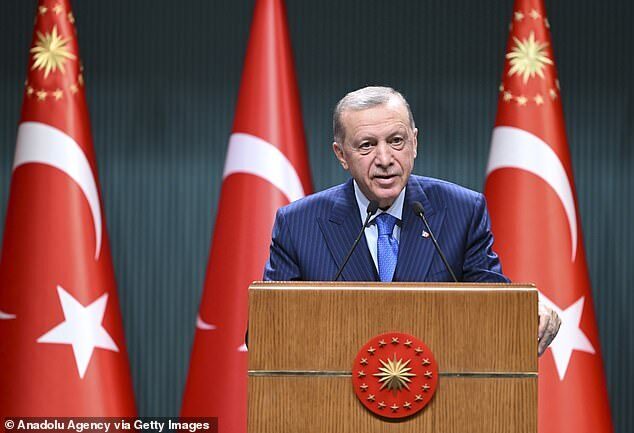
Turkey's President Recep Tayyip Erdogan has warned Sweden on Monday that it should not expect Turkey's support to join NATO
Turkish President Recep Tayyip Erdogan warned Sweden on Monday that it should not expect his backing to join NATO following the burning of the Quran outside Ankara's embassy in Stockholm.

"Sweden should not expect support from us for NATO," Erdogan said in his first official response to the act by an anti-Islam politician during a protest on Saturday that was approved by the Swedish police despite Turkey's objections.

Swedish leaders roundly condemned far-right politician Rasmus Paludan's actions but defended their country's broad definition of free speech.

The protest further jeopardised Sweden's attempt to join NATO in response to Russia's invasion of Ukraine.

Comment: The outlook for the West's scheming isn't looking too bright, but it looks like no one will really 'win', because they threaten to drag the whole world down with them:


Alarm Clock

Estonia wants to close Gulf of Finland to block Russia access to Baltic Sea - reports

gulf of finland
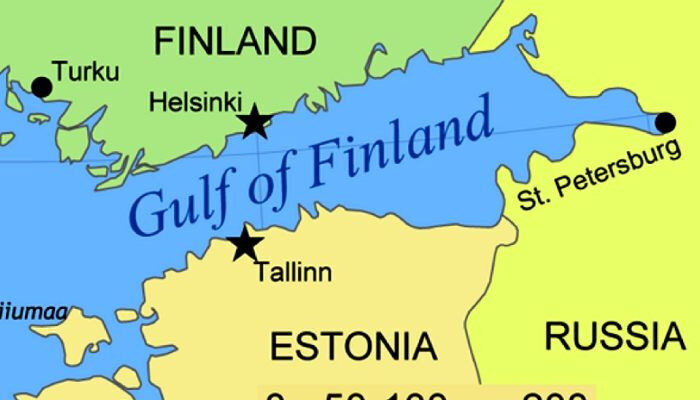
The Estonian government is planning to establish the contiguous zone regime in the Gulf of Finland as proposed by the national Foreign Ministry, ERR writes.

The outlet reports that the measure will allow Estonia to apply its laws in broader territorial waters, prosecute violations of its legal acts, and practically close off the Baltic Sea to Russian ships.

The regime will be applied within the 24 nautical miles from the Estonia coast and cover the whole of the Gulf of Finland. It would have a beneficial impact on Estonia's security, protection of the environment as well as archeological and historical objects found in the sea, Estonian Foreign Minister Urmas Reinsalu explained.

Comment: If true, and if Estonia attempts to follow through, some are speculating that Russia may consider this an act of war. Although this possible development aligns with a number of other signs that a significant escalation is in the works:


Chess

SOTT Focus: Russo-Ukrainian War: The World Blood Pump

cannon
© UnknownIron • Ash • Blood
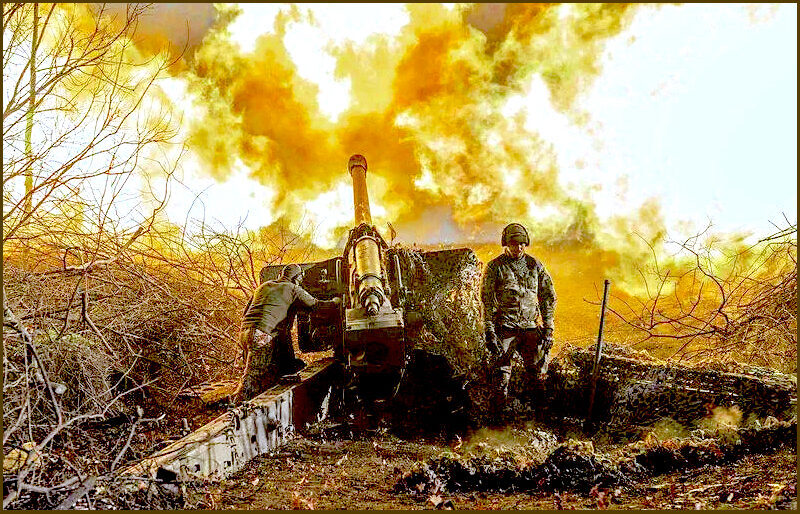
Since Russia's surprise decision to voluntarily withdraw from west bank Kherson in the first week of November, there has been little in the way of dramatic changes to the frontlines in Ukraine. In part, this reflects the predictable late autumn weather in Eastern Europe, which leaves battlefields waterlogged and clogged with mud and greatly inhibits mobility. For hundreds of years, November has been a bad month for attempting to move armies any sort of significant distance, and like clockwork we started to see videos of vehicles stuck in the mud in Ukraine.

The return of static positional warfare, however, also reflects the synergistic effect of increasing Ukrainian exhaustion along with a Russian commitment to patiently attriting and denuding Ukraine's remaining combat capability. They have found an ideal place to achieve this in the Donbas.

It has gradually become apparent that Russia is committed to a positional attritional war, as this maximizes the asymmetry of their advantage in ranged fires. There is an ongoing degradation of Ukraine's warmaking ability which is allowing Russia to patiently maintain the current tempo, while it organizes its newly mobilized forces for offensive action in the coming year, setting the stage for cascading and unsustainable Ukrainian losses.

In Ernest Hemingway's novel, The Sun Also Rises, a formerly wealthy, now down on his luck character is asked how he went bankrupt. "Two ways", he replies, "gradually and then suddenly." Someday we may ask how Ukraine lost the war and receive much the same answer.

Comment: This analysis is a fount of information, logic and strategy - well worth the read.