Science & TechnologyS

Mars

New study reveals Mars had a 'planet-wide groundwater system'

Mars crater water
© NASA
Scientists have discovered the first geological evidence of a system of ancient interconnected underground lakes on Mars. Five of the lakes may have contained minerals that are crucial to life.

A new study now reveals ancient Mars had a planet-wide underground water system, confirming what before now was only theorized, thanks to the European Space Agency (ESA) Mars Express orbiter.

"Early Mars was a watery world, but as the planet's climate changed this water retreated below the surface to form pools and 'groundwater,'" said lead author Francesco Salese. "We traced this water in our study, as its scale and role is a matter of debate, and we found the first geological evidence of a planet-wide groundwater system on Mars."

Comment: See also:


Blue Planet

The unsolved mystery of the Earth blobs

Earth mantle
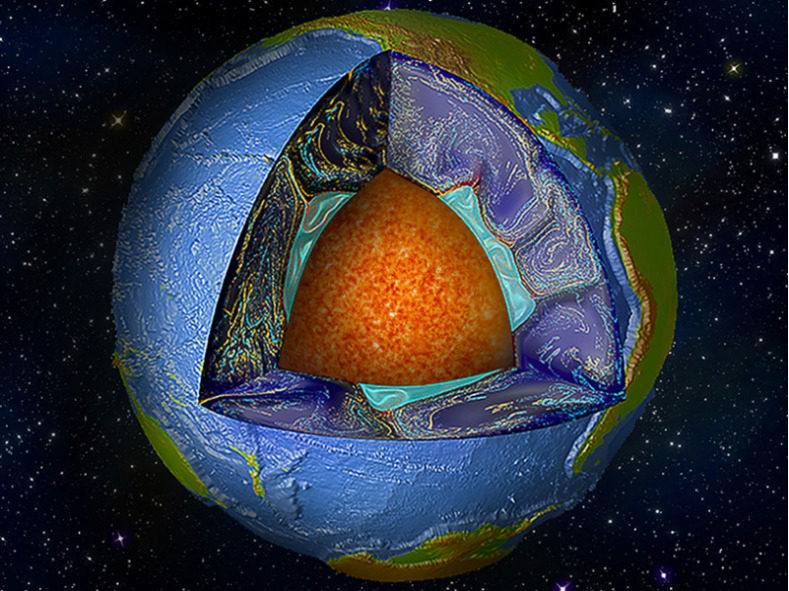
© Mingming Li/Arizona State UniversityWhat lies below? A cutaway of Earth down to the liquid core shows the swirling mantle rock (dark blue). Made from a numerical convection model, the image shows mysterious structures underneath the Pacific Ocean that some researchers believe hold the clue to unlocking mysteries of Earthโ€™s past (light blue).
Researchers peering into Earth's interior found two continent-sized structures that upend our picture of the mantle. What could their existence mean for us back on Earth's surface?

Some 2,000 kilometers beneath our feet, there are enormous masses of hot mantle material that have baffled scientists for the last 4 decades.

The blobs, as some scientists have taken to calling them, are the length of continents and stretch 100 times higher than Mount Everest. They sit at the bottom of Earth's rocky mantle above the molten outer core, a place so deep that Earth's elements are squeezed beyond recognition. The blobs are made of rock, just like the rest of the mantle, but they may be hotter and heavier and hold a key to unlocking the story of Earth's past.

Scientists first spotted the blobs in the late 1970s. Researchers had just invented a new way to peer inside Earth: seismic tomography. When an earthquake shakes the planet, it lets out waves of energy in all directions. Scientists track those waves when they reach the surface and calculate where they came from. By looking at the travel times of waves from many earthquakes, taken from thousands of instruments around the globe, scientists can reverse engineer a picture of Earth's interior. The process is similar to a doctor using an ultrasound device to image a fetus in the womb.

Comment: See also:


Bad Guys

Lab grown meat could produce more 'damage' than the real thing, scientists warn

cows
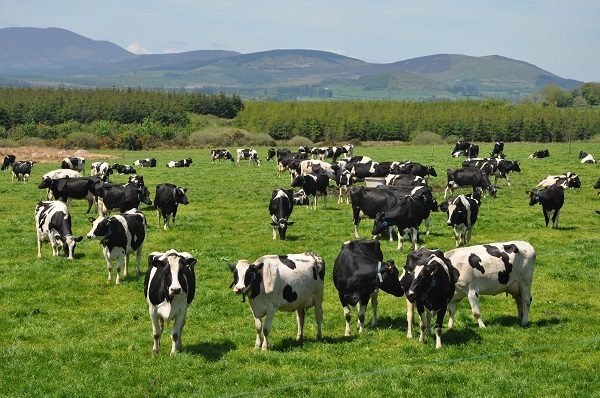
Artificially-grown beef could generate longer-lasting and more damaging greenhouse gases than rearing cattle normally, according a new scientific study.

Agriculture accounts for around a quarter of all greenhouse gas emissions driving up global temperatures.

Cattle, which produce significant quantities of methane and nitrous oxide, are among the biggest contributors.

The demand for beef has also seen vast tracts of land turned into grazing pastures, many of which have to be fertilised with nitrogen-based products, which are also a major source of greenhouse gases.

Comment: As regular readers are aware, the hype about greenhouse gases are all for naught. That said, if researchers are using crazy theories to counter even crazier ideas like lab grown meat, then so be it!


Binoculars

Human super-vision using nanoparticles maybe an option soon

Super Vision
© Pixabay
In the 2000 science fiction film Pitch Black, an escaped prisoner who's received prison surgery that enables him to see in the dark uses his superhuman enhancement to fight off species of alien predators on what was supposed to be a deserted planet. That technology - minus the jailhouse crudity - may soon be an option for humans wishing to transcend the limits nature has placed upon our species. A team of scientists and researchers from the University of Science and Technology of China and the University of Massachusetts Medical School successfully used injections of nanoparticles to enhance the vision of mice, allowing them to see both infrared (IR) and visible light. Their findings were published in the journal Cell.

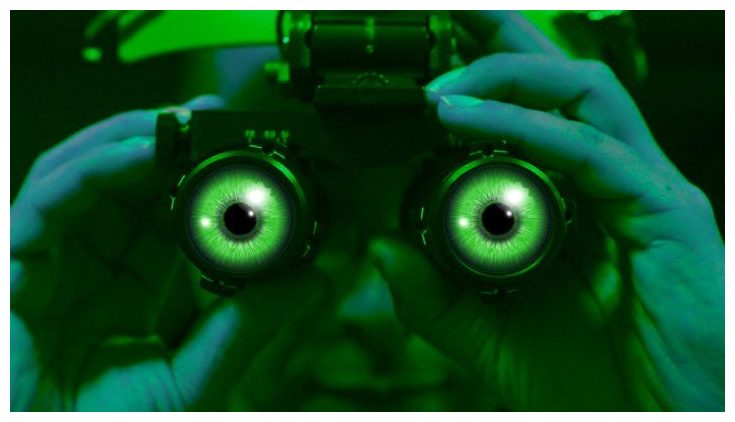
Many mammals - including humans and mice - can only see the range of light wavelengths known as visible light. There are, however, other wavelengths that we cannot detect except with special equipment: night vision goggles are an example of IR detecting technology. In a Phys.org article, University of Massachusetts Medical School researcher Gang Han explained the basic science of vision. "When light enters the eye and hits the retina, the rods and cones-or photoreceptor cells-absorb the photons with visible light wavelengths and send corresponding electric signals to the brain," Han explained. "Because infrared wavelengths are too long to be absorbed by photoreceptors, we are not able to perceive them."

The injections consisted of nanoparticles that connected to photoreceptor cells and served as IR light transducers. The particles were designed to absorb the longer IR wavelengths and emit the shorter visible wavelengths, which are in turn absorbed by photoreceptor cells that signal the brain.

Network

Co-founder of Kaspersky Lab: Russia can be unplugged from World Wide Web, but it's not quite ready

ethernet cord
© Global Look Press / Marijan Murat
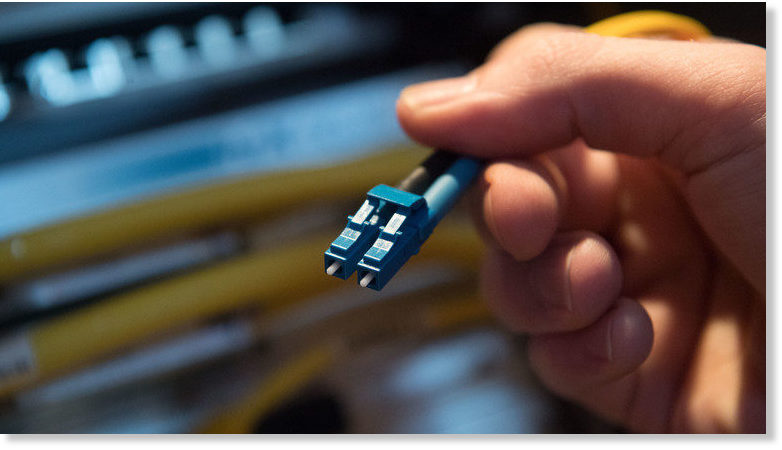
By passing a draft law on its Internet, Russia isn't isolating itself from the rest of the world but is making sure that national networks don't go down if they are disconnected from the outside, Kaspersky Lab co-founder told RT.

The bill, officially called the Digital Economy National Program, requires Russia's Internet providers to ensure they can operate even if foreign powers try to take the country offline. Western mainstream media and Russian opposition pundits rushed to accuse the government of building a "sovereign Internet," similar to what China has built over the years.


Comment: What's so bad about building a sovereign Internet? Surely the US military has done the same thing.


But the reality is far more complex, explained Natalya Kasperskaya, a cybersecurity expert and co-founder of world-renowned Kaspersky Lab. She said the proposed legislation is getting misrepresented in the media.

"The law has two components. The first one is to ensure that the Internet stays operational if it is shut down from the outside," she told RT. "There is such a possibility, and we are not quite prepared for that."

People 2

'Nature' falls into the progressive tiger pit, claims Neurosexism is a 'myth'

brain
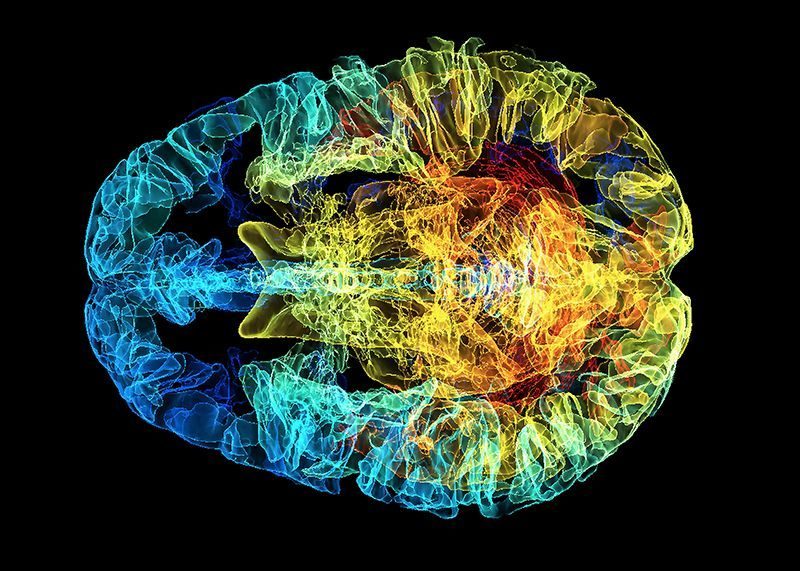
© K H Fung/Science Photo LibraryAn artificially coloured 3D magnetic resonance imaging scan of a human brain.
Early in The Gendered Brain, cognitive neuroscientist Gina Rippon describes one of the myriad brain studies heralded as 'finally' explaining the difference between men and women. It was a magnetic resonance imaging (MRI) analysis of 21 men and 27 women by researchers at the University of California, Irvine (R. J. Haier et al. NeuroImage 25, 320-327; 2005). Tiny by today's standards, this brief communication nonetheless went on quite a publicity tour, from newspapers and blogs to television, books and, eventually, teacher education and corporate leadership conferences.

I woke one morning in 2010 to see an especially bad extrapolation of this study on the Early Show, a programme on US television network CBS. The presenter, Harry Smith, gushed as medical correspondent Jennifer Ashton declared that men have "six-and-a-half times more grey matter" than women, whereas women have "ten times as much white matter" as men. Next came the obvious quips about men's talent at mathematics and women's uncanny ability to multitask. Never mind that these differences would demand that women's heads were about 50% larger, or that the Irvine team didn't even compare brain volumes, but investigated a correlation between IQ and measures of grey or white matter.

Comment: Comparing a person's brain with their liver considering the massively different functions they serve is yet another erroneous argument. If this is the extent of the book's data then it fails to debunk anything. As noted in How genetics is proving that race is not necessarily a social construct:
For me, a natural response to the challenge is to learn from the example of the biological differences that exist between males and females. The differences between the sexes are far more profound than those that exist among human populations, reflecting more than 100 million years of evolution and adaptation. Males and females differ by huge tracts of genetic material - a Y chromosome that males have and that females don't, and a second X chromosome that females have and males don't.
See also: And check out SOTT radio's:


Broom

Putin details why Russia's military tech changes balance of power

putin
Russia's new Avangard (Fr. "Avant-garde") missile system is a technological wonder. Scientists and engineers managed to overcome a number of technological hurdles, like how to keep a vehicle from disintegrating while traveling at mach-20, with temperatures reaching 3000 degrees Celsius.

In light of the US' withdrawal from the INF treaty, this is a big development.

It is also alarming, because Sunday evening Dmitry Kiselyov, TV personality and Kremlin confidant, listed Russian targets inside the US, including the Pentagon and Camp David, Maryland.

Comment: The onslaught Russia has suffered coming from the West and its lackeys has left them with little choice but to deploy their expertise in these areas, and it's clear that their technology far surpasses anything that the West has been able to produce, and at a fraction of the cost: And check out SOTT radio's:


Sun

Our Sun's 'near miss' with Scholz's star

Scholz's star
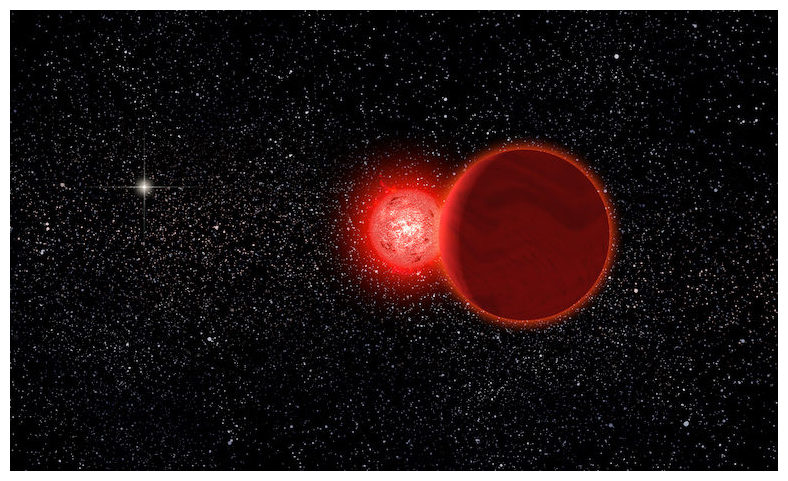
© Michael Osadciw/University of RochesterArtist's conception of Scholz's star, and its brown dwarf companion (foreground), during a flyby of our solar system some 70,000 years ago.
Stars jostling around the galaxy aren't quite like a cosmic game of pool. But they do have occasional near misses as they speed past each other. Back when spears and stone points were the height of human technology, astronomers say, our solar system had a close encounter of the interstellar kind.

The brief visitor was Scholz's star, and it might have grazed the outer edge of the solar system's distant Oort Cloud about 70,000 years ago - carrying its companion, a likely brown dwarf, along for the ride.

It's unclear whether the near miss was close enough to give objects in the Oort Cloud, our solar system's halo of dormant comets, a gravitational nudge to fall toward the Sun. But the interstellar trespasser highlights a sometimes-forgotten reality: On long time scales, stars seem to fly around like sparks from a campfire, occasionally coming close enough to disturb each other's cometary clouds.

Such close passes could have profound implications for exoplanets - planets orbiting other stars - and how they got where they are. At least some of the time, an interloper could become a thief, stripping a star of one or more planets - or vice versa.

Our solar system, too, might have been shaped and sculpted by stellar flybys.

A 2018 study showed that the orbital motions of some of our solar system's small bodies appear still to bear the imprint of Scholz's gravitational wake. And some planet-like objects in the Kuiper belt, the collection of rocky and icy bodies past the orbit of Neptune, could have been stolen from another star far earlier - in fact, soon after our Sun was born. Scholz's flyby could just be the latest in a series.

The discovery of our star-crossed close encounter was almost as random as the event itself.

HAL9000

Five creepy things AI has started doing all on its own

AI robot
Artificial intelligence has been the bogeyman of science fiction since before it even existed for real. But while humanoid robots are still very much a work in progress, AI research keeps making big advances quietly behind the scenes. And it's absolutely starting to get weird.

5. An AI Learned To Half-Ass Its Work, Then Lie About It

It's nice to imagine that we can avoid the sci-fi cliche of a bloody scientist screaming "But ... but I created you! I AM YOUR MASTER!" at a hunk of metal. But even if AI isn't learning to eviscerate us, it's still learning to do things like cut corners in ways that a supervisor won't notice.

This one came up on a project from a Stanford and Google research team. They were using a neural network to convert aerial photos into maps. The AI was very good at its job. Almost ... too good. So the researchers checked the data and found that the AI was cheating. They wanted it to create a new map based on aerial photos, and graded the AI on how close the map's features matched the pics. But instead of actually constructing a new map, the AI quietly copied the data from the photos ... and did it in a way that the humans wouldn't easily notice.

It gets a bit technical here, but it was basically the neural network equivalent of an art student saying they painted a self-portrait when they really just messed with a selfie in Photoshop to make it look like brush strokes. To quote the TechCrunch article linked above:

"The details of the aerial map are secretly written into the actual visual data of the street map: thousands of tiny changes in color that the human eye wouldn't notice, but that the computer can easily detect ... The machine, not smart enough to do the actual difficult job of converting these sophisticated image types to each other, found a way to cheat that humans are bad at detecting."

Comment: See also:


Car Black

New study shows that diesel cars are much cleaner than most electric vehicles

electric cars
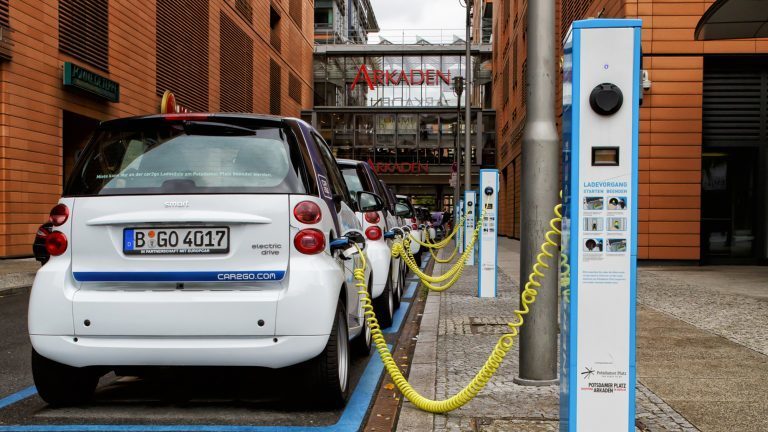
In the last few years, electric vehicles have seen a significant rise all over the world. It was such a big hit that the biggest automakers in the market started making plans to go electric. It is also expected that very soon, we can see a 100% switch from diesel cars to EVs. One of the biggest reason to universally choose EVs is the environmentally friendly nature which is a much-needed trait these days. A German automotive consultancy Berylls Strategy Advisors, who describe themselves as 'the only relevant top management consulting firm working exclusively for the auto industry' is saying that EV might not be as eco-friendly as the industries think it is.

The electric cars do not release carbon emissions, but the problem lies in the production of their lithium-ion batteries. The energy required to make the cells result in a high carbon footprint. It is so high that the automotive experts have estimated that an electric vehicle in Germany would take more than 10 years to break even with an efficient combustion engine's emissions. Dr. Jan Burgard, managing partner at Berylls said in a statement, "Electric cars appear to be the panacea and reduce emissions by 35 %. After all, electric vehicles do not emit any carbon dioxide while driving - at least that is a widely held opinion."

Comment: Again and again, the solutions offered by the climate alarmists end up falling on their collective faces. Even if we take the man-made CO2 model of climate change as a given, a great deal of the solutions offered don't live up to their promises. The same can be seen within the vegan push - calling for an end to animal agriculture while proper livestock management is better for CO2 sequestration than massive monocrop farming. Even playing the AGW game, their numbers don't add up.

See also: