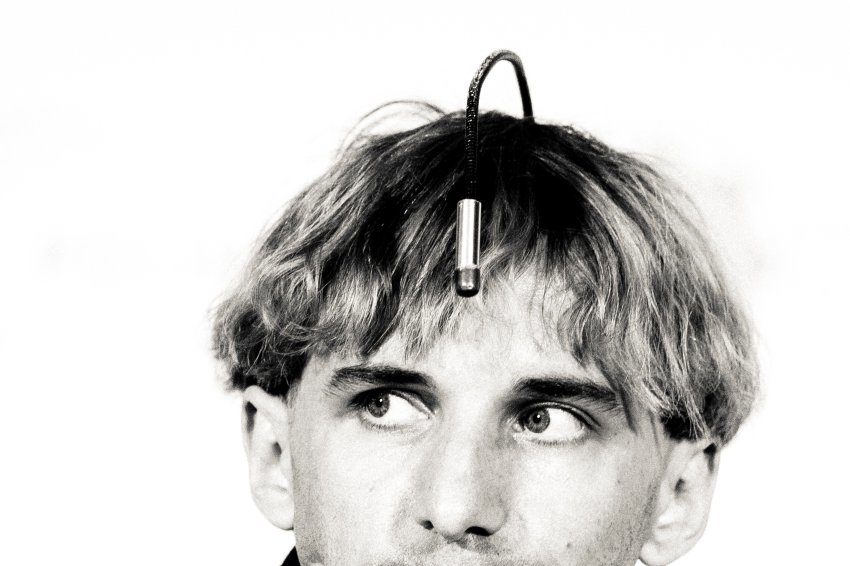
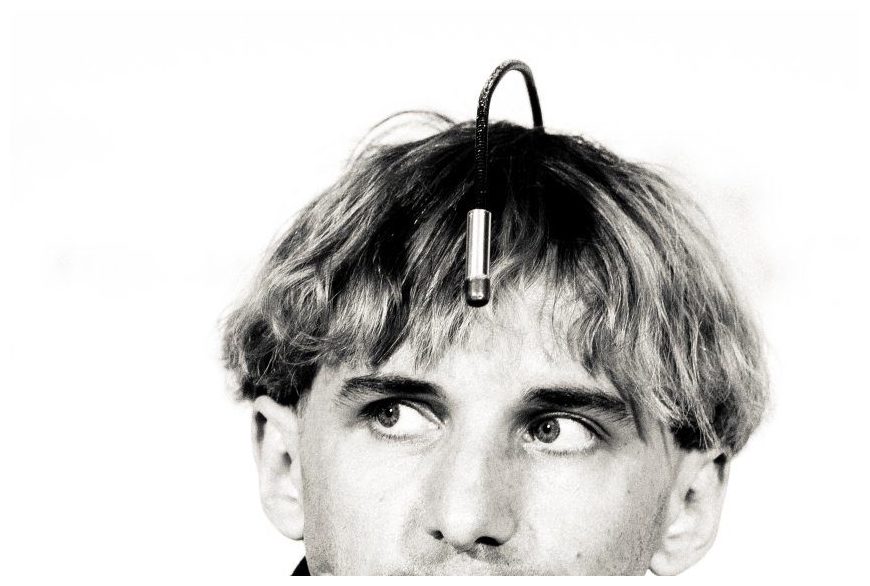
© Rosdiana Ciaravolo/Getty ImagesActivist Neil Harbisson has an antenna implanted in his skull, and is by most definitions a proper cyborg. He is pictured here in Milan in 2017.
The new movie
Alita: Battle Angel has once again drawn our attention to the idea of cyborgs: machine-human hybrids. And as we become increasingly reliant on machines and devices to function normally in our daily lives, computer science and engineering expert Robin R Murphy of Texas A&M University in the US reminds us of the
gap between the law and our capacity to augment our bodies and minds.The main character of
Alita: Battle Angel is a cyborg with an entirely mechanical body housing a biological brain. While some of the elements of the movie are farfetched, many are startlingly
plausible.
Writing in the
journal Science Robotics, Murphy argues that works of science fiction such
Alita and antecedents stretching all the way back to Edgar Allen Poe's
The Man Who Was Used Up, first published in 1839, have done much to anticipate the technological developments and trends of our slow transformation into cyborgs. However, she adds, they have done little to predict many of the ethical and legal complications that will accompany them.
So, what exactly is a cyborg? The word itself is a portmanteau of "cybernetics" and "organism" and was first coined by the Austrian scientist and musician Manfred Clynes in 1960 in a
paper written with the American psychologist Nathan Kline. Their article inspired NASA in 1963 to investigate the possibility of modifying human beings for extended travel in outer space, to produce a human-machine hybrid system.
Beyond space travel, the idea has come to mean many things, ranging from technological interventions in the human body to our increasing cognitive reliance on various devices.













Comment: These rediscoveries are particularly important considering the documented collapse of insects elsewhere in the world. Are we seeing a resurgence of some and the extinction of others or was this just a lucky find? Plummeting insect numbers 'threaten global collapse of nature'
See also: