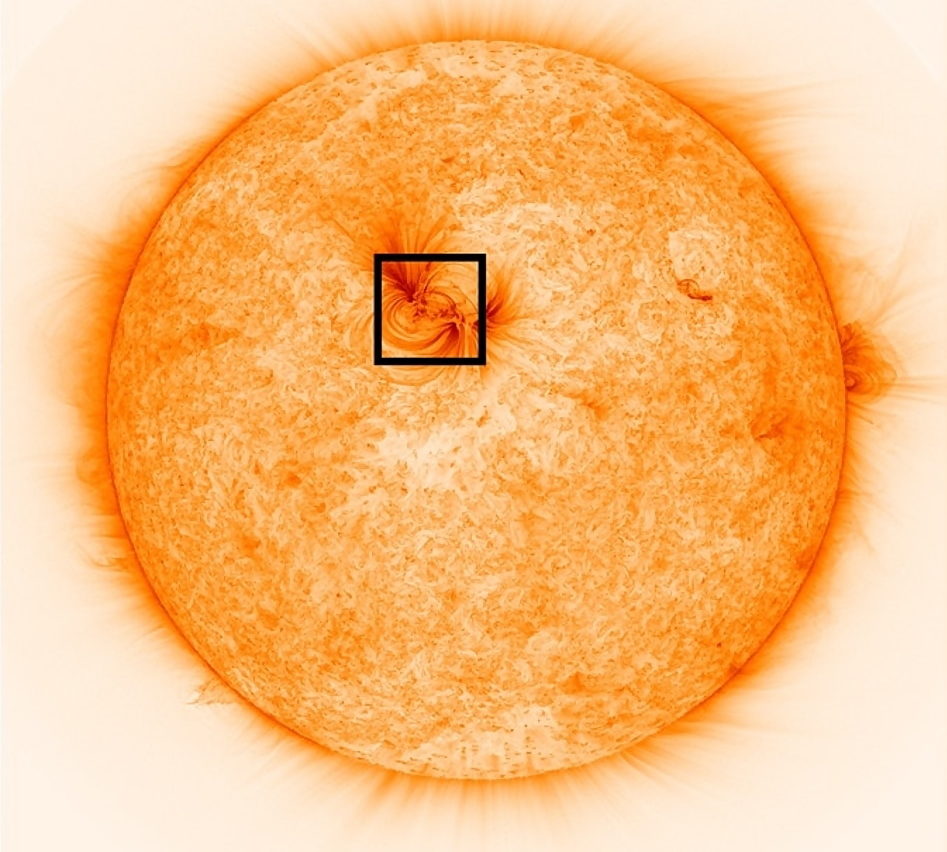
© University of Central LancashireAs the Sun burns through some 5 million tons of hydrogen fuel every second, it emits powerful radiation into outer space.
We are all pretty familiar with the host star that sustains life on Earth, but the
Sun's boiling hot atmosphere still contains many mysteries.
Now, the highest resolution images of the
Sun ever taken reveal previously unknown details of the star's roiling outer layer. And they are truly incredible.
The images were captured by the space-based NASA High-Resolution Coronal Imager telescope (Hi-C), and then analyzed by a team of scientists from both NASA and the University of Central Lancashire in the United Kingdom.
The stunning images reveal the outermost layer of the Sun's atmosphere, previously believed to be somewhat bare, is actually teeming with snake-like, thin, magnetic threads, filled with boiling hot plasma. The plasma, which is essentially hot, electrified gas, reaches millions of degrees Fahrenheit.


















Comment: We may be able to shed some light on the above questions by looking at other planets in our solar system, such as Venus; Pierre Lescaudron in Volcanoes, Earthquakes And The 3,600 Year Comet Cycle writes: See also: