Science & TechnologyS

Biohazard

Flashback Engineered bat virus stirs debate over risky research: Lab-made coronavirus related to SARS can infect human cells

bats coronavirus virus
An experiment that created a hybrid version of a bat coronavirus โ€” one related to the virus that causes SARS (severe acute respiratory syndrome) โ€” has triggered renewed debate over whether engineering lab variants of viruses with possible pandemic potential is worth the risks.

In an article published in Nature Medicine1 on 9 November, scientists investigated a virus called SHC014, which is found in horseshoe bats in China. The researchers created a chimaeric virus, made up of a surface protein of SHC014 and the backbone of a SARS virus that had been adapted to grow in mice and to mimic human disease. The chimaera infected human airway cells โ€” proving that the surface protein of SHC014 has the necessary structure to bind to a key receptor on the cells and to infect them. It also caused disease in mice, but did not kill them.

Although almost all coronaviruses isolated from bats have not been able to bind to the key human receptor, SHC014 is not the first that can do so. In 2013, researchers reported this ability for the first time in a different coronavirus isolated from the same bat population.2

Comment: Nature has since added the following note to this article:
Editors' note, March 2020: We are aware that this story is being used as the basis for unverified theories that the novel coronavirus causing COVID-19 was engineered. There is no evidence that this is true; scientists believe that an animal is the most likely source of the coronavirus.
In re-posting this, we are not suggesting that this particular research was directly involved in engineering SARS-CoV-2 - if indeed it was engineered or 'tweaked' at all.

But it's nevertheless instructive that such research is conducted. Obviously, being public research, it is not implicated in any nefarious bio-weapons or 'bio-hacking' experiments. But its findings could readily be used by firewalled, private networks in which research takes place away from any public scrutiny.


Mars

New potentially habitable exoplanet is similar in size and temperature to Earth

Kepler-1649c
This is an illustration of newly discovered exoplanet Kepler-1649c orbiting around its host red dwarf star.
Astronomers have uncovered a potentially habitable Earth-sized exoplanet 300 light-years away from us.

Out of the 2,681 exoplanets spotted by NASA's Kepler space telescope between 2009 and 2018, this one is the most similar in size, and potentially temperature, to our own planet, according to a new study.

Exoplanets are those found orbiting stars outside of our solar system. Researchers recently uncovered the planet in archival data collected by Kepler.

Kepler was retired in 2018, but its data could lead to more discoveries for years to come. Currently, NASA's TESS mission is the latest planet-hunter seeking out exoplanets.

The planet has been dubbed Kepler-1649c. It's 1.06 times larger than Earth and receives about 75% the amount of light that Earth gets from the sun. This suggests that the surface temperature of the exoplanet could be similar to Earth.

Comment: See also:


Comet 2

Trio of comets grace our skies

New Comet SWAN brightens, while Comet ATLAS continues to fragment and Comet PanSTARRS holds steady.

There's a lot happening in the northern sky these days, namely lots of comets! Comet ATLAS is still worth watching, but look for the new Comet SWAN (C/2020 F8). And you can still catch a glimpse of our old friend, Comet PanSTARRS (C/2017 T2).

COMET CRAZY

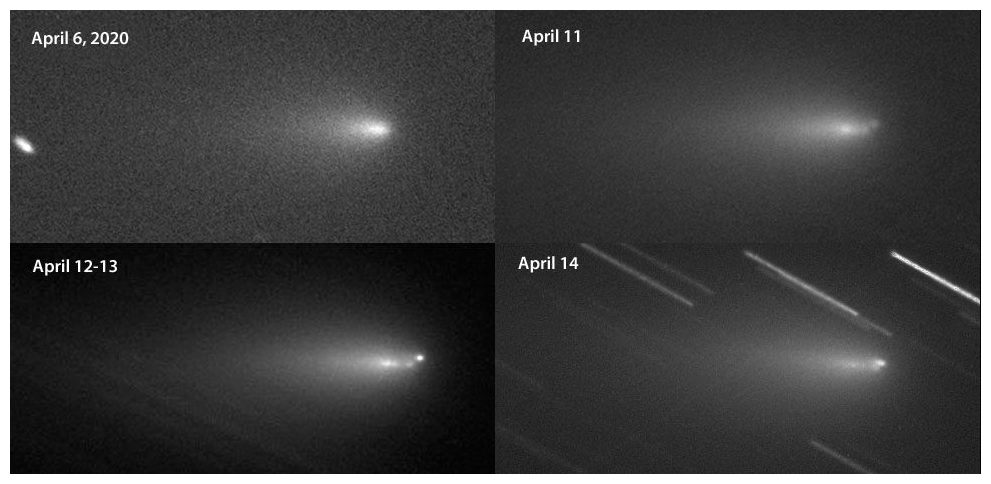
Comet ATLAS (C/2019 Y4) continues to shed fragments while slowly fading and becoming more diffuse. But it ain't dead yet!

Comet ATLAS Fragmenting
© Gianluca Masi and Nick HaighThe evolution of Comet ATLAS's fragmenting pseudo-nucleus is clearly visible in these images taken between April 6th and 14th. The brightest fragment situated off-axis from the other pieces may be the original nucleus. In the final frame note that it has developed a tiny tail of its own.
Observers are still spotting the crumbling object in 100-mm binoculars and (dimly) in 6-inch telescopes under dark skies. On April 14th at 3h UT the comet's overall magnitude had faded to 9.4, but striking changes have occurred within the inner coma. The nuclear region is now clearly elongated east-to-west with hints of fuzzy condensations visible along its length, using magnifications upward of 300ร— and averted vision.

Sun

Solar wind is hotter than expected says new research

Solar Wind
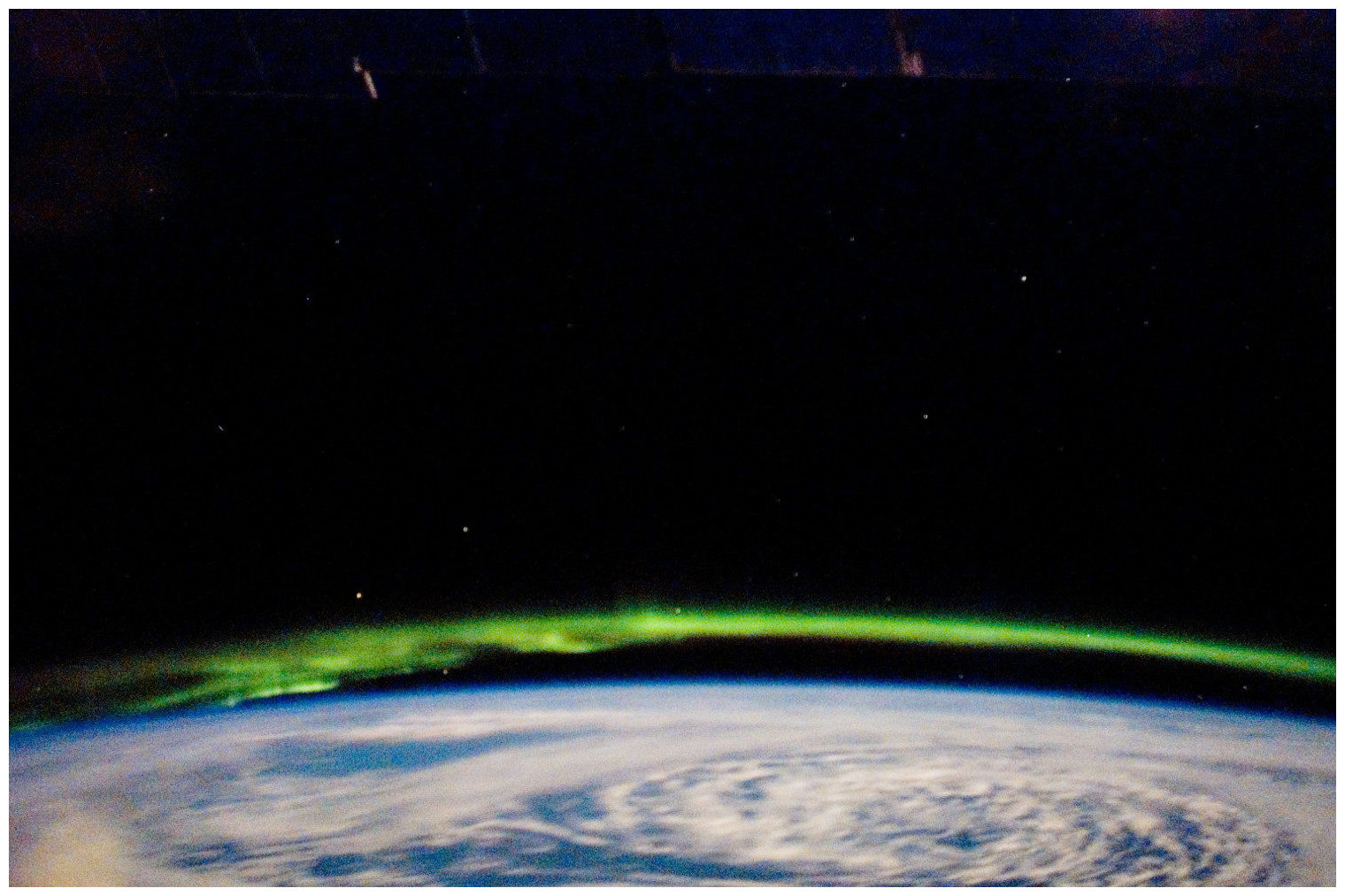
© Cary ForestThe solar wind causes events such auroras, like this one photographed by a U.S. astronaut after docking with the International Space Station. It can also interfere with satellite communications and distort the magnetic field of earth.
When a fire extinguisher is opened, the compressed carbon dioxide forms ice crystals around the nozzle, providing a visual example of the physics principle that gases and plasmas cool as they expand. When our sun expels plasma in the form of solar wind, the wind also cools as it expands through space โ€” but not nearly as much as the laws of physics would predict.

In a study published April 14 in the Proceedings of the National Academy of Sciences, University of Wisconsin-Madison physicists provide an explanation for the discrepancy in solar wind temperature. Their findings suggest ways to study solar wind phenomena in research labs and learn about solar wind properties in other star systems.

"People have been studying the solar wind since its discovery in 1959, but there are many important properties of this plasma which are still not well understood," says Stas Boldyrev, professor of physics and lead author of the study. "Initially, researchers thought the solar wind has to cool down very rapidly as it expands from the sun, but satellite measurements show that as it reaches the Earth, its temperature is 10 times larger than expected. So, a fundamental question is: Why doesn't it cool down?"

Fireball

Oh, what now!? Newfound asteroid the size of a house will fly by Earth on Wednesday

asteroid
© urikyo33 from Pixabay
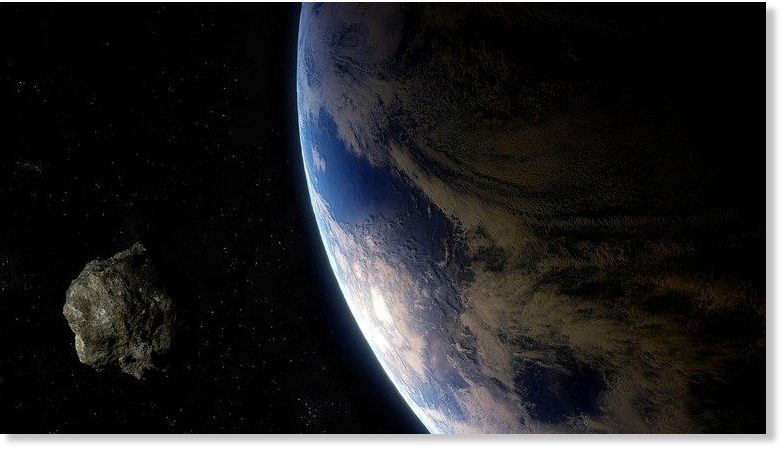
NASA's asteroid defense network has warned of an impending close flyby of a space rock about the size of a house, which will zip past the Earth just inside the orbit of the moon on Wednesday.

Asteroid 2020 GH2 will pass Earth at 19,000 miles per hour and was only discovered on Saturday April 11. With a diameter of between 43 and 70 feet (13-70 meters) wide, GH2 could inflict significant damage were it to crash into our planet. Mercifully, however, it will miss Earth, flying by at a distance of 223,000 miles (359,000 kilometers).

For context, the average lunar distance from Earth is 239,000 miles (385,000 km). For an asteroid to pose a clear and present danger to us, it would need to come within the range of geostationary weather satellites, which operate at a distance of about 22,000 miles (35,000 km) from Earth.

Health

A safe alternative to opioid painkillers could come from tarantula venom

tarantula
© Edgar Stich/iNaturalist, CC-BY-NC
Many people have no love for spiders. But some of the venomous arthropods could hold the key to unlocking a painkiller that rivals opioids in effectiveness, but without the damaging side-effects, such as addiction.

Scientists have modified the neurotoxic venom of a tarantula called the Chinese bird spider (Cyriopagopus schmidti) to produce a protein that acts as a powerful painkiller. So far, it's proven effective in mice.

"Our findings could potentially lead to an alternative method of treating pain without the side-effects and reduce many individuals' reliance on opioids for pain relief," said chemical biologist Christina Schroeder of the University of Queensland in Australia.

Info

New formation theory explains the mysterious interstellar object 'Oumuamua

'Oumuamua-like objects
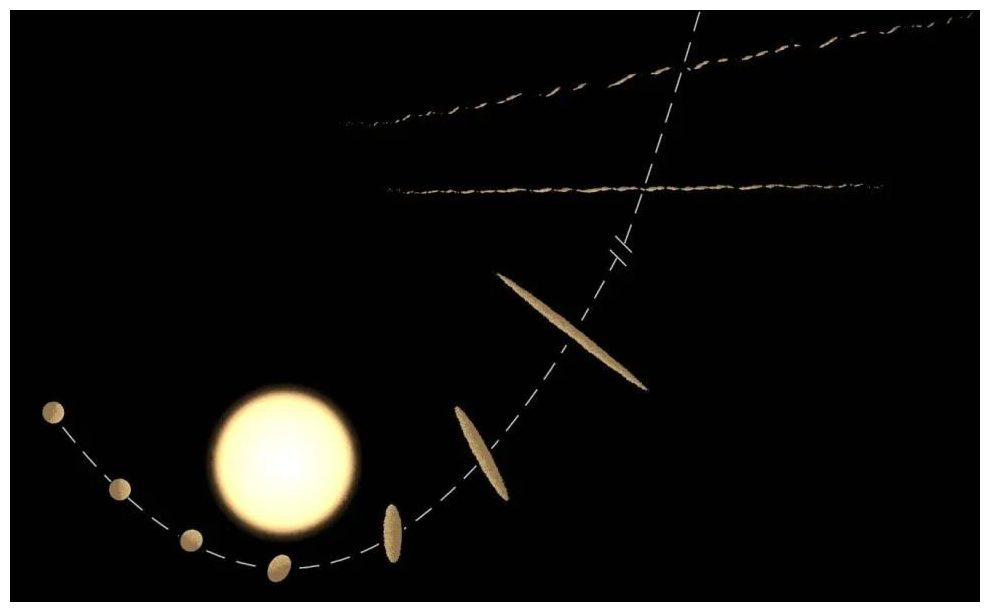
© NAOC/Y. ZhangThis illustration shows the tidal disruption process that can give rise to 'Oumuamua-like objects.
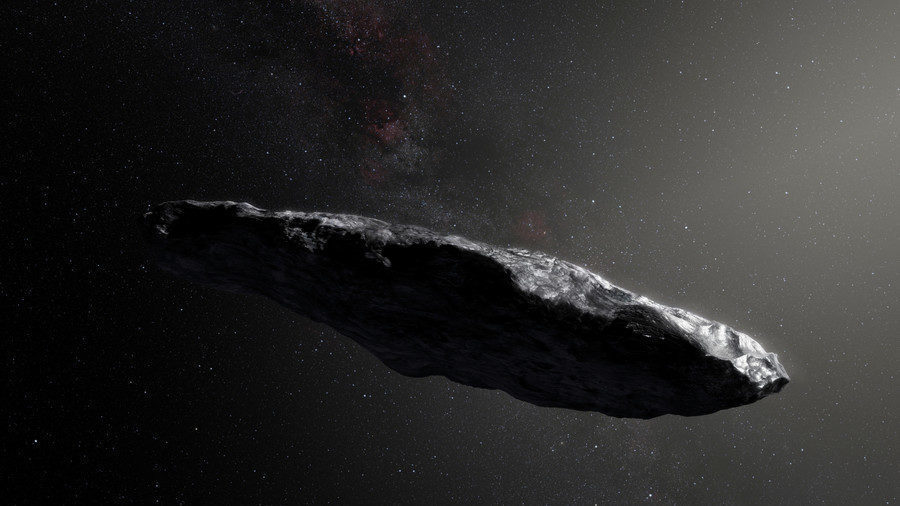
Since its discovery in 2017, an air of mystery has surrounded the first known interstellar object to visit our solar system, an elongated, cigar-shaped body named 'Oumuamua (Hawaiian for "a messenger from afar arriving first").

How was it formed, and where did it come from? A new study published April 13 in Nature Astronomy offers a first comprehensive answer to these questions.

First author Yun Zhang at the National Astronomical Observatories of the Chinese Academy of Sciences and coauthor Douglas N. C. Lin at UC Santa Cruz, used computer simulations to show how objects like 'Oumuamua can form under the influence of tidal forces like those felt by Earth's oceans. Their formation theory explains all of 'Oumuamua's unusual characteristics.

"We showed that 'Oumuamua-like interstellar objects can be produced through extensive tidal fragmentation during close encounters of their parent bodies with their host stars, and then ejected into interstellar space," said Lin, professor emeritus of astronomy and astrophysics at UC Santa Cruz.

Galaxy

Super Duper Supernova! Distant star explosion is brightest ever seen

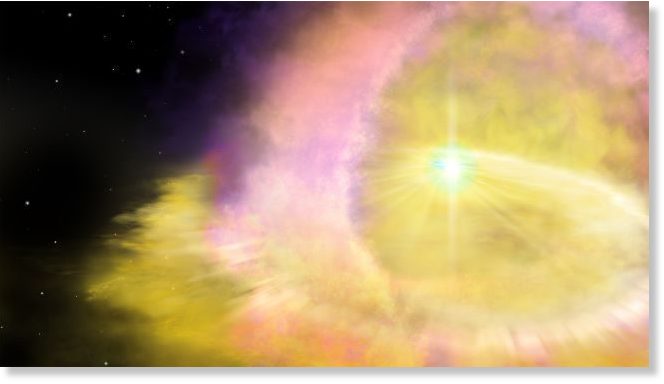
An artist's illustration of a brilliant supernova, the explosive death of a star.
© Aaron Geller (Northwestern University)An artist's illustration of a brilliant supernova, the explosive death of a star.
And it may be an odd type of supernova that has yet to be confirmed observationally.

This supernova is one for the record books.

A mammoth star explosion known as SN2016aps, which occurred in a galaxy about 3.6 billion light-years from Earth, is the brightest supernova ever seen, a new study reports.

"We can measure supernovae using two scales: the total energy of the explosion, and the amount of that energy that is emitted as observable light, or radiation," study lead author Matt Nicholl, a lecturer in the School of Physics and Astronomy and the Institute of Gravitational Wave Astronomy at the University of Birmingham in England, said in a statement.

"In a typical supernova, the radiation is less than 1% of the total energy," Nicholl added. "But in SN2016aps, we found the radiation was five times the explosion energy of a normal-sized supernova. This is the most light we have ever seen emitted by a supernova."

SN2016aps is so odd and so extreme that Nicholl and his colleagues think it may be a "pulsational pair-instability" supernova, in which two big stars merge before the whole system goes boom. Such events are hypothesized, but astronomers have never confirmed their existence observationally.

Bizarro Earth

Is EVERYTHING broken? Earth has a 'leaky core' resulting in iron-rich lava eruptions, researchers find

lava
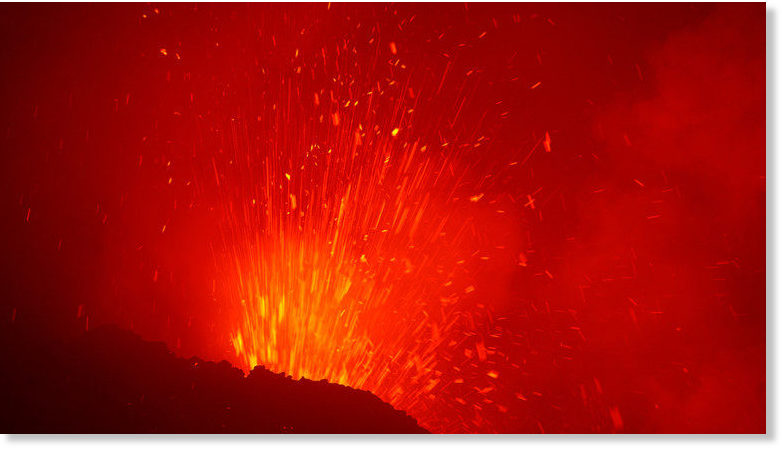
© REUTERS/Antonio Parrinello
Amid growing anxiety over the coronavirus pandemic, it would be nice if we could at least rely upon the solidity of the Earth. Think again, says a new study, which found the inner layer of our planet is discharging metal material.

The Earth's molten core may be leaking iron, according to scientists at the University of California, Davis.

The study concluded that a huge drop in temperature from our planet's liquid iron core to the outer rocky mantle pulls heavier iron isotopes out towards the Earth's surface, while lighter iron isotopes remain within the core.

Meteor

Chinese scientists claim Oumuamua asteroid is part of destroyed exoplanet

Oumuamua
© Reuters / Handout
In 2017, scientists from the University of Hawaii at Manoa spotted an enigmatic celestial body that turned out to be the first known interstellar object passing through the Solar System. Because of its unusual origin, it earned the name Oumuamua, which in Hawaiian means "first distant messenger".

Chinese scientists claim that the mysterious Oumuamua asteroid is a part of an Earth-sized exoplanet that was destroyed by its star. According to the study published in the journal Nature, the planet was ripped apart by tidal forces due to its close proximity to the star. The researchers say that during such a process, debris is ejected into interstellar space. Dr Yun Zhang, the study's lead author, says that this may explain why Oumumua has non-gravitational acceleration.

"If Oumuamua was produced and ejected in the way we suggest, plenty of residual water ice could be activated during its passage through the solar system. The resulting outgassing would cause accelerations that match Oumuamua's comet-like trajectory", Dr Yun Zhang wrote.

Comment: Theories on the origins of Oumuamua abound: