Science & TechnologyS


Butterfly

When the map doesn't work: Evolutionary trees can't reveal speciation and extinction rates

speciation equus horses donkeys zebras
Living species of the genus Equus
Scientists often want to make inferences about what the biological past was like, and how that past gave rise to the present, because doing so allows them to understand the processes that drive evolution. But, writing in Nature, Louca and Pennell1 challenge a major aspect of that enterprise.

Specifically, their work regards the issue of estimating past rates of speciation and extinction, which are, respectively, the rates at which new species arise and existing species go extinct. These rates determine the number of contemporary species of various forms. There are, for instance, around 6,600 species of songbird (passerines), which constitute more than half of all existing bird species, and we might therefore be tempted to say that songbirds have a high rate of speciation in comparison with that of other birds. But it's also possible to speculate that they have a low extinction rate. Louca and Pennell show that the uncertainty is even worse than this: not only can we not estimate these two rates, but also there is an infinite number of different sets of these two parameters that are equally good at describing any particular outcome, such as the number of species of contemporary songbird.


Comment:


Seismograph

Timing of Earth's biggest earthquakes follows a 'devil's staircase' pattern

Scientists have found global earthquake sequences tend to occur in clusters
© Angelo_Giordano/PixabayScientists have found global earthquake sequences tend to occur in clusters -- outbursts of seismic events separated by long but irregular intervals of silence.
The timing of large, shallow earthquakes across the globe follows a mathematical pattern known as the devil's staircase, according to a new study of seismic sequences.

Previously, scientists and their models have theorized that earthquake sequences happen periodically or quasi-periodically, following cycles of growing tension and release. Researchers call it the elastic rebound model. In reality, periodic earthquake sequences are surprisingly rare.

Instead, scientists found global earthquake sequences tend to occur in clusters -- outbursts of seismic events separated by long but irregular intervals of silence.

The findings, published this week in the journal Bulletin of the Seismological Society of America, suggest large earthquakes increase the probability of subsequent seismic events.

Previous models failed to account for the interconnected nature of global fault systems. Seismic event don't occur in isolation. Each major quake alters the dynamics of other fault systems.

While the research suggests large quake sequences are "burstier" than previously thought, they remain as unpredictable as ever. The gaps between bursts are irregular, making it exceedingly difficult to anticipate the next cluster.

"Mathematically described as the devil's staircase, such temporal patterns are a fractal property of nonlinear complex systems, in which a change of any part -- e.g., rupture of a fault or fault segment -- could affect the behavior of the whole system," scientists wrote in their paper.

Fish

'Longest animal ever' discovered in deep-sea canyon off Australia's Ningaloo coast

siphonophore australia
© Schmidt Ocean InstituteAn image shows the coils of the long siphonophore.
Does it really count as one animal though?

Underwater explorers found a 150-foot-long (45 meters) siphonophore — a translucent, stringy creature that, like coral, is made up of smaller critters — living in a submarine canyon off the coast of Australia. It's "seemingly the largest animal ever discovered," they said.

Every individual siphonophore is made up of many little "zooids," which each live lives that are more similar to animals we're used to talking about, albeit always connected to the larger colony. Zooids are born axsexually, and each one performs a function for the siphonophore's larger body, according to a research article published in the journal Developmental Dynamics in 2005. Linked together in long chains, the colonies were already known to reach lengths of up to 130 feet (40 m) according to the Monterey Bay Aquarium — though each siphonophore is only about as thick as a broomstick.

Comet 2

New Comet P/2020 G1 (Pimentel)

CBET 4754 & MPEC 2020-H06, issued on 2020, April 17, announce the discovery of a comet (magnitude ~15) by Eduardo Pimentel on CCD images taken by Jacques, Pimentel, and J. Barros with a 0.28-m f/2.2 astrograph of the "Southern Observatory for Near Earth Research" (SONEAR) at Oliveira, Brazil. The new comet has been designated P/2020 G1 (Pimentel).

We performed follow-up measurements of this object while it was still on the PCCP webpage.

Stacking of 7 unfiltered exposures, 24 seconds each, obtained remotely on 2020, April 15.4 from Q62 (iTelescope network) through a 0.50-m f/6.8 astrograph + CCD + focal reducer, shows that this object is a comet with a compact coma about 15" in diameter and a tail 20" long in PA 90.

Our confirmation image (click on it for a bigger version)
Comet P/2020 G1 Pimentel
© Remanzacco Blogspot

Microscope 1

Transposons: Formerly designated "useless junk", now speculated to drive speciation?

transposons
© Adam DiehlChromatin loops are important for gene regulation because they define a gene's regulatory neighbor-hood, which contains the promoter and enhancer sequences responsible for determining its expression level. Remarkably, transposable elements (TEs) are responsible for creating around 1/3 of all loop boundaries in the human and mouse genomes, and contribute up to 75% of loops unique to either species.
PaV asks us to draw attention to this new paper on transposons:
Until recently, little was known about how transposable elements contribute to gene regulation. These are little pieces of DNA that can replicate themselves and spread out in the genome. Although they make up nearly half of the human genome, these were often ignored and commonly thought of as "useless junk," with a minimal role, if any at all, in the activity of a cell. A new study by Adam Diehl, Ningxin Ouyang, and Alan Boyle, University of Michigan Medical School and members of the U-M Center for RNA Biomedicine, shows that transposable elements play an important role in regulating genetic expression with implications to advance the understanding of genetic evolution.

Transposable elements move around the cell, and, unlike previously thought, the authors of this paper found that when they go to different sites, transposable elements sometimes change the way DNA strands interact in 3-D space, and therefore the structure of the 3-D genome. It appears a third of the 3-D contacts in the genome actually originate from transposable elements leading to an outsized contribution by these regions to looping variation and demonstrating their very significant role in genetic expression and evolution.

University of Michigan, " Transposable elements play an important role in genetic expression and evolution" at Phys.org

Comment: Transposon activity was not always viewed so favorably: Attitudes are shifting, albeit slowly and reluctantly. The author's question is valid. Why is it so hard to believe that just because science doesn't understand the reason something exists, it assumes there is no purpose to it. Nature makes no waste:


Biohazard

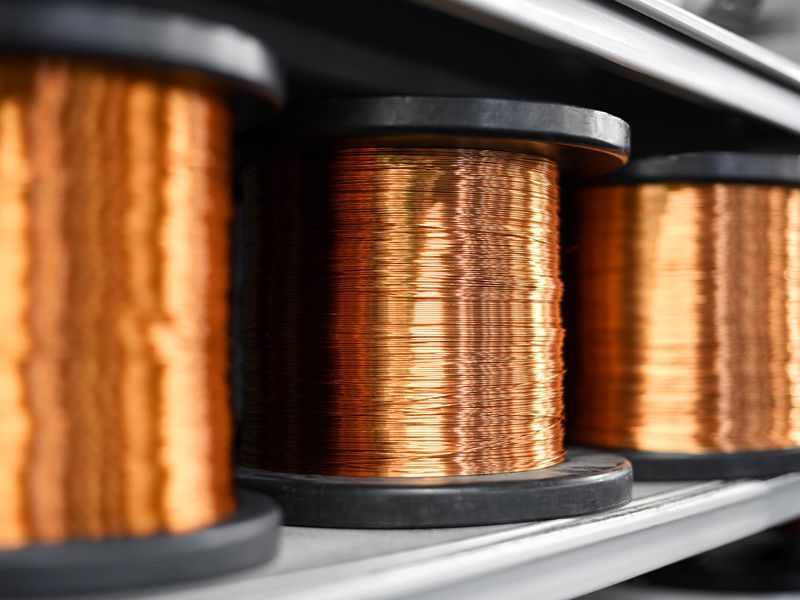
Ancient doctors knew of copper's virus-killing powers

copper wire
© Getty ImagesCopper wire
The SARS-CoV-2 virus endures for days on plastic or metal but disintegrates soon after landing on copper surfaces. Here's why

When researchers reported last month that the novel coronavirus causing the COVID-19 pandemic survives for days on glass and stainless steel but dies within hours after landing on copper, the only thing that surprised Bill Keevil was that the pathogen lasted so long on copper.

Keevil, a microbiology researcher at the University of Southampton (U.K.), has studied the antimicrobial effects of copper for more than two decades. He has watched in his laboratory as the simple metal slew one bad bug after another. He began with the bacteria that causes Legionnaire's Disease and then turned to drug-resistant killer infections like Methicillin-resistant Staphylococcus aureus (MRSA). He tested viruses that caused worldwide health scares such as Middle East Respiratory Syndrome (MERS) and the Swine Flu (H1N1) pandemic of 2009. In each case, copper contact killed the pathogen within minutes. "It just blew it apart," he says.

In 2015, Keevil turned his attention to Coronavirus 229E, a relative of the COVID-19 virus that causes the common cold and pneumonia. Once again, copper zapped the virus within minutes while it remained infectious for five days on surfaces such as stainless steel or glass.

Comment:


Eye 1

Facebook constructs bot-based universe to test out scenarios for manipulating humans, but don't worry, it's safe

facebook and westworld
© Global Look Press via ZUMA Press / Jaap Arriens Youtube
Facebook is using bots to simulate the behavior of users when updates occur on the social meda platform.

The MIT Technology Review on Wednesday, April 15, cited a paper by Facebook engineers, titled "WES: Agent-based User Interaction Simulation on Real Infrastructure." The paper describes how Facebook created a scaled-down version of the platform, called WW, to simulate user behavior with the help of bots.

In WW, hard-coded and machine-learning-based bots act as users with different goals or agendas which play out differently depending on the scenario set up by the engineers.

Comment: RT writer Helen Buyinski explains why this is such a concerning technological development:
While the writers have cloaked their and their bots' activities in several layers of academic language, the report reveals their creations are interacting through the real-life Facebook platform, not a simulation. The bots are set up to model different "negative" behaviors - scamming, phishing, posting 'wrongthink' - that Facebook wants to curtail, and the simulation allows Facebook to tweak its control mechanisms for suppressing these behaviors.

Even though the bots are technically operating on real-life Facebook, with only the thinnest veil of programming separating them from interacting with real-world users, the researchers seem convinced enough of their ability to keep fantasy and reality separate that they feel comfortable hinting in the paper of new and different ways of invading Facebook users' privacy.


Galaxy

A star orbiting a black hole just confirmed a prediction made by general relativity

Schwarzschild precession
© ESO/L. CalçadaThis artist’s impression illustrates the precession of the star’s orbit, with the effect exaggerated for easier visualization.
A single star called S2 looping around the supermassive black hole in the centre of our galaxy just demonstrated a prediction of general relativity in the most extreme environment we can test it in - putting yet another feather in the theory's already bristling cap.

Putting together decades worth of observations, astronomers have shown that S2's orbit isn't a fixed-in-position ellipse; rather, the orbit shifts around like a spirograph drawing - a phenomenon known as Schwarzschild precession.

This is the first time Schwarzschild precession has been detected around a supermassive black hole, demonstrating that it holds true even when we observe the orbits of stars in the most gravitationally extreme environment.

In addition, general relativity equations can be used to accurately predict the orbital changes - and these calculations have precisely matched up with the observations of S2.

Magnify

Flamingos have friends, enemies, and even romantic trysts, 5-year study reveals

flamingos
The sight of tens of thousands of flamingos flocking together to create a huge pink cloud may be one of the wonders of the natural world but research suggests that within these vast congregations, individual birds form intimate, long-lasting friendship groups.

A five-year study of captive flocks in Gloucestershire has found that flamingos spend large amounts of time with specific close "friends" in groups of up to four or five.

The report says that some of these friendship groups appear to avoid others they do not get along with. No loners were spotted but some individuals, dubbed "social butterflies" by the researchers, did flit from group to group.

It has long been known that gatherings of flamingos in the wild, which can number up to 2 million individuals, are complex social structures. It is also known that the birds have very different individual characteristics.

Butterfly

You be the judge on Michael Behe's case for Intelligent Design

Michael Behe
Michael Behe
"That Behe fellow is a known Christian. And he has been seen entering, and leaving, churches. And so therefore this idea of intelligent design, that's a religious idea. That's not science."

With that line, summarizing the approach of many of his critics, biochemist Michael Behe got a laugh of recognition from the audience at the 2020 Dallas Conference Science & Faith this past January.

Behe got a laugh because, as with much of humor, he was caricaturing...but not by a lot. Here Professor Behe invites us to review the sweep of his argument for intelligent design, as he has presented it in his books and other publications, form Darwin's Black Box to Darwin Devolves, from irreducible complexity to the First Rule of Adaptive Evolution. This is, from top to bottom, an empirical argument, as he points out. It can only be fairly evaluated on empirical not religious grounds. Too bad the critics (with some noble exceptions) have avoided doing that.

Comment: