
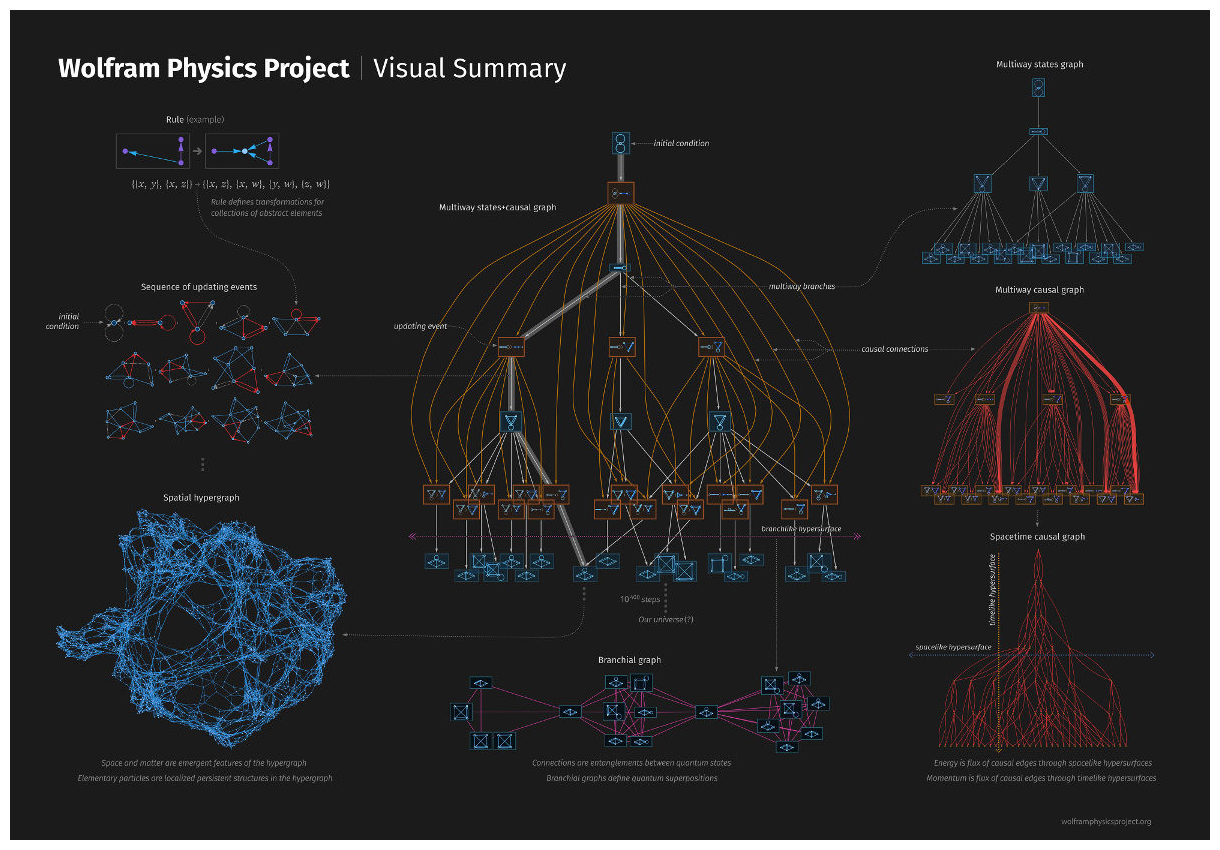
© Stephen Wolfram WritingsView Diagram in 4K
I Never Expected This
It's unexpected, surprising — and for me incredibly exciting. To be fair, at some level I've been working towards this for nearly 50 years. But it's just in the last few months that it's finally come together. And it's much more wonderful, and beautiful, than I'd ever imagined.
In many ways it's the ultimate question in natural science: How does our universe work? Is there a fundamental theory? An incredible amount has been figured out about physics over the past few hundred years. But even with everything that's been done — and it's very impressive — we still, after all this time, don't have a truly fundamental theory of physics.
Back when I used do theoretical physics for a living, I must admit I didn't think much about trying to find a fundamental theory; I was more concerned about what we could figure out based on the theories we had. And somehow I think I imagined that if there was a fundamental theory, it would inevitably be very complicated.
But in the early 1980s, when I started studying the computational universe of simple programs I made what was for me a very surprising and important discovery: that even when the underlying rules for a system are extremely simple, the behavior of the system as a whole can be essentially arbitrarily rich and complex.
And this got me thinking: Could the universe work this way? Could it in fact be that underneath all of this richness and complexity we see in physics there are just simple rules? I soon realized that if that was going to be the case, we'd in effect have to go underneath space and time and basically everything we know. Our rules would have to operate at some lower level, and all of physics would just have to emerge.
By the early 1990s I had a definite idea about how the rules might work, and by the end of the 1990s I had figured out quite a bit about their implications for space, time, gravity and other things in physics — and, basically as an example of what one might be able to do with science based on studying the computational universe, I devoted nearly 100 pages to this in my book A New Kind of Science.






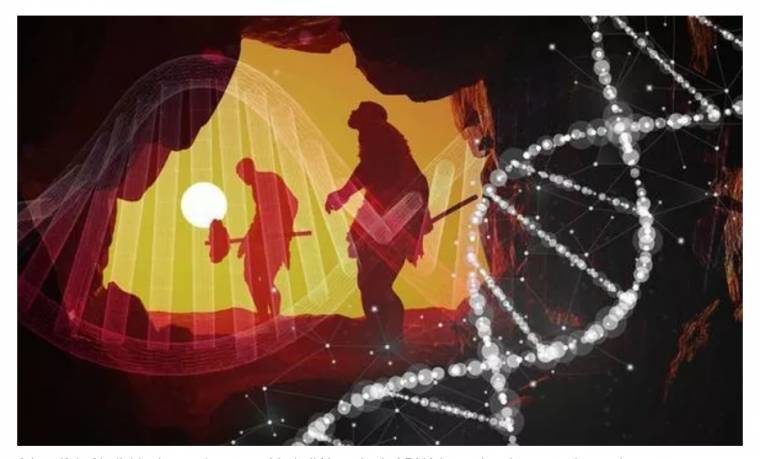







Comment: Laura Knight-Jadczyk explored some of the possible reasons and implications behind this limited interbreeding event in her article The Golden Age, Psychopathy and the Sixth Extinction back in 2011.
See also:
- Earliest interbreeding event between ancient human populations discovered
- First hominins on the Tibetan Plateau were Denisovans - 160,000 years ago
- Early human species may have survived long enough in Indonesia to have interbred with Denisovians
- Previously unknown "proto-hominin" species suggests ancestor of humans evolved in Europe not Africa
And check out SOTT radio's: