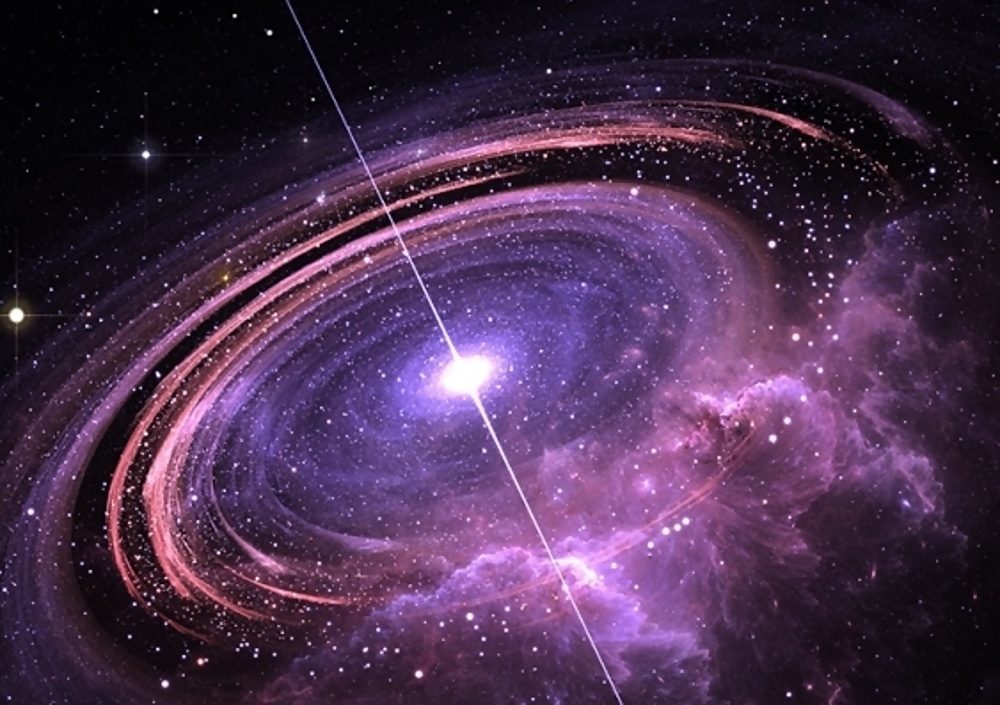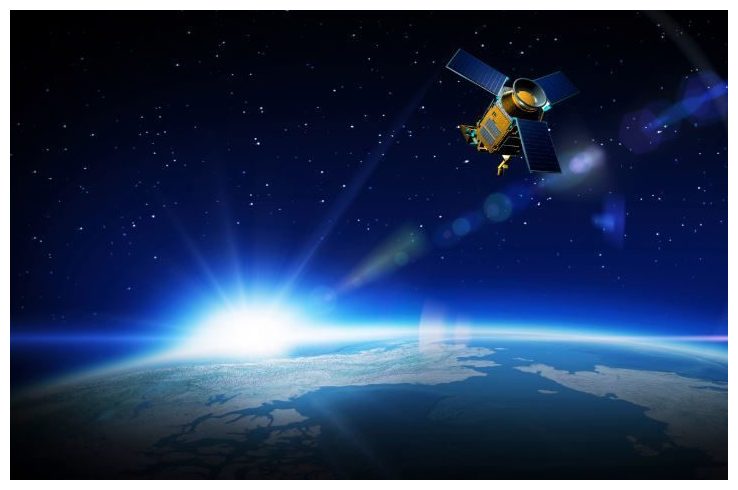
© ESA, NASA and M. KornmesserClash of Titans: This artist's illustration depicts the collision of two 125-mile-wide icy, dusty bodies orbiting the bright star Fomalhaut, located 25 light-years away.
What astronomers thought was a planet beyond our solar system has now seemingly vanished from sight, suggesting that what was heralded as one of the first exoplanets to ever be discovered with direct imaging likely never existed.
Two University of Arizona astronomers conclude that NASA's Hubble Space Telescope was instead looking at an expanding cloud of very fine dust particles from two icy bodies that smashed into each other. Hubble came along too late to witness the suspected collision but may have captured its aftermath. The missing-in-action planet was last seen orbiting the star Fomalhaut, 25
light years away.
"These collisions are exceedingly rare and so this is a big deal that we actually get to see evidence of one," said Andras Gaspar, an assistant astronomer at the University of Arizona's Steward Observatory and lead author of a research paper announcing the discovery. "We believe that we were at the right place at the right time to have witnessed such an unlikely event with NASA's Hubble Space Telescope."
"The Fomalhaut star system is the ultimate test lab for all of our ideas about how exoplanets and
star systems evolve," added George Rieke, a Regents Professor of Astronomy at Steward Observatory. "We do have evidence of such collisions in other systems, but none of this magnitude has been observed in our solar system. This is a blueprint of how
planets destroy each other."
Comment: See also: