Science & TechnologyS


Info

New way to plug a human brain into a computer: Via veins

Human brain, motherboards
© Hakule/Getty ImagesHuman brain, motherboards, chip and artificial intelligence concept and neural tech and brain computer interfaces.
The hard part of connecting a gooey, thinking brain to a cold, one-ing and zero-ing computer is getting information through your thick skull — or mine, or anyone's. The whole point of a skull, after all, is keeping a brain safely separate from [waves hands at everything].

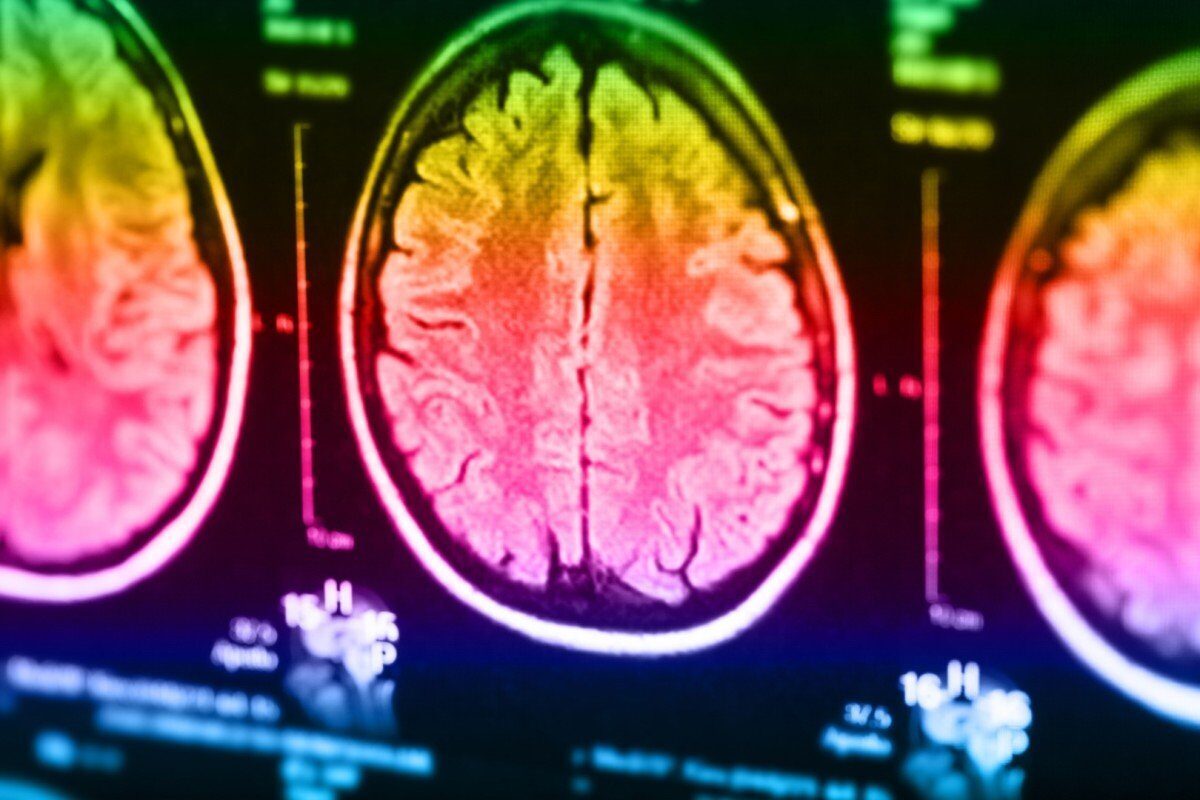
So if that brain isn't yours, the only way to tell what's going on inside it is inference. People make very educated guesses based on what that brain tells a body to do — like, if the body makes some noises that you can understand (that's speech) or moves around in a recognizable way. That's a problem for people trying to understand how the brain works, and an even bigger problem for people who because of injury or illness can't move or speak. Sophisticated imaging technologies like functional magnetic resonance can give you some clues. But it'd be great to have something more direct. For decades, technologists have been trying to get brains to interface with computer keyboards or robot arms, to get meat to commune with silicon.

On Wednesday, a team of scientists and engineers showed results from a promising new approach. It involves mounting electrodes on an expandable, springy tube called a stent and threading it through a blood vessel that leads to the brain. In tests on two people, the researchers literally went for the jugular, running a stent-tipped wire up that vein in the throat and then into a vessel near the brain's primary motor cortex, where they popped the spring. The electrodes snuggled into the vessel wall and started sensing when the people's brains signaled their intention to move — and sent those signals wirelessly to a computer, via an infrared transmitter surgically inserted in the subjects' chests. In an article published in the Journal of NeuroInterventional Surgery, the Australian and US researchers describe how two people with paralysis due to amyotrophic lateral sclerosis (better known as Lou Gehrig's disease) used such a device to send texts and fool around online by brain-control alone.

"Self-expanding stent technology has been well demonstrated in both cardiac and neurological applications to treat other disease. We just use that feature and put electrodes on top of the stent," says Thomas Oxley, an interventional neurologist and CEO of Synchron, the company hoping to commercialize the technology. "It's fully implantable. Patients go home in a couple of days. And it's plug-and-play."

Info

The order of life

A new model that describes the organization of organisms could lead to a better understanding of biological processes.
Two Types of Particles
© MPIDS / Novak, Saha, Agudo-Canalejo, GolestanianParticles of two types (red and green) interact with each other. While particles of the same type inevitably experience reciprocal attraction or repulsion, particles of different types can interact non-reciprocally. Here the green particles chase the red particles. On a large scale, the highly compressed bands of the green particles chase the bands of the red particles. This creates order and movement in the system.
At first glance, a pack of wolves has little to do with a vinaigrette. However, a team led by Ramin Golestanian, Director at the Max Planck Institute for Dynamics and Self-Organization, has developed a model that establishes a link between the movement of predators and prey and the segregation of vinegar and oil. They expanded a theoretical framework that until now was only valid for inanimate matter. In addition to predators and prey, other living systems such as enzymes or self-organizing cells can now be described.

Order is not always apparent at first glance. If you ran with a pack of wolves hunting deer, the movements would appear disordered. However, if the hunt is observed from a bird's eye view and over a longer period of time, patterns become apparent in the movement of the animals. In physics, such behaviour is considered orderly. But how does this order emerge?

The Department of "Living Matter Physics" of Ramin Golestanian is dedicated to this question and investigates the physical rules that govern motion in living or active systems. Golestanian's aim is to reveal universal characteristics of active, living matter. This includes not only larger organisms such as predators and prey but also bacteria, enzymes and motor proteins as well as artificial systems such as micro-robots. "When we describe a group of such active systems over great distances and long periods of time, the specific details of the systems lose importance. Their overall distribution in space ultimately becomes the decisive characteristic", explains Golestanian.

Galaxy

Earth-size planet sighted careening through the galaxy

rogue planet
© Jan Skowron / Astronomical Observatory, University of WarsawAn artist's impression of a gravitational microlensing event by a free-floating, or rogue, planet. In microlensing, gravity from an object causes the light from a background source to bend, an astronomical phenomenon that shows up as distortions in images taken from Earth.
Earth orbits the sun like a ship sailing in circles around its anchor. But what if someone — or something — cut that ship loose? Unbound from any star or solar system, what would become of a tiny world flying helplessly and heedlessly through interstellar space? What happens when a planet goes rogue?

Scientists suspect that billions of free-floating or "rogue" planets may exist in the Milky Way, but so far only a handful of candidates have turned up among the 4,000-or-so worlds discovered beyond our solar system. Most of these potential rogue planets appear to be enormous, measuring anywhere from two to 40 times the mass of Jupiter (one Jupiter is equivalent to about 300 Earths). But now, astronomers believe they've detected a rogue world like no other: a tiny, free-floating planet, roughly the mass of Earth, gallivanting through the gut of the Milky Way.

This discovery, reported today (Oct. 29) in the Astrophysical Journal Letters, may mark the smallest rogue planet ever detected, and it could help prove a long-standing cosmic theory. According to the study authors, this little world could be the first real evidence that free-floating, Earth-sized planets may be some of the most common objects in the galaxy.

Comment: Our own solar system has experienced encounters with a 'rogue planet' in the not so distant past: The Seven Destructive Earth Passes of Comet Venus

Also check out SOTT radio's: MindMatters: The Holy Grail, Comets, Earth Changes and Randall Carlson


Chalkboard

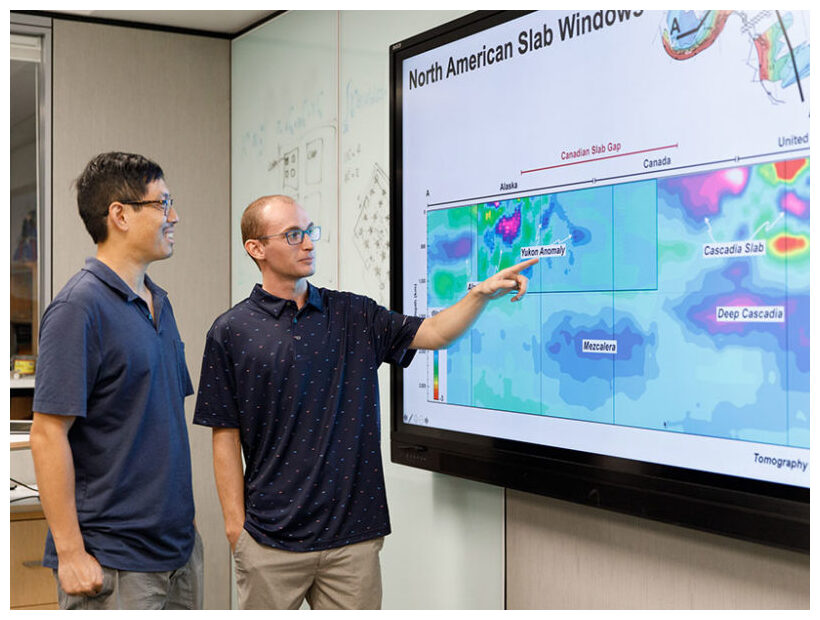
Japanese scientists publish most detailed and complete record yet of Earth's last magnetic reversal

Earth's Magnetic Field
© Science ABC
A better understanding of the geophysical events leading up to the switch and how Earth responded since then.

The Earth's magnetic field, generated 3,000km below our feet in the liquid iron core, is crucially important to life on our planet. The magnetic field is constantly changing in both its strength and direction. It has undergone some dramatic shifts in the past.

A long-standing question has been how fast the field can change. Earth's magnetic fields typically switch every 200 to 300 millennia. Yet, the planet has remained steady for more than twice that now, with the last magnetic reversal occurring about 773,000 years ago.

A new study has offered a better understanding of the geophysical events leading up to the switch and how Earth has responded since then.

Cassiopaea

Another possible Nova in M31

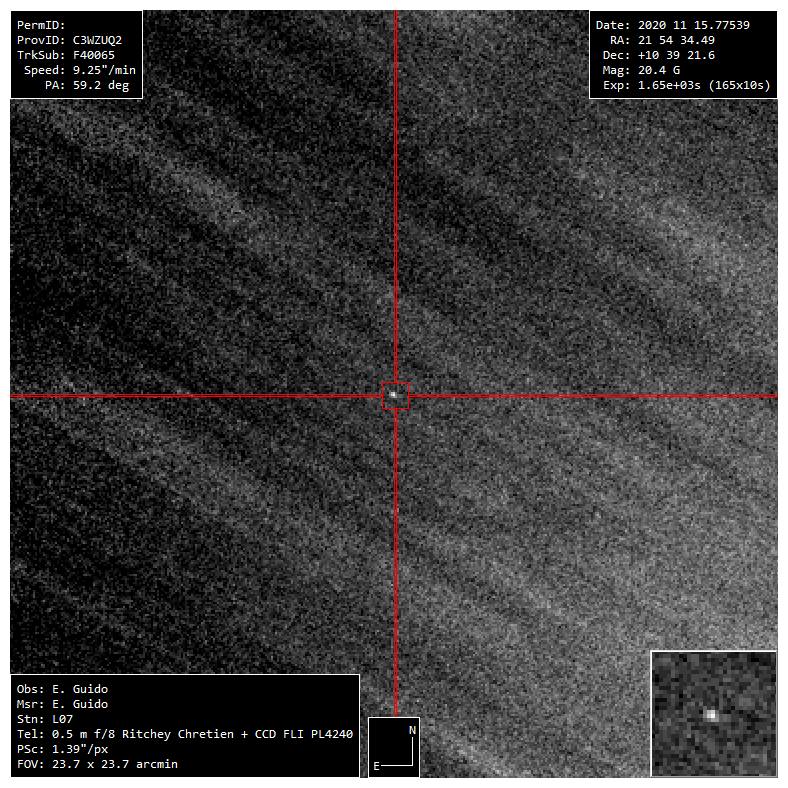
Just few days after the discovery of the nova in M31 designated as AT2020xyv, we report our discovery of another possible nova in M31 on a 240-s R-band CCD frame taken on 2020 Oct. 30.91 UT with the 0.5 m f/8 Ritchey Chretien + CCD FLI PL4240 at MPC Code L07 (Osservatorio Salvatore di Giacomo, Agerola, ITALY), with magnitude R = 18.48 +- 0.10 at coordinates:

R.A. = 00 45 28.80, Decl.= +41 54 10.0 (equinox 2000.0; Gaia DR2).

This transient PNV J00452880+4154100 has been independently discovered by Darnley et al. as reported on ATel #14130 of 31 Oct 2020; 07:32 UT and identified by them as the eruption of recurrent Nova M31N 2008-12a.

Our discovery image of this transient (click on it for a bigger version):
Nova M31
© Remanzacco Blogspot

Info

Analysis of gravitational-wave data leads to wealth of discoveries

Black Hole Merger
© LIGO/T. PyleAn illustration showing the merger of two black holes and the gravitational waves that ripple outward as the black holes spiral toward each other.
A global network of scientists has completed the first major analysis of gravitational wave data, providing exciting insights into some of the most exotic objects in the Universe.

"We are announcing the discovery of 44 confirmed black hole mergers, which is a more than a four-fold increase in the number of previously known gravitational-wave signals," says Shanika Galaudage from Australia's Monash University, who was part of the research team.

"With so many black holes to study, we can start to answer deep questions about how these systems came to merge."

It's been just five years since physicists shook the scientific world with the long-sought-after detection of gravitational waves. This Nobel Prize-winning feat recorded the ripples in spacetime created by a colossal crash between two orbiting black holes - a phenomenon first predicted by Einstein's theory of general relativity.

Since then, detections have generally been announced one by one. But now, as detectors such as the LIGO and Virgo observatories improve, observations have exploded.

"Gravitational-wave astronomy is revolutionary - revealing to us the hidden lives of black holes and neutron stars," says Christopher Berry, co-author and astrophysicist from the University of Glasgow. "In just five years we have gone from not knowing that binary black holes exist to having a catalogue of over 40."

These new detections create a diverse family portrait of black hole binaries, showing that they are stranger and more common than thought, as well as illuminating their origins.

Chart Bar

How Covid deaths are over-counted

covid suits
Who you gonna call? Virus busters
The system for counting deaths from Covid is not working properly and we are over-counting Covid deaths. This can be fixed, easily, by improving cross-checking and retesting all alleged positive PCR test results. Accurate data is a basic prerequisite for good policy choices. The remedial steps needed are simple and relatively inexpensive. Central government should mandate them to be done immediately.

When trying to understand the impact of increased testing on case numbers we look to the percentage of tests reported as positive. In a similar way, it is important to double check other data points against each other, as percentages, to truly understand how the epidemic is progressing. Using this approach, it appears that we are over-counting deaths because there are not enough severely sick people from Covid to account for them. In other words, there are proportionately more Covid deaths per case and per hospital admission since the Summer. This paper explains this phenomenon and calls for proper scientific cross-checking to be instituted before a Covid outbreak is declared.

Contradictions in the data

The ONS carry out random testing of the population to estimate how many people have Covid in the UK each week. A sample of people are randomly tested and then modelling is used to predict what proportion of the population test positive at that time. This estimate includes all 'asymptomatic cases' so should be higher than the number that eventually come forward with symptoms and are diagnosed as true positive cases. (Whether asymptomatic cases can be considered 'true' infections is a separate matter entirely, which will not be discussed here.)

Butterfly

Finnish daycares built a 'forest floor', and it changed children's immune systems for the better

child play dirt immune system
© Halfpoint Images/Getty Images
Playing through the greenery and litter of a mini forest's undergrowth for just one month may be enough to change a child's immune system, according to a small new experiment.

When daycare workers in Finland rolled out a lawn, planted forest undergrowth such as dwarf heather and blueberries, and allowed children to care for crops in planter boxes, the diversity of microbes in the guts and on the skin of young kids appeared healthier in a very short space of time.

Compared to other city kids who play in standard urban daycares with yards of pavement, tile and gravel, 3-, 4-, and 5-year-olds at these greened-up daycare centres in Finland showed increased T-cells and other important immune markers in their blood within 28 days.

SOTT Logo Radio

SOTT Focus: MindMatters: The Weird World of Color Perception and Adaptation: Interview with Dr. Katie Tregillus

tregillus
Everyone likes a good optical illusion, but fewer understand them. Today we interview Katie Tregillus PhD about her research on color perception and adaptation. Katie takes us through the strange and complex world of color, from basic physiology up to conscious perception. How can different people looking at the same image 'see' totally different colors? How do colored lenses change our perception of the world of color? And what are some of the craziest visual illusions and perceptual adaptations known in the field today? All this and more today on MindMatters.


Running Time: 01:28:16

Download: MP3 — 80.8 MB


Blue Planet

DNA tracks mysterious Denisovans to Tibetan cave, humans mated with two of their populations

Baishiya
© DONGJU ZHANG/LANZHOU UNIVERSITYArchaeologists wearing anticontamination gear sampled Baishiya Karst Cave on a winter night.
For today's Buddhist monks, Baishiya Karst Cave, 3200 meters high on the Tibetan Plateau, is holy. For ancient Denisovans, extinct hominins known only from DNA, teeth, and bits of bone found in another cave 2800 kilometers away in Siberia, it was a home. Last year, researchers proposed that a jawbone found long ago in the Tibetan cave was Denisovan, based on its ancient proteins. But archaeologist Dongju Zhang of Lanzhou University and her team wanted more definitive evidence, including DNA, the molecular gold standard. So in December 2018, they began to dig, after promising the monks they would excavate only at night and in winter to avoid disturbing worshippers.

After working from dusk to dawn while temperatures outside plunged to -18°C, then covering traces of their dig every morning, the scientists' persistence paid off. Today in Science, Zhang's team reports the first Denisovan ancient DNA found outside Denisova Cave: mitochondrial DNA (mtDNA) gleaned not from fossils, but from the cave sediments themselves. Precise dates show the Denisovans took shelter in the cave 100,000 years and 60,000 years ago, and possibly as recently as 45,000 years ago, when modern humans were flowing into eastern Asia.


Comment: Modern humans may have been in the area for a lot longer: Previously unknown "proto-hominin" species suggests ancestor of humans evolved in Europe not Africa


Comment: See also: Also check out SOTT radio's: