Science & TechnologyS


Boat

China claims breakthrough 'in dynamic cooperative confrontation' ship drone technology

china drone sub
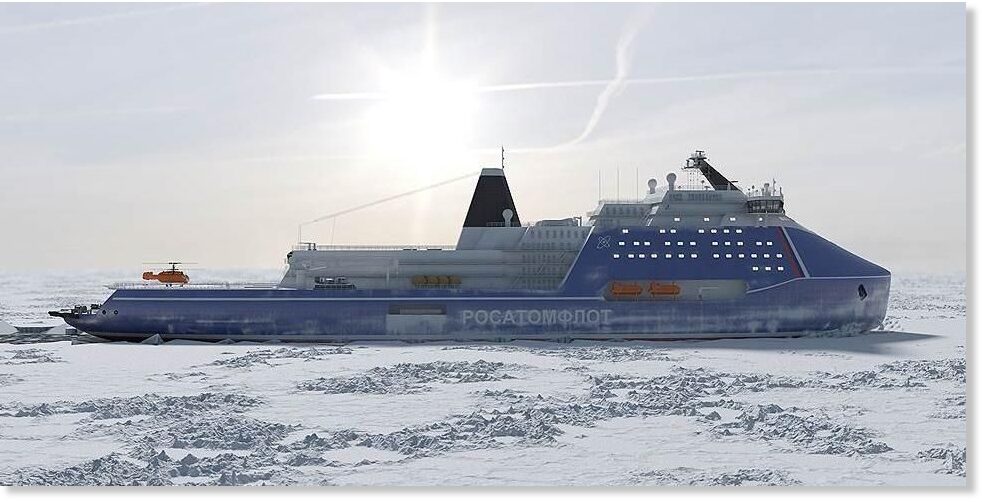
© Yunzhou TechSix unmanned high-speed vessels cruise and guard Chinese sea territory in a highly dynamic, complex environment.
An unmanned high-speed vessel developed by Yunzhou Tech, a leading developer of unmanned surface vehicles, has achieved a breakthrough in its dynamic cooperative confrontation technology, which could quickly intercept, besiege and expel invasive targets, marking a milestone in maritime unmanned intelligence equipment development, the Global Times learned on Sunday.

Compared with manned vessels, ship drones have the advantages of low cost, multiple functions, strong scalability, high mobility and long duration. They can adapt to special and extreme environments, and they have huge advantages in maritime development and rights protection.

A video posted by the company shows six high-speed unmanned vessels cruising and guarding Chinese sea territory in a highly dynamic, complex environment. They conduct collaborative perception, high-speed tracking, evidence collection, interception and expelling unknown targets at sea. During the whole process, the ship drone swarms can make decisions completely on their own.

Comment: And just a few months ago: China's successful hypersonic missile test in August takes US by surprise

See also: And check out SOTT radio's: NewsReal: Why You Should Question Media Reports About China 'Causing Covid' And 'Invading Taiwan'


Nebula

We might not know half of what's in our cells, new AI technique reveals

cell
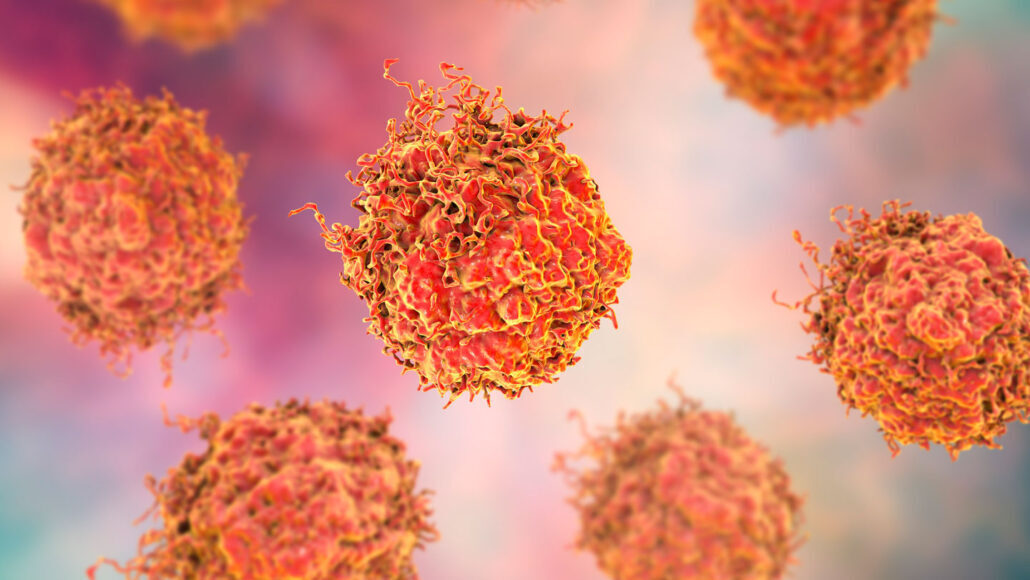
© UC San Diego Health SciencesUC San Diego researchers introduce Multi-Scale Integrated Cell (MuSIC), a technique that combines microscopy, biochemistry and artificial intelligence, revealing previously unknown cell components that may provide new clues to human development and disease. (Artist’s conceptual rendering.).
Most human diseases can be traced to malfunctioning parts of a cell — a tumor is able to grow because a gene wasn't accurately translated into a particular protein or a metabolic disease arises because mitochondria aren't firing properly, for example. But to understand what parts of a cell can go wrong in a disease, scientists first need to have a complete list of parts.

By combining microscopy, biochemistry techniques and artificial intelligence, researchers at University of California San Diego School of Medicine and collaborators have taken what they think may turn out to be a significant leap forward in the understanding of human cells.

The technique, known as Multi-Scale Integrated Cell (MuSIC), is described November 24, 2021 in Nature.

Comment: See also: And check out SOTT radio's:


Clock

In the quantum realm, not even time flows as you might expect

New study shows the boundary between time moving forward and backward may blur in quantum mechanics.
Time Flows
© Aloop Visual and Science, University of ViennaArtistic illustration of a gondolier trapped in a quantum superposition of time flows.
A team of physicists at the Universities of Bristol, Vienna, the Balearic Islands and the Institute for Quantum Optics and Quantum Information (IQOQI-Vienna) has shown how quantum systems can simultaneously evolve along two opposite time arrows - both forward and backward in time.

The study, published in the latest issue of Communications Physics, necessitates a rethink of how the flow of time is understood and represented in contexts where quantum laws play a crucial role.

For centuries, philosophers and physicists have been pondering the existence of time. Yet, in the classical world, our experience seems to extinguish any doubt that time exists and goes on. Indeed, in nature, processes tend to evolve spontaneously from states with less disorder to states with more disorder and this propensity can be used to identify an arrow of time. In physics, this is described in terms of 'entropy', which is the physical quantity defining the amount of disorder in a system.

Dr Giulia Rubino from the University of Bristol's Quantum Engineering Technology Labs (QET labs) and lead-author of the publication, said: "If a phenomenon produces a large amount of entropy, observing its time-reversal is so improbable as to become essentially impossible. However, when the entropy produced is small enough, there is a non-negligible probability of seeing the time-reversal of a phenomenon occur naturally.

Arrow Down

Study reveals 'nepotistic behavior' in some science journals

biomedical science
© Anawat Sudchanham/ShutterstockAn analysis of published scientific research suggests possibly editorial bias "nepotistic behavior" among subsets of biomedical journals, researchers said Tuesday.
Researchers said in a study published Tuesday published by PLOS Biology that they found possible editorial bias and "nepotistic behavior" in a subset of biomedical journals.

The analysis, which included nearly 5 million articles published in nearly 5,500 publications between 2015 and 2019, found that most journals publish work by a large number of authors.

But a small number of journals featured "hyper-prolific" individuals that were published disproportionately more often -- and that their papers were more likely to be accepted for publication within three weeks of submission.

Bacon

Flesh-eating vulture bees evolved a gut that loves meat

Bees/raw chicken
© Quinn McFederick/UCRRaw chicken baits attract vulture bees in Costa Rica
They might not sting, but there is nothing sweet about flesh-eating vulture bees.

Many entomologists will tell you that bees are basically wasps that became vegetarian, but a little-known species of tropical stingless bee, Trigona hypogea, has evolved to have a particular taste for raw flesh. They even have a special meat-chewing tooth, winning them the charming name of "vulture bees".

Now, a paper published in mBio, also describes how the vulture bees have the omnivorous microbiome to match, including familiar bacteria in sourdough, and even take home meaty leftovers.

"These are the only bees in the world that have evolved to use food sources not produced by plants, which is a pretty remarkable change in dietary habits," says entomologist Doug Yanega from the University of California (UC), US, who was involved in the study.


Cassiopaea

Astronomers claim to have deciphered origin of 'tsunami of gravitational waves'

black hole
© N. Fischer, H. Pfeiffer, A. Buonanno/Max Planck Institute & SXS CollaborationSimulation of a black hole merger.
The most recent gravitational wave observing run has netted the biggest haul yet.

In less than five months, from November 2019 to March 2020, the LIGO-Virgo interferometers recorded a massive 35 gravitational wave events. On average, that's almost 1.7 gravitational wave events every week for the duration of the run.

This represents a significant increase from the 1.5-event weekly average detected on the previous run, and a result that has plumped up the number of total events to 90 since that first history-making gravitational wave detection in September 2015.

"These discoveries represent a tenfold increase in the number of gravitational waves detected by LIGO and Virgo since they started observing," said astrophysicist Susan Scott of the Australian National University in Australia.

Comment: See also:


Microscope 1

Latest discoveries in the field of structural biology point to Intelligent Design

DNA representation
© Unsplash
The August 9, 2021 edition of Chemical and Engineering News (C&EN) featured a story in the field of structural biology entitled "How Transcription Gets Its Start." Transcription is the biochemical process that occurs in every cell in the human body when protein synthesis is initiated. It is a complex series of steps that begin in the nucleus when a gene — a section on a strand of DNA — expresses instructions for a specific protein to be produced.

In simple terms, the portion of the DNA molecule where the gene is located is unzipped resulting in a strand of mRNA (messenger RNA). mRNA can be thought of as a digital tape that contains a sequence of 3-letter codes called codons that dictate the precise sequence of amino acids for the protein it is about to produce.

The mRNA leaves the nucleus and enters the site of protein synthesis called a ribosome. It is here that the codons are read and the specific amino acids are delivered by a second RNA molecule, tRNA (transfer RNA) which has its own 3-letter sequences called anti-codons that match the codons on the mRNA. The process continues; the ribosome continues assembling the amino acids one-by-one until the protein has been assembled according to the instructions originally encoded on the gene.

Comment: See also:


Galaxy

Mysterious small & cold object observed 20 billion miles from Earth in 1983 'may have been elusive Planet Nine'

planet nine
Michael Rowan-Robinson, from Imperial College London, turned to the archives in the hope of finding a 'blip' in old data that could point to its existence. The faint green dot above 21h in the centre of this image is what 'could' be Planet Nine
A mysterious, small and cold object seen 20 billion miles from Earth by astronomers in 1983 may have been the elusive Planet Nine, according to a new report.

Astronomers have speculated over the existence of a hidden planet in the outer reaches of the solar system for decades, gaining renewed interest in 2016 when new evidence came to light, but nothing has ever been directly observed.

Michael Rowan-Robinson, from Imperial College London, turned to the archives in the hope of finding a 'blip' in old data that could point to its existence.

He analysed data collected by the Infrared Astronomical Satellite (IRAS) in 1983, finding three potential sources that might just be 'Planet Nine'.

Comment: See also: And check out SOTT radio's:


Archaeology

Paleontologists debunk fossil thought to be missing link between lizards and first snakes

lizard fossil
Filling in the links of the evolutionary chain with a fossil record of a ''snake with four legs" connecting lizards and early snakes would be a dream come true for paleontologists. But a specimen formerly thought to fit the bill is not the missing piece of the puzzle, according to a new Journal of Systematic Palaeontology study led by University of Alberta paleontologist Michael Caldwell.

"It has long been understood that snakes are members of a lineage of four-legged vertebrates that, as a result of evolutionary specializations, lost their limbs," said Caldwell, lead author of the study and professor in the departments of biological sciences and earth and atmospheric sciences.

"Somewhere in the fossil record of ancient snakes is an ancestral form that still had four legs. It has thus long been predicted that a snake with four legs would be found as a fossil."

Comment: Yet another example of twisting the evidence to fit your favorite narrative. If you take it as a given that Darwinian evolution is true instead of looking at the evidence in an unbiased manner, mistakes will follow.

See also:


Info

'Volcanic winter' likely contributed to ecological catastrophe 250 million years ago

Volcanic Winter
© Jagoush - Shutterstock
A team of scientists has identified an additional force that likely contributed to a mass extinction event 250 million years ago.Its analysis of minerals in southern China indicate that volcano eruptions produced a "volcanic winter" that drastically lowered earth's temperatures--a change that added to the environmental effects resulting from other phenomena at the time.

The research, which appears in the journal Science Advances, examined the end-Permian mass extinction (EPME), which was the most severe extinction event in the past 500 million years, wiping out 80 to 90 percent of species on land and in the sea.

"As we look closer at the geologic record at the time of the great extinction, we are finding that the end-Permian global environmental disaster may have had multiple causes among marine and non-marine species," says Michael Rampino, a professor in New York University's Department of Biology and one of the authors of the paper.

For decades, scientists have investigated what could have caused this global ecological catastrophe, with many pointing to the spread of vast floods of lava across what is known as the Siberian Traps--a large region of volcanic rock in the Russian province of Siberia. These eruptions caused environmental stresses, including severe global warming from volcanic releases of carbon dioxide and related reduction in oxygenation of ocean waters--the latter causing the suffocation of marine life.