Animals
S


Attention

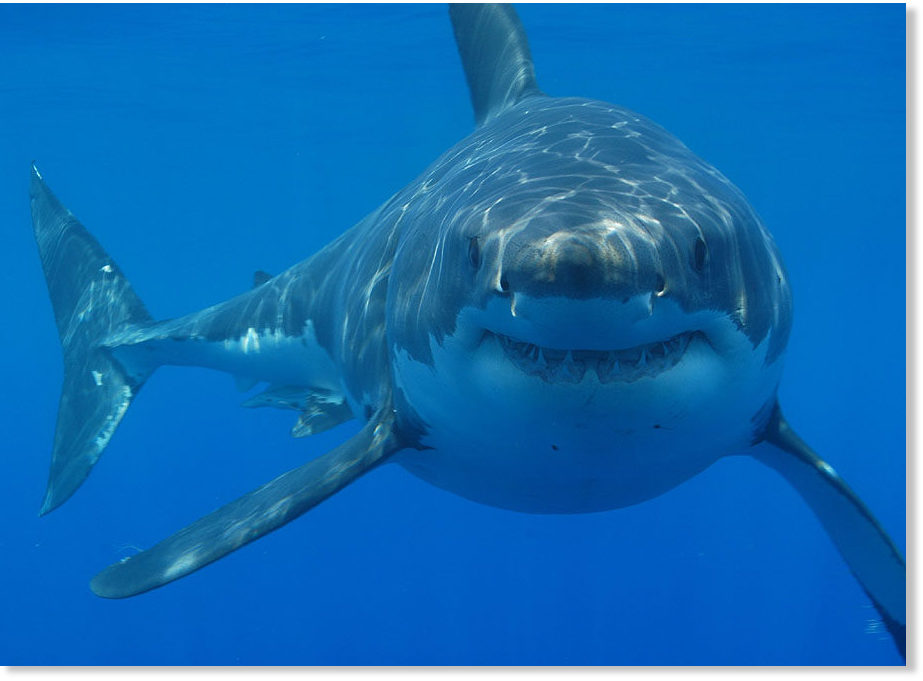
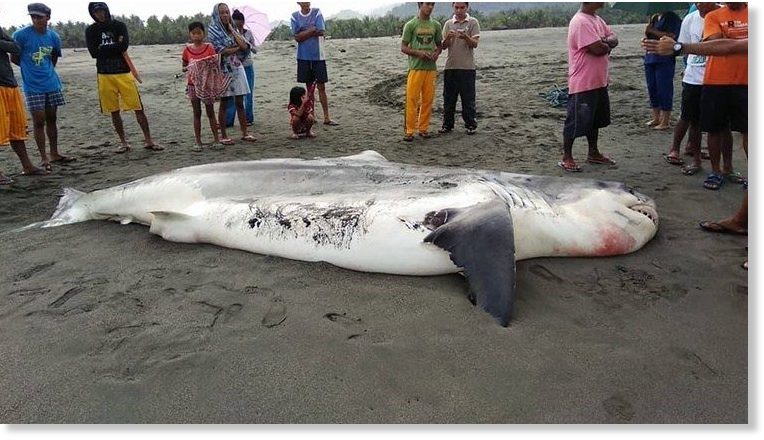
17-feet great white shark found dead on the east coast of Luzon Island, Philippines

17-feet shark
17-feet shark
Fishermen have been warned to take care after a huge Great White Shark washed up off the east coast of Luzon Island.

The 17-feet-long monster was reported in the town of Dipaculao, in Aurora province, today (Wednesday, January 24).

The species is a rare visitor to the warm seas of the Philippines, with only four sightings on record. Nonetheless, it is a protected species by law.

Eddie Fabrigas Rebueno, of the Dipaculao Municipal Disaster Risk Reduction and Management Office, said the find was reported to his office at 6.30am this morning.

He said the shark, a female, did not show any sign of serious injury apart from some bruising on her snout and some missing teeth.

Rose

Not socially constructed: Wild chimp 'girls' play with 'dolls' too

Nature and nurture may both influence gender-based toy choices.
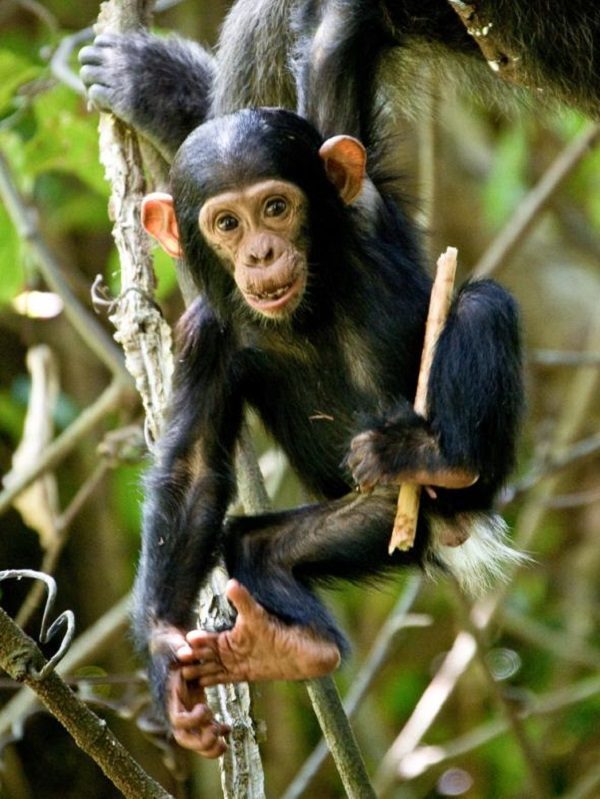
young chimpanzee
© Michael Poliza, National Geographic/Getty ImagesA young chimp in Mahale Mountains National Park, Tanzania (file picture).
It's almost Christmas, and, as the song goes, Barney and Ben hope for Hopalong boots and a pistol that shoots, while Janice and Jen would like dolls that will talk and go for a walk.

Now new research suggests that such gender-driven desires are also seen in young female chimpanzees in the wild - a behavior that possibly evolved to make the animals better mothers, experts say.

Young females of the Kanyawara chimpanzee community in Kibale National Park, Uganda, use sticks as rudimentary dolls and care for them like the group's mother chimps tend to their real offspring. The behavior, which was very rarely observed in males, has been witnessed more than a hundred times over 14 years of study.

"The stick serves no immediate function, they just carry it - sometimes for a few minutes, other times for hours," study leader Richard Wrangham, a biological anthropologist at Harvard University, said via email.

Comment: Today's post modernists want you to believe gender is a social construct and claim biology has nothing to do with it. Yet the facts remain the same, there are 2 sexes and hardwired differences inherent in them. As these examples show, they can't simply be explained away as something created only by society and culture. See also: Rooted in our biology: Revealing insights on behavioral sex differences from our primate cousins


Binoculars

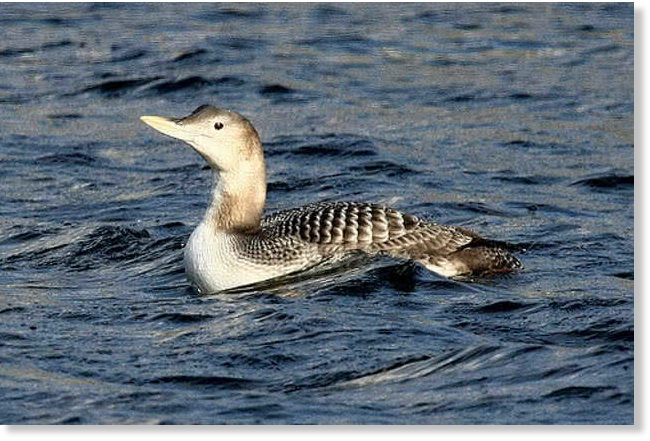
Arctic bird species, seen for the first time in Romania

Yellow-Billed Loon
Yellow-Billed Loon
The yellow-billed loon (Gavia adamsii), an arctic bird species, was spotted on the country's Olt river, the Romanian Ornithological Society (SOR) announced. It is the first time the species is identified in Romania.

The bird was recognized by József Szabó, a founding member of SOR, who was in the area with a SOR team to undertake the winter count of the aquatic birds, which takes place at the beginning of the year. It was spotted close to the Ulmi locality, in southern Romania's Olt county.

The yellow-billed loon, also known as the white-billed diver, is a member of the loon or diver family. It breeds in the Arctic and winters mainly at sea along the coasts of the northern Pacific Ocean and northwestern Norway. It occasionally strays well south of its normal wintering range, and has been recorded as a vagrant in more than 22 countries. It is a specialist fish-eater, catching its prey underwater.

Some 1,000 such birds arrive in Europe yearly. It has been spotted also in Belgium, Austria, Belarus, Bulgaria, but never in Romania so far. The highest population, of some 20,000 birds, can be found in Canada.

Attention

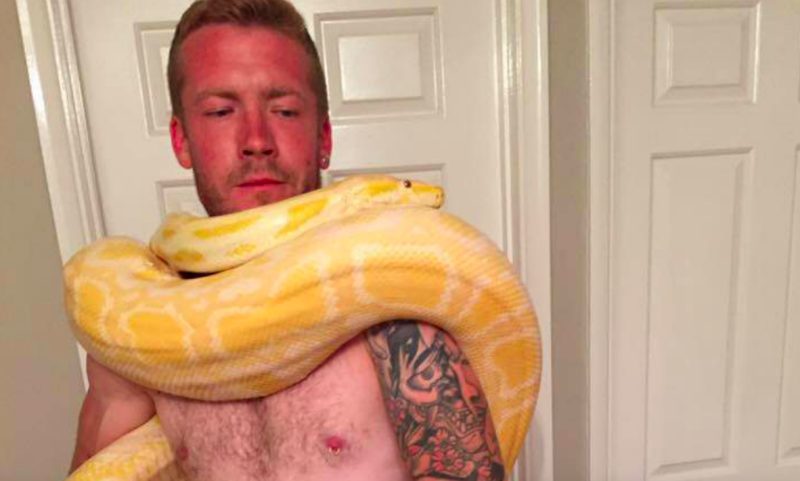
31 year old lover of exotic animals killed by his pet python in the UK

Dan Brandon python
Dan Brandon kept 10 snakes and 12 tarantulas in his bedroom and was said to be responsible owner

A lover of exotic animals died of asphyxia after his 2.4-metre (8ft) pet African rock python called Tiny wrapped itself around him, a coroner has ruled.

Dan Brandon was found dead by his mother, Babs, in his bedroom in Hampshire, with the python concealed close by.

Attention

Diver attacked by shark off New Caledonia


Shark
A shark has seriously injured a diver off New Caledonia.

The attack occurred off the beach in Nouville near Noumea where the man, who is in his 40s, was on an outing with his son and nephew.

The shark bit his body and arm.

He was rushed to hospital where he was initially put in an artificial coma.

Reports said the injuries were not life-threatening.

Attention

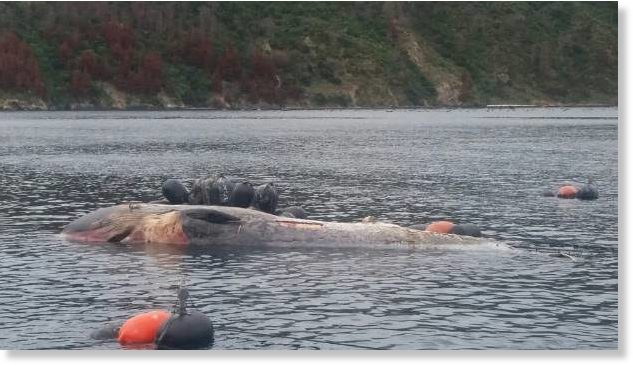
Dead whale discovered in Marlborough Sounds, New Zealand, second for the area in 4 months

dead whale
A carcass of a large 16-metre whale has been found in the outer Marlborough Sounds.

The dead whale was found caught up in a mussel farm in Port Ligar, near d'Urville Island, but was likely dead before it got tangled.

Department of Conservation spokeswoman Trish Grant said the carcass was that of a sei whale or a Bryde's whale, but DNA tests would confirm the species.

DOC received reports of the whale carcass on Monday.

Skin samples were taken from the whale for DNA analysis to help identify its exact species, Grant said.

Info

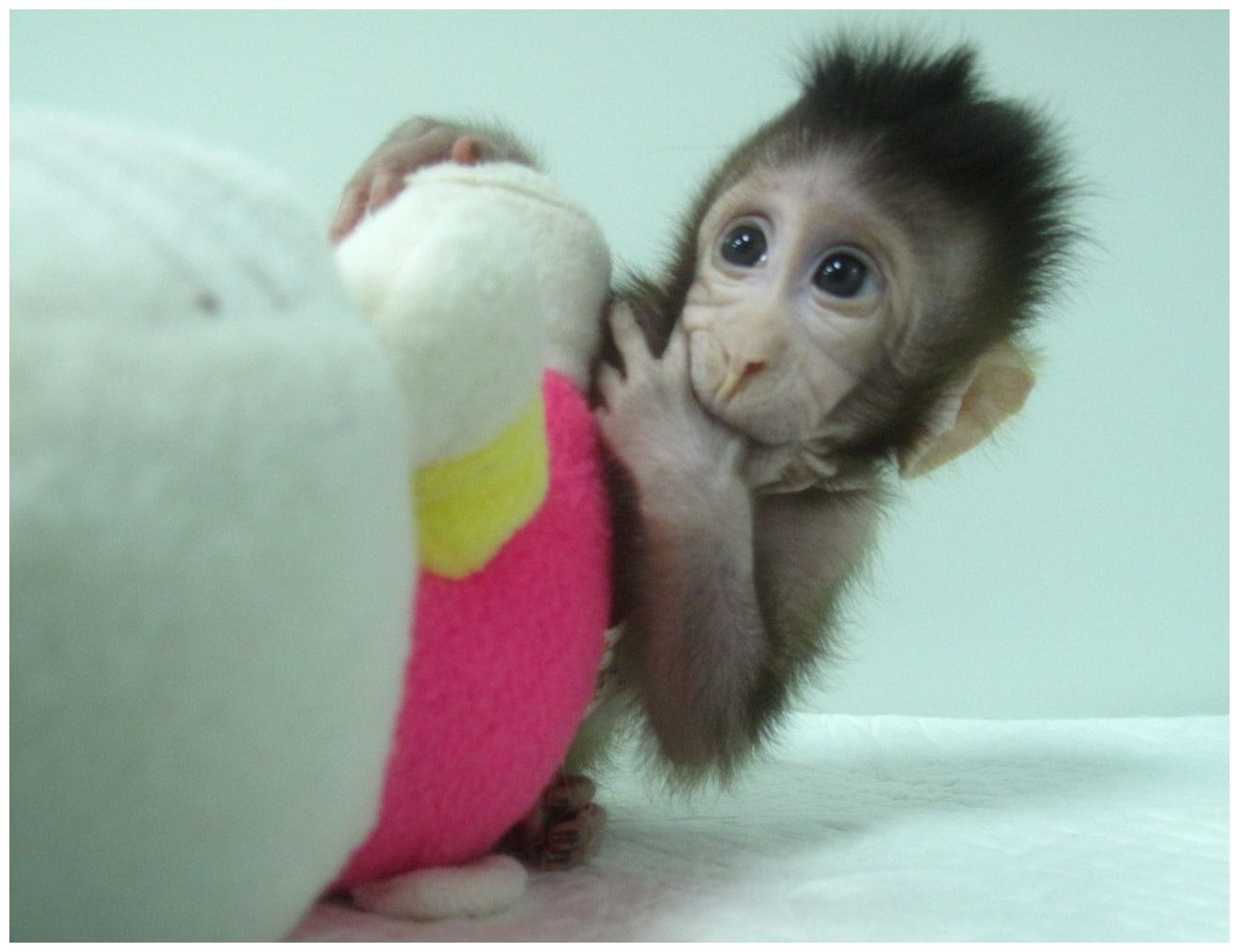
Chinese scientists successfully clone genetically identical primates

Cloned Monkey
© Qiang Sun and Mu-ming Poo/Chinese Academy of SciencesZhong Zhong, a cloned long-tailed macaque.
Chinese scientists have announced the successful creation of two cloned monkeys, representing a major advance in cloning practice and potentially opening the way for a revolution in animal-model lab research.

The monkeys, long-tailed macaques called Zhong Zhong and Hua Hua, are described in the journal Cell by a team led by Qiang Sun, director of the Nonhuman Primate Research Facility at the Chinese Academy of Sciences Institute of Neuroscience.

The animals were cloned using a technique called somatic cell nuclear transfer (SCNT). This was the method used to create Dolly the sheep, the first successfully lab-cloned mammal, in 1996.

Since then, it has been successfully used to clone other species, including mice and cows, but primates have remained stubbornly resistant.

SCNT involves removing the nucleus from an egg cell and replacing it with another derived from differentiated body cells. The implant then determines the animal that develops. Because it is theoretically possible to implant the same genetic information infinite number of times, it is therefore possible to produce (again, theoretically) an infinite number of identical animals - providing a perfect standardised cohort for medical research.

Attention

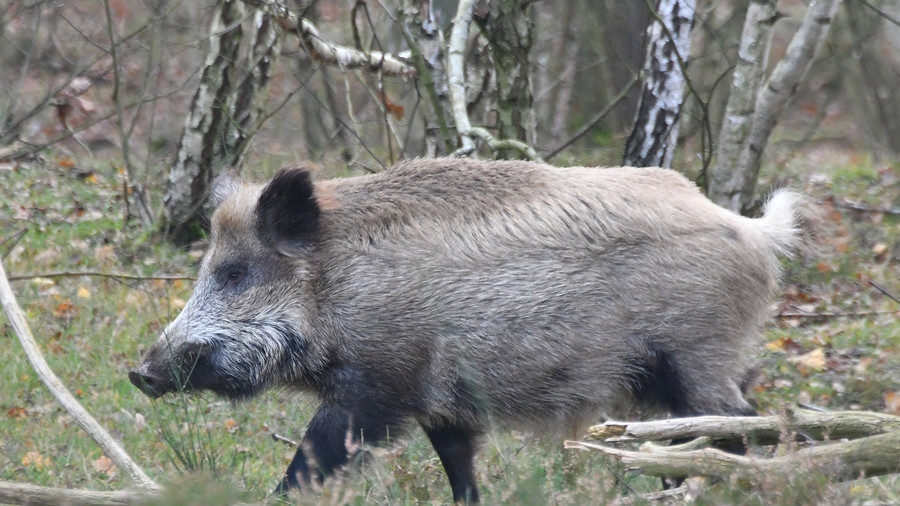
Swedish boar found with record levels of radiation 32yrs after Chernobyl disaster

boar
© Bernd Settnik / www.globallookpress.com
Thirty two years on from the Chernobyl disaster, the highest ever radiation level measured in wild boar meat in Sweden has been recorded - a whopping 25 times greater than the safe limit for meat consumption.

The radioactive animal, shot in Tierp Uppsala County on the eastern coast of Sweden, was found to have a radiation level of 39,706 becquerel per kilo by the Radiation Safety Authority. The safe limit set by the Swedish Food Agency for meat consumption is 1,500 becquerel per kilo.

"It is the highest value we have measured since we invited hunters to send us samples," Paul Andersson at the Radiation Safety Authority told Jaktjournalen.

Arrow Down

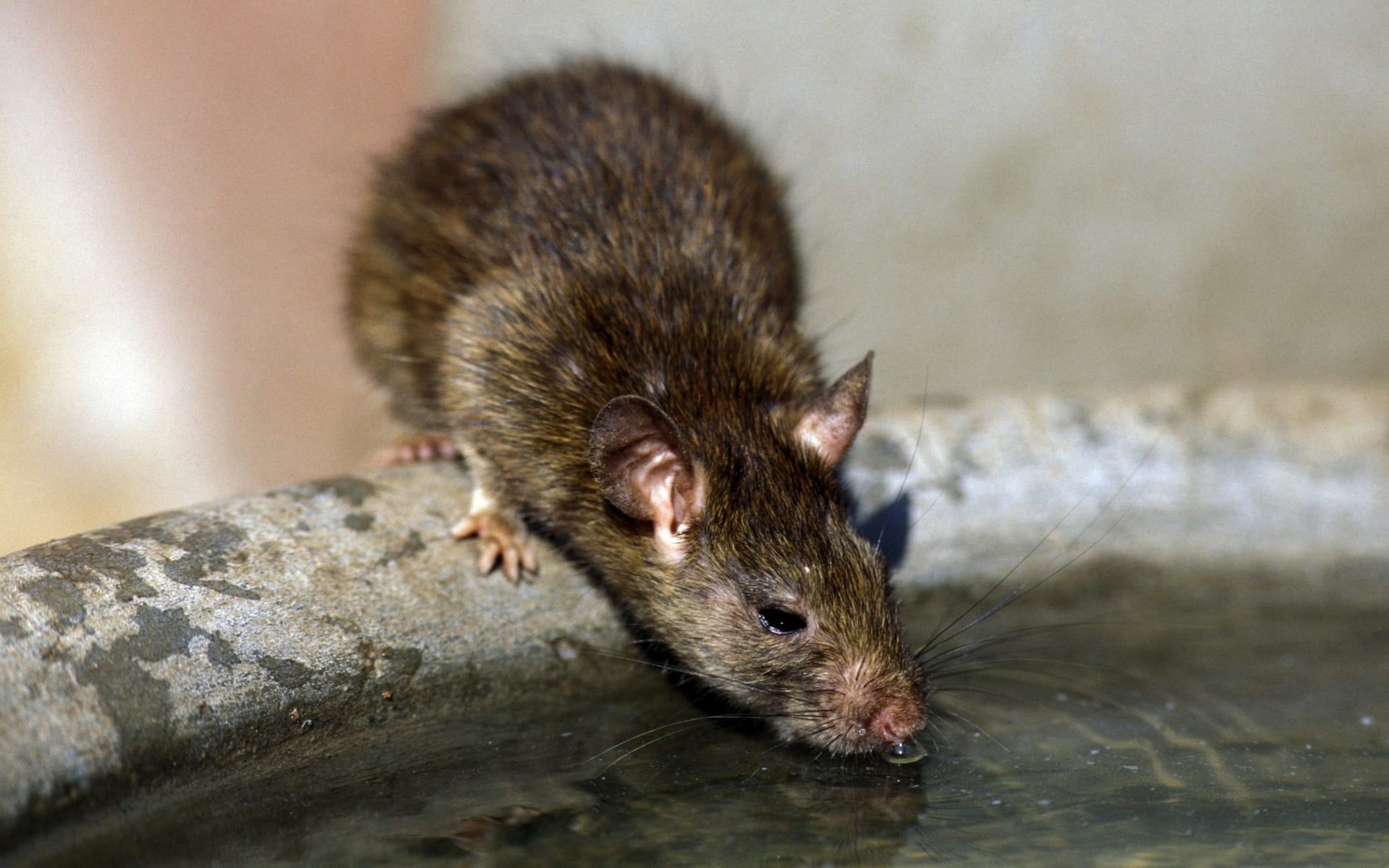
Plague of rats: Parisian rubbish collectors warn highly aggressive rats have invaded the banks of the Seine

Paris rat infestation
© Urs Flueeler / EyeEmParis dustmen sound alarm over plague of rats on banks of river Seine

Paris rubbish collectors have released a video to sound the alarm over a plague of rats that have invaded the banks of the Seine, claiming that the rodents now pose a physical threat to dustmen.

Shot last month between the tourist landmark of the Musée d'Orsay and the Pont Royal, the film shows a huge group of the large vermin desperately trying to escape from a deep plastic municipal rubbish bin.

The dustman who shot the film, known only as David, can be heard shouting: "Look in the bin, there are a million rats!"

He said colleagues were so overwhelmed, they simply shut the bin and "crushed" all the rats in their garbage truck.

The "horror" scene was, according to the municipal collector, far from a one-off.

"For the past year, we've seen a proliferation of rats in all the arrondissements on the banks of the Seine," the dustman told Le Parisien, the French capital's daily newspaper. He said the situation was no longer tenable "both for Parisians and tourists who come to visit the most beautiful city in the world".

Info

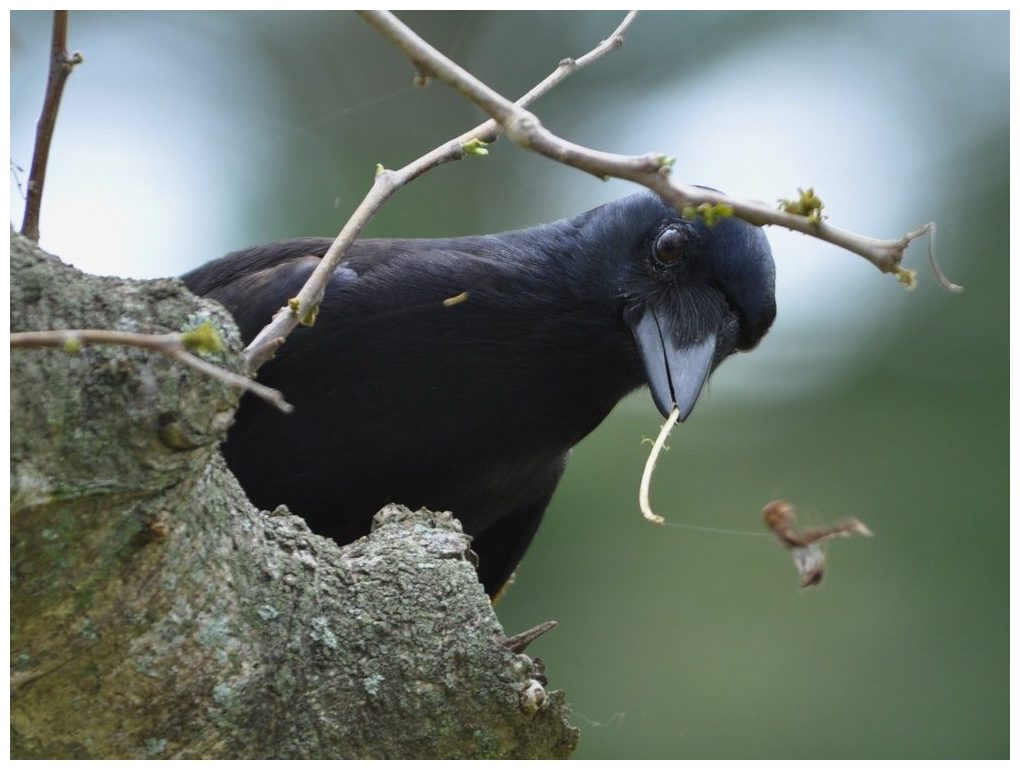
Smart critters - Crows make hooked tools

New Caledonian crow
© James St ClairA New Caledonian crow with a freshly fashioned hook.
The manufacture and use of tools has long been touted as a line of demarcation between humans and non-human animals: our technological prowess is what makes us human, it was thought. But research over the last few decades has blurred that line, as tool manufacture and use, and even the use of tools to make other tools (known as meta-tool use), has been reported in an increasing number of species.

Meta-tool use has been seen in numerous primate species, but among nature's most prolific tool-makers and users are the corvids: members of the Corvidae family, such as ravens, magpies and, importantly, crows. Crows in Japan and California, for example, have been observed to use cars lined up at traffic lights to crack open difficult nuts.

In 1996 Gavin Hunt at the University of Auckland reported in Nature the remarkable discovery that New Caledonian crows (Corvus moneduloides) manufactured and used tools while trying to catch prey. The tools had features previously seen only in early human cultures after the Lower Palaeolithic period, which ended 200,000 years ago. They were remarkably standardised, came in distinct types with distinct shapes, and, importantly, used hooks.