
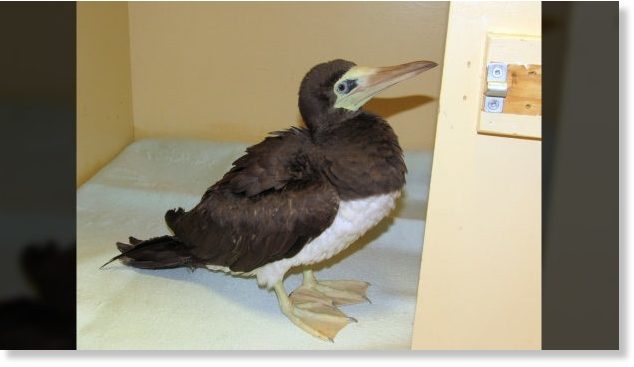
© Wild ARCA brown booby, a tropical bird rarely seen in the cool climate of the Pacific Northwest, is recovering after it was found injured at Ogden Point. Jan. 31, 2018.
A female brown booby about two years old was found with a puncture wound in its chest at Ogden Point on Monday.
The tropical birds are typically found in California, Mexico and Hawaii and it's rare for them to be spotted here, according to BC SPCA's Wild Animal Rehabilitation centre in Metchosin, which is now caring for the injured animal.












Comment: The last 12 months has seen a notable number of these extralimital records of tropical seabirds in North America, presumably for the most part storm driven, here's a list of such reports: Bird from the tropics, the brown booby, seen for first time in New Hampshire
Wrong place, wrong time: Tropical seabird turns up at Point Pelee, Ontario
Rare sighting of frigatebird in Wausau, Wisconsin, a likely hurricane refugee
Rare red-billed tropicbird turns up in Gulf Breeze, Florida
Wrong place, wrong time: Nazca Booby from the Galapagos Islands turns up at Dana Point, Califorina
Although displacement caused by extremely inclement weather seems the most plausible explanation in most cases, the following extract from a 2015 report of a brown booby turning up near Cape Race in Canada, indicates that at least some of these seabirds had been getting lost due to other factors: