Animals
S


Hearts

European domestic dog may have originated in Southwestern Germany

Canidae
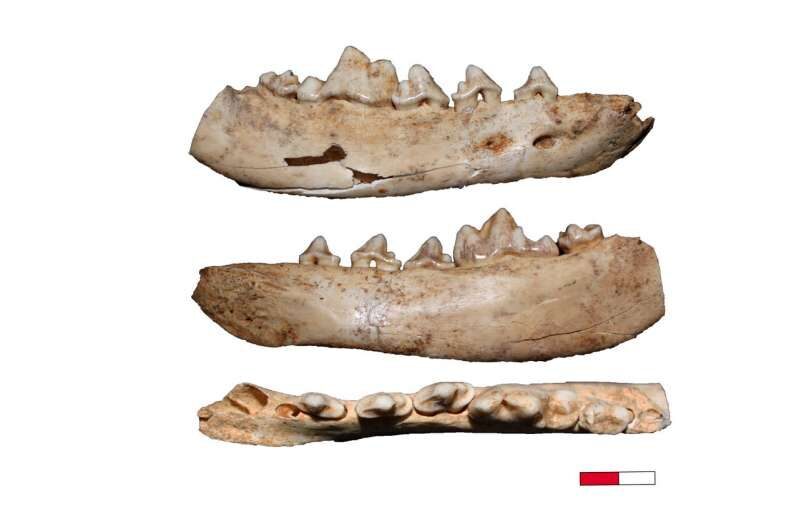
© SenckenbergThe domestication of wolves was studied on the basis of Canidae fossils from the Gnirshöhle cave in Southwestern Germany.
Together with a group of international colleagues, a research team from the Senckenberg Centre for Human Evolution and Palaeoenvironment at the University of Tübingen studied the beginnings of the domestication of wolves in Europe. Using a multi-method approach, the researchers analyzed several Canidae fossils from a cave in Southwestern Germany. In their study, published today in the nature journal Scientific Reports, they reach the conclusion that the transition from wolves to domesticated dogs may have occurred in this region between 16,000 and 14,000 years ago.

Dogs are generally considered the oldest domestic animals. "However, to date it is still not clear exactly when the transition from wolves to domestic and herding dogs occurred. Scientific estimates range between 15,000 to 30,000 years ago," explains Dr. Chris Baumann of the Senckenberg Centre for Human Evolution and Palaeoenvironment at the University of Tübingen, and he continues, "Moreover, the location where this transition from wild to domestic animals occurred also continues to be uncertain."


Comment: Interestingly, it has been proposed that the domestication of dogs may have happened more than once:


Doberman

Brazilian man dies after having his face ripped off by SEVEN pitbulls while out for his morning walk

Pereira's family have hit out at the owner and accused him of not housing his pets properly
© UnomidiasPereira's family have hit out at the owner and accused him of not housing his pets properly
A BRAZILIAN man mercilessly attacked by seven pitbulls that ripped his face off has died in hospital.

Aglacir de Macedo Pereira, 46, was ambushed by the deadly dogs in Lageado Feio, a rural area of southern Brazil on February 2.

Pereira was enjoying his regular morning walk when the seven savage pitbulls escaped from a farm underneath a gate and let rip.

Brave passersby rescued him from the gruesome attack and called an ambulance. They then helped the victim down the road to meet the emergency vehicle.

Pereira was rushed to the Santa Cruz Hospital in central Pinhao, over 20 miles away from the rural area where the incident took place.

The pit bulls had completely bitten off all of the skin on his face, leaving his skull completely exposed.

Doberman

Mother walking to corner store killed by pack of dogs in Porter, Texas

dog attack
Deann Stephenson walked to the corner store near her home almost every day until Feb. 15, when her family says four dogs that belong to a neighbor escaped their front yard and bit her to death.

The midday incident in Porter, north of Kingwood, happened about a year after the family moved to the area for a fresh start: A new home, church and friends.

"I'm devastated," said Stephenson's husband, Bruce Clark. "They took everything. I got nothing."

Clark is disabled and Stephenson was also his caretaker. He said they have two children together.


Attention

The end is nigh? Watch swarms of locusts 'invade' Saudi Arabia

locusts
The kingdom has been struggling with a locust infestation as the current climate conditions in the country have allowed the ravenous insects to multiply and attack crops.

Myriads of locusts have been "bugging" Saudi Arabia since January, arriving in the kingdom from neighbouring countries.

The authorities have been forced to double down on their efforts to combat the "invasion" with aerial spraying, according to Arab News.

Locals have shared horrifying videos of the locusts' conquest of Saudi Arabia, with one such video uploaded on YouTube.

In the footage, dated 22 February, an astounding amount of the insects is seen covering every surface imaginable, be it the desert, trees, or city streets.

Locusts have historically been a nightmare for farmers, as these insatiable swarming critters are known for their ability to destroy crops.


Doberman

Boy dies after being mauled by pack of dogs in Bangladesh

dog attack
A nine-year-old boy died in Dinajpur's Kaharol upazila after a pack of dogs mauled him on Sunday evening.

The deceased was Hriday Shil, son of Abinash Shil of Pouria (Napitpara) village under Mukandapur village in Kaharol Upazila of Dinajpur. The boy was a third-grader at a local primary school.

According to the family members and villagers, Hriday went out of his home to go to a nearby potato field early in the evening on Sunday.

Afterwards, he was returning home alone at around 6pm. On his way back, a pack of five agitated dogs attacked and mauled the boy badly. Hearing his screams, locals rushed to the spot and rescued Hriday.

Bug

Huge 'tornado' of mosquitoes filmed in Argentina

tornado of mosquitoes
Little dirt devils on the side of the highway are not at all uncommon in rural Texas, and boy are we lucky they're only made out of dirt and not blood-sucking mosquitos.

A video tweeted by Twitter user @FMLaMarea shows footage from Argentina of what looks like your average group of little baby tornados, sweeping across a highway, but they're not. They are not dust devils at all. They are mosquitoes. A literal tornado of mosquitoes, swarming in funnels all across the road.


Comment: We're seeing more and more of these videos from around the world in recent years. Is that just down to people having mobile phones with in-built cameras, or are mosquito populations increasing?


Attention

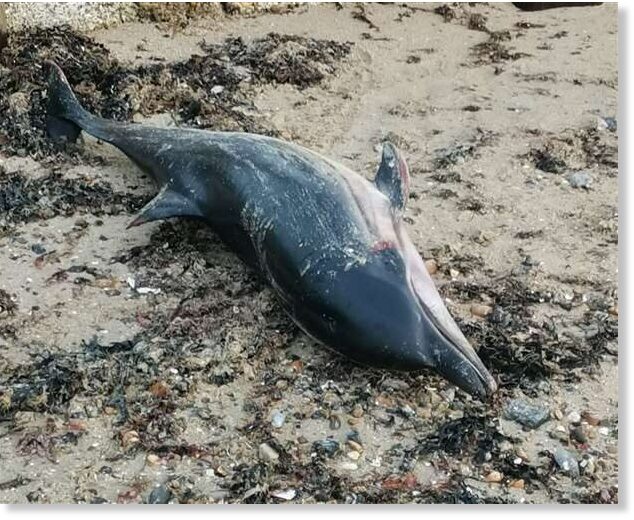
Body of striped dolphin rarely found in UK waters found in Minnis Bay, Kent

A striped dolphin has been found in Minnis Bay
© Lisa ButcherA striped dolphin has been found in Minnis Bay.
The body of a dolphin species rarely seen in UK waters has tragically washed up on a seafront.

Beachgoers sadly discovered the dead striped dolphin in Minnis Bay, near Margate, following yesterday's high tide.

Although they are widely distributed throughout the world, the striped dolphin is usually found in deep tropical to warm temperate oceanic waters.

They are usually seen in groups of up to 100 and usually feed on a diet of fish or cephalopods, such as squid.

Male striped dolphins can grow to lengths of about 9ft, while females can reach up to 8ft.

Attention

18-meter sperm whale found dead off China's northeast coast

whale
An 18-meter sperm whale was found dead in the shallow waters of Bohai Sea in Dalian, northeast China's Liaoning Province, state media cited local authorities as saying.

No external wounds were visible in the 40 tone male whale, Xinhua said, quoting scientists at the scene.

Research will be carried out into how the whale died, Xinhua reported.


Source: AFP

Attention

Florida manatees are dying in droves this year with 317 recorded dead - experts blame poor water quality, starvation

A manatee surfaces for air in Fort Myers, Fla., on Jan. 15.
© ANDREW WEST/THE NEWS-PRESSA manatee surfaces for air in Fort Myers, Fla., on Jan. 15.
It's already been a deadly year for Florida manatees.

More sea cows deaths have been documented through the first two months of the year than were recorded during those same two months in 2019 and 2020 combined, according to Florida Fish and Wildlife Conservation Commission records.

Through Feb. 12, the state recorded 317 manatee deaths, though former FWC commissioner Ron Bergeron said he thought the number was closer to 350 sea cows.


Manatee advocates said the die-off is another example of poor water quality.


Magic Wand

Bird believed extinct for 170 years spotted in Borneo - researchers were looking in the wrong place

babbler
© BirdingASIABlack-browed babbler
A team of researchers from Indonesia and Singapore has found evidence of the continued existence of a bird long thought extinct. In their paper published in the journal BirdingASIA, the team describes the history of the bird, why it was thought to be extinct and how it was found in Borneo.

Back sometime between 1843 and 1848 a bird now called the black-browed babbler was captured by naturalist Carl A.L.M. Schwaner. Records of the find are sketchy, but it appeared the bird had been captured on the island of Java. That finding was the one and only piece of evidence of the bird's existence — it is currently labeled as "data deficient" in ornithology texts. The bird was put into storage, and for the next 170 years, there were no further reports of its existence. Over time, the bird and its history became known as "the biggest enigma in Indonesian ornithology." Most in the field assumed it had gone extinct. Then, last year, a pair of researchers, Muhammad Rizky Fauzan and Muhammad Suranto captured a bird that they could not identify on the Indonesian part of the island of Borneo. They took pictures of it and sent them to colleagues, then released the bird.

Comment: It seems something has gone awry with science because the list of creatures and plants declared extinct, which then later reappear, is growing: