Volcanoes
S


Attention

Ebeko volcano in the Kuril Islands, Russia throws ash to a height of 3 km

volcano
The volcano Ebeko on the Kuril island of Paramushir ejected a column of ash to a height of 3 kilometers during the eruption, the press service of the Russian Emergencies Ministry for the Sakhalin Region reported.

"This morning, the Crisis Management Center of the Main Directorate of the Ministry of Emergency Situations of Russia for the Sakhalin Region received information that an ash release occurred on the Ebeko volcano to an altitude of 3 km," RIA Novosti reports.

As it gets thinned, the plume spread southeastward for a distance of up to 5 km.

According to the Ministry of Emergency Situations, no ash falls were observed in Severo-Kurilsk.


Attention

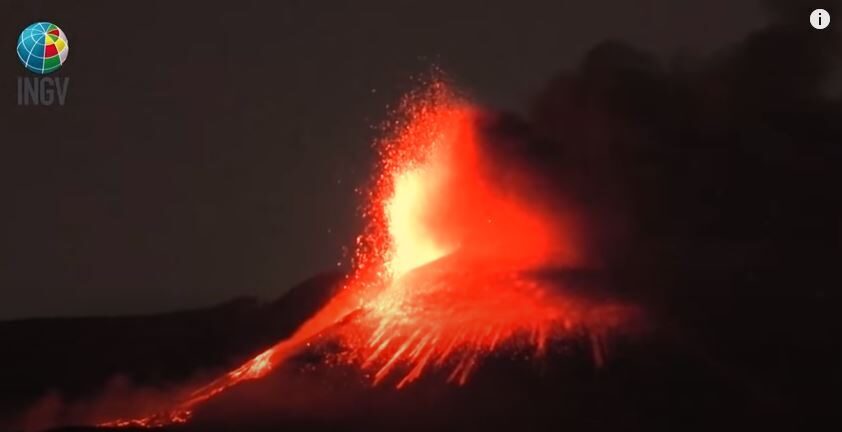
Big eruption at Stromboli volcano, Italy

Mount Stromboli eruption
© YouTube/Disaster Compilations (screen capture)
The Italian volcanoes of Stromboli and Etna both erupted today, 19 May, according to Italy's volcanology institute INGV. Etna, located in the north-east of Sicily, erupted just after 07.00 this morning, reports local newspaper La Sicilia.

A strong blast occurred on the nearby Aeolian island of Stromboli just before 15.00 this afternoon, the latest in an "intense phase of renewed volcanic activity," according to INGV.


Fire

Italy's Mount Etna erupts, shooting columns of lava into dawn sky

Mount Etna eruption
© YouTube/Global News (screen capture)
Mount Etna lit up the early morning sky on Wednesday with spectacular displays of eruptions to the dawn chorus of birds. Video from Italy's National Institute of Geophysics and Volcanology shows Europe's most active volcano shooting columns of lava into the morning sky. INGV Vulcani said the eruption began at 5:12 am, and posted this footage showing the eruption at Etna's southeast crater.


Fire

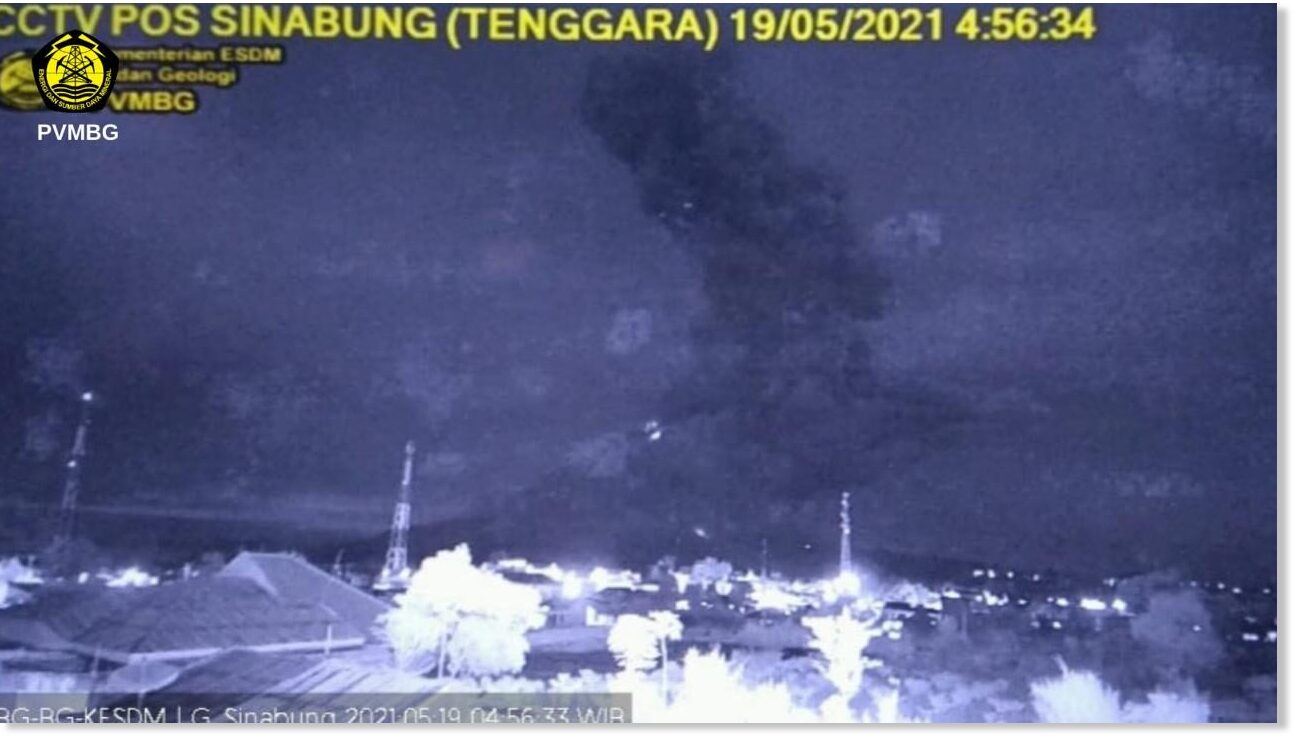
Strong eruption continues with pyroclastic flows at Sinabung volcano in Northern Sumatra, Indonesia

ERUPTS
The explosive eruption of the volcano continues at high levels.

Another vigorous eruption, lasting about 11 minutes, occurred at 04:48 local time this morning at the volcano.

According to PVMBG volcano observatory, a dense dark ash plume rose to estimated 6 km altitude and drifted east and south.

The explosion also triggered pyroclastic flows (gravity-driven mass flows) over the E-SE slopes reaching length of at least 3000 m.


Fire

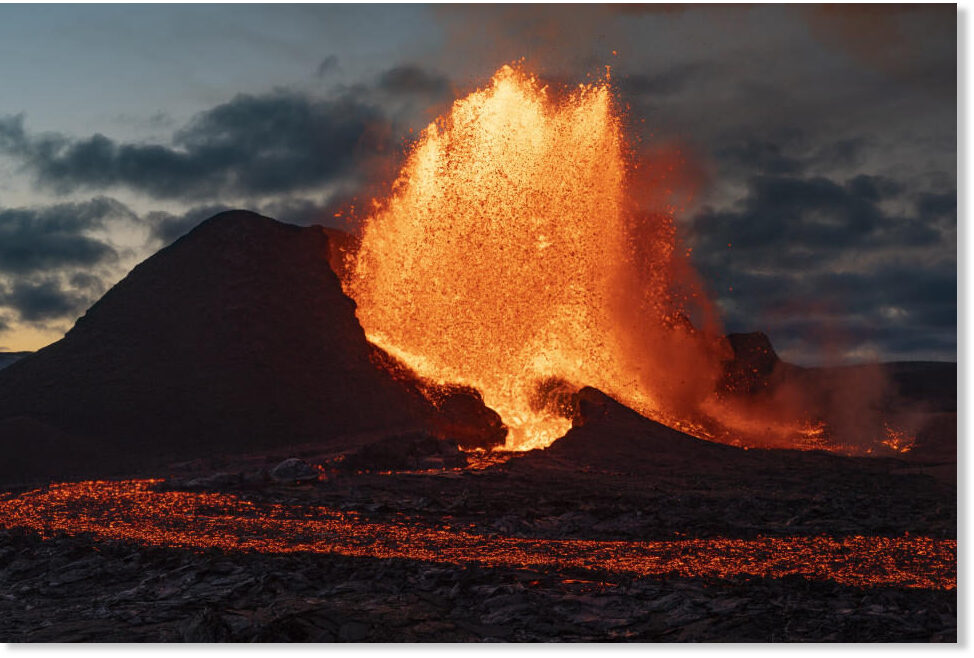
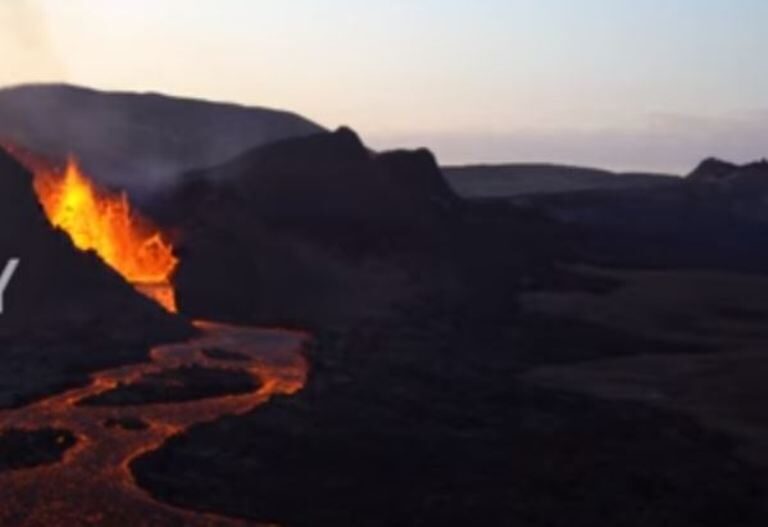
Huge lava eruption at Fagradalsfjall volcano in Iceland

Lava flows from an eruption of the Fagradalsfjall volcano on the Reykjanes Peninsula in southwestern Iceland on Thursday, May 13, 2021.
The lava fountaining episodes at the active vent at Fagradalsfjall continue pretty regularly, as described during the previous days, but with some differences. Now the episodes and the intervals between each one are shorter, with the fountaining phase lasting for 1-3 minutes, and pauses between each episode about 3-4 minutes long. Lava jets are just a bit shorter in height but wider at the same time.

The fountains generally reach 250 meters in height in average during the strong sustained phase, but sometimes can reach 350 meters in height during the most energetic episodes.

The construction of a wall to prevent lava flowing in Nátthagi has begun yesterday.


Attention

Overview of the Younger Dryas impact hypothesis debate

The Younger Dryas impact hypothesis
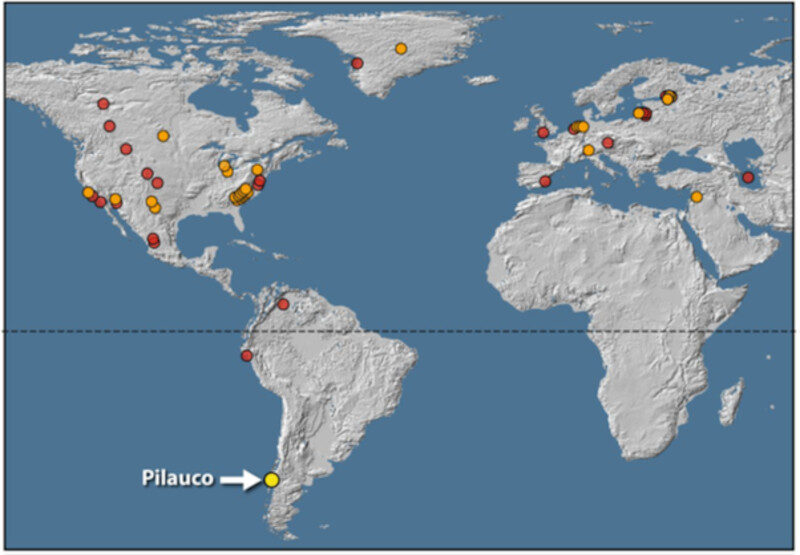
© Earth-Science journal, Earth-Science ReviewsLocation map showing 53 YD boundary (black mat) sites (reproduced from Pino et al. (2019) under the terms of the CCA 4.0 International License). Orange dots represent 28 sites with peaks in both platinum and other impact proxies such as high-temperature iron-rich microspherules. Red dots represent 24 sites with impact proxies but lacking platinum measurements. The yellow dot indicates the Pilauco site, Chile, described in detail in Pino et al. (2019). A new site in South Africa, Wonderkrater, has been identified since this map was first published (Thackeray et al., 2019).
Indefatigable genius and digital friend of the Tusk, Dr. Martin Sweatman, authored a surprise blockbuster this week. Below is a peer-reviewed and fully accepted pre-online synthesis overview of the Younger Dryas Impact controversy since the very first paper in 2007. 'The Younger Dryas impact hypothesis: review of the impact evidence' concludes — in perhaps the world's most appropriate and respected scientific journal — that based on the published evidence, our modern world is indeed birthed of a horrendous global catastrophe ~12,881 years ago. It is a lengthy, detailed, fair and lucid tour-de-force in support of The Event based on Martin's reading of the entire debate.

Martin is an example to the Tusk of how many, many people there are on earth. You have to have 8+ billion humans in order to have enough brain matter and determination on the end of the bell curve to find a just one single, well-qualified, unbiased, poly-curious scientist, so determined to find the truth that they will to read every last word — and then write every last word — well.

Attention

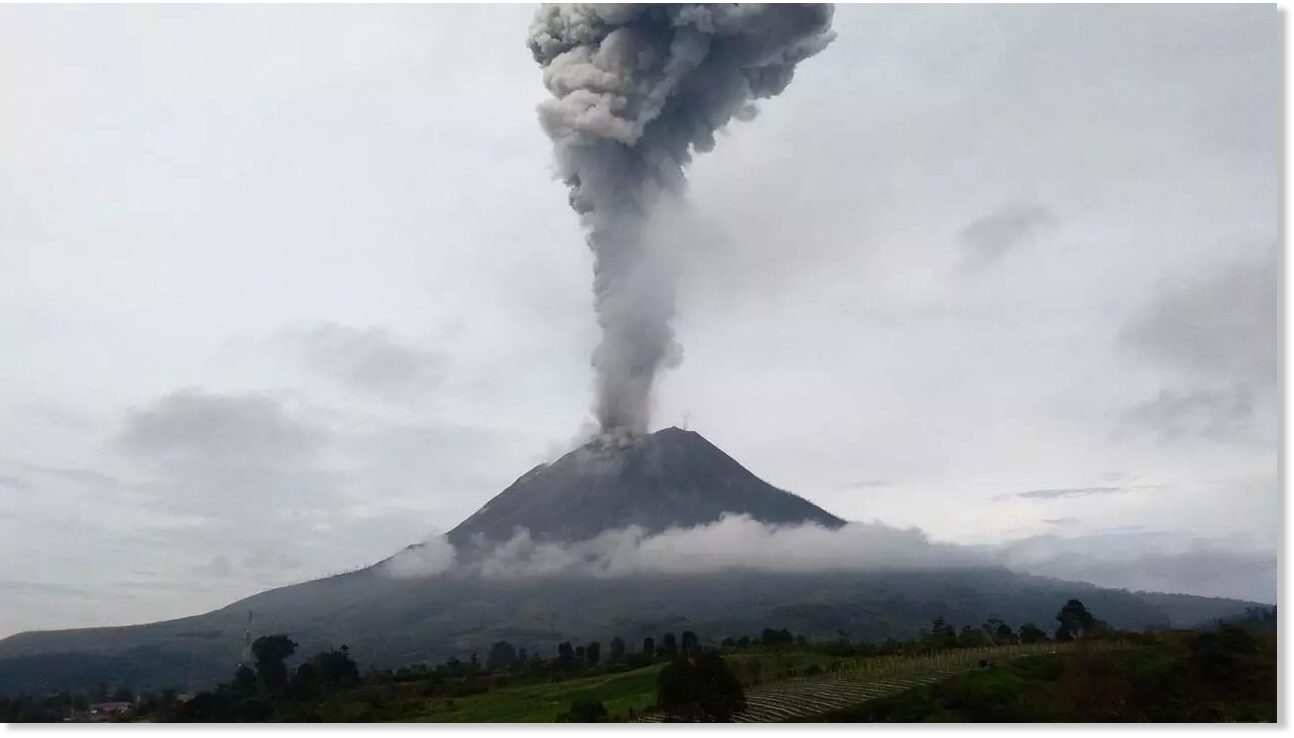
Indonesia's Sinabung volcano erupts, spewing massive column of smoke and ash up to 2,800 metres high

Mount Sinabung erupted on Friday,
Mount Sinabung erupted on Friday
Indonesia's Mount Sinabung erupted on Friday, spewing a massive column of smoke and ash up to 2,800 metres into the sky.

The volcano in North Sumatra province started belching ash and volcanic material at 9 am and the eruption lasted almost six minutes, a local geological agency said.

Images showed a thick column of ash spewing from the inside of Sinabung towards the east.


Fire

Two unbelievably huge monster-sized lava fountains at volcano in Iceland - biggest since the eruption started

erupts
I went to my balcony to film again after hearing there were really huge lava fountains spewing around midnight local time, and lo and behold I caught the 2 biggest ones, filmed around 2am Sunday, May 2nd.

The footage is a little shaky because of strong wind.


Fire

Iceland's Fagradalsfjall Volcano continues spectacular eruption after being dormant for 6,000 years

Fagradalsfjall volcano eruption
© YouTube/Ruptly (screen capture)
Iceland's Fagradalsfjall volcano has been putting on a spectacular display of new eruptions, over a month since it first erupted, as onlookers continue to gather to watch fiery fountains and rivers of lava.

The lava flows erupting from Fagradalsfjall volcano near Geldingadalir on the Reykjanes Peninsula were captured in day and nighttime footage from RT's Ruptly video agency. A new fissure opened at the site on Thursday.

Eruptions in the region of southwestern Iceland began on March 19, following heavy seismic activity in the area. The Reykjanes Peninsula has not seen a volcanic eruption in nearly 900 years - and Mount Fagradalsfjall itself is believed to have been dormant for hundreds of years.

The latest continuous eruptions have already modified the local landscape, with flowing lava filling up mountain valleys. Some onlookers seen in the footage have been lucky enough to witness the process. Authorities say the burning rivers are not flowing fast enough to pose an immediate danger, so visitors have been permitted to visit the site.


Comment: See also: 34,000 quakes in two weeks near Fagradalsfjall volcano, Iceland - 900% increase in activity compared with whole of 2020


Ice Cube

Adapt 2030 Ice Age Report: Why is this information being released now in 2021?

AI sunspot cycles
© YouTube/Adapt 2030 (screen capture)
Artificial Intelligence has forecast Grand Solar Minimum level sunspot activity beginning now through 2050, this has made it through the main stream media. Interestingly, the same information was released in 2015 by Valentina Zharkova but denied and dismissed. Why is this solar activity information being released at this moment ? Is it to explain why all continents are experiencing crop damage and yield reductions from abnormal cold? My findings and thoughts are explained in the video. Thank you for watching.


Comment: We're entering an ice age. Its effects will likely be felt within the coming year, and its devastating consequences over the next 3-5 years.

See also: