Extreme Temperatures
S


Snowflake

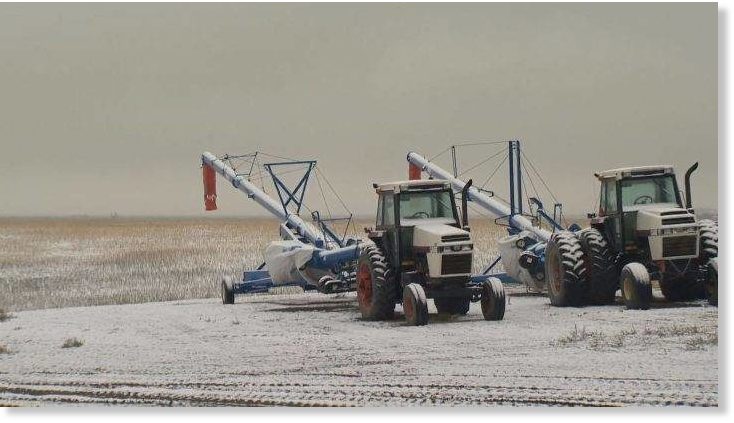
Southern Saskatchewan hit with snow on first day of October

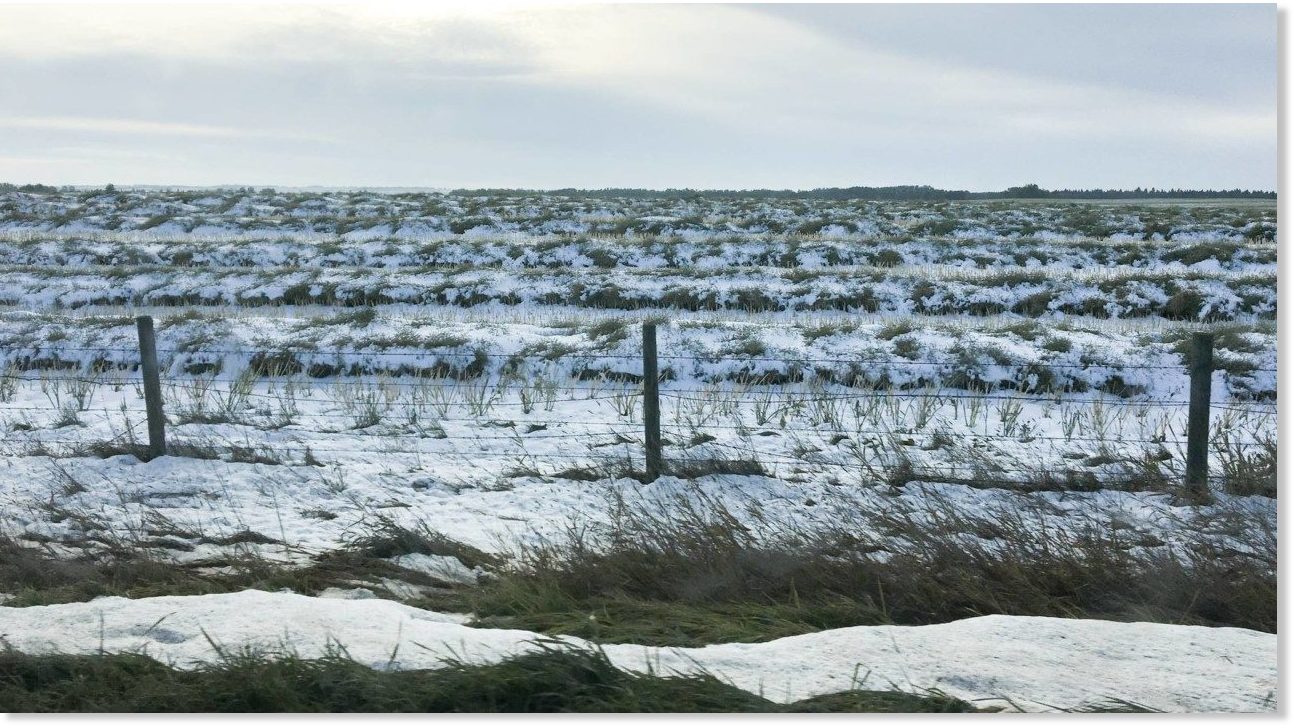
On the first day of October southern Saskatchewan woke up to a white blanket of snow covering the ground.
© Taryn Snell / Global NewsOn the first day of October southern Saskatchewan woke up to a white blanket of snow covering the ground.
On the first day of October southern Saskatchewan woke up to a white blanket of snow covering the ground.

According to Environment Canada, Regina and area have seen periods of light snow that will last throughout the morning but by afternoon we should see a high of eight degrees.

On Tuesday Southern Saskatchewan will see periods of mixed snow and rain throughout the day with a high of three degrees.

"We are looking at another system moving in tonight so that will spread some snow and rain in the south west into the evening and that will be pushing through southern Saskatchewan tomorrow, so a better chance of accumulating snow tomorrow maybe looking at a few centimetres especially in areas just to the north of Regina," said Environment Canada Meteorologist Mark Melsness.

Tornado1

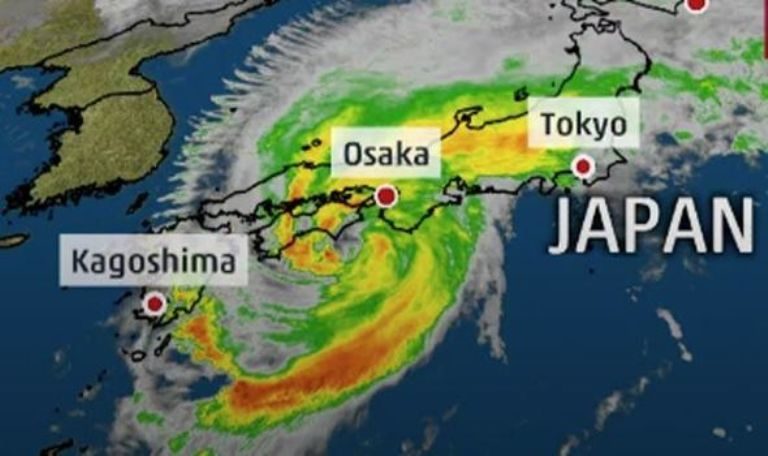
Japan hit by unseasonal high temperatures after Typhoon Trami leaves four dead, hundreds injured & travel chaos

Typhoon Trami: The storm has blasted across Japan
© THE WEATHER CHANNELTyphoon Trami: The storm has blasted across Japan
Tokyo woke up to unseasonal heat and bright cloudless skies on Monday (Oct 1), hours after the ferocious Typhoon Trami caused widespread power outages, cancelled flights and shut down train services as it churned towards the Pacific Ocean.

Commuters in central Tokyo experienced massive transport snarls during the morning rush hour - with many unable to get to work on time - as rail operators delayed the start of train services to clear fallen trees and other debris.

One of the services was the Keio Line, after a train hit a collapsed wall in Setagaya ward at about 4.45am, halting services for over four hours. No one was injured.

Across the country, the season's 24th typhoon left at least four people dead, one missing and more than 200 injured, according to a tally by public broadcaster NHK as at 9pm (8pm in Singapore).

The storm first slammed into the south-western Okinawa chain of islands on Saturday, before moving north-east and making landfall in Wakayama, south of Osaka, on Sunday. It then traversed north-east across the main island of Honshu.

At its peak, the typhoon packed gusts of 216kmh, the Japan Meteorological Agency said. Though it gradually lost strength after making landfall, the western Tokyo suburb of Hachioji still recorded winds of up to 164kmh.


Ice Cube

Adapt 2030 Ice Age Report: Earth's thermosphere record cold & auroras with no CME

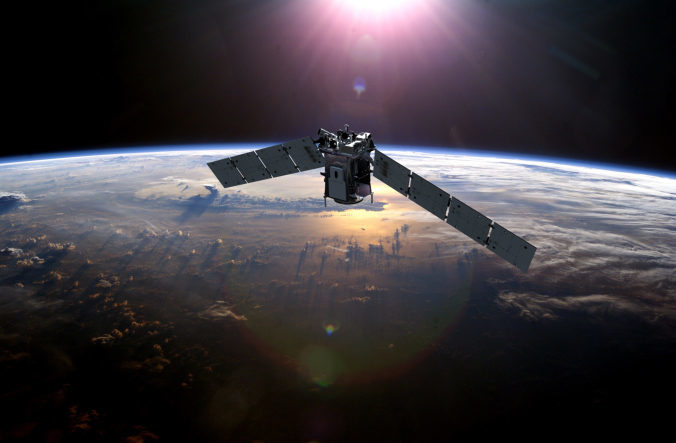
The TIMED satellite monitoring the temperature of the upper atmosphere
NASA coming out stating that Earth's Thermosphere is entering record territory and even mentions "Solar Minimum Cold" that's a huge change from warming, warming, warming. I feel the are covering themselves as it cools and people begin to ask questions. For example like how there was no geomagnetic storm and Earth had immense auroras over Alaska, how is that possible unless the magnetosphere is in decline.


Comment: See also:


Ice Cube

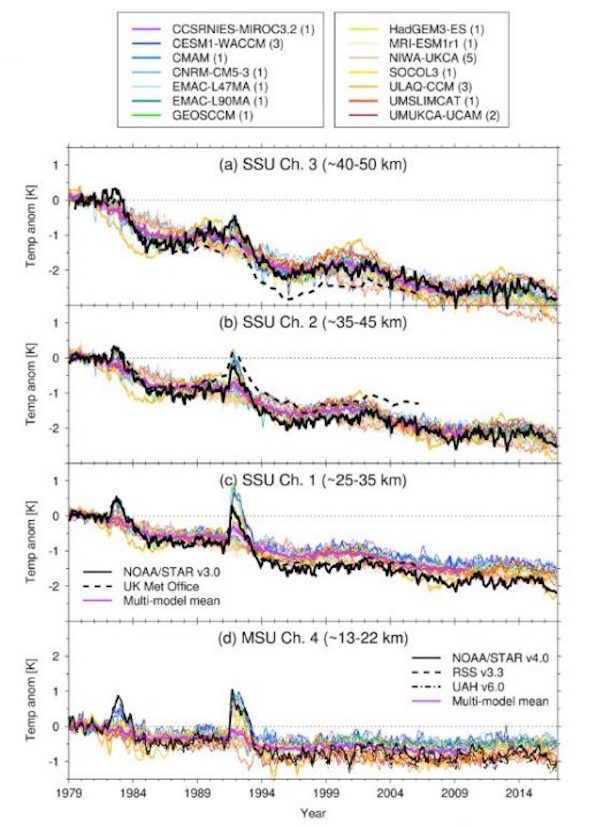
Rethinking the mystery of stratospheric cooling

This paper claims that stratospheric cooling is the work of "greenhouse gases". Saying: "An extended satellite temperature record and the chemistry‐climate models show weaker global stratospheric cooling over 1998-2016 compared to 1979-1997."
Stratospheric Cooling
Figure 1 from the paper. Time series of global monthly mean temperature anomalies (K) for the period 1979–2016 for the data sets andaltitude ranges stated in thefigure. Anomalies are shown relative to a baseline of 1979–1981. The number of individualensemble members plotted for each model is shown in the legend. The multimodel mean is shown in thick purple.Note that only the CESM1(WACCM), GEOSCCM, ULAQ-CCM, and UMUKCA-UCAM models include the radiative effectsof volcanic aerosols over the hindcast period in the refC2 experiment. Note the UK Met Office SSU data set is shown as6-month averages. (a) SSU channel 3 (~40–50 km). (b) SSU channel 2 (~35–45 km). (c) SSU channel 1 (~25–35 km). (d) MSUchannel 4 (~13–22 km). SSU = Stratospheric Sounding Unit.

Comment: See also: Temperatures have dropped to -91°C (-131,8°F) in the stratosphere!


Attention

Adapt 2030 Ice Age Report: Indonesian tsunami - Record snow - More Grand Solar Minimum signs?

A gigantic tsunami has crashed into the Indonesian coast

With the Indonesian 7.7 earthquake and tsunami, at the same time Krakatou awoke with over 50 eruptions in the W. Java island area.

All time coldest days in Germany and Netherlands, snowiest September in Alberta and massive frost damage to Australian crops in spring.

Do you think the intensifying Grand Solar Minimum is the cause of the changes we are seeing?


Sources

Snowflake

Snow hampers harvests in Saskatchewan and Alberta

Fields across much of Alberta have been hit hard by both snow and rain
© Jeffrey Heyden-KayeFields across much of Alberta have been hit hard by both snow and rain
Early signs of winter are keeping some combines idle in Western Canada.

Parts of Alberta received several consecutive days of snow, putting grain harvest on hold.

Alberta farmers harvested 31.3 per cent of their spring wheat crop as of Sept. 18, an Alberta Agriculture report says. That number is well below the five-year average of 55.9 per cent.

Canola producers are also feeling the effects of the early snowfalls.

"The snow is slowing wheat and canola farmers down," Denis Guindon, a director with the Alberta Canola Producers Commission, told Farms.com. "The snow is pushing the wheat down so farmers can't harvest the crop. And there's not much canola being harvested because of the snow and fluctuating temperatures.

Comment: See also: A taste of the future: 'Disbelief' as snow hits and northern Alberta farmers scramble to save crops worth millions


Snowflake

Up to 6 inches of early snow blankets the Black Hills, South Dakota

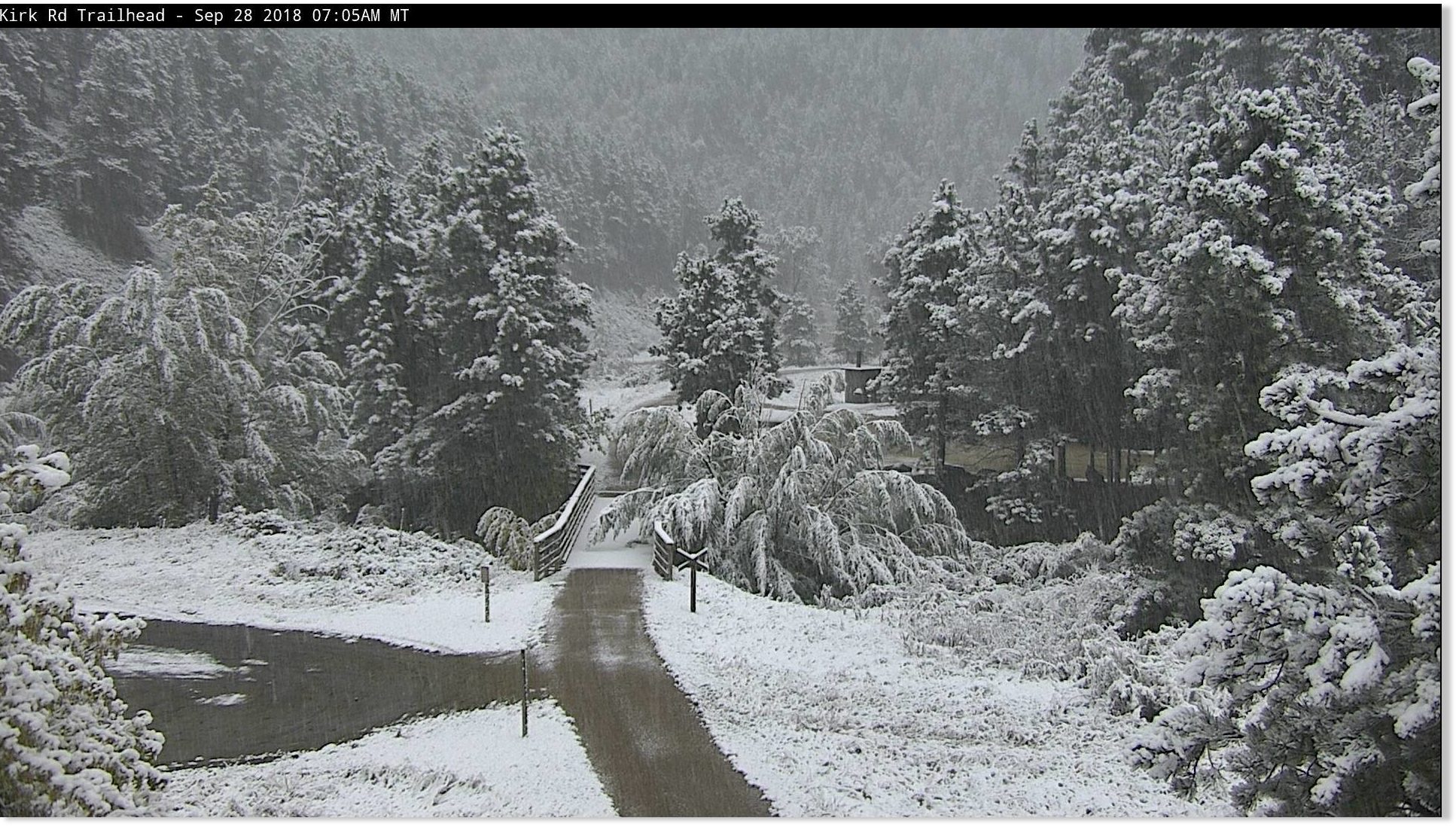
Black Hills snow on Friday morning, Sept 28, 2018.
Our weather will be cooler and a bit fall-like this weekend, but that's nothing compared the weather some residents of the Black Hills woke up to on Friday morning.

4 to 6 inches of snow blanketed higher elevations of the Central and Northern Black Hills Thursday night into Friday morning. While most places that got snow received between 1 and 4 inches, the snow was a bit heavier in the highest elevations. The National Weather Service Office in Rapid City reported 6 inches of snow near Hill City and 6.5 inches of snow near Deerfield.

The snow will end by early Friday afternoon. It won't stick around for long, either. Temperatures will warm back into the 50s by Saturday afternoon.


Snowflake Cold

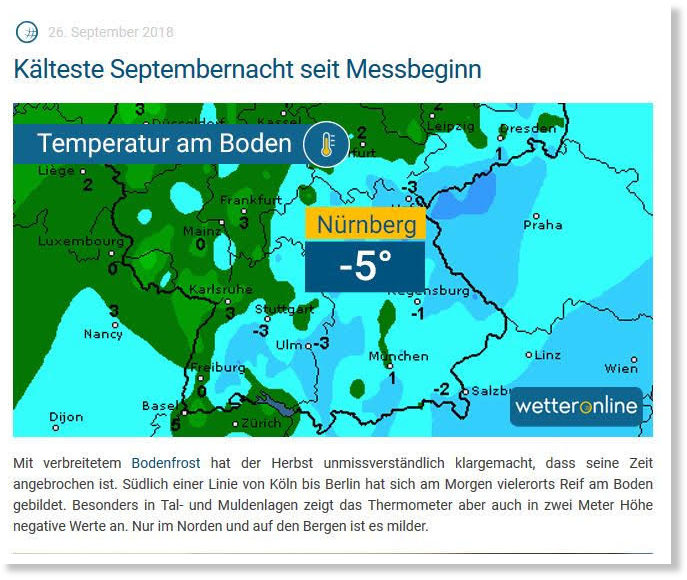
Germany - Coldest September morning since weather records began!

COLD MAP
Not just for the day, mind you, but for the entire month.
________________

Greetings Robert! I am a follower and Reader of Iceagenow living in Munich Germany and I think this bit of news is worth posting on iceagenow.

Just like in the Netherlands, Germany is also experiencing record low temps for September! Just days after Summer officially ended, an unusually strong Polar Air mass with record subfreezing temperatures has settled across West Central Europe.

Here is the Graphic and Translated Text from Wetteronline.de

Snowflake Cold

Ice Age Farmer Report: Time is short - Record colds globally - Cover-up in overdrive - Prepare NOW

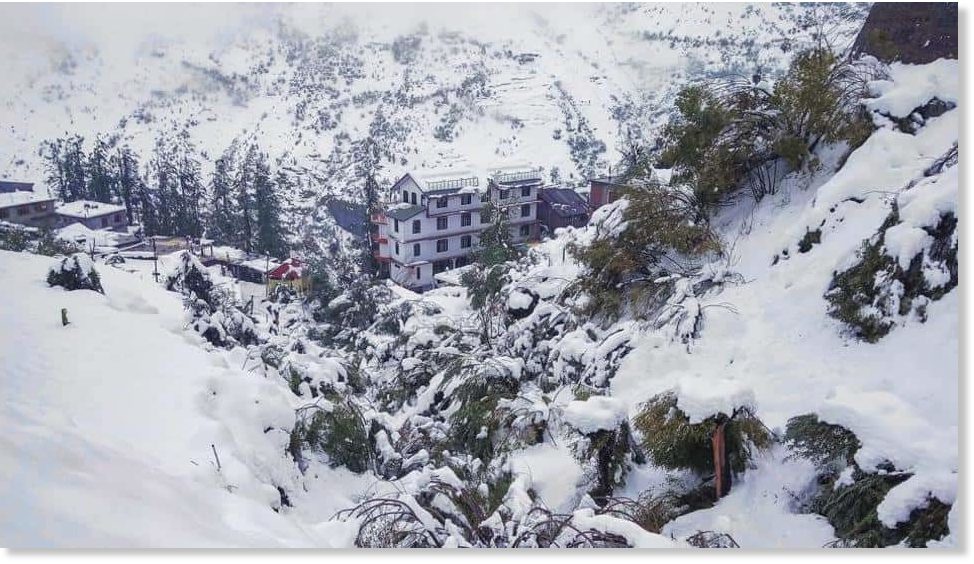
A view of a snow-covered hills, at Keylong
© PTIA view of a snow-covered hills, at Keylong in Lahaul-Spiti district, Monday, September 24, 2018. Over 1,500 tourists are stranded in the district due to heavy snowfall even as rescue operations are continuing.
All-time cold/snow records in Netherlands, France, Germany, India, Canada, Aus, NZ.

Establishment is frantically changing the data, rewriting history, and censoring opposition, but the crop losses are impossible to hide.

Start growing your own food and preparing immediately.


Sources

Snowflake Cold

Adapt 2030 Ice Age Report: Arctic methane release & 50% crop losses in W. Australia

WA wheat crop losses
© YouTube/Adapt 2030 (screen capture)
Sydney Morning Herald has a spooky headline Arctic Methane seeping from lakes its runaway global warming greenhouse gasses, oh wait, its a remote lake off the Brooks Range in Alaska's North Slope oil and gas production areas. It gets better, they blame humans for causing permafrost melt but then say this methane isn't from permafrost melt its an oil field seep, all they while forgetting record cold and crop losses in W. Australia during the same week. So much for unbiased media.