Extreme Temperatures
S


Info

SOTT Focus: Adapt 2030 Ice Age Report: Interview with Laura Knight-Jadczyk and Pierre Lescaudron (Part 2)

ECHCC_front_low_def_CoverBook
© SOTT.net/Red Pill Press
This is part two of a discussion between Laura Knight-Jadczyk and Pierre Lescaudron, editors at SOTT.net and authors of Earth Changes and the Human Cosmic Connection: The Secret History of the World, with ADAPT2030 (David DuByne).

The news cycle is largely distraction from increasing food prices and societal changes as Earth shifts to a cooler climate. As the Eddy Grand Solar Minimum intensifies, a 400-year cycle in our Sun is affecting crop production, the economy and everyone on our planet.

This is a timeline for what you can expect from now to 2030 as the frequency from our Sun changes...

Topics from the interview:
  • Magnetic Field weakening on Earth
  • Volcanic winter if a VEI6-7 occurs during the Eddy Grand Solar Minimum
  • Decreasing charge of Earth's Ionosphere leads to increased volcanic activity
  • Global Electric Circuit
  • Electric Universe
  • Late Antique Little Ice Age and SO2 in the air globally
  • Galactic Cross
  • Victor Clube
  • Continental climate in both Asia and N. America will cool faster than other parts of the globe
  • Interweaving of long term cycles coming together in our lifetimes
  • Dimensional reality splits as energetic changes sweep the spiral arm of our galaxy
  • New reality aggregating and condensing
  • Hyper-dimensional view of reality

Comment: See also: Adapt 2030 Ice Age Report: Interview with Laura Knight-Jadczyk and Pierre Lescaudron

Review of Earth Changes and the Human-Cosmic Connection. The book is available to purchase here.


Snowflake Cold

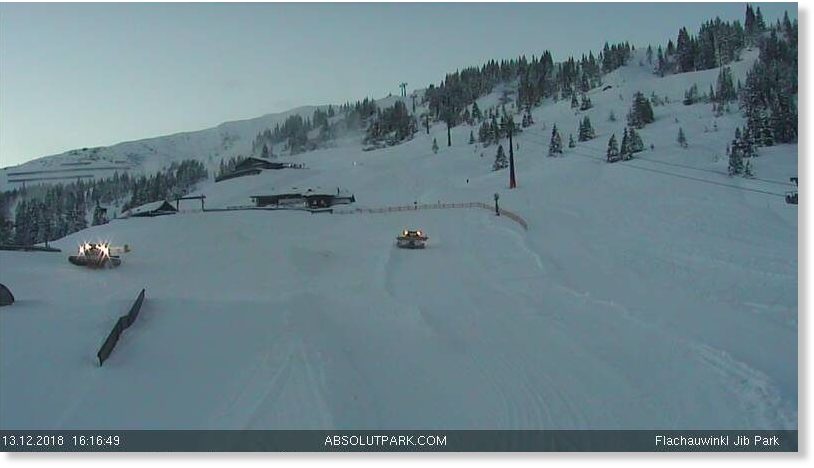
World Snow Overview - Ski resort in Austria gets 140cms (55 inches) in 7 days

Flachauwinkl
Flachauwinkl, Austria
SNOW NEWS UPDATED 13 DECEMBER 2018

It's been a remarkable week in the Alps with one of the biggest early December snowfalls in memory covering wide areas of the region. Resorts reported up to 80cm of snow falling in 24 hours in some cases and up to 1.4 metres of snow accumulating in others. Most of the snow fell between Saturday and Wednesday with the most intense period for many on Sunday and Monday.

AUSTRIA It's been an incredible week for fresh snow in Austria with the little resort of Flachauwinkl (50/150cm) topping the 7-day snowfall table with a remarkable 140cm (a few inches under five feet) of snowfall. Much of that fell between Sunday and Tuesday too. Plenty of internationally better-known ski centres saw big accumulations as well Saalbach 50/60cm - it may need to update its depth totals) also reported 140cm, 90cm (three feet) of that arriving over three days. Zell am See (0/115cm) got 116cm. Most other Austrian resorts reported 50-100cm so it's not difficult to report the conditions almost everywhere are ‘powder' as shown in our snowfinder tool.


Info

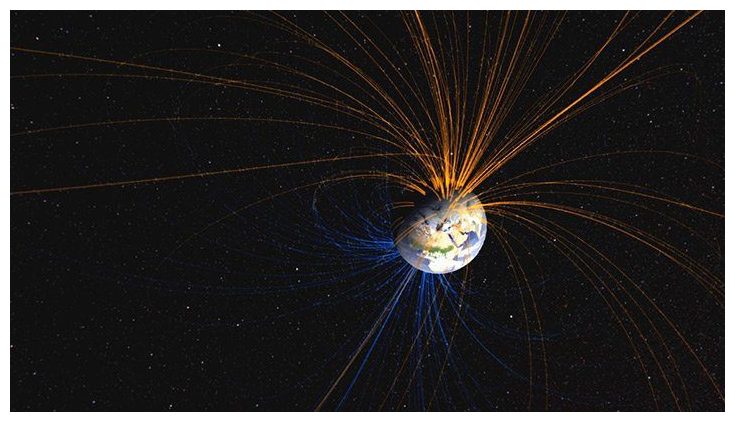
Earth's magnetic field may be headed for a cataclysm says latest French study

Earth's Magnetic Field
© NASA Goddard – CC BY 2.0
We've reported on Earth's magnetic field before, including studies claiming that the planet's poles may reverse at any time and studies saying that Earth is probably not headed for a polar reversal at all. At the heart of these studies is the undeniable, millennia-old weakening trend in the planet's magnetic field, which, depending on your point of view, is either a temporary phenomenon that will eventually reverse itself (as it has in the past), or the harbinger of a cataclysmic breakdown of the Earth's entire magnetic shield and a subsequent flip of the magnetic poles.

The most recent study from the EDIFICE project, a geophysical research initiative based in France, claims we're headed for a cataclysm. According to Dr. Nicolas Thouveny, one of the principal investigators for EDIFICE: "The geomagnetic field has been decaying for the last 3,000 years. If it continues to fall down at this rate, in less than one millennium we will be in a critical (period)."

Cassiopaea

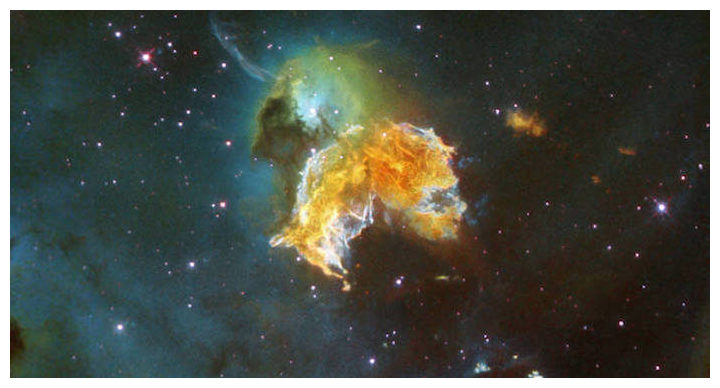
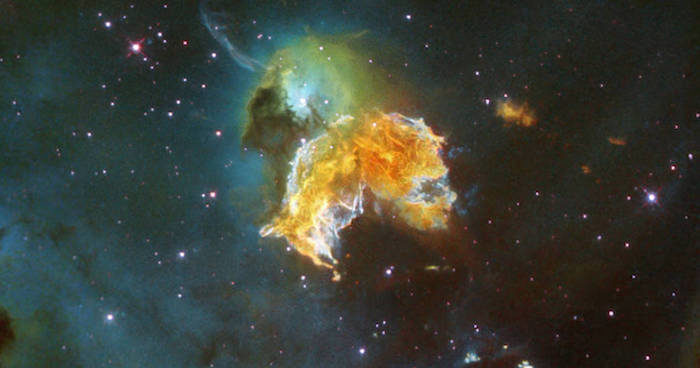
Supernovae may have killed off large animals at dawn of Pleistocene

A nearby supernova remnant
© NASAA nearby supernova remnant.
Lawrence - About 2.6 million years ago, an oddly bright light arrived in the prehistoric sky and lingered there for weeks or months. It was a supernova some 150 light years away from Earth. Within a few hundred years, long after the strange light in the sky had dwindled, a tsunami of cosmic energy from that same shattering star explosion could have reached our planet and pummeled the atmosphere, touching off climate change and triggering mass extinctions of large ocean animals, including a shark species that was the size of a school bus.

The effects of such a supernova - and possibly more than one - on large ocean life are detailed in a paper just published in Astrobiology.

"I've been doing research like this for about 15 years, and always in the past it's been based on what we know generally about the universe - that these supernovae should have affected Earth at some time or another," said lead author Adrian Melott, professor emeritus of physics & astronomy at the University of Kansas. "This time, it's different. We have evidence of nearby events at a specific time. We know about how far away they were, so we can actually compute how that would have affected the Earth and compare it to what we know about what happened at that time - it's much more specific."

Melott said recent papers revealing ancient seabed deposits of iron-60 isotopes provided the "slam-dunk" evidence of the timing and distance of supernovae.

"As far back as the mid-1990s, people said, 'Hey, look for iron-60. It's a telltale because there's no other way for it to get to Earth but from a supernova.' Because iron-60 is radioactive, if it was formed with the Earth it would be long gone by now. So, it had to have been rained down on us. There's some debate about whether there was only one supernova really nearby or a whole chain of them. I kind of favor a combo of the two - a big chain with one that was unusually powerful and close. If you look at iron-60 residue, there's a huge spike 2.6 million years ago, but there's excess scattered clear back 10 million years."

Melott's co-authors were Franciole Marinho of Universidade Federal de São Carlos in Brazil and Laura Paulucci of Universidade Federal do ABC, also in Brazil.


Snowflake

Winter storm dumped nearly 3 feet of snow in 48 hours on Busick, North Carolina

A massive storm is bringing snow, sleet and freezing rain across the country.
© APA massive storm is bringing snow, sleet and freezing rain across the country.
A tiny Yancey County community that most North Carolinians have never heard of is the talk of the state, after the National Weather Service revealed nearly 3 feet of snow fell there in 48 hours.

"The tiny town of Busick, North Carolina, in Pisgah National Forest,...recorded 34 inches by Monday afternoon," NBC News reported.
ABC News also singled out Busick in its storm coverage, calling the snow fall "staggering."

Mount Mitchell in Yancey County also got 34 inches of snow, according to the North Carolina State Parks. The park is the highest point east of the Mississippi, at 6,684 feet.


Ice Cube

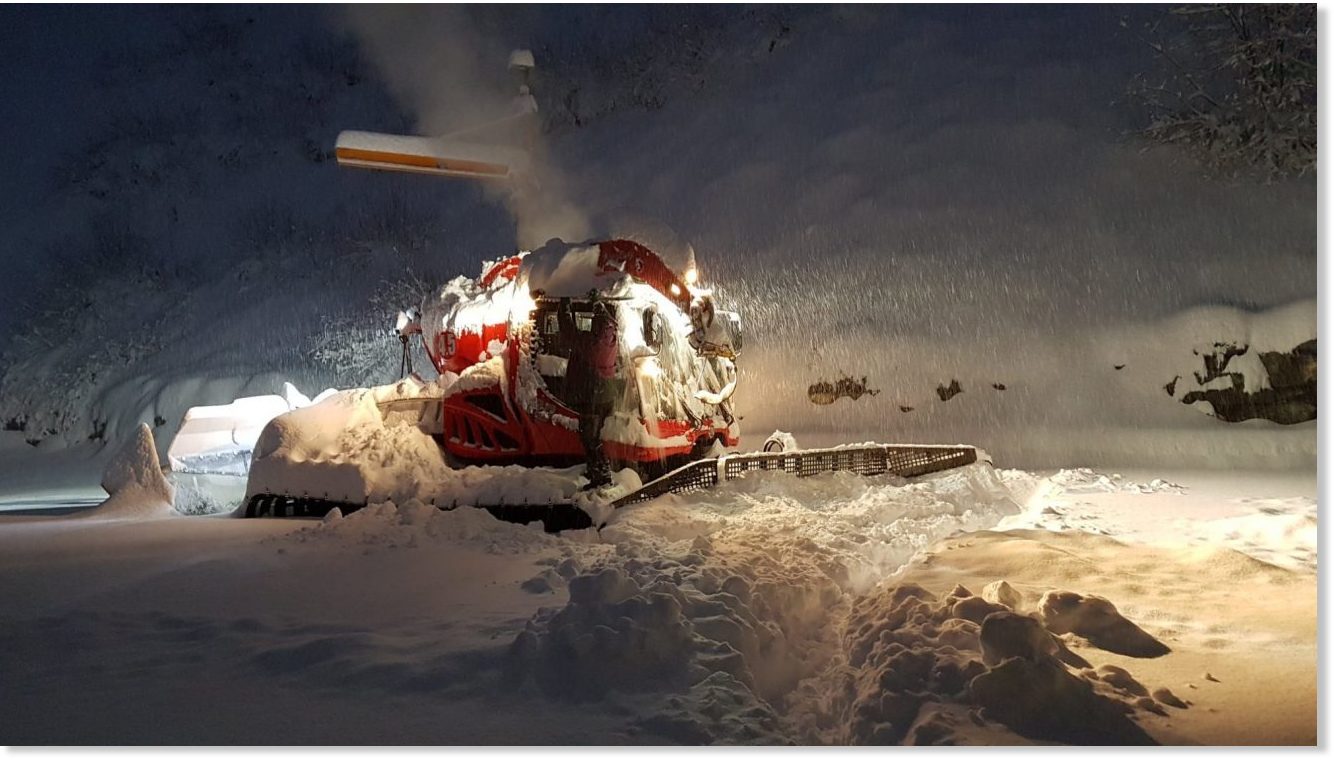
Ice Age Farmer Report: Mini Ice Age Cancelled! Now back to regularly scheduled geoengineering

snow plough
Seismic shifts in human consciousness actively happening -- eyes and minds are opening all around, and conversations are happening, where there was before no receptivity! Record colds, record snows, global temps dropping. Yet the media flogs the dead horse of Global Warming and now publicly advances geoengineering . It will get stranger yet. And you must prepare.


Sources

Snowflake

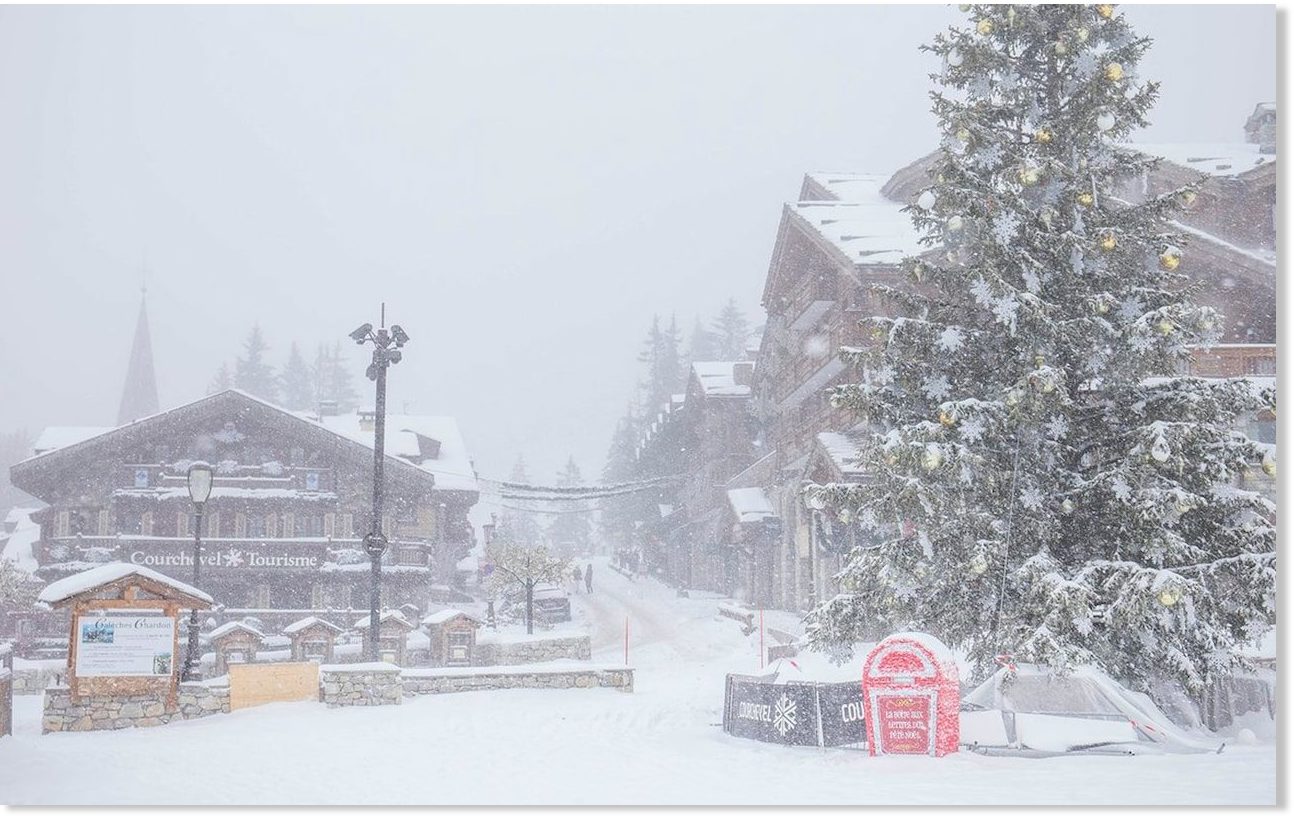
Alps battered by snowstorm over the weekend - up to 100 cms (almost 40 inches) falls

Resorts across the world's biggest ski ares Les Trois Vallées have been hit by heavy snow and wind
Winter has arrived with a vengeance in the Alps after the biggest storm of the season battered ski resorts across France, Austria, Italy and Switzerland over the weekend.

After a slow start to the ski season, with some resorts having to postpone their openings due to a lack of snow, the tables have turned and now resorts are dealing with too much snow and strong winds, meaning some ski areas have had to close due to high avalanche risk.

"There were significant falls of snow across the majority of the Alps at the weekend, with the being snow pushed down from the north and west. All resorts but the most southern regions were lucky enough to get between 30cm and 100cm," said John Armstrong from myweather2.com. These include Tignes (60cm), Courchevel (40cm), Verbier (50cm), Zermatt (60cm) and St Anton (30cm).


Snowflake Cold

Bitterly cold temperatures recorded across South Korea

fire cold
© KBS News
Bitterly cold temperatures have gripped Korea on the second weekend of December, even though winter is only just beginning.

The season's first cold weather warnings have been issued in Gangwon and northern Gyeonggi provinces while advisories are in place in the central region and North Gyeongsang Province.

These areas are reporting temperatures below minus ten degrees Celsius.

According to the Korea Meteorological Administration (KMA), Cheorwon in Gangwon Province recorded the lowest morning temperature of minus 20-point-four degrees on Saturday.


Snowflake Cold

Beijing endures one of the coldest December days on record - Snow flies in Shanghai

map china
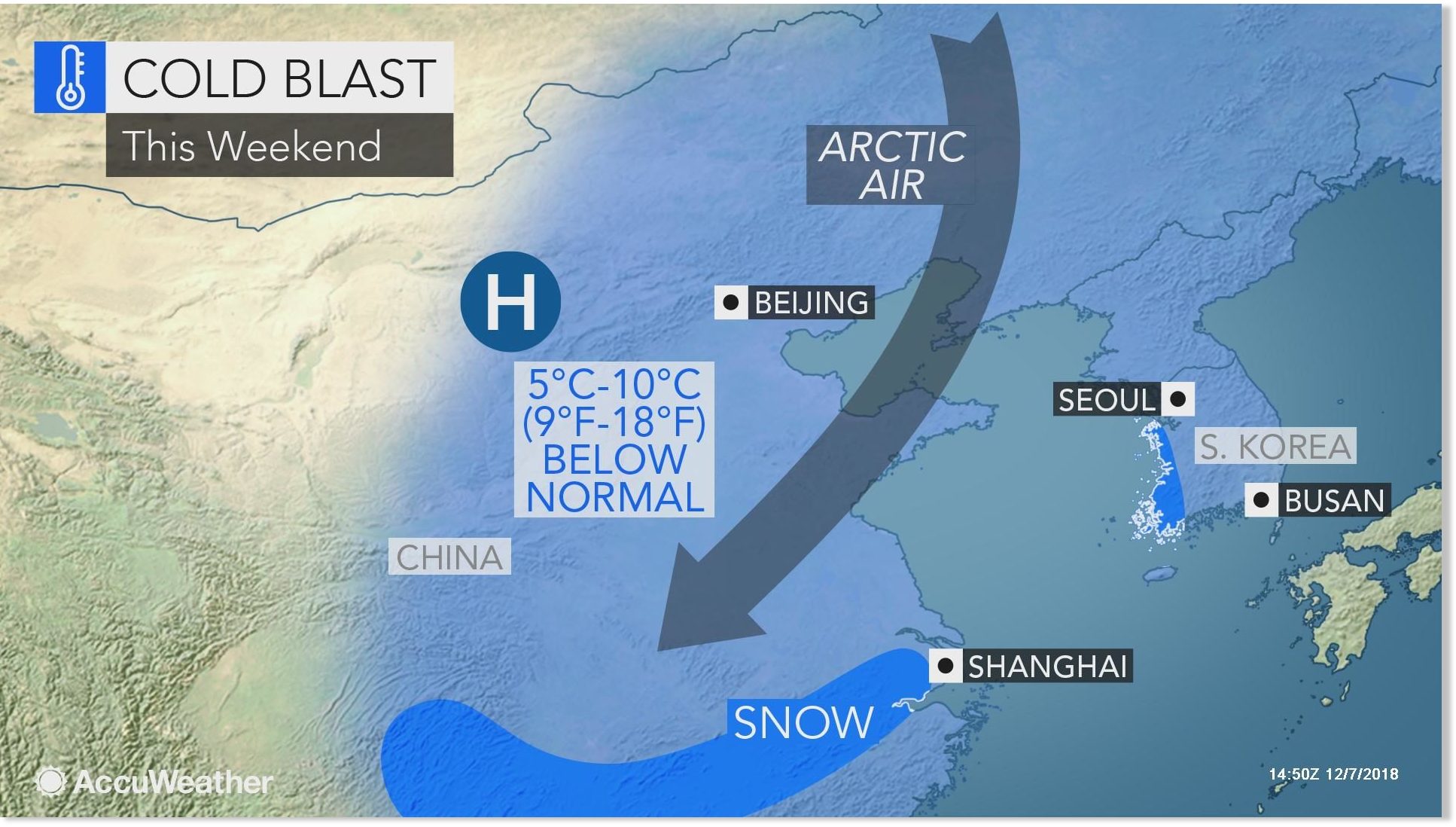
Bitter cold will continue to have a firm grip on eastern Asia through at least this weekend, forcing residents to bundle up. This will also lead to snow opportunities.

A mild autumn and start to December came to a bone-chilling end as bitterly cold air reached Beijing and northeast China on Thursday.

The cold air quickly pressed southward, encompassing much of eastern China and the Korean Peninsula by Friday.

Friday was one of Beijing's coldest December days on record as temperatures were held to just shy of 6 below zero Celsius (21 F). Biting winds created dangerously lower AccuWeather RealFeel® Temperatures of 18 below zero C (zero F).


Comment: Earlier during the same week: Temperatures plunged to minus 40 degrees and lower in China's northeast prompting unprecedented weather warning


Ice Cube

Siberia - FAR colder than normal

Google Translated

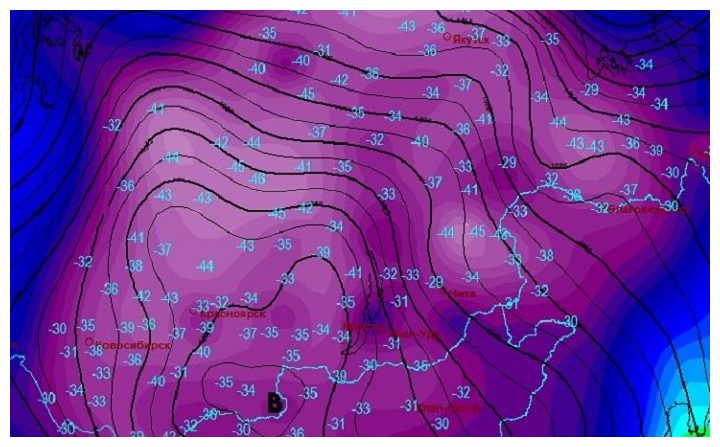
Extensive cold anticyclone swept most of Siberia and the Far East, capturing the territory of Mongolia. Now the anticyclone is at the stage of its maximum development, its power is 1062.5 hPa. In the coming days, its weakening and destruction will begin, the pressure at its center will drop to 1030.0 hPa.
Pressure + Temp over Siberia
© GismeteoSurface pressure map and minimum air temperature on December 6, 2018.
On Tuesday in the south of Eastern Siberia and the western regions of the Far East winter came with frosty weather, after which the frosts in the region intensified every day. The lowest air temperature in the Irkutsk Region is noted in Erbogachen: −47.2 degrees on 4 December. On the night of December 6, throughout the region, with the exception of areas of Baikal, the minimum air temperature was below 30 degrees below zero. In Irkutsk, the coldest night since the beginning of the winter period was observed today: −31.1 in the city, near the meteorological station, and −34.3 degrees near the airport.