Extreme Temperatures
S


Attention

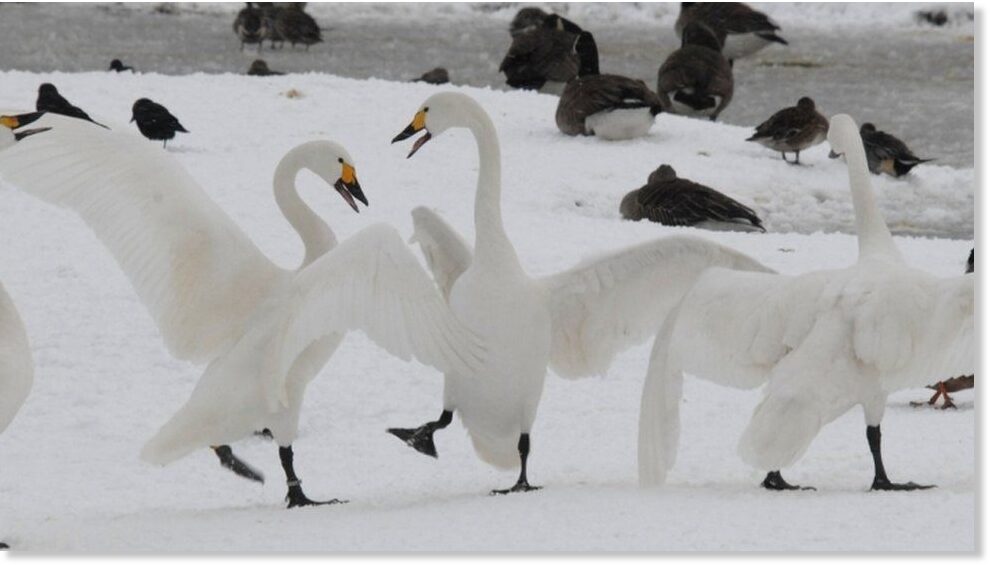
Storm Darcy forces Bewick's swans heading for the Arctic tundra to 'reverse migrate' back to Slimbridge, UK

Bewick's swans return to the Arctic tundra in the early spring to mate, having flown to the UK to avoid a harsher winter
© WWTBewick's swans return to the Arctic tundra in the early spring to mate, having flown to the UK to avoid a harsher winter
A flock of Bewick's swans which had begun their migration from the UK to the Arctic tundra have turned back due to Storm Darcy.

Twenty birds had set off from Slimbridge Wetland Centre last week but 12 reappeared at the site just four days later.

Eleven had previously left from the centre and one new Bewick's swan, which staff have now named Darcy, tagged along.

Each year, Bewick's swans fly 4,000km to the UK to escape the harsh Russian winter and journey back there in early spring to breed.


Snowflake Cold

After Storm Darcy brings heavy snow, extreme freeze shuts UK schools and roads

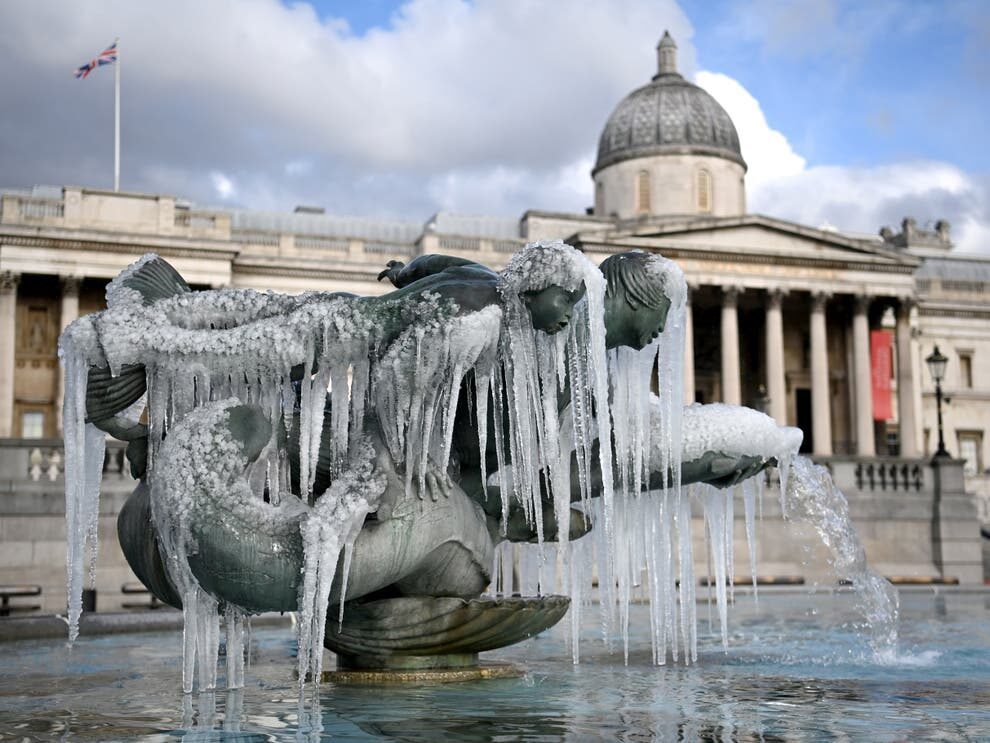
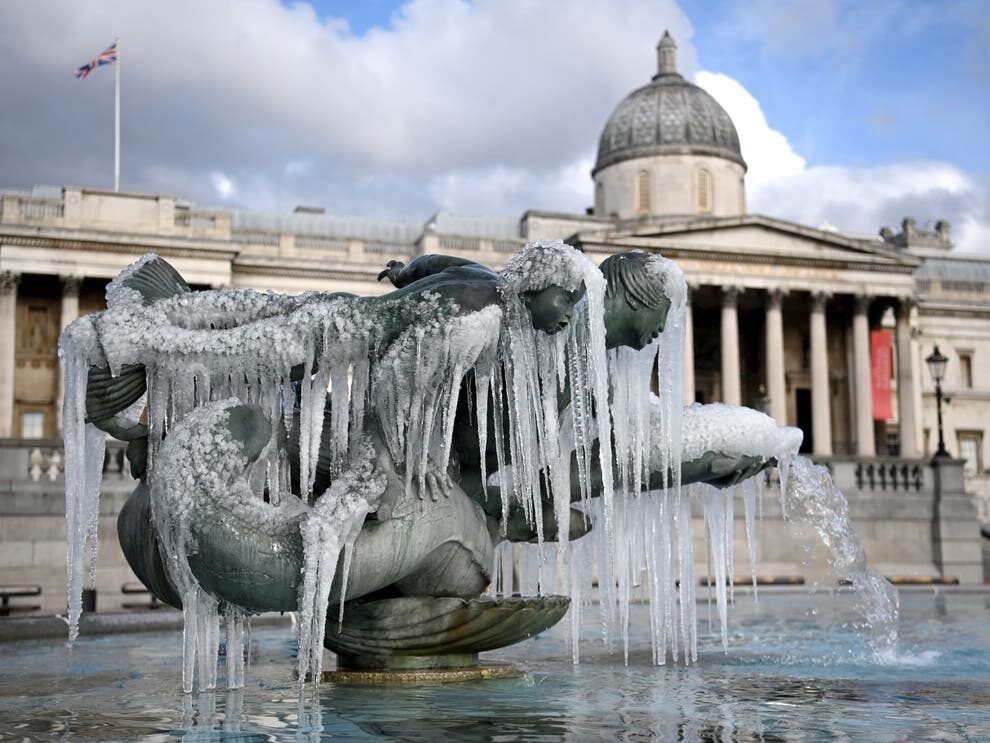
Icicles formed on the fountains of Trafalgar Square in London in the big freeze
© EPAIcicles formed on the fountains of Trafalgar Square in London in the big freeze
Schools closed across the UK as more snow blanketed the country, with what was thought to be the deepest "extreme freeze" for a decade.

About 70 schools shut to the children of key workers and vulnerable pupils in County Durham, as many did in Essex, Suffolk and Derbyshire.

Roads as far south as Kent became impassable because of a thick sheet of ice, and the M20 - the main route across the county - was closed in both directions on Wednesday following a crash.

Forecasters warned that further travel disruption was likely, with roads too treacherous to use, and cancelled rail services.

National severe weather warnings for snow and ice have been issued for much of the UK for the rest of this week.

Met Office chief meteorologist Dan Suri said: "Weather for the rest of this week will continue to be very cold, with daytime temperatures only reaching a degree or so above freezing at best for many, and strong easterly winds continuing to make it feel even colder."

Comment: Dangerously cold temperatures pour into Europe this week


Snowflake Cold

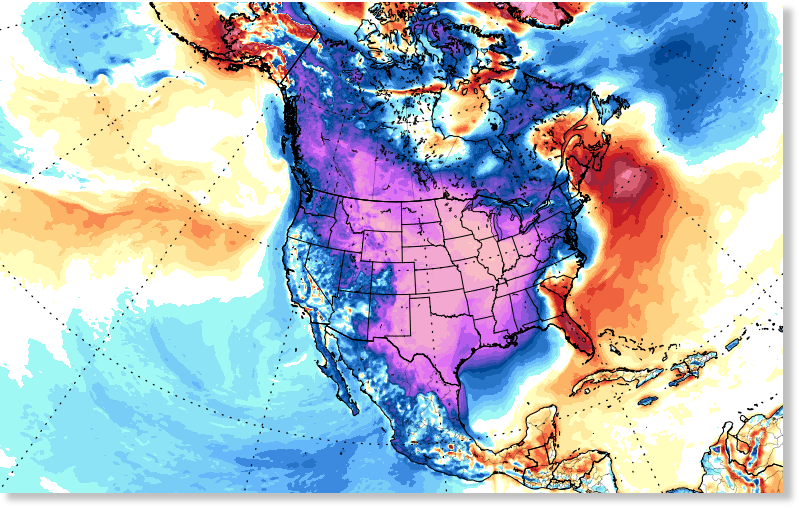
North America's widespread and record-breaking Arctic outbreak set to intensify further

cold map
Hundreds of COLD RECORDS have fallen across North America over the past few days, and hundreds - potentially thousands - more are expected to tumble over the coming 10-or-so days as the Arctic descends south on the back of a weak and wavy "meridional" jet stream.

"Early February brings deadliest week in the U.S. for avalanches since 1910," reads a thedenverchannel.com headline dated Feb. 8 (1910 fell during the solar minimum of cycle 14, a weak solar cycle very similar to that just experienced - cycle 24).

The article goes on, pointing out that between between Jan. 30 and Feb. 6 a total of 15 people died in avalanches across the United States. In Colorado alone, since Jan. 29, 2021, more than 500 avalanches have been reported to the Colorado Avalanche Information Center (CAIC).

Comment: U.S. avalanche death toll reaches 15 in a week - Colorado records 500 avalanches at the same time

Related: Dangerously cold temperatures pour into Europe this week


Snowflake Cold

Record cold invades Moscow - Eiffel Tower requires blowtorch - Autobahn chaos in Germany - Summer chill blamed for mass bird deaths in Australia

snow
As the MSM doubles-down on its catastrophic global warming narrative, the planet is busy nosediving into its next cooling epoch: the Grand Solar Minimum.

RECORD COLD INVADES MOSCOW

As reported by themoscowtimes.com, western Russia has been hit by bitter cold this week, and has joined central and eastern regions which have been battered by brutal Arctic lows of -58.3C (-73F) and beyond for months now.

Moscow is suffering its coldest weather of the past decade, according to the MT article, with Muscovites suffering lows of -20C (-4F):

Comment: Hundreds of drivers spend night on Autobahn as Germany's snow chaos continues

Cold weather blamed for mass deaths of tree martin birds in Western Australia


Snowflake Cold

Dangerously cold temperatures pour into Europe this week

cold temperatures Europe
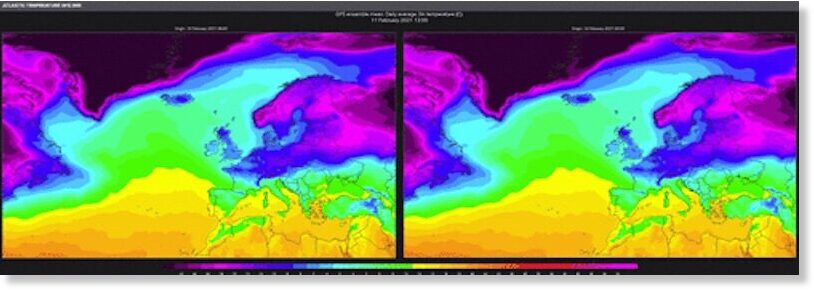
While the Arctic blast over the central US is set to worsen in the coming days (see: here & here), temperatures in northern Europe are set to dive as low as -20 degrees Celsius (-36 degrees Fahrenheit), data firm Maxar Technologies said in a report on Wednesday.

The pattern of exceptionally frigid air blasting parts of the US and Europe at the moment is due to a disruption of the polar vortex, which has allowed Arctic air to spill south into North America and Europe.

Maxar said European heating degree days (HDD) between Feb. 10-14 would register around 102, which is well above the ten-year average of 82.1. HDD is a measurement designed to quantify the demand for energy needed to heat a building.

However, there is good news following dangerously cold air that has poured into Europe since early January and sent natural gas prices sky-high - that is - temperatures are expected to return to normal by next Friday across the UK, continental Europe, and the Nordic region.

Snowflake Cold

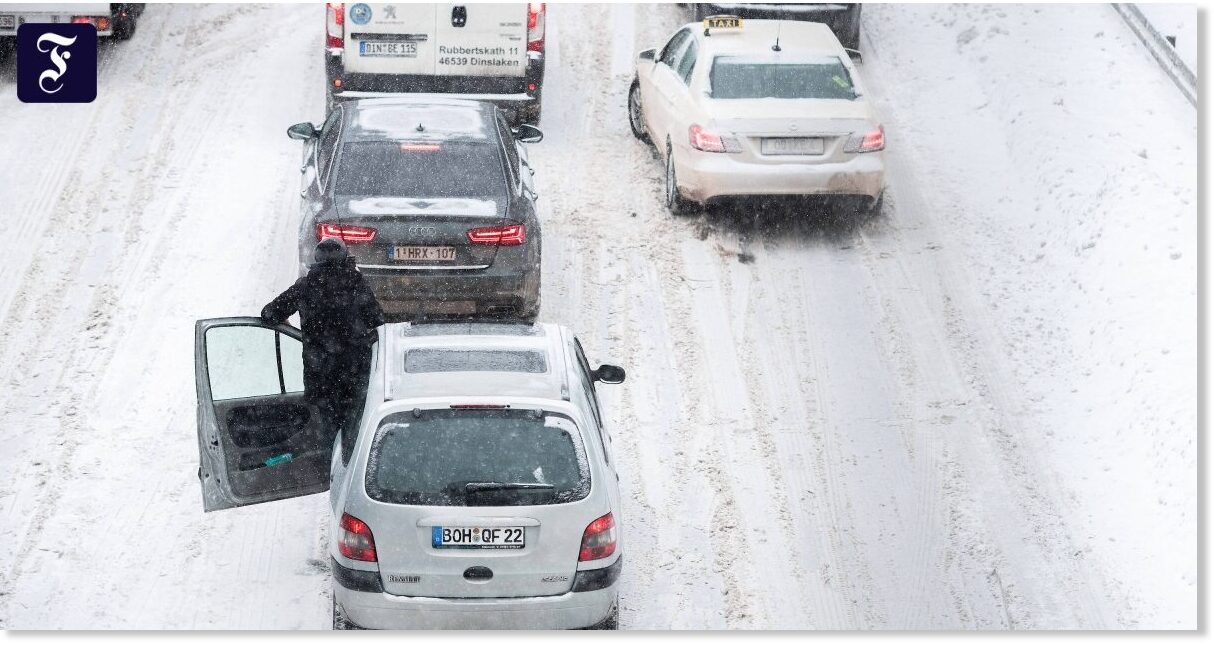
Hundreds of drivers spend night on Autobahn as Germany's snow chaos continues

snow
Long traffic jams built up on motorways in several regions of Germany due to the freezing conditions, leaving hundreds of people stranded in their cars.

The worst log jam came on the A2 motorway outside Bielefeld, in North Rhine-Westphalia where an enormous 37 kilometre line of traffic built up on both sides of the road on Monday night. The queues stretched all the way into the state of Lower Saxony and had still not been cleared by Tuesday morning.

The A2 was blocked in both directions due to trucks coming to a standstill in the snow and not being able to get out. Police reported that hundreds of drivers had to spend the night in their cars.

Video footage showed shivering drivers huddled in their vehicles, complaining of going for hours without food as temperatures plunged to minus 12 degrees Celsius.


Rose

Plants blooming 20 days earlier over last 30 years

hay fever
© Colin Hawkins/Getty Images/Cultura RFPollen released by plants is also more intense than in 1990 in bad news for those with allergies, research in US and Canada finds
The climate crisis is multiplying the miseries faced by people with allergies, with new research finding that the pollen season in North America is now an average 20 days longer than it was three decades ago.


Comment: There's much more at stake than simply people's allergies: Spring arriving earlier across the US throwing wildlife into disarray
When species that depend on one another — such as pollinating insects and plants seeking pollination - don't respond similarly to changing conditions, populations suffer.

Rising global temperatures are helping lengthen the period of time, typically in spring, when pollen is released by plants, trees and grasses, according to the study, published in Proceedings of the National Academy of Sciences.


Comment: Throughout the article they erroneously claim that this is solely due to 'warmer winters', but, if that was the case, then why have farmers been repeatedly losing their crops to unseasonable frosts?


In an analysis of 60 pollen-collecting stations across the US and Canada, the pollen season is now 20 days longer on average than it was in 1990. The season is also becoming more intense, with significantly larger quantities of pollen being detected.

Comment: The Guardian is clearly ideologically possessed with its erroneous claims of global warming, and their reporting is more often than not warped to fit an agenda, in doing so they blind themselves to what's really going on.

What we're seeing, at least in part, is a meandering jet stream causing extremes of weather; unseasonable warmth often followed by record cold. This year is a good example:

See also: For more, check out SOTT radio's:


Snowflake Cold

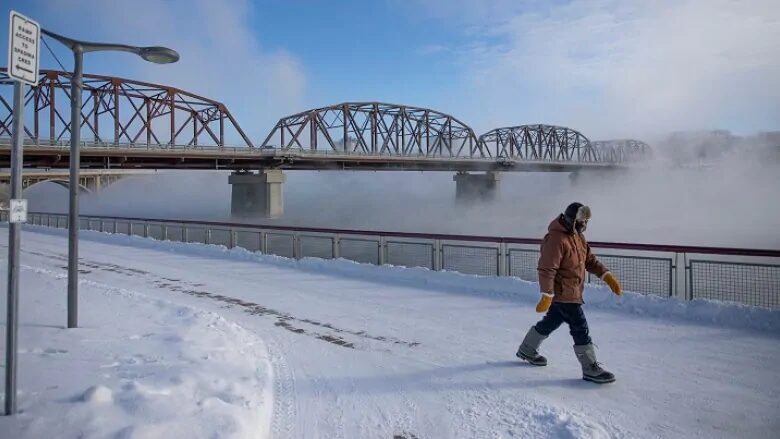
Polar vortex breaks temperature records across Canadian Prairies

Cold weather in Canada
© Kayle Neis/The Canadian Press
A polar vortex continues to bring bitter cold to the Prairies, resulting in cancellations of schools and buses in all major Prairie cities.

A mass of cold air arrived on Sunday, setting daily temperature records in Alberta, Saskatchewan and Manitoba.

According to Environment Canada, 22 cold-weather records were broken throughout the three provinces.

The coldest temperature was recorded in Uranium City, about 1,045 kilometres northwest of Regina, where it was -48.9 C, breaking a previous record of -40 C set in 2019.

In Alberta, the lowest temperature was recorded in Fort Chipewyan, about 710 km northeast of Edmonton, where it was -47.3 C, breaking the previous record of -45.6 C set in 1936.

Arrow Down

U.S. avalanche death toll reaches 15 in a week - Colorado records 500 avalanches at the same time

An aerial view of the deadly avalanche site in Millcreek Canyon, Utah, Feb. 6, 2021.
© Wasatch Backcountry RescueAn aerial view of the deadly avalanche site in Millcreek Canyon, Utah, Feb. 6, 2021.
In backcountry areas across the United States, from Alaska to Colorado to New Hampshire, hundreds of avalanches rumbled down mountains in early February, ending in the most deadly week for avalanches in more than a century.

Between Jan. 30 and Feb. 6, 15 people died in avalanches in the U.S. — the most in that time frame since 1910, when 96 people died on the west side of Stevens Pass in Washington in a massive avalanche.

In total, 21 people have died in avalanches in the country in the 2020-2021 season as of Monday, including:

Snowflake Cold

Alpine skiing world championships postponed after storm dumps 3 feet of snow - 15 FEET in a month

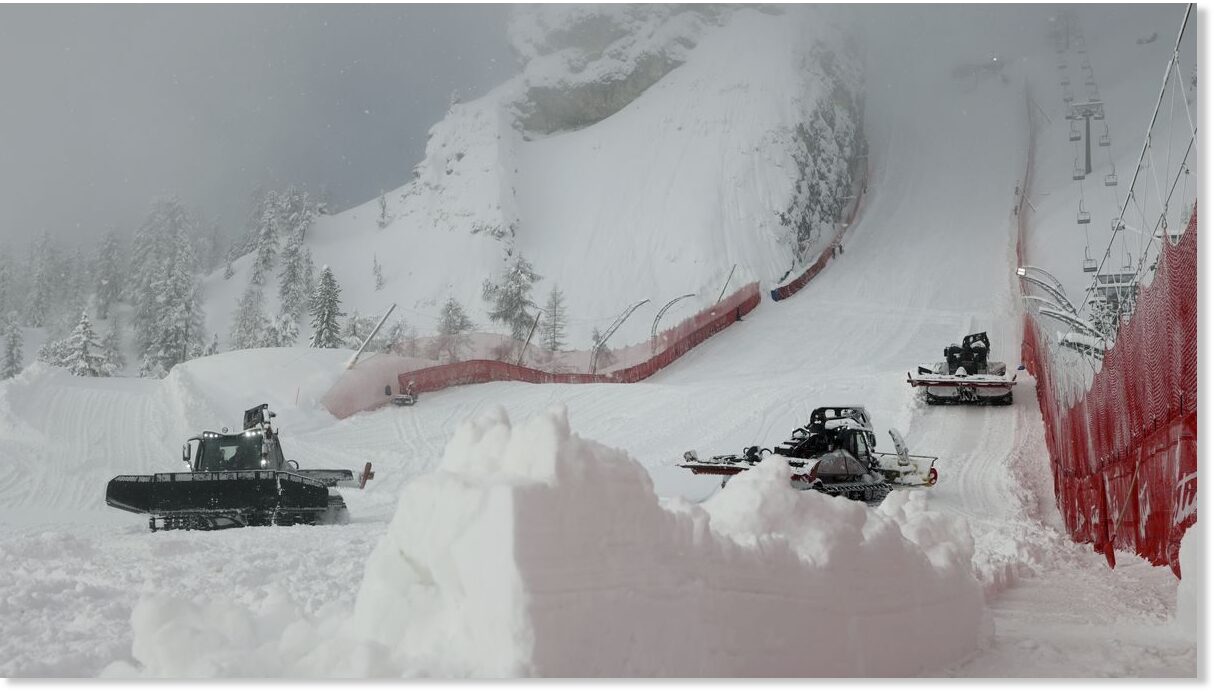
Snowcats clear the snow along the Olympia delle
© Marco TrovatiSnowcats clear the snow along the Olympia delle Tofane course after a women's alpine combined race was canceled due to heavy snowfall, at the alpine ski World Championships in Cortina d'Ampezzo, Italy, Monday, Feb. 8, 2021.
No fans. Now no race.

The opening event of the Alpine skiing world championships scheduled for Monday was postponed due to heavy snowfall.

Organizers called the women's combined off with no immediate new date for the race announced, although the International Ski Federation said information about rescheduling would come later.

A meter (3 feet) of snow has fallen since Sunday and more was still coming down Monday afternoon, making it nearly impossible to create a hard and reliable racing surface.