Secret HistoryS


Blue Planet

Humans migrated from Europe to the Levant 40,000 years ago

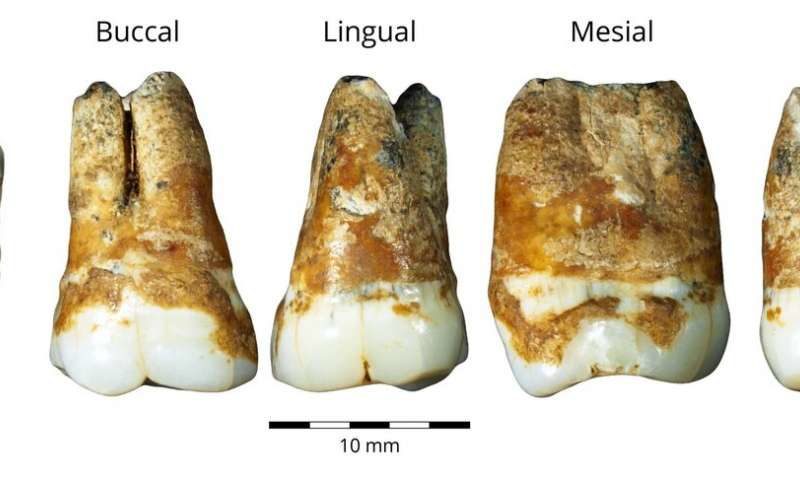
molars
© Dr. Rachel Sarig.Upper and lower molars taken from the Manot cave, dated to 38,000 years ago, showing a mixture of characteristics.
Who exactly were the Aurignacians, who lived in the Levant 40,000 years ago? Researchers from Tel Aviv University, the Israel Antiquities Authority, and Ben-Gurion University now report that these culturally sophisticated yet mysterious humans migrated from Europe to the Levant some 40,000 years ago, shedding light on a significant era in the region's history.

The Aurignacian culture first appeared in Europe some 43,000 years ago and is known for having produced bone tools, artifacts, jewelry, musical instruments, and cave paintings. For years, researchers believed that modern man's entry into Europe led to the rapid decline of the Neanderthals, either through violent confrontation or wresting control of food sources. But recent genetic studies have shown that Neanderthals did not vanish. Instead, they assimilated into modern human immigrant populations. The new study adds further evidence to substantiate this theory.

Comment: See also: And check out SOTT radio's:


Brick Wall

Best of the Web: Fall of the Berlin Wall - 30th anniversary: Don't forget Gorbachev's key role in re-uniting Germany and creating EU

Mikhail Gorbachev
© AFP / VITALY ARMANDMikhail Gorbachev (L) and German Chancellor Helmut Kohl shake hands as they exchange documents after signing several agreements 13 June 1989 in Bonn
The German foreign minister's view of the collapse of communism and the fall of the Berlin Wall owes more to fairy tales than reality, writes John Laughland.

As the 30th anniversary of the fall of the Berlin Wall approaches, it is inevitable that there will be a deluge of sentimentalizing about that great event. German Foreign Minister Heiko Maas has given us a taste of things to come in an editorial published in 26 EU countries, where he thanked "the hundreds of thousands of East Germans who took to the streets to protest for freedom... the Gdansk shipyard workers, the singing revolutionaries in the Baltic countries, the Hungarians who were the first to cut through the Iron Curtain... the pioneers of Charter 77 in Prague, those who took part in the Candle Demonstrations in Bratislava, the revolutionaries of Timișoara".

"In other words, all the women and men whose desire for freedom swept away walls and barbed wire. And we have our friends and Alliance partners in the West, as well as Gorbachev's policy of glasnost and perestroika, to thank for this, paving the way to reunification," he wrote.

Comment: Look, we get it; the sicko elites in today's Europe are gloating about how they 'saved Europe'. That's rank propaganda, obviously. The 'fall of the wall' couldn't have happened without the USSR letting it happen.

But is even that reason to celebrate?? Maybe it was for a couple of decades, but now... totalitarianism is pouring out of every Western orifice.


Brick Wall

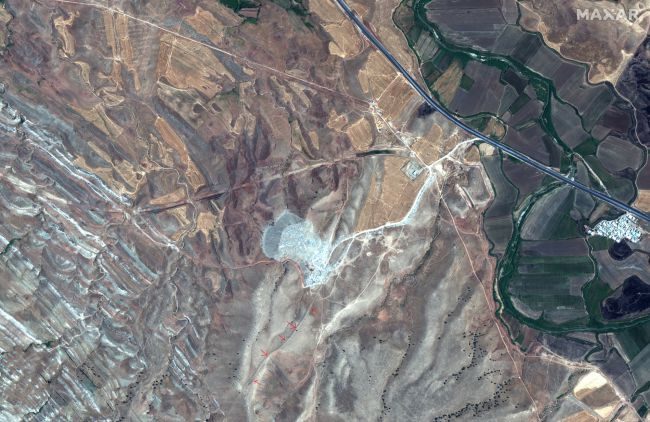
Ancient 70-mile-long wall found in Western Iran

Gawri
© (Image: 2019 Maxar Technologies)This satellite image was taken on July 31, 2019 by the WorldView-2 satellite. The red arrows show a surviving section of the Gawri Wall.
Archaeologists have identified the remains of a stone wall in Iran about the length of the famous Hadrian's Wall that was built across England by the Romans.

The wall, which extends about 71 miles (115 kilometers), was found in Sar Pol-e Zahab County in western Iran.

"With an estimated volume of approximately one million cubic meters [35,314,667 cubic feet] of stone, it would have required significant resources in terms of workforce, materials and time," wrote Sajjad Alibaigi, a doctoral student in the department of archaeology at the University of Tehran, in an article published online in the journal Antiquity. The structure runs north-south from the Bamu Mountains in the north to an area near Zhaw Marg village in the south, Alibaigi wrote.

Comment: See also:


Fire

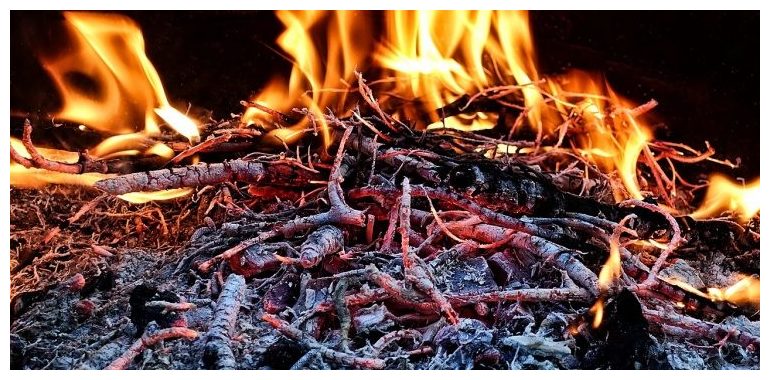
Neanderthals were able to control fire

Fire
© Arkeolojik Haber
Fire starting is a skill that many modern humans struggle with in the absence of a lighter or matches. The earliest humans likely harvested fire from natural sources, yet when our ancestors learned the skills to set fire at will, they had newfound protection, a means of cooking, light to work by, and warmth at their fingertips.

Just when this momentous acquisition of knowledge occurred has been a hotly debated topic for archaeologists.

Now, a team of University of Connecticut researchers, working with colleagues from Armenia, the U.K., and Spain, has found compelling evidence that early humans such as Neanderthals not only controlled fire, but also mastered the ability to generate it.

"Fire was presumed to be the domain of Homo sapiens but now we know that other ancient humans like Neanderthals could create it," says co-author Daniel Adler, associate professor in anthropology. "So perhaps we are not so special after all."

Their work, published today in Scientific Reports, pairs archaeological, hydrocarbon and isotope evidence of human interactions with fire, with what the climate was like tens of thousands of years ago.

Info

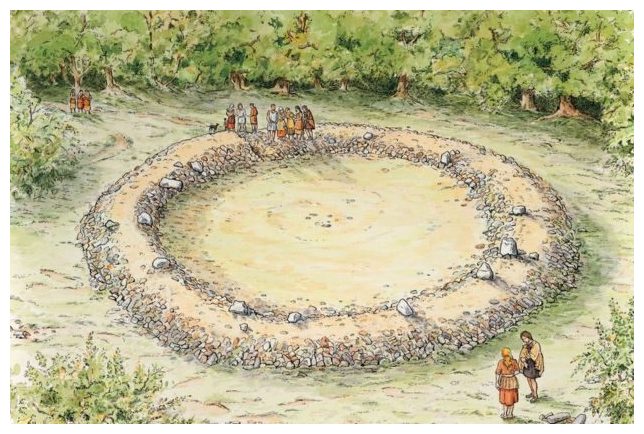
Bronze Age ring cairn monument discovered in England

Ring Cairns
© Anne LeaverArchaeologist Jon Hoyle said nobody knows precisely what ring cairns were used for.
A previously unknown Bronze Age monument has been discovered hidden in woodland in the Forest of Dean following an airborne laser scan.

The ritual monument, known as a ring cairn, dates back to about 2,000 BC.

It consists of a circular bank with several small limestone standing stones on top.

Archaeologist Jon Hoyle, who found it, said it was the only site of its kind known about in Gloucestershire, and was a "very significant" discovery.

It was identified following a LiDAR (light detection and ranging) survey of the Forest of Dean.

The technique used laser beams fired from an aeroplane to create a 3D record of the land surface, effectively removing the trees from the landscape.

Mr Hoyle said when he studied the data, he spotted an "extremely circular" feature, which he thought initially might be a World War Two gun emplacement.

After visiting the site, at a secret location near the village of Tidenham, he realised it was much older, dating to between 2,500 BC and 1,500 BC.

Attention

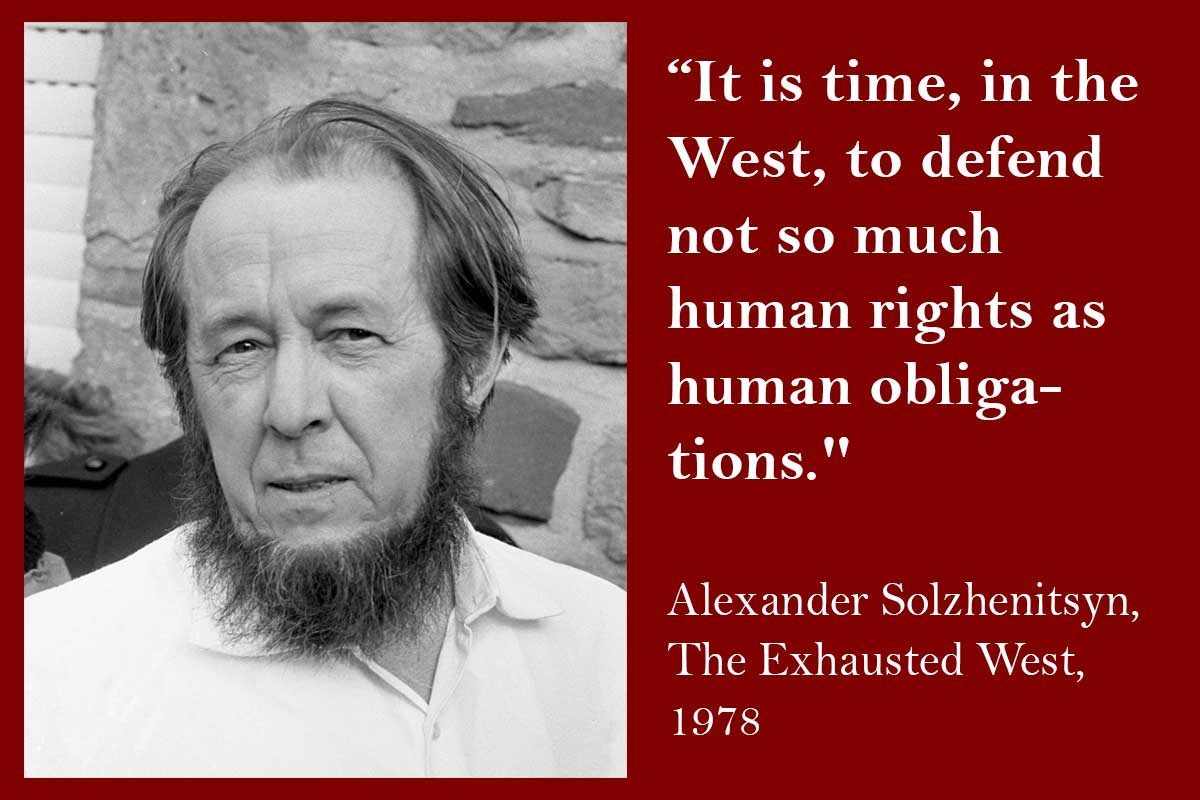
A World Split Apart: Solzhenitsyn's Warning to the West

Solzhenitsyn

Comment: The following is a transcript of the historic speech Alexandr Solzhenitsyn gave at the Harvard Commencement in 1978. Often times, great ideas and men are forgotten or not thought of anymore, but much of what Solzhenitsyn said then is still applicable today 40 years later.


I am sincerely happy to be here with you on this occasion and to become personally acquainted with this old and most prestigious University. My congratulations and very best wishes to all of today's graduates.

Harvard's motto is "Veritas." Many of you have already found out and others will find out in the course of their lives that truth eludes us if we do not concentrate with total attention on its pursuit. And even while it eludes us, the illusion still lingers of knowing it and leads to many misunderstandings. Also, truth is seldom pleasant; it is almost invariably bitter. There is some bitterness in my speech today, too. But I want to stress that it comes not from an adversary but from a friend.

Three years ago in the United States I said certain things which at that time appeared unacceptable. Today, however, many people agree with what I then said...

Comment: For more on Solzhenitsyn and the message(s) he had for the world, see also:


Gem

Staffordshire hoard revealed to be most important Anglo-Saxon find in history

staffordshire hoard
© PA WireStaffordshire hoard: Archaeologists believe it was captured across several mid-seventh century battles
Britain's most spectacular Anglo-Saxon treasures may well have been captured on a series of Dark Age battlefields - during bitter conflicts between rival English kingdoms.

Archaeologists, who have just completed a major study of the finds, now believe that they were captured in several big mid-seventh century battles.

It is likely that the treasures, now known as the Staffordshire Hoard, were seized (in perhaps between three and six substantial military encounters) by the English midlands kingdom of Mercia from the kingdoms of Northumbria, East Anglia and possibly Wessex.

Comment: Evidently our understanding of the period is murky and it would appear a revision of accepted history is in order. See:


Map

The last Neanderthal eagle talon necklace found in Spain

Foradada
© Antonio Rodríguez-HidalgoA falange of imperial eagle with marks of court from Cave Foradada.
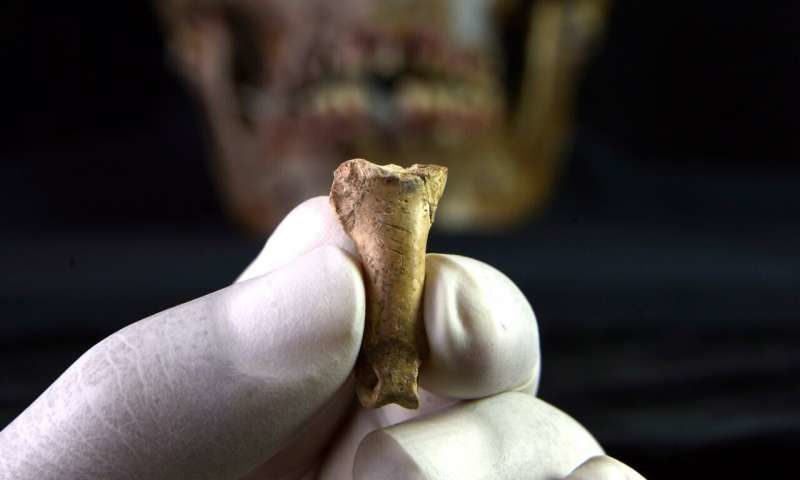
Eagle talons are regarded as the first elements used to make jewellery by Neanderthals, a practice which spread around Southern Europe about 120,000 to 40,000 years ago. Now, for the first time, researchers found evidence of the ornamental uses of eagle talons in the Iberian Peninsula. An article published on the cover of the journal Science Advances talks about the findings, which took place in the site of the Cave Foradada in Calafell. The study was led by Antonio Rodríguez-Hidalgo, researcher at the Institute of Evolution in Africa (IDEA) and member of the research team in a project of the Prehistoric Studies and Research Seminar (SERP) of the UB.

Comment: The Smithsonian reports on the further implications of the find:
"I think it is an important addition to a growing body of evidence of personal ornament usage in Neanderthals, now spanning more than 80,000 years," says Davorka Radovčić, a curator at the Croatian Natural History Museum, Zagreb, who studied the talons at Krapina but was not involved in the new study. We think that the talons are related to the symbolic world of the Neanderthals," Rodríguez says. While it's difficult or even impossible to know what these symbols actually meant to Neanderthals, their use may imply that Neanderthals were practicing a form of communication.

"We're looking at evidence of traditions that have to do with social identification," says John Hawks, an anthropologist at the University of Wisconsin-Madison who wasn't involved in the study. "Why do you wear ornaments? Why do you go through this trouble? Because you notice something interesting, you want to associate yourself with it, [and] you want it to mark yourself for other people to recognize." Neanderthals are also known to have made birch tar as an adhesive, suggesting they were capable of human-like planning and complex cognition. But a few months ago, another research team published a study claiming that birch tar wasn't actually so hard to make and shouldn't be used as an example of Neanderthals' cleverness.
See also:


People 2

Erika the Red: Were Viking women warriors?

Viking
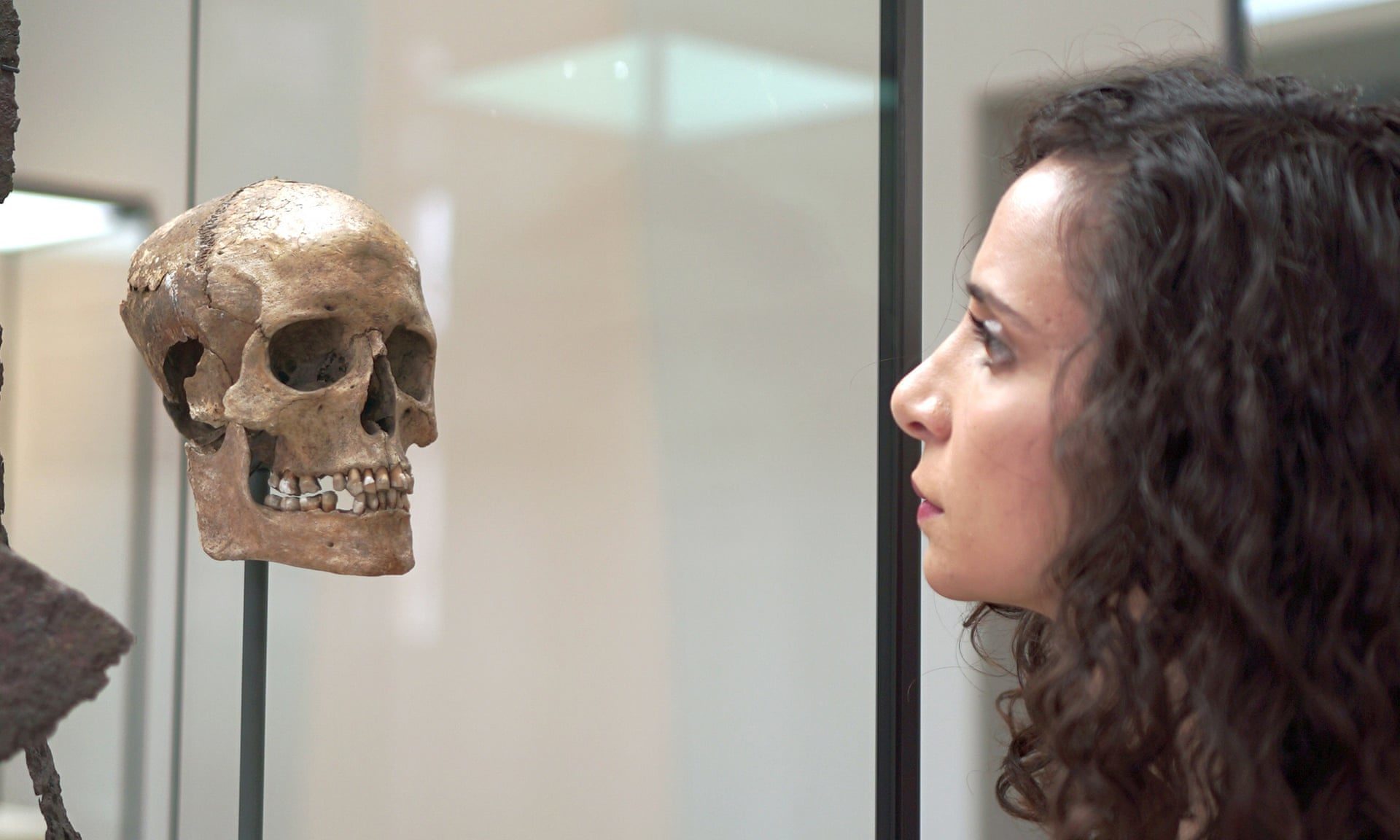
© Eloisa Noble/National GeographicElla Al-Shamahi comes face to face with the Viking woman’s skull.
Think of a Viking warrior and you probably imagine a fearsome, muscular, bearded man. Well, think again. Using cutting-edge facial recognition technology, British scientists have brought to life the battle-hardened face of a fighter who lived more than 1,000 years ago. And she's a woman.

The life-like reconstruction, which challenges long-held assumptions that Viking warrior heroes such as Erik the Red left their women at home, is based on a skeleton found in a Viking graveyard in Solør, Norway, and now preserved in Oslo's Museum of Cultural History. The remains had already been identified as female, but her burial site had not been considered a warrior grave "simply because the occupant was a woman", according to archaelogist Ella Al-Shamahi.

Comment: Interesting commentary can be found in an article published in The Week just last month that calls into question the Viking woman warrior claim:
In other words, there is very little in the history books to support the claim that the skeleton in Bj. 581 was a Viking woman warrior. In fact, we can't say for certain that this individual was a woman, a warrior, or even a Viking.

While the DNA evidence suggests this skeleton belonged to a female [...]

On the one hand, there seems to have been a clear delineation between men and women: On the family farm, chores were gender-coded as either male or female; from the sagas, we learn that cross-dressing was grounds for divorce. On the other hand, it wasn't uncommon for female skeletons to be buried with male-coded objects, such as weapons. We still don't know what this meant to the Vikings, but it does mean that Bj. 581 is not unique.

That the individual buried in Bj. 581 was a warrior is also hard to confirm, because as professor of Viking studies Judith Jesch observed, the skeleton shows no marks or wear that might be associated with battle wounds.

Finally, the grave objects in Bj. 581 are not Scandinavian, which raises the question of whether this person was a Viking at all. Instead, the weapons, the clothes, and the animals found in this grave seem to have originated nearer the Caspian Sea, which is located in Central Asia.
Another article Upper-class Viking men were buried with cooking gear shows that these grave goods could be interpreted in a number of ways:
[...] upper-class men and women generally were buried with the same types of items - including cooking gear.

"The key is a good example. It is often considered to be the symbol of a housewife," Moen said. Nonetheless, almost as many men's graves had keys as women's graves.

However, from his own work in Vestfold, he had the impression that farmers were much more concerned with marking gender in their graves than the upper-class citizens, although he points out that this was not the focus of his research.

There are still a few clear differences between genders for the elite. Men generally have weapons in their graves, while women have jewellery and textile tools, as Moen's work shows. More than 40 per cent of the male graves contained jewellery such as brooches and beads.
See also:


Bad Guys

The CIA's secret mind control quest: Torture, LSD and a 'poisoner in chief'

Sidney Gottlieb
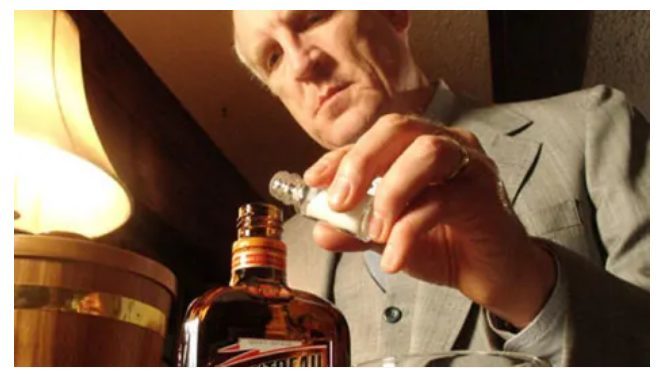
During the early period of the Cold War, the CIA became convinced that communists had discovered a drug or technique that would allow them to control human minds. In response, the CIA began its own secret program, called MK-ULTRA, to search for a mind control drug that could be weaponized against enemies.

MK-ULTRA, which operated from the 1950s until the early '60s, was created and run by a chemist named Sidney Gottlieb. Journalist Stephen Kinzer, who spent several years investigating the program, calls the operation the "most sustained search in history for techniques of mind control."

Some of Gottlieb's experiments were covertly funded at universities and research centers, Kinzer says, while others were conducted in American prisons and in detention centers in Japan, Germany and the Philippines. Many of his unwitting subjects endured psychological torture ranging from electroshock to high doses of LSD, according to Kinzer's research.

"Gottlieb wanted to create a way to seize control of people's minds, and he realized it was a two-part process," Kinzer says. "First, you had to blast away the existing mind. Second, you had to find a way to insert a new mind into that resulting void. We didn't get too far on number two, but he did a lot of work on number one."

Kinzer notes that the top-secret nature of Gottlieb's work makes it impossible to measure the human cost of his experiments. "We don't know how many people died, but a number did, and many lives were permanently destroyed," he says.

Comment: See also: