
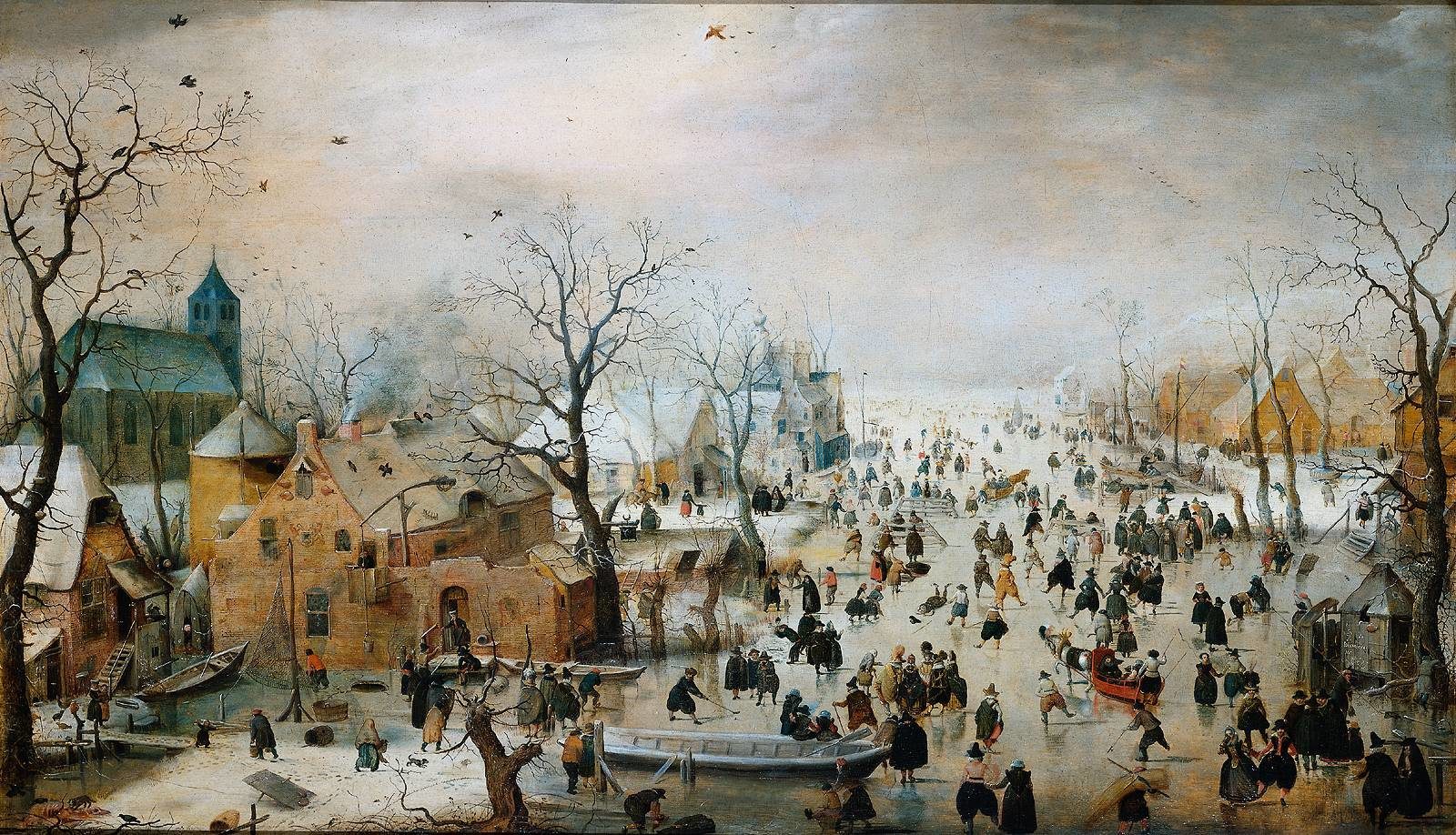
© Rijksmuseum, AmsterdamWinter Landscape with Ice Skaters (c1608), by Hendrick Avercamp. Avercamp was deaf and mute and specialised in painting scenes of the Netherlands in winter.
Yet in the frigid decades of the late-17th century, the Dutch whaling industry boomed. Whalers discovered how to boil blubber aboard their ships or on sea ice, then learned how to transport it from the Arctic to furnaces in Amsterdam. There, labourers boiled the oil until it reached a purity never achieved in the Arctic, giving Dutch whalers a competitive edge in the European market. Shipwrights greased and reinforced the hulls of whaling vessels so that they could slide off thick ice and survive the occasional collision. The governing council of the Dutch Republic - the country that would become the Netherlands of today - allowed a corporate monopoly on whaling to expire, and thereby encouraged competition between hundreds of new whalers. Ironically, by provoking crisis, climate change spurred a golden age for the Dutch whaling industry.

















Comment: See also:
- Greta Thunberg: False Prophet of the Children's Crusade
- Gulf Stream is 15% weaker, region south of Greenland coldest in 1,000 years
- 536 AD: Plague, famine, drought, cold, and a mysterious fog that lasted 18 months
And, for more, check out SOTT's radio shows on the topic:- Behind the Headlines: Earth changes in an electric universe: Is climate change really man-made?
- Adapt 2030 Ice Age Report: Interview with Laura Knight-Jadczyk and Pierre Lescaudron
As well as our monthly documentary tracking the shifts occuring: SOTT Earth Changes Summary - October 2019: Extreme Weather, Planetary Upheaval, Meteor Fireballs