OF THE
TIMES

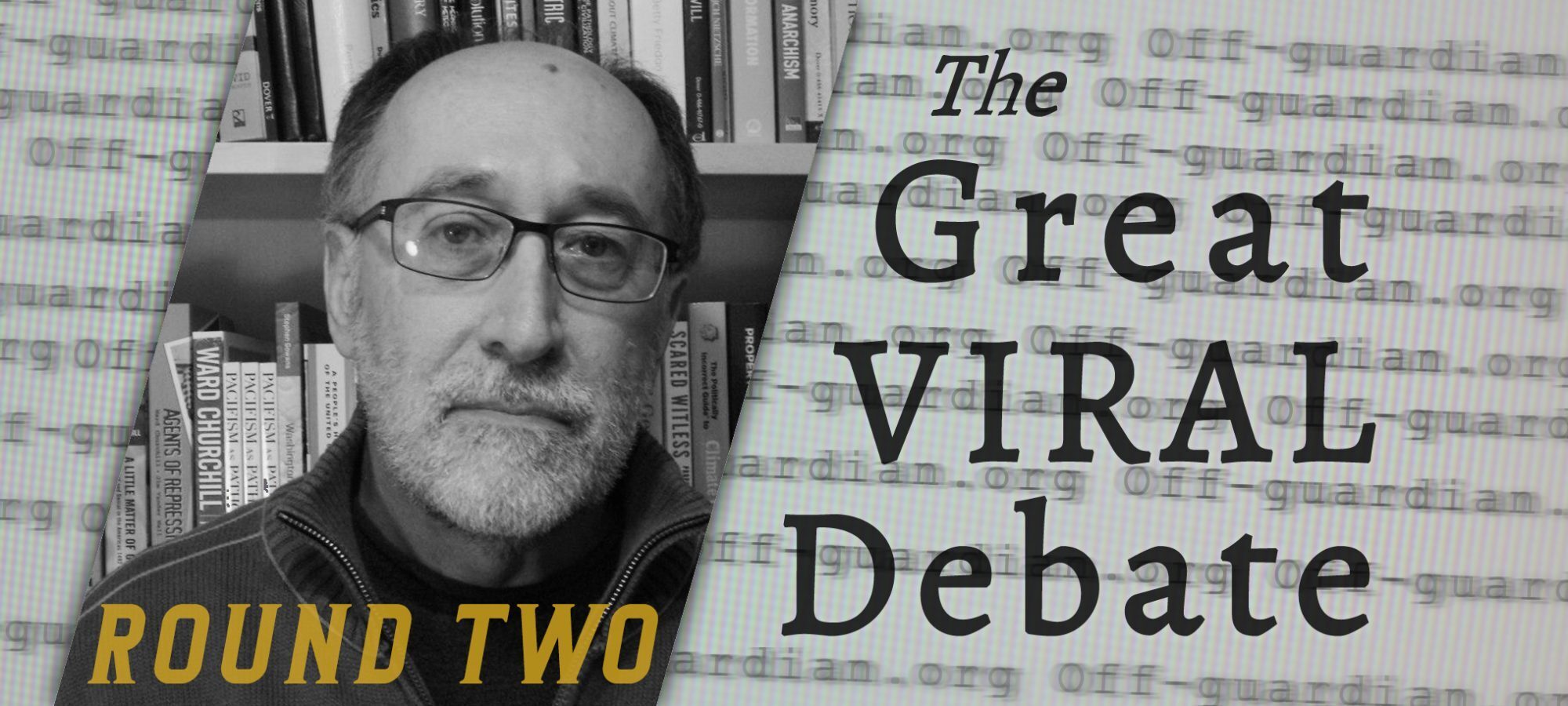
SARS-COV-2 merits suppression measures in order to combat the virus rather than the herd/community immunity approachDr Rancourt, arguing against the proposition, responds to Tim Anderson's first response from 17 Oct:

As TVC's Your View aired on Wednesday morning, host Morayo Afolabi-Brown was interrupted by the sound of shouting in the studio. "I think you should just find a way to take cover. They're already at the gates."The president sent out an appeal:
The broadcast cut out, and shortly afterwards, the station was on fire. Videos shared to social media showed the building engulfed in flames and smoke, as several cars parked outside burned.
"Every car has been burned down. They're burning everything."
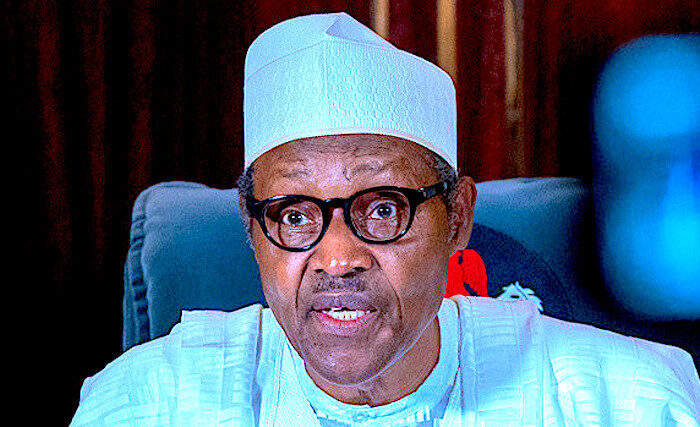
Nigerian president Muhammadu Buhari said: "The Presidency appeals for understanding and calm across the nation, as the implementation of the reforms, gathers pace at Federal and State levels."
It did not address the previous day's shooting at protesters and focused largely on to the establishment of judicial panels to address issues of police brutality across the country. Buhari's office said the dissolution of the SARS was "the first step" in a set of reforms that "will deliver a police system accountable to the Nigerian people." At least 25 were being treated in hospitals as a result of police firing at protesters.
The shooting occurred at the Lekki Toll Plaza in Lagos, where a small group of protesters had gathered in defiance of the curfew. Witnesses to the event posted graphic videos online as well as photos of blood-soaked garments and flags.
According to local media, the Nigeria Civil Society Situation Room, a coalition of over 70 civil society organizations, has called on the National Assembly leadership to urgently summon President Muhammadu Buhari and the inspector general of police, Mohammed Adamu, to explain the circumstances that led to widespread killings in the country.
Protests have been taking place in Nigeria for over two weeks, with demonstrators actively using the social media hashtag #EndSars to gain attention. The SARS unit was abolished earlier this month by the inspector general of police "in response to the yearning of the Nigerian people."

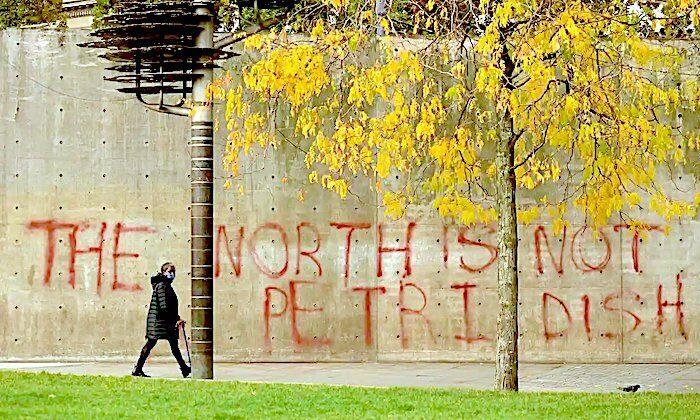
South Yorkshire becomes the fourth region in England to be plunged into a tier-three lockdown, following Liverpool and Merseyside, Lancashire, and Greater Manchester. The move will see pubs, bars, casinos, and gyms shut along with a ban on socializing indoors and further tough restrictions on household mixing.Scotland, as well, is extending restrictions:
Scottish First Minister Nicola Sturgeon has confirmed that Scotland's two-week circuit breaking restrictions will be extended by a further seven days as advisers warn against reopening the hospitality sector on Monday.Back on the continent, Madrid becomes the focus for Spain's restrictions:
The hospitality industry has been shut since October 9 and was intended to reopen on October 25. Under the new plans, pubs, bars and restaurants won't be able to reopen until November 2 at the earliest. The restriction against gathering in homes will also be extended by one week.
The first minister claimed there was reason for "cautious optimism". On Tuesday, 1,739 new Covid-19 infections were registered, with an additional 28 deaths - the highest daily number since May. Sturgeon will be publishing a tiered system of restrictions as well, replacing the current arrangement in the populated territory that includes Glasgow and Edinburgh.
Health Minister Salvador Illa explained that 21 days of "very strict" measures in Madrid have already brought down the number of coronavirus cases in the region, but a curfew is under consideration. Spain's Covid-19 death toll stands at 33,992, while there have been 974,449 confirmed infections in total, according to official government data on Monday. The Community of Madrid's President Isabel Díaz Ayuso has backed curfews across Spain, but said that she did not want another state of alarm. The region has been the worst affected in the country, with 281,388 confirmed Covid-19 cases as of Monday.Czech Republic receives warning of a health system 'collapse':
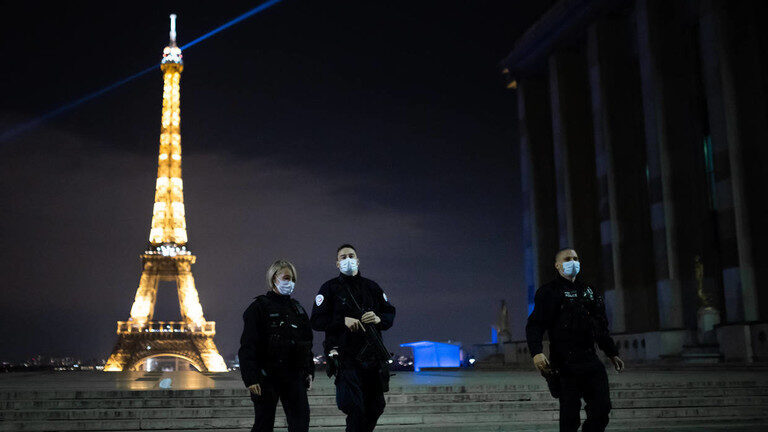
The Czech government has ordered most shops to close, in a bid to prevent the country's health system from collapsing in November under the pressure of Covid-19. The new restrictions, in place from 6am on October 22 until November 3, will force all retail outlets to shut, apart from essential services such as supermarkets and pharmacies. Group sizes outdoors will also be limited to two people, with the exception of households or colleagues.And for the good news: Poland is facing a restriction upgrade but no lockdown - according to its prime minister:
This fresh wave of measures comes as the Czech Republic is now suffering Europe's fastest-growing Covid-19 infection rate. On Tuesday the Ministry of Health reported a record 11,984 new cases of the virus, the country's highest daily total since the pandemic began. It was only on October 9 that more than 8,000 cases were registered in a single day for the first time.
Czech Prime Minister Andrej Babis apologized for the effect of the measures on people's lives, but issued a stark warning that the health system was nearing breaking point. Measures would not be relaxed until the 'R' (reproduction) value decreases to 0.8, and said that a review of an extension to the country's state of emergency - currently in force until November 3 - would be held by October 30.
Poland registered a record in new confirmed COVID-19 infections. Mateusz Morawiecki said he would like the current "red zones" to be extended nationwide, starting Saturday. The capital, Warsaw, and other major cities are already designated "red zones," as are some 150 of Poland's 400 counties.There is overwhelming evidence that the coronavirus restrictions are increasing the rates of infection, versus containment and abatement. Protocols of 'rinse and repeat' guarantee brainwashed officials are unable to assimilate and utilize new information.
Morawiecki said earlier in the day that his government would pursue a "middle of the road" strategy of defending people's health and lives while also protecting the economy and jobs, but avoiding a full lockdown.
"Our strategy is to structure social and economic life in a way that will allow us to continue to learn, work and live without locking down the economy, but at the same time to break the transmission belt of infection."
With the return to schools and universities being linked with the recent sharp spike in infections, the government wants all primary schools to switch to remote learning, and plans to adopt a mixed system for older students.
Fourteen among Poland's more than 130 Roman Catholic bishops have been reported as infected.

Comment: See also: