
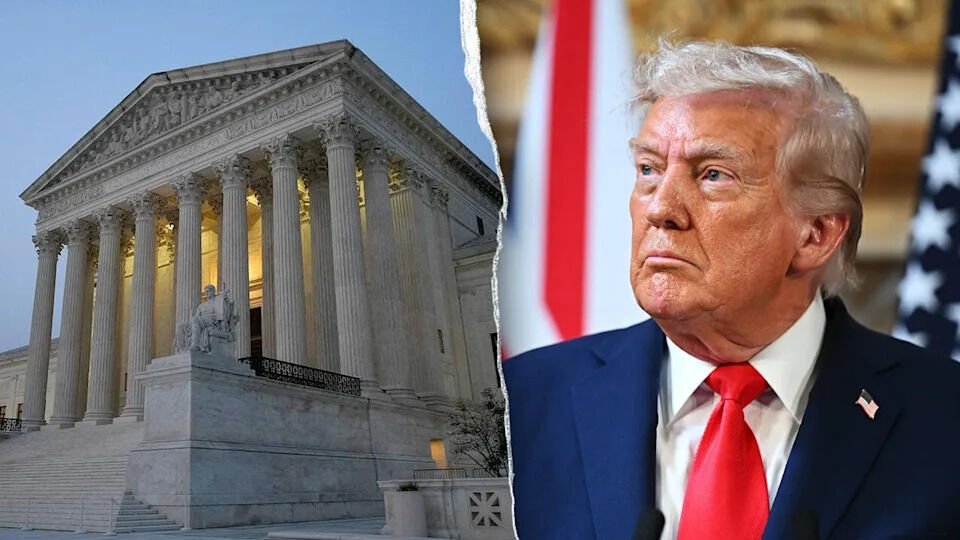
The 6-3 decision centers on an immigration officers' 2012 decision to put lawful permanent resident Muk Choi Lau on immigration parole when he returned from a short trip to China because he had been accused of a counterfeiting crime.
Lau argued that the officer overstepped their authority, and the decision wrongly allowed the Department of Homeland Security under then-President Barack Obama an easier path to removal after he pleaded guilty to selling counterfeit clothes in New Jersey.
The high court disagreed. "Border officers did not have the burden to establish by clear and convincing evidence that Lau had committed a crime involving moral turpitude," Justice Clarence Thomas wrote in the opinion.
Justice Ketanji Brown Jackson dissented, writing that the decision to put Lau on immigration parole effectively sentenced him to "immigration limbo" before he'd been convicted of any crime.
"I worry that the Court has now handed the Government a massive blank check," she wrote in the dissent joined by her two liberal colleagues.
The liberal group Alliance for Justice echoed that concern, saying the ruling could provide an expanded path for revoking green cards.
But Advancing American Freedom, a group founded by former Republican Vice President Mike Pence, called it an important case to allow the removal of people who "abuse the privilege of being granted lawful permanent resident status."
The decision comes as the high court considers a series of immigration-related issues against the backdrop of President Donald Trump's sweeping immigration crackdown, though this case started before Trump took office.
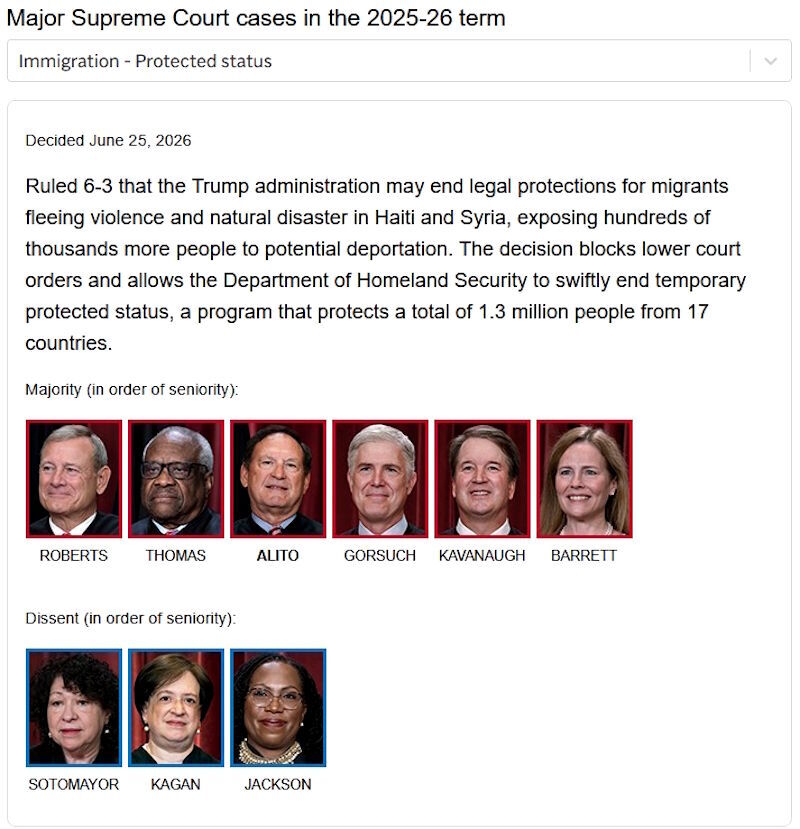
© Associated PressUpdated June 25, 2026 • Majority opinion writers are in boldface type • Reporting by Mark Sherman and Lindsay Whitehurst
The court is also considering cases over Trump's push to end birthright citizenship, potentially revive a restrictive asylum policy and end temporary legal protections for migrants fleeing war and natural disasters in their homelands.




Comment: Epoch Times adds: The Haitians received 'temporary protected status' fifteen years ago.
Trump admin ends temporary protected status for Haitian migrants currently in the US