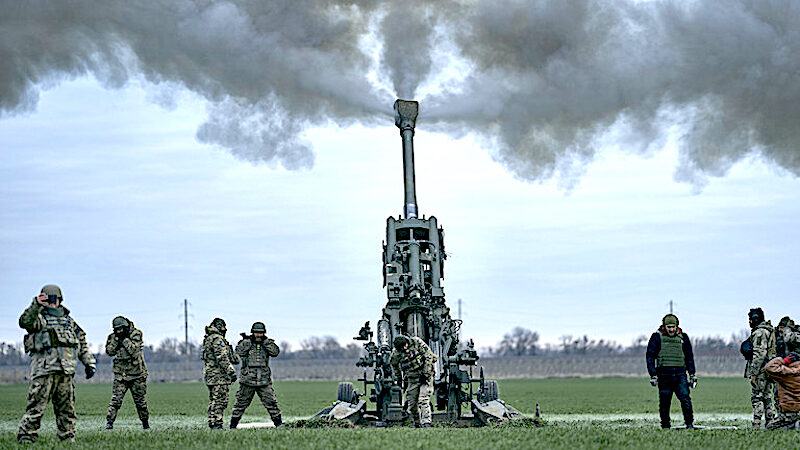
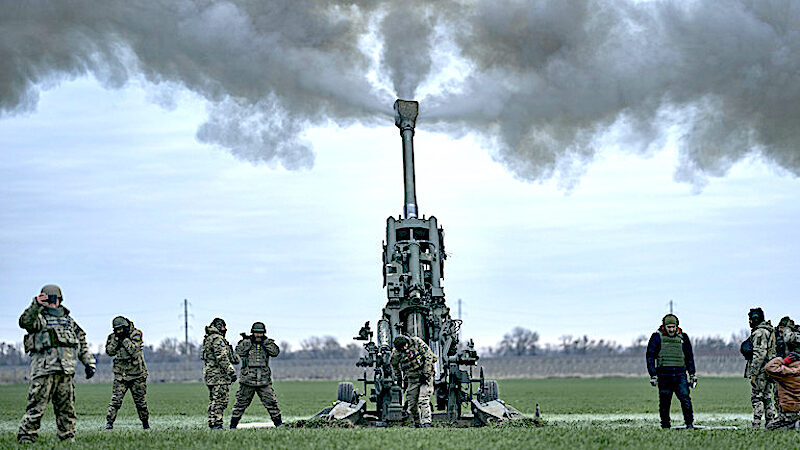
© AP/Libkos, FileUkrainian soldiers fire at Russian positions from a US-supplied M777 howitzer
Kherson region, Ukraine • Jan. 9, 2023
Russia has the upper hand on the front lines as the bloc is no longer able to meet Kiev's needs...
More than 18 months into the conflict between Russia and Ukraine, NATO military aid to Kiev remains a constituent part of the war. This factor seeps into public consciousness, influences the political perception of the conflict, and affects the situation on the battlefield, whichever side of the hostilities people find themselves on. All these aspects are important in their own right, and each will influence the course of the conflict and its eventual outcome.
But how long will NATO be able to provide military assistance to Ukraine?Gloomy prospects for UkraineNATO began providing assistance to Kiev as soon as the conflict started in 2022,
and the volume of aid increased throughout the course of last year. This assistance largely influenced the attitude of ordinary Ukrainians toward the hostilities and reinforced the myth of a speedy and inevitable "victory" for Kiev, certain to happen
"because the whole world supports us."The same attitude prevailed in the area of
public policy - the aid provided by a particular country indicated whose side it was on: Ukraine's "allies" in NATO (primarily the US) provided direct military assistance, while
"neutral" countries offered only financial and organizational assistance, or no help at all.
On the battlefield,
NATO aid is fully responsible for the combat capabilities of the Armed Forces of Ukraine (UAF). If this aid is discontinued, the Ukrainian army will lose its combat capability within a few weeks, or as soon as the current ammunition stocks run out.
How likely is it that NATO assistance will continue? To answer this question, we need to understand the stocks of weapons and military equipment among members of the bloc - and it is important to note that many are lacking in this regard.









Comment: See also: