
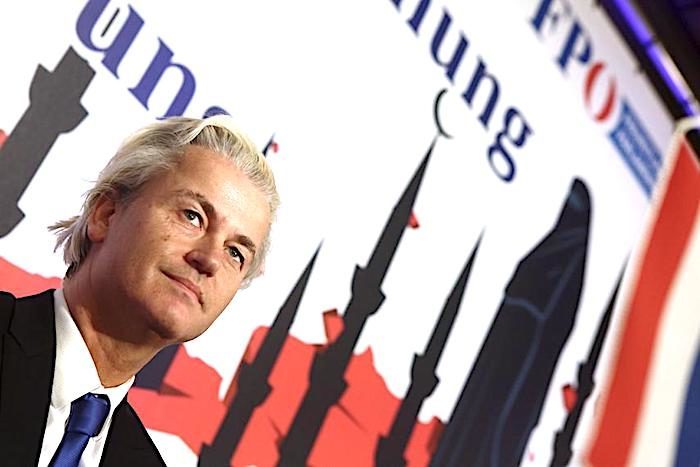
© Newsweek
Wilders was surrounded by police and security guards during a walkabout in Spijkenisse, part of the ethnically diverse industrial area surrounding the vast port of Rotterdam and a stronghold of his Freedom Party. "Not all are scum, but there is a lot of Moroccan scum in Holland who makes the streets unsafe," he told reporters, speaking in English. "If you want to regain your country, if you want to make the Netherlands for the people of the Netherlands, your own home, again, then you can only vote for one party."
Crime by young Moroccans was not being taken seriously, added Wilders, who in December was convicted of inciting discrimination for leading supporters in a chant that they wanted "Fewer! Fewer! Fewer!" Moroccans in the country. Wilders - who has lived in hiding since an Islamist murdered Dutch filmmaker Theo van Gogh in 2004 - pledges to ban Muslim immigration, close all mosques and take the Netherlands out of the European Union.














Comment: See also: