© AP Photo/ Lefteris Pitarakis
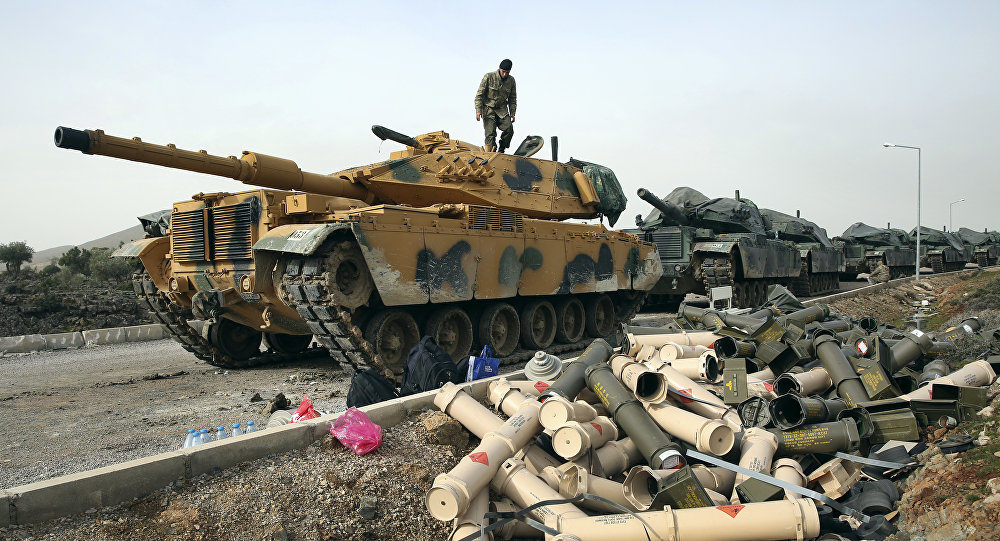
On January 19, Turkish forces
began military action across their southern border with Syria in 'Operation Olive Branch'. They started by shelling Kurdish-held areas in Afrin, and soon followed with airstrikes and a ground incursion. This move came after Ankara's condemnation of the United States' intention to
create a 'Border Security Force' of 30,000 men in northern Syria, formed out of Kurdish YPG/SDF fighters. This was the catalyst for the Turkish move, although it simply adds to Turkey's long-standing disapproval of the Americans' continuous supply of weapons and training to Kurdish militias,
according to Turkey's former foreign minister, Yasar Yakis.
Judging by the Americans' inconsistent and uncommitted reaction to 'Olive Branch', Turkish President Recep Tayyip Erdogan's move caught the US by surprise. Having failed in the objective of toppling the Assad government by allowing proxy armies of mercenaries and jihadists to advance unchallenged, the second-best alternative for the US and allies was to play on the ambitions of the Kurds for an independent state of their own and seize a sizeable part of Syria's northeastern territory - the
so-called '
Plan B' that would enable the
permanent US (and perhaps
Israeli) military presence in a subservient state of Kurdistan.
The Border Security Force was an obvious step in this direction, and while there was nothing Syria could do about it without risking dire consequences, Turkey could.















Comment: See also: