Puppet MastersS

Target

As proxy war with China continues, the US color revolution has begun in Thailand

Bangkok protest
© UnknownBangkok Protest, begins the US-backed color revolution in Thailand.
The tentative first beginnings of a long-awaited US-backed color revolution has begun in Thailand, with a small protest of under 100 protesters in the downtown district of Thailand's capital Bangkok. Despite the diminutive nature of the protest, the Western media and Western-funded organizations posing as nongovernmental organizations (NGOs) transformed the event into headline news.

The protest leaders vowed to gather weekly until their demands were met. This is a thinly veiled threat, with the protests taking place precisely where previous protests organized by the same interests carried out gun battles with government troops, mass murder against counter-protesters, and committed widespread and devastating arson in the surrounding areas.

The protesters seek to overthrow Thailand's independent institutions including its military and constitutional monarchy, and return US proxies to power, particularly billionaire and former prime minister, Thaksin Shinawatra and his Pheu Thai Party (PTP). Thaksin Shinawatra is a convicted criminal who fled Thailand to evade a two year jail sentence and a myriad of court cases still pending trial.

Comment: See also:


Propaganda

John Pilger discusses mainstream media and imperial power

John Pilger
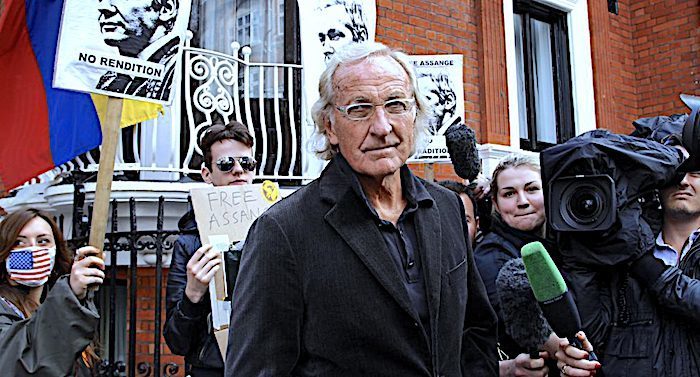
© AP/Lefteris PitarakisFilmmaker John Pilger, Ecuadorian Embassy, London, June 22, 2012.
Emmy award-winning filmmaker John Pilger is among the most important political filmmakers of the 20th and 21st century. From Vietnam to Palestine to atomic war, Pilger's work has been on the cutting edge, and his stinging critique of western media has always be revelatory. And, no doubt, his biting analysis is more relevant and important now than ever. His latest film, The Coming War on China powerfully presages the growing potential for war between the US and China.

Randy Credico and Dennis J. Bernstein spoke with Pilger on January 18 about the multiple failures of the corporate press in fanning the phony flames of Russiagate, and turning its back on Julian Assange - acting more like prosecutors than journalists, whose responsibility it is to monitor the centers of power and report back to the people.

They also spoke with Pilger about the recent decision by the British Library to acquire his substantial works and invaluable archives and make them readily available to a much wider audience:

Comment: Thank you John Pilger for the Alt News validation and your commentary on the sad state of honest journalism in Western society. FYI: SOTT was (proudly) included on the blacklist put together by PropOrNot and published in The Washington Post.

See also:


People 2

Rouhani: Iranian leaders must listen to the people

Rohani
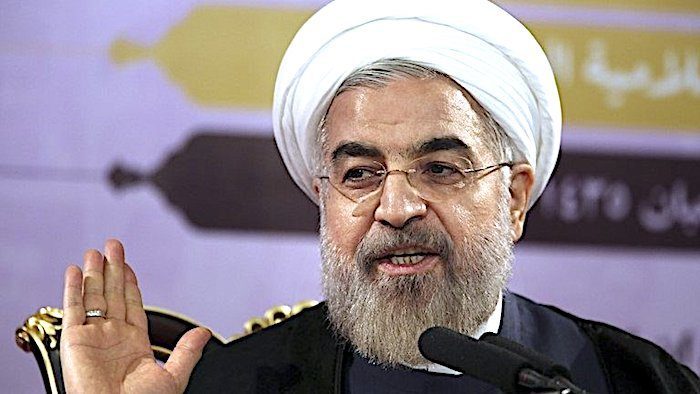
© PinterestPresident Hassan Rohani
President Hassan Rouhani has said that the Iranian people continue to support the clerical establishment despite foreign pressure but insisted that the country's leaders must listen to protesters behind a recent wave of unrest. Rouhani made the comments on January 31, hours after President Donald Trump said the United States stands with the people of Iran against the country's "corrupt dictatorship."

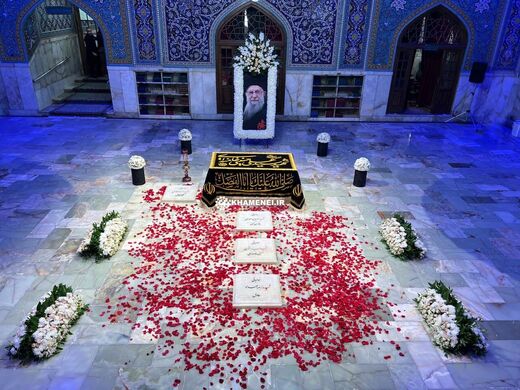
"The Iranian nation will never give up Imam Khomeini's legacy: Islamism and Republicanism. Return is impossible," Rouhani said during a visit to the mausoleum of Ayatollah Ruhollah Khomeini, the founder of Iran's Islamic republic, near Tehran.

"As long as people love the culture of Islam and love their Iran and safeguard their national unity, no superpower can change the path of this nation," he also said, referring to the United States.

Rouhani also hinted that popular support was at risk if the Iranian establishment did not listen to angry protests that have swept the country in recent weeks. "All officials of the country should have a listening ear for people's demands and wishes," he said.

Comment: The US has mastered the art of infiltrating countries, causing unrest, instigating color revolutions and regime change...never for the better and always at a cost.


Attention

What the hell are we still doing in Syria?

NettingSoldier
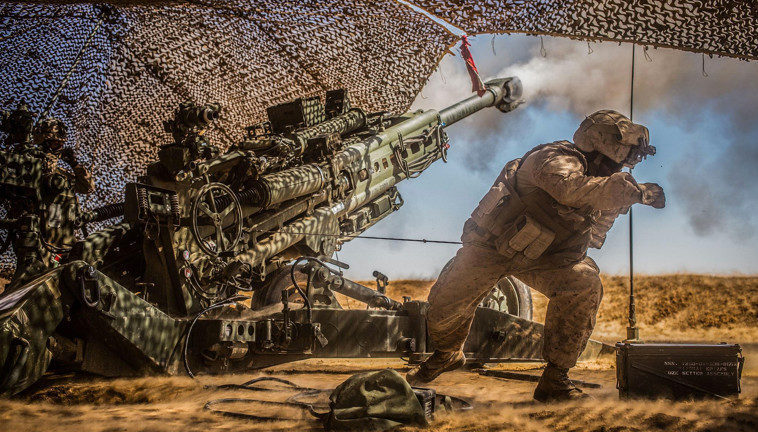
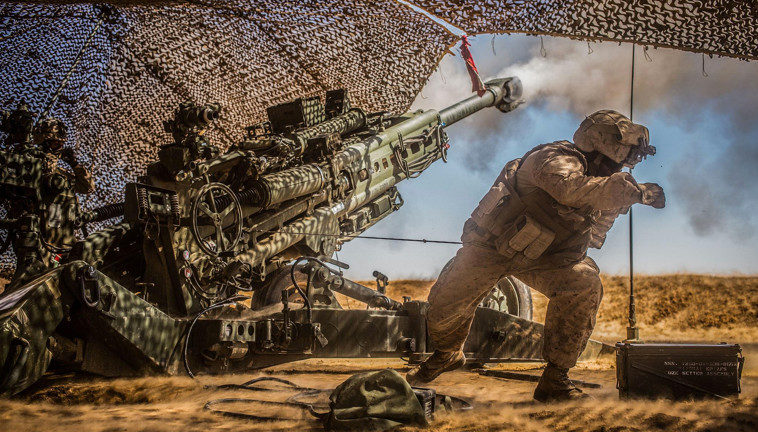
© Corporal Zachery C. LaningUS Marines conduct a fire mission in Northern Syria, March 2017.
With our ongoing war efforts there, the Trump administration is courting disaster.

Congress refused to authorize American intervention in Syria in 2013. Still, we sent in Special Forces. Congress later authorized a smaller intervention against ISIS. The caliphate was smashed, after President Trump changed the rules of engagement, and the president claimed credit. Bashar al-Assad, backed by Russia, had crushed most of the rebel forces. All done, U.S. troops can come home, having not been authorized to carry out any other missions by the people through their representatives. Right?

Wrong. Last week, in a speech at the Hoover Institute, Secretary of State Rex Tillerson relayed America's latest policy in the Syrian civil war. We're staying. And we're going to accomplish everything we failed to do over the last half decade. We're going to finish off both ISIS and al-Qaeda. Then resolve the conflict between Assad and his opponents, diminish Iranian influence, make the country safe for returning refugees, and ensure that there are no weapons of mass destruction in the country. And we're going to do it without committing major resources. Yessiree, we're going to lick this Syria problem even though our putative allies in the region are now more divided than ever.

The Congress and the U.K. Parliament both declined to go along with the elite consensus for regime change in Syria years ago. Later, Russian intervention on Assad's behalf surely had some persuasive power of its own. So too the realization that the "moderate rebels" were little more than a PR front group for al-Qaeda. But Tillerson tells us it is still American policy to plan "for a post-Assad Syria."

Comment: So far, the US says one thing and does another. What the hell are we doing? It certainly seems hard to tell! But then again, by lowering standards and switching plans you lower expectations and confuse everyone. An advantage, no?


Document

Sochi Congress agrees to create 150-member Syrian constitutional committee

Syrian National Dialogue Congress
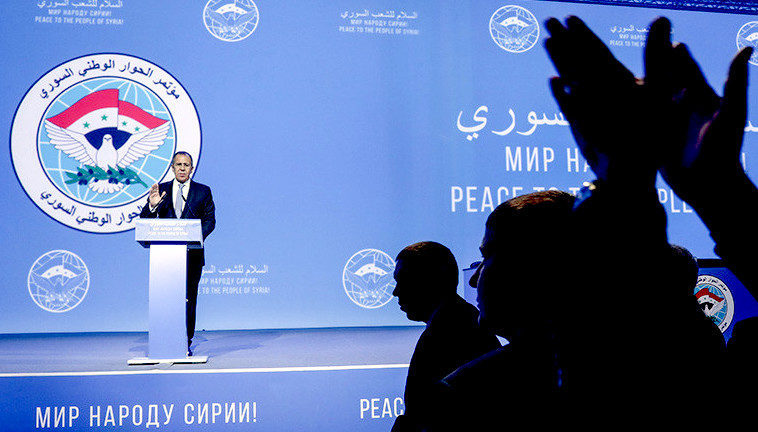
© Valery Sharufulin/TASS Host Photo Agency/AFPSyrian National Dialogue Congress
The Syrian National Dialogue Congress meeting in Sochi, Russia has agreed to create a committee that will work on a new constitution for Syria. The body is expected to operate under the auspices of the UN in Geneva.

"A Constitutional Committee is to be formed, comprising the government of the Syrian Arab republic delegation along with a wide-represented opposition delegation for drafting a constitutional reform," UN special envoy to Syria Staffan De Mistura said, addressing the Congress. "In your final declaration today you've embraced 12 principles, developed in the Geneva political process, which describes a vision of Syria, that all Syrians should be able to share."

The UN official said there were heated discussion during the Congress, but added it's a completely normal occurrence during democratic negotiations. The new panel is perceived to be a valuable contribution to the Geneva process - "the political settlement under the auspices of the UN [and] in accordance with Security Council Resolution 2254," de Mistura underlined.

Comment: Security Council Resolution 2254 called for a ceasefire, a political settlement in Syria, and within 18 months, free and fair elections held under U.N. supervision. The political transition would be Syrian-led.


Arrow Up

ACLU First Amendment victory: Judge blocks Kansas law that targets boycotting Israel

judgegavel
© Getty Images
The American Civil Liberties Union won an early victory today in its federal lawsuit arguing that a Kansas law requiring a public school educator to certify that she won't boycott Israel violates her First Amendment rights.

A federal judge issued a preliminary injunction blocking enforcement of the law while the case filed in October proceeds. It is the first ruling addressing a recent wave of laws nationwide aiming to punish people who boycott Israel.

The law, which took effect on July 1, requires that any person or company that contracts with the state submit a written certification that they are "not currently engaged in a boycott of Israel." The ACLU is also currently fighting a case filed in December against a similar law in Arizona.
"The court has rightly recognized the serious First Amendment harms being inflicted by this misguided law, which imposes an unconstitutional ideological litmus test," said ACLU attorney Brian Hauss, who argued the issue in court. "This ruling should serve as a warning to government officials around the country that the First Amendment prohibits the government from suppressing participation in political boycotts."
In his opinion, U.S. District Judge Daniel Crabtree wrote, "[T]he Supreme Court has held that the First Amendment protects the right to participate in a boycott like the one punished by the Kansas law."

Comment: See also:


Star of David

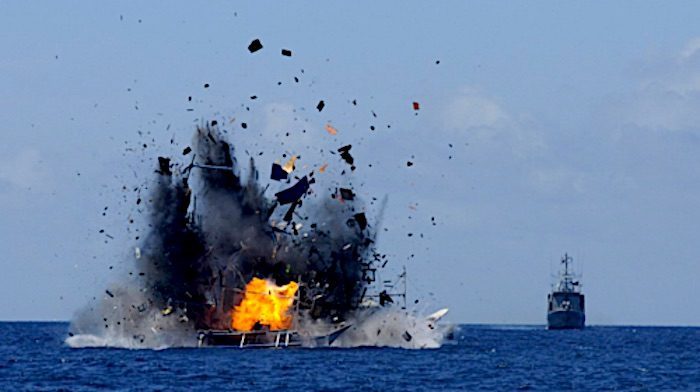
Retired Rear Admiral Chorev: Hezbollah suicide ships could target Israeli assets

explosion on sea
© Unknown
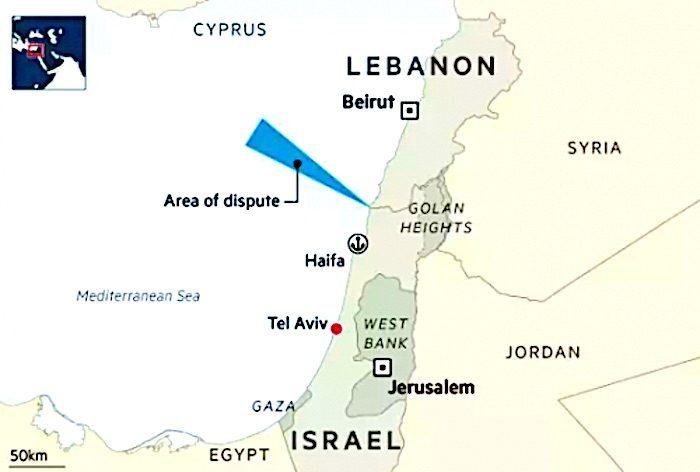
Rear Admiral (Retired) Professor Shaul Chorev has warned The Jerusalem Post that Israel's Navy should start preparing its forces for a possible conflict on the open waters with Hezbollah, a militant group based in Lebanon. Chorev warns the rogue terrorist group is about to unleash missiles and suicide ships targeting Israeli strategic assets on the Mediterranean Sea.

"Hezbollah will not need to equip themselves with ships like Israel, but we must assume they will use asymmetric warfare to challenge Israeli technology like land-to-sea missiles or suicide ships like you see in Yemen," said Chorev, [a former Deputy Chief of Naval Operations; Commanding Officer of the Haifa Naval Base and Commanding Officer of an Israeli Naval Flotilla] at the geostrategy conference jointly organized by Haifa University's Research Center for Maritime Policy & Strategy (HMS) and the Chaikin Chair for Geostrategy.

Chorev explains while it is not in Hezbollah's interest to start a conflict with Israel, "when you look at their strategy, it is clear that they will target Israeli strategic assets. The next war with Hezbollah could see a focus on the sea," he added.
Map Israel Mediterranean
© Unknown

Comment: Israel is panicked that Iran will create a supply conduit to the Mediterranean Sea. Protestations of fear (they could bomb our boats!) artificially escalate tensions -- a useful hook to dupe the US into all out war with Iran.


Handcuffs

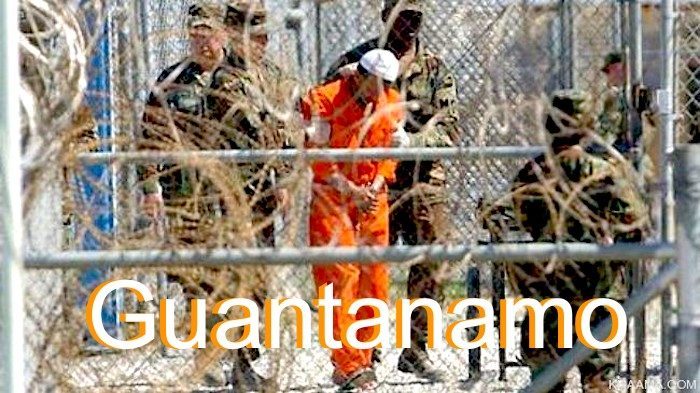
Trump keeps open Guantanamo Bay Detention Center, signs executive order

Guantanamo
© Khaama Press/KJN
U.S. President Donald Trump says he has signed an executive order to keep the high-security U.S. military detention center open at Guantanamo Bay, Cuba. Trump made the announcement during his State of the Union address to the U.S. Congress late on January 30.

"In the past, we have foolishly released hundreds of dangerous terrorists, only to meet them again on the battlefield -- including the ISIS leader, al-Baghdadi," Trump said in his address. Abu Bakr al-Baghdadi was captured in Iraq by U.S. forces and held in a prison near Baghdad. In 2004, however, he was handed over to Iraqi authorities, who released him some time later.

"I just signed an order directing [Defense] Secretary [Jim] Mattis to reexamine our military detention policy and to keep open the detention facilities at Guantanamo Bay," Trump said.

The executive order reverses a decision by Trump's predecessor, Barack Obama, to close the controversial facility -- preserving the detention center as a U.S. counterterrorism tool.

President George W. Bush opened Guantanamo after the September 11, 2001 terrorist attacks against the United States in order to hold and interrogate suspected enemy combatants. At its peak in 2003, it held about 680 detainees. More than 500 were released during the Bush administration and 197 during Obama's eight years in office. It now holds 41 detainees.

Comment: Trump made a controversial decision, given the history and track record of abuse, legal negligence and torture procedures. Can he promise better process and treatment of prisoners?
See also:


Pistol

Laith Abu Naim, age 16, is fourth Palestinian child shot dead by Israeli forces in 2018

Laith Abu Naim
© MGM KFYRLaith Abu Naim
Laith Abu Naim, 16, is the fourth Palestinian minor to be shot dead by Israeli forces in 2018 to date. The Palestinian Health Ministry announced this evening that Laith was killed by a shot to the head.

Laith was unarmed. His family says an Israeli soldier shot the boy at a distance of two metres during clashes in their village of Mughayer, northeast of Ramallah in the occupied West Bank.

He was pronounced dead upon arrival at the hospital in Ramallah.

"The soldiers killed him from a short range. They could have arrested him; they could have injured him; they could have shot his leg," Laith's uncle Marzouq Abu Naim told Palestinian media. "But the soldier meant to kill him. The bullet went through his eye and through the back of his head."

Confrontations broke out today when an Israeli military patrol entered the village of Mughayer. Local teens began throwing stones and Israeli forces fired tear gas and stun grenades. Mayor Faraj al-Nasan said the soldiers were in military vehicles and there was no threat to their lives when they fired live ammunition.

Comment: This boy, and others, paid the price of not being Jews, not being Israeli.


Chess

Operation Olive Branch - Aggravation of relations between US and Turkey

US soldier and Kurdish fighter
© cont.ws
Originally appeared at VPK, translated by AlexD

The rivalry between the external forces supporting President Bashar al-Assad and those that oppose him, for a long time was a struggle for control for the borders or key regions as well as oil fields, highways and waterways. Today the government troops' control of the majority of the territory, supported by Iran and its allies as well as the Russian Space Forces is a fact, which all regional opponents of Assad (the KSA, Qatar and Turkey) and their supporters in Western countries and organisations (the USA, France, UK, NATO and the EU) must take into consideration.


The war in Syria with the defeat of the banned in Russia Islamic State is not complete. It only marked a new stage with the participation with pro-Saudi and pro-Turkish groups in Idlib and Eastern Ghouta, and now in Afrin with the Turkish Armed Forces. The overthrow of Assad remains for Syrian Islamists and their sponsors the main goal in the diplomatic war, which they wage against Damascus in Geneva with the support of the Western block and directing against him officials of the UN.

Turkey is the most vulnerable of Assad's regional opponents due to the long border between the two states, the majority of areas in Syria inhabited by Kurds (except the corridor from A'zaz to Jarabulus controlled by the Turkmen). The war with the Kurdistan Workers' Party (PKK), which the Turkish Armed Forces for decades waged, until recently fought on the territory of Turkey and Iraq. At the same time, Ankara is not without reason considers the rear bases of the political and military structure of Syrian Kurds and the failure of the unification of the Kurdish enclaves in Northern Syria into a single quasi-state structure are as important as the torpedoing of the Erbil referendum on independence and the refusal of the Turkish Kurds to the autonomy.

The military operation in Afrin demonstrates to what extent Turkey is ready to confront the Kurdish or Kurdish-American initiatives. The reports about the beginning of arming the Syrian Kurds with MANPADS systems and the preparation of 30 thousand-strong frontier corps, half of which will be Kurds, have played the role of the proverbial straw that broke the camel's back, or other accumulated confrontations between Ankara and Washington are not so important. In any case, the government, member state of NATO, carries out a military operation, contrary to the interests of the superpower, heading this block. That, however, is not the first time. Suffice it to recall the occupation of Northern Cyprus by Turkish troops and numerous conflicts with another NATO member, Greece.