OF THE
TIMES
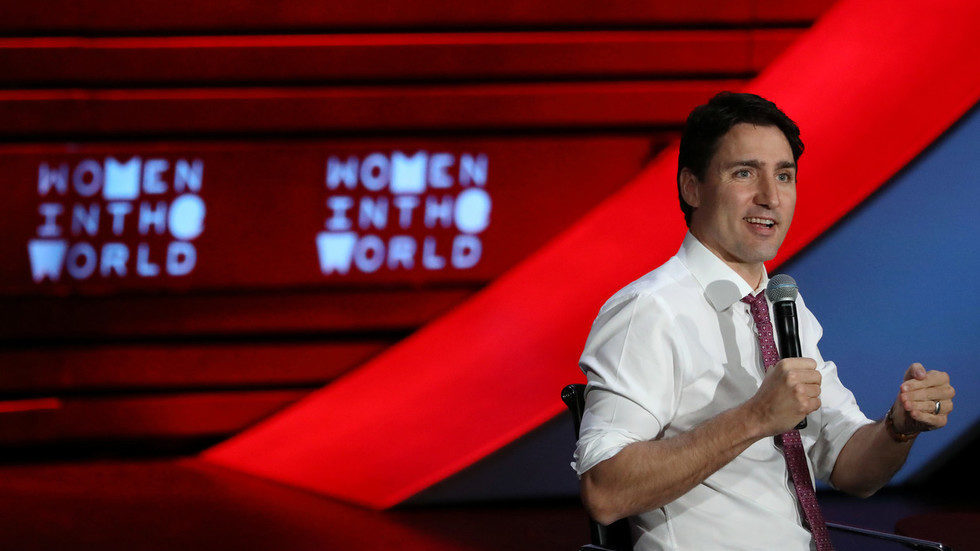
They've used the term 'feminist' to prop up their party so much that Conservatives are almost forced to bring this up in the conversation.The Trudeau-led Liberal Party made defending women an "important political debate," which, in turn, attracts extra scrutiny to their own actions, Southern said.

Israel Is on the Brink of Disaster. Trump Just Made Things Worse.
On April 9, Israelis will go to the polls to choose their next government. The campaign has largely been a referendum on whether Prime Minister Benjamin Netanyahu should remain Israel's leader in light of his expected indictment in three corruption cases for bribery and breach of trust. With those scandals front and center, policy disagreements have largely been ignored, leaving Israeli voters at risk of unwittingly bringing an avoidable disaster on themselves by annexing territory in the West Bank.
President Trump just raised that risk.
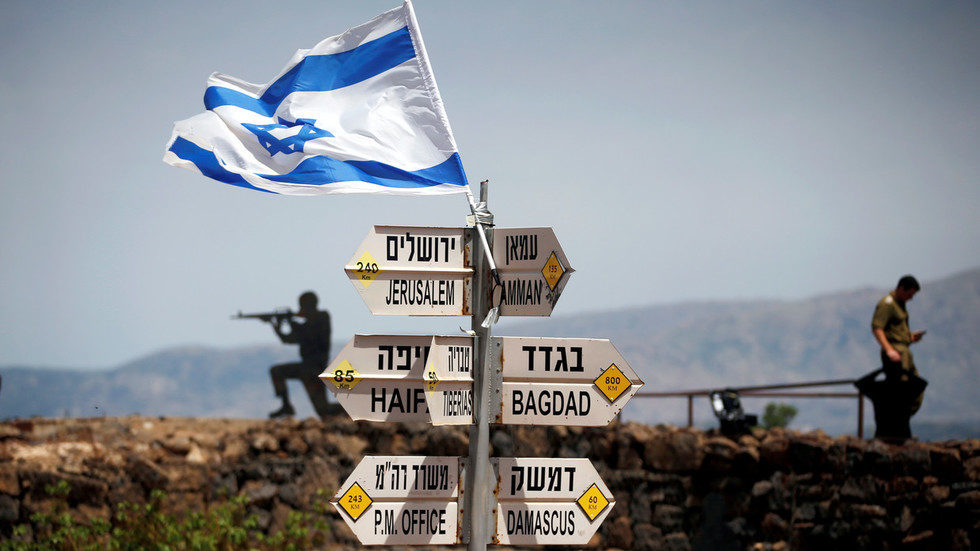
How so? On Twitter on Thursday, he wrote that "it is time for the United States to fully recognize Israel's Sovereignty over the Golan Heights, which is of critical strategic and security importance to the State of Israel and Regional Stability!" It is the latest, and most important, signal from Washington that Mr. Trump is ready to acknowledge Israeli control of the Golan Heights.
But those signals are also being read by the Israeli right wing as an encouragement to pursue annexation of territory in the West Bank - a far more dangerous step that would present Israel with an unparalleled existential threat to its Jewish and democratic character.
To be sure, there is a big difference between the two territories, both of which came under Israeli control in the 1967 war. The sparsely populated Golan Heights, seized from Syria and annexed by Israel in 1981 in defiance of international criticism, were being used by Syria to bombard Israel's Galilee region below.
The West Bank, on the other hand, is densely populated and its future has been the most intractable issue of the Israeli-Palestinian conflict since 1967. Annexing it would foreclose independence for a Palestinian nation, and risk inflaming the entire Middle East.
That threat is not beyond the horizon any more. The young, charismatic New Right party leaders Naftali Bennett and Ayelet Shaked, both ministers in Mr. Netanyahu's coalition government, lead the annexation movement, and their zeal has seeped into Mr. Netanyahu's Likud Party as well. Of the 29 Likud legislators running for re-election, 28 are on record as supporting annexation of at least a part of the West Bank, as is the Likud Central Committee.
Most significantly, the speaker of the Knesset, Yuli Edelstein, who is No. 2 on Likud's electoral slate behind Mr. Netanyahu, said on Sundaythat a description of the Golan Heights as "Israeli-controlled" in the recent annual report of the United States State Department - a shift from previous reports that called it "Israeli-occupied" - represented an important first step toward recognition of Israeli sovereignty in the West Bank.
Reaching that goal, however, would create challenges as harrowing as any Israel has faced since its war of independence. As cataloged by the Israeli group Commanders for Israel's Security, annexation would cost billions of dollars annually, would create virtually indefensible borders because of the spider web of Israeli-governed territory within the larger West Bank that most supporters of this plan want to annex, provide ammunition to the anti-Israeli Boycott, Divestment and Sanctions movement, and destroy Israel's foreign relations with a host of countries.
It would also ensure that the partisan split emerging in the United States over Israel's policies toward the Palestinians becomes a chasm. It might even open a rift between Mr. Netanyahu and his stalwart ally President Trump, who thinks himself able to devise an ultimate deal between Israelis and Palestinians, by making any such deal impossible.
Most important, annexing the West Bank - whether just the 60 percent of it that Israel controls now, or its entirety - would bring the collapse of security coordination between Israel and the Palestinian Authority and likely cause the demise of the authority, forcing Israel to take over all of the West Bank, like it or not. Israel would then have to grant citizenship to the 2.5 million Palestinians living there, giving itself the choice of no longer functioning as a Jewish state, or destroy its democracy by denying the Palestinians political equality. If anything can truly threaten Israel, the region's pre-eminent military and economic powerhouse, it is that.
While Mr. Netanyahu himself has been the sole Likud leader not explicitly supporting annexation in the West Bank, his political predicament might well pull him into the annexationist camp. His legal problems create a strong incentive to form a government that will pass a law barring the indictment of a sitting prime minister.
Voter surveys suggest the election next month will result in an almost even split between the Netanyahu-led bloc of Likud and its allied parties, and an opposition bloc led by Benny Gantz. That means Mr. Netanyahu will remain in power at the whim of his preferred right-wing coalition partners, whose leverage over a prime minister seeking to stay out of jail will be enormous. And the item at the top of their wish list is extending Israeli sovereignty to the West Bank.
Most worrisome, Israelis have been barely paying attention. As the Israeli journalist Aluf Benn points out, this is a campaign that won't turn on any issues but on Mr. Netanyahu himself. And to the extent that Israelis are paying attention to policy, they are concerned about terrorism and the cost of living, with only 9 percent listing the Israeli-Palestinian conflict as their top concern and just 2 percent listing the future of the West Bank. Even though only 15 percent of Jewish Israelis support annexing the West Bank, a core of right-wing activists are poised to overrun the preferences of a much larger but less ideologically dedicated majority.
Should Mr. Netanyahu emerge victorious once again, the prospects of Israel taking this path are alarmingly high. The pro-annexationists have never put forth a detailed proposal of what annexation will entail.
Israeli voters may be about to rush headlong into quicksand that they don't even realize exists.

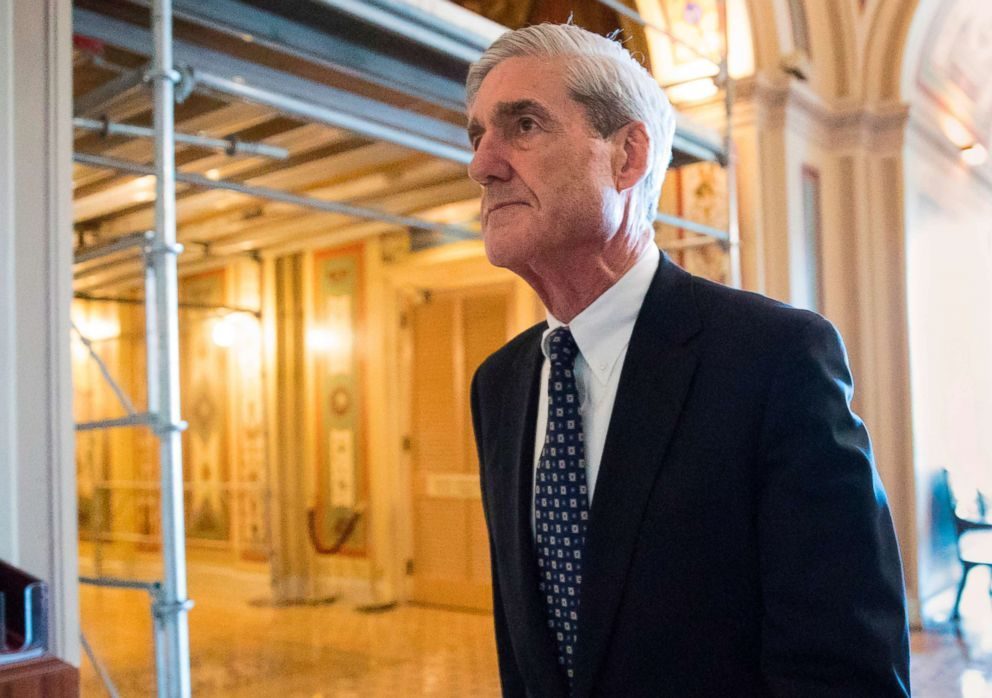
The Democrats, who have spent years pushing the Russiagate narrative, have urged the AG not to share the report's conclusions with the White House yet, claiming that, otherwise, the administration would try to interfere in which parts of the report are made public. The Speaker of the House, Nancy Pelosi, and Chuck Schumer, a senior Democratic Senator from New York, say it is imperative that the report is released in "full."Also see: Tucker Carlson: No American citizen has been charged with Russian collusion as per Mueller Report
Trump, confident that the entire affair was a mere 'witch-hunt', had earlier indicated he would not mind if the report were made public, so it is unclear why the Democrats would assume the White House wants to interfere. Donald Trump's legal team said the president was "pleased" that Mueller has finally delivered on his probe, noting that the Attorney General "will determine the appropriate next steps."
Although a handful of key Trump associates, including former campaign manager Paul Manafort and Republican operative Roger Stone, have been charged and have even pleaded guilty to procedural crimes, nobody has been charged with any offenses relating to collusion.
The report might prove a further disappointment to many as, according to a senior Justice Department official, Mueller is not recommending any additional indictments. Apparently not holding his breath for any smoking guns in the report, the chairman of the House Intelligence Committee, Rep. Adam Schiff, has promised to subpoena Mueller himself, unless the Congress is provided with "underlying evidence" to sift through.
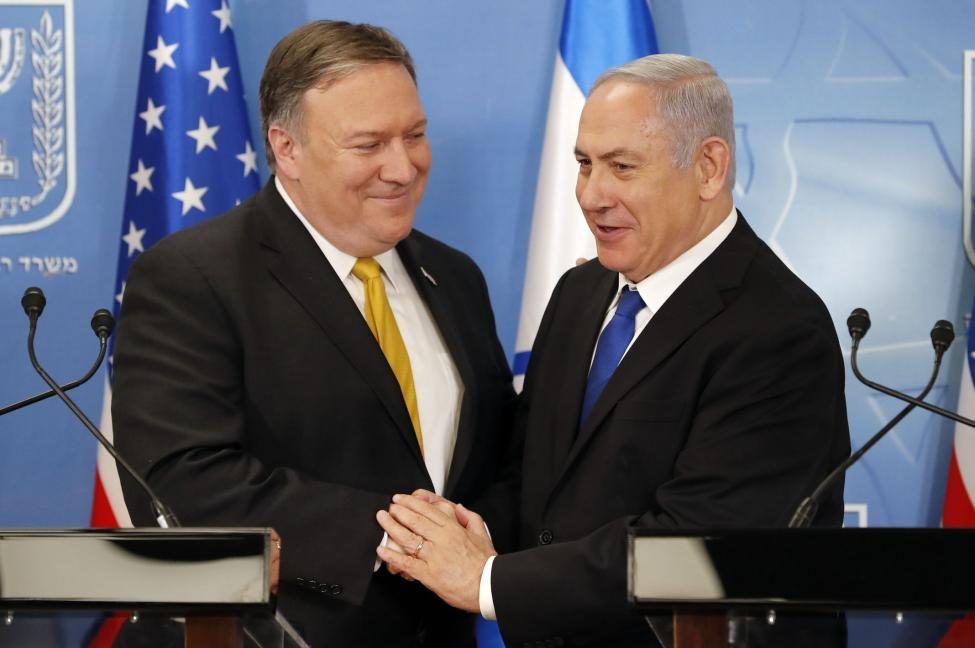
While Secretary of State Mike Pompeo's video tour from Jerusalem omits Muslim sites, Al-Aqsa mosque and the Dome of the Rock, it does include a model of the Third Temple some Jewish groups want in place of it.
The iconic mosque and shrine are located on Temple Mount, one of the holiest sites in the world for Muslims, Christians and Jews. The video posted by the State Department shows Pompeo visiting the Church of the Holy Sepulchre and the Western Wall, followed by a model of the Third Temple, which some groups want to erect on Temple Mount triggering concerns that Muslim sites would be affected.
The Third Temple plays an important eschatological role in Judaism and is associated with the era of the Jewish Messiah. While most Jewish-Orthodox scholars believe the Messiah will ultimately rebuild the Temple, some hardline religious organizations call for an immediate construction of it in the present times.
In the video the model is accompanied by the words of Prime Minister Benjamin Netanyahu speaking about the Golan heights, calling it "hard-fought" real estate.

'Russian collusion': Farage mocks 'cancel Brexit' petition with signatures from RussiaFrom Theresa May to Donald Tusk, it seems Brexit has many politicians getting all religious:
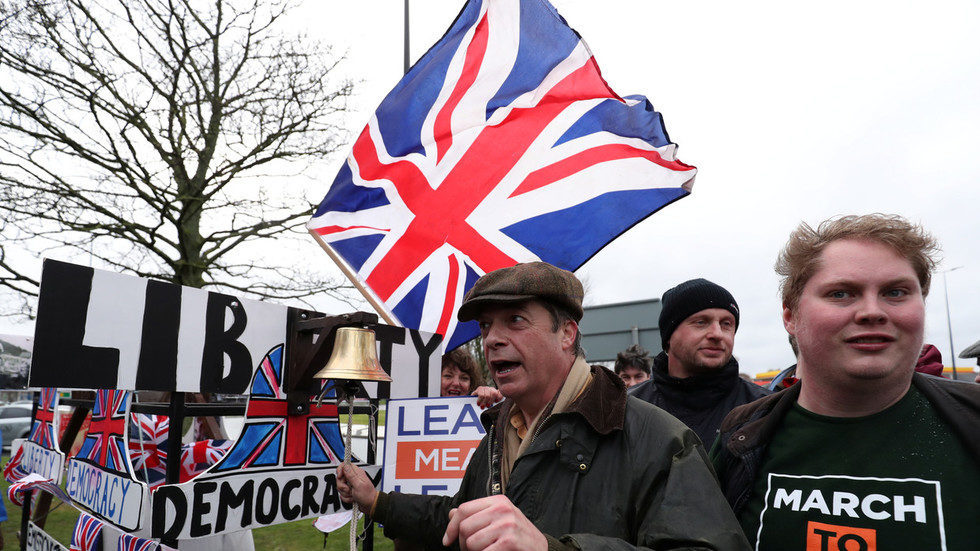
Former UKIP leader Nigel Farage has reacted to a tweet making fun of the fact some Russians have signed a petition calling for Brexit to be stopped, suggesting that an investigation should be launched into "Russian collusion."
Hugh Bennett, news editor at right-wing blog Guido Fawkes, took to social media on Thursday night after the 'Revoke Article 50' petition had passed the 1 million signatures barrier.
Bennett attached a data image from the petitions website, revealing that 12 Russians had signed up and cheekily asked: "I thought they were meant to be against foreign interference in our democracy?"
The tweet got picked up by the Independent MEP, who could soon be officially registered as leader of his new Brexit Party in the coming weeks. He seized on the irony of 'Russian involvement' in a pro-EU, UK petition, arguing that an inquiry was needed.
Bennett also noted verifiable interest in the stop Brexit petition from other countries such as Saudi Arabia and even North Korea, which has one signature. It couldn't be from the big man, surely?!
The tweet triggered an avalanche of seemingly irate Remainers, not seeing the funny side and instead insisting it was "fake news." Others living in various countries around the world felt the need justify their signatures.
At the time of publishing this article, the petition had broken the 3 million barrier.
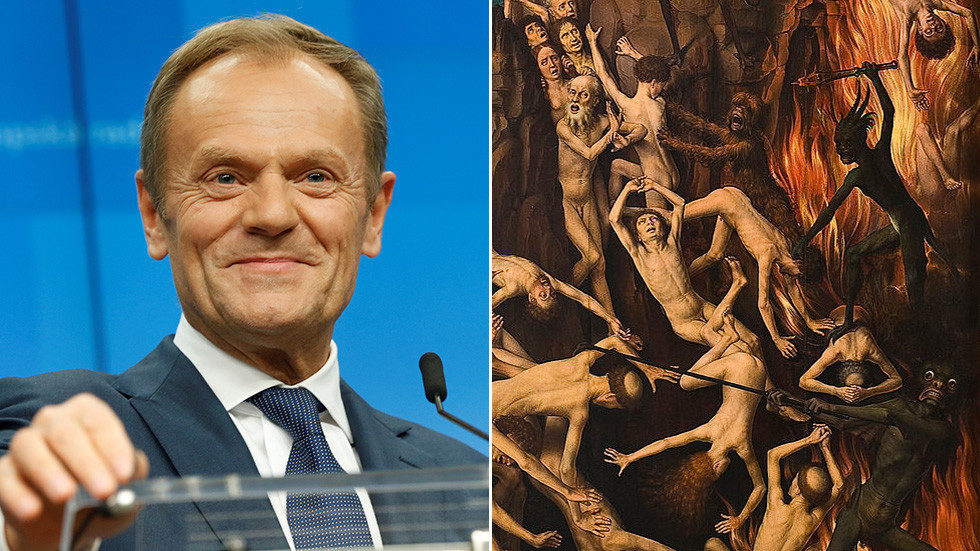
Tusk: 'Lots of space' in hell for British MPs who vote against Brexit dealConsidering Tusk's milieu, one suspects he was referring to Shakespeare:
Donald Tusk, who last month blasted the architects of Brexit, suggesting there may be "a special place in hell" for them, believes the place of eternal suffering is big enough to also include British MPs voting against the deal.
The initial acerbic remark about hell made by the president of the EU Council targeted people who "promoted Brexit without a sketch of a plan how to carry it safely." It caused quite a stir among participants and watchers of Britain's dramatic divorce with the EU. European Commission President Jean-Claude Juncker at one point remarked that he personally knew no hell except his current job.
A journalist asked Tusk if he sees hell a suitable place for MPs who now vote against the deal, to which the stone-faced Polish Catholic politician replied: "According to our Pope, hell is still empty. It means there is a lot of space." The news conference was then wrapped up to the laughter of the audience and a parting shot by Juncker: "Don't go to hell."
Tusk was likely referring to last year's controversy, which happened after an Italian journalist misquoted Pope Francis as saying that there was no hell. The Vatican had to disprove the claim and clarify the Catholic view on what hell is.
Or did Tusk actually mean Shakespeare and not the Pope? Who knows?
"Hell is empty and all the devils are here."Finally, Sputnik outlines some of the hypothetical consequences of a no-deal Brexit:
― William Shakespeare, The Tempest
But what is so terrible about a no deal Brexit and why are so many MPs so keen to avoid it?See also:
Trade
Trade between the UK and the EU could be severely affected.
The UK government has rolled over existing EU trade agreements with Israel, Switzerland and Chile as well as aviation services with US and Canada and nuclear deals with Australia.
But it is not clear what concessions it will have to make to other countries to get them to roll over EU agreements.
The biggest difficulty for Britain though is the tariffs which would be imposed on imported and exported goods.
Earlier this month the UK government said it would scrap 80 to 90 percent import tariffs on goods, in order to keep food and commodities prices down for consumers and manufacturers.
Britain imports 90 percent of its lettuce, 80 percent of its tomatoes and 70 percent of its soft fruit from the EU, according to the British Retail Consortium.
Law and Justice
The Home Secretary, Sajid Javid, has written to his counterparts in the EU27 asking for them to put contingencies in place in the event of a no deal Brexit, but has had no reassurances.
British police officer carry out 539 million checks on the Schengen Information System (SIS) every year - checking on EU nationals' criminal records in their home countries.
Last month the National Police Chiefs' Council lead for Brexit, Deputy Assistant Commissioner Richard Martin, said Britain would be "less safe".
"Will we be less safe? Yes. Will criminal gangs be running amok? No. But will it make our jobs more difficult, yes," Mr. Martin said.
"Crime is by its nature borderless....organised criminals are entrepreneurs of crime...and if there is a gap to exploit I'm sure they would," Mr Martin told a briefing in London.
Mr. Martin said the EU Arrest Warrant would also no longer work in the event of a no-deal Brexit.
He said the system would revert back to the 1957 Convention on Extradition which would be a "much slower and clunkier process".
Mr Martin said before the EU Arrest Warrant the UK extradited around 60 people a year - now it's almost 2,000 a year.
Health
The government will continue to accept EU-approved medicines but the EU has said UK pharmaceutical companies will have to re-register their products in order to sell them in Europe.
The UK government has asked hospitals and UK companies to build "buffer stocks" of key items to deal with any interruption to supply.
The Department of Health has also bought warehouse space and secured additional freight capacity for shipping medical goods to the UK.
Transport
British adults, including lorry and coach drivers, would not be allowed to drive in EU countries without a special driving permit.
UK tourists could also end up paying more to use their mobile phones in Spain, France, Italy and Greece.
Borders
Border checks would be re-introduced at British airports and ports and on the land border with the Republic of Ireland.
This could potentially resurrect dormant Irish republican groups, like the IRA and the INLA, who have long fought for a united Ireland but laid down their arms after the Good Friday Agreement.
HM Revenue and Customs has been talking to businesses about how the customs process would work in the event of no deal but many businessmen and women are still unaware how they will be affected because the UK and EU economies are now so closely enmeshed.
Migration
The UK has offered EU citizens who are in the UK before 29 March 2019 can gain the right to remain and eventually become UK nationals.
But in the event of no deal there would be no such offer to the millions of UK nationals who live in the EU27, especially tens of thousands of people who retired to Spain or Portugal.
The rights of UK nationals would vary depending on each country.
In the event of no deal it would be up to the UK government to decide what to do with EU citizens who arrive in the country after Brexit.
Agriculture
The government has said it will to continue to allow EU agri-products into the UK even in the event of no deal.
But again UK exporters of goods like lamb, beef, fish, grain and vegetables would have to go through protracted bureaucracy in order to be able to export to the EU27.
When Britain leaves the EU - deal or no deal - we will be exiting the Common Agricultural Policy, which currently gives generous subsidiaries to British farmers in certain circumstances.
Miscellaneous
The UK has promised a new environmental watchdog to replace EU functions, such as air pollution but it will not be in place until 2021 so some complaints may just sit in an in-tray until then.
The Competition and Markets Authority will also be expanded as it takes on the work currently done by the European Commission when it comes to monopolies and cartels.
Places like Cornwall and west Wales, which ironically voted strongly to Leave in the 2016 referendum, actually do very well from EU grants, which will soon be drying up.
Iain Begg, a professor at the European Institute at the London School of Economics, said the grants would disappear with or without a deal.
"Although some research grants may last until 2024, the bulk of the grants from the EU will have been spent by 2022," Prof. Begg told Sputnik.
Comment: It's not just France and Germany:
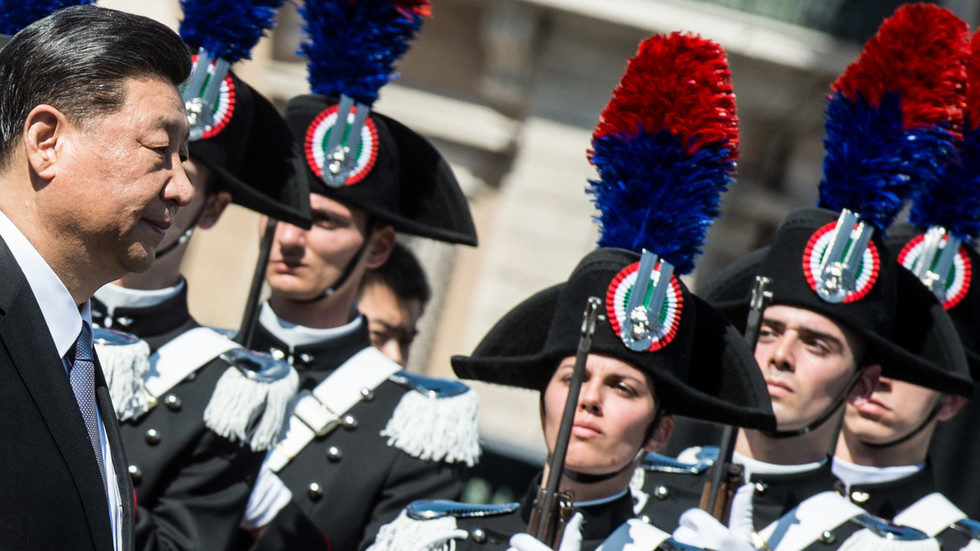
- By joining China's Silk Road, Italy shows EU maximizes own interests over US wishes
- Italy is linking up with China's Eurasian megaproject, and there's nothing Washington can do to stop it
- US advice: Italy should steer clear of China's Silk Road because...it's a national security issue?
A country making sovereign choices in its own interest is taboo these days. Thankfully there are still a handful of countries that are doing it.