OF THE
TIMES
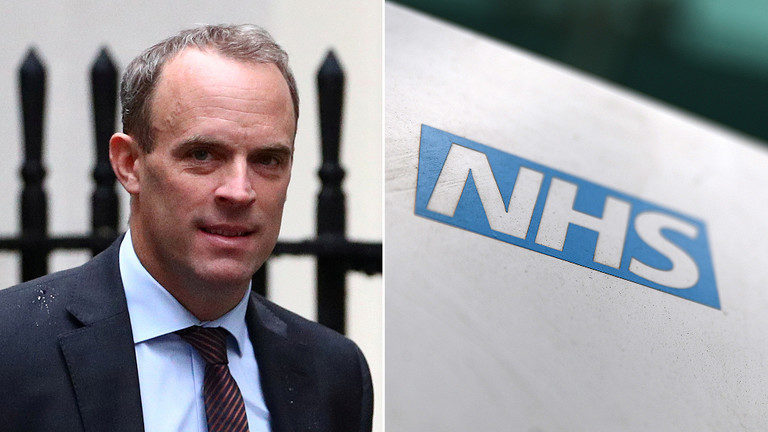
Dominic Raab struggled to affirm he had "never advocated for the privatization of the NHS" in a radio interview after he was confronted with a book he co-wrote which called for "private operators" to enter the healthcare system.See also:
During an interview on BBC Radio 4's Today show, the UK Foreign Secretary attempted to extinguish talk of a Tory government giving the green light to more private companies gaining a bigger foothold in the NHS, in the context of post-Brexit trade negotiations with the US.
"I can tell you categorically I've never advocated privatization of the NHS," Raab claimed.However, unfortunately for the foreign secretary, BBC presenter Nick Robinson had a copy of 'After the Coalition,' a 2011 book Raab co-authored with fellow Tories Kwasi Kwarteng, Chris Skidmore, Priti Patel, and Liz Truss.© Reuters / Neil HallFILE PHOTO: Britain's Foreign Secretary Dominic Raab Reuters / Hannah McKay; (R) An NHS logo
The 'health' chapter of the book suggests that NHS reforms are necessary and that "the current monolith should be broken up." It then goes on to insist that "private operators should be allowed into the service and, indeed, should compete on price."
"The NHS should take advantage of the extra efficiencies private companies can provide."
Raab, ostensibly ruffled by having the quotes read back to him, attempted to downplay the significance of the remarks, claiming that he and his Conservative colleagues were really referring to services such as coffee shops and florists that operate within the UK healthcare system.
Robinson fired back: "It talked about hospitals being run by private companies, it didn't talk about coffee shops."
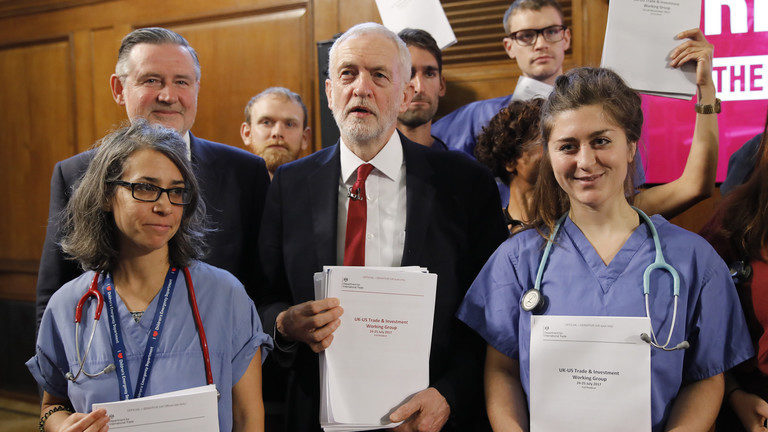
The future of the NHS has become a huge issue in the UK general election campaign. The Labour party, led by Jeremy Corbyn, claim that a Tory Brexit risks US pharmaceutical companies coming into the UK market as part of any trade deals with President Donald Trump. PM Boris Johnson has dismissed the concerns as "scaremongering."

Trump says Turkey very good member of NATO... or will be, while Erdogan challenges alliance to keep up with the timesSee also:
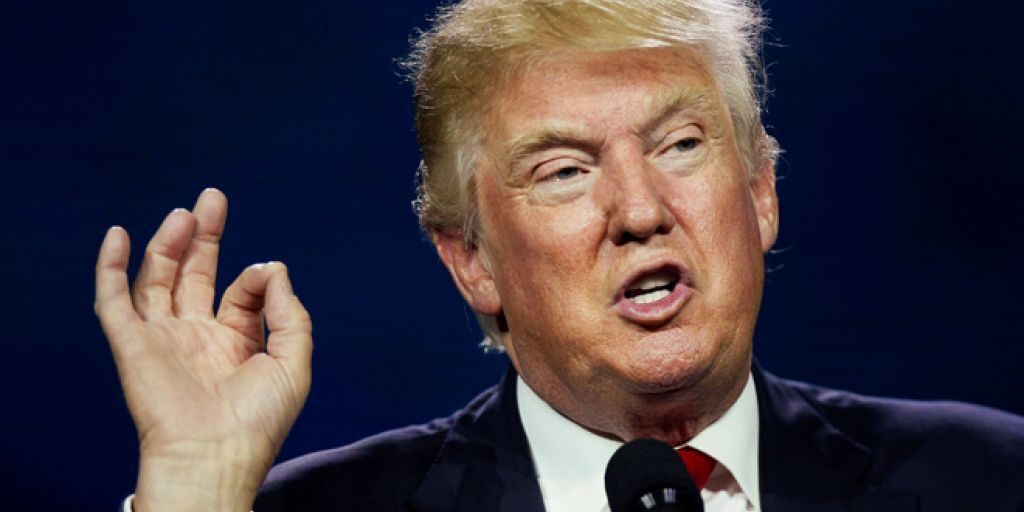
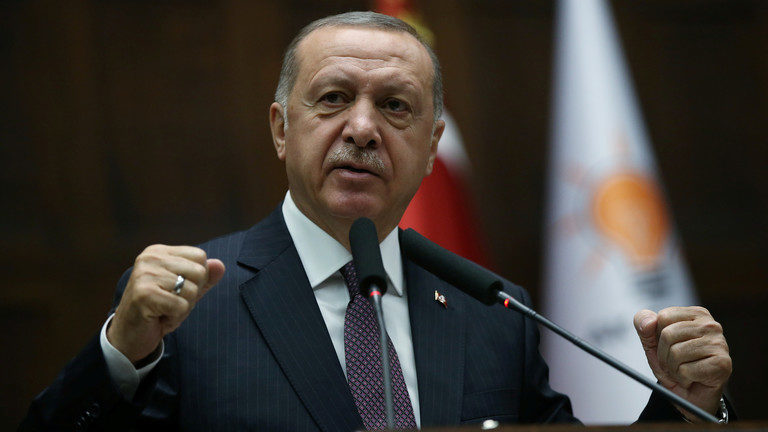
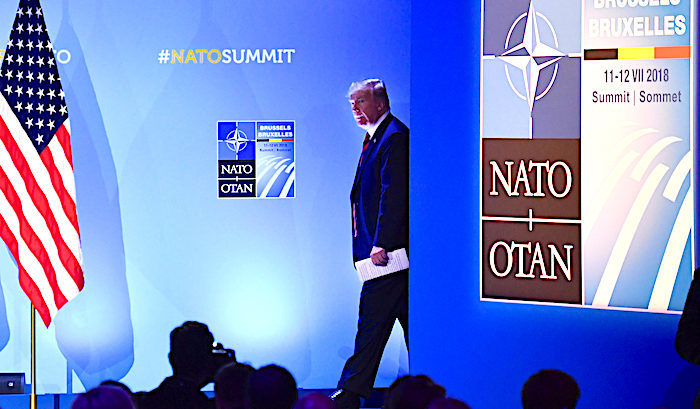
Turkey, which demands "unconditional" support from other NATO members for its fight against Kurdish militias, is a "very good member" of the alliance which "could not have been nicer" to the US, President Donald Trump believes.
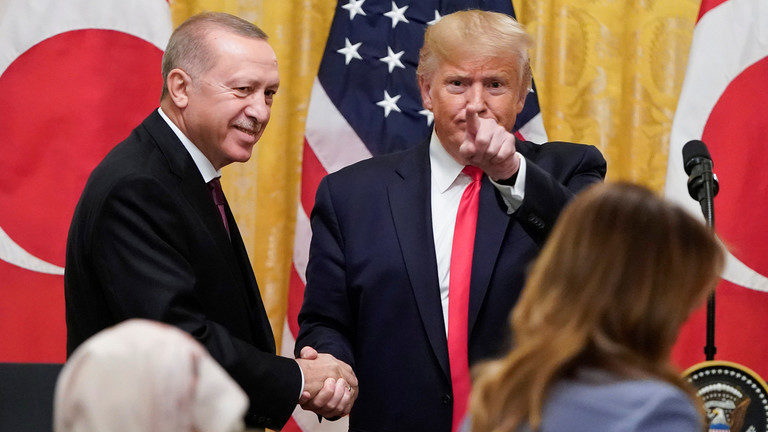
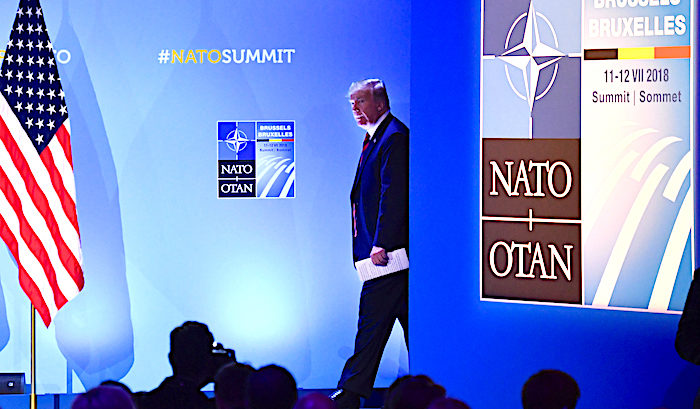
The compliment to Turkey and its president, Recep Tayyip Erdogan, who Trump once cautioned not to be a "fool," came as NATO members are gathering in the UK to mark its anniversary. Sitting alongside NATO Secretary General Jens Stoltenberg, Trump said as far as he is concerned, Turkey is just fine."I like Turkey. And I get along very well with the president. He is a very good member of NATO, or will be."© REUTERS / Joshua RobertsFILE PHOTO. Donald Trump greets Tayyip Erdogan after a joint news conference at the White House.
Trump added that Turkey "could not have been nicer" to the US when it went after terrorist leader Abu Bakr al-Baghdadi, who was hiding in the part of Syria largely controlled by Turkish-backed military groups.
"We flew over areas that were totally controlled by the Turks and the Turkish military. We said we were coming. They were very supportive, actually. We didn't tell them what we were doing and where we were going. Turkey could not have been nicer and more supportive," he said.
Trump also addressed Turkey's purchase of Russian long-range surface-to-air missiles. He criticized his predecessor, Barack Obama, for not allowing Ankara to buy the American product instead and seemingly blasted his own administration for punishing Turkey for the Russian purchase by cutting Turkey off the F-35 fighter jet program.
"All they are going to do now is they will go to another country whether it is Russia or China. They don't want to do it. They want to buy the best plane... But they are making it very difficult for them to buy it in Washington," Trump said.
Trump could do with taking some of his own advice regarding sanctions and the trade war: '5G now America-free': China's Huawei assembles latest phones without US parts
Earlier in the day, Erdogan demanded NATO's support for Turkey's military campaign targeting Syrian Kurdish militias, which has been a matter of great controversy for European allies. The Turkish leader demanded NATO renew itself to keep up with the times, and said his country will continue to block NATO's plan for deployment of assets in Eastern Europe, unless his demand is met.
Stoltenberg, during his meeting with Trump, tried to downplay the conflict within the military bloc, saying NATO's strength comes from its ability overcome differences for the sake of fighting for a common security goal.
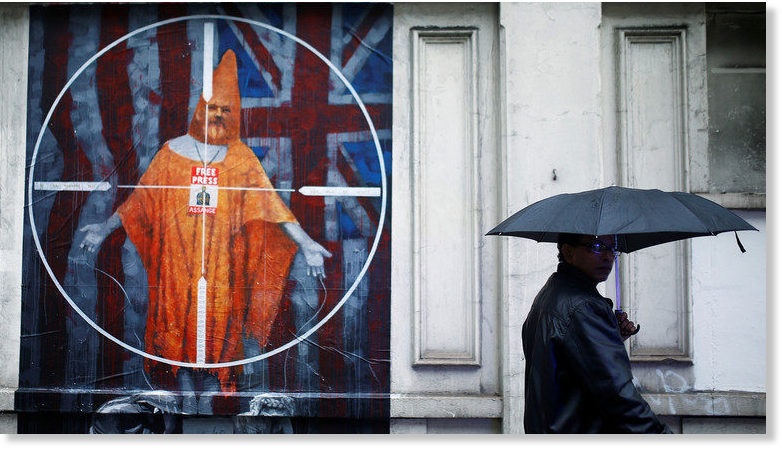
"I think I'm going out of my mind," Julian Assange told John Pilger at Belmarsh Prison. "No you're not," Pilger responded. "Look how you frighten them, how powerful you are."


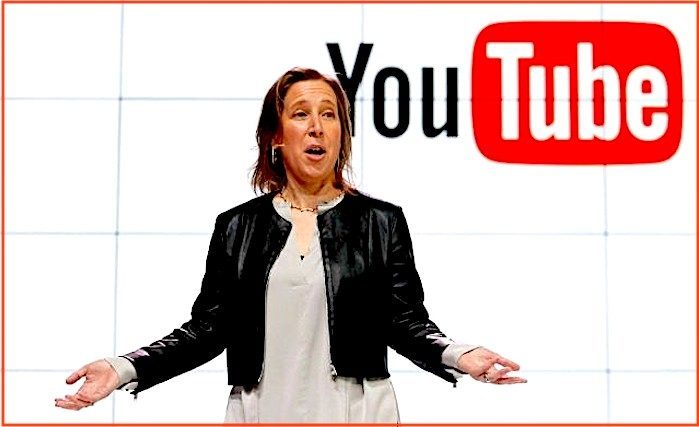
60 Minutes correspondent Lesley Stahl asked Wojcicki, "Have you taken down any of President Trump's ads at all?" YouTube's CEO responded, "There are ads of President Trump that were not approved to run on Google or YouTube." When pressed for an example, Wojcicki added, "Well, they're available in our transparency report."
In response to concerns raised after the 2016 election cycle, Google and YouTube, like Facebook, keep a searchable archive of political ads that have run on the site.
60 Minutes reviewed the archive to learn more about President Trump's problematic political ads. We found that over 300 video ads were taken down by Google and YouTube, mostly over the summer, for violating company policy. But the archive doesn't detail what policy was violated. Was it copyright violation? A lie or extreme inaccuracy? Faulty grammar? Bad punctuation? It's unclear. The ads determined to be offending are not available to be screened. We found very little transparency in the transparency report.
Last week, it was reported that Google plans to stop advertisers from using voter data to create targeted ads. Data such as public voter records and political affiliations will be off-limits to advertisers during the election campaign.
"We're limiting election ads audience targeting to the following general categories: age, gender, and general location (postal code level)," said a Google spokesman. "Political advertisers can, of course, continue to do contextual targeting, such as serving ads to people reading or watching a story about, say, the economy."
In a tweet, Trump campaign manager Brad Parscale said Google's "arbitrary" rule change will "lead directly to suppressing voter turnout." He also shared a statement from the Trump campaign, the RNC, the NRSC, and the NRCC, which declared a similar position.
"There can be no denying that President Trump and his campaign have built the greatest digital operation in all of politics, and that Google's decision will disproportionately impact both the Trump operation and all of the Republican candidates and organizations that derive strength from it," said the statement.
"What's more, given the growing and documented cases of anti-conservative bias in Silicon Valley, we are highly skeptical that such a ban would be applied equally to conservative and liberal organizations."
"Google has made an extraordinarily poor decision which will lead to less-informed voters, lower voter engagement, and voter suppression," concluded the statement, which called on Google to "immediately reverse its decision."
Read the full statement here.
"We in the Trump administration will continue to support countries trying to prevent Cuba and Venezuela from hijacking those protests and we'll work with legitimate (governments) to prevent protests from morphing into riots and violence that don't reflect the democratic will of the people."
Comment: See also: