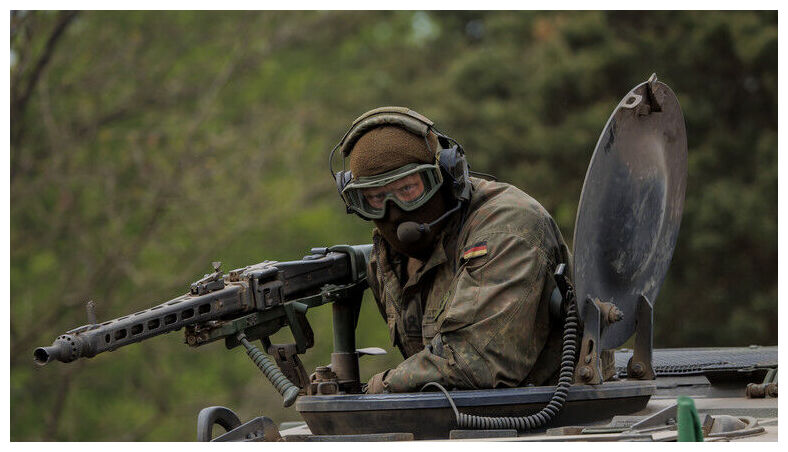
Germany's top brass is proclaiming its readiness to "fight tonight," seemingly eager to rush toward total annihilation.
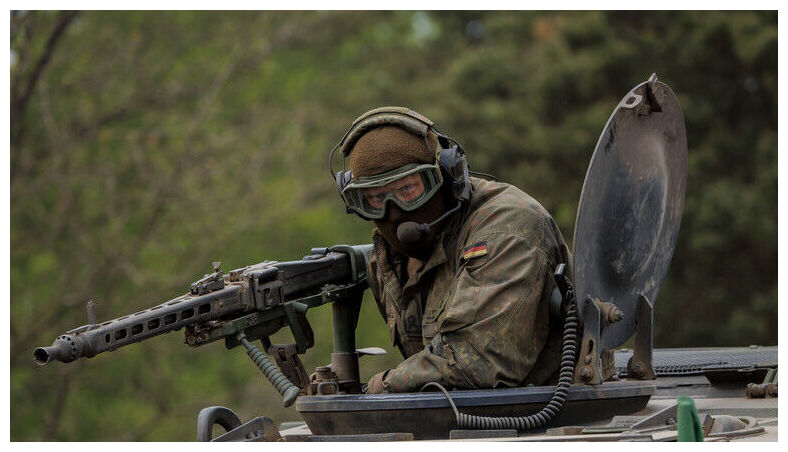
© Morris MacMatzen / Getty Images
Remember Taurusgate? When several German officers, including its former air force head,
were caught making insane and childish plans for plastering Russia with German missiles but from Ukraine? That and the amateurish manner in which these grand strategists in prankster mode let themselves be caught were daft as well as sadly comical. But
lessons have not been learned, even if the German Air Force is now under new management.
Recently, its new commander-in-chief gave a combative and intriguingly ill-considered, even jejune interview. Speaking to Britain's
Telegraph, General Holger Neumann
released several inflammatory statements. The one that has found most attention was his proud claim that his pilots stand ready not merely to fight Russia at a moment's notice, but to strike with immediate, large-scale, and - he assumes with that special German military optimism some call fatal arrogance - devastating operations.
Neumann, who
has a Lego model of Luke Skywalker's helmet in his office and has admitted that
Star Wars was among the things that made him want to be a fighter pilot, is likely to fantasize about taking out a Death Star or two singlehandedly. But stuck in the real world, his dream targets, he let the
Telegraph readers know, include the Black Sea area, the Kola Peninsula, the Kaliningrad exclave, St. Petersburg, and Moscow. That is, places whose military and political importance would make rapid and severe Russian retaliation inevitable.
Neumann did hedge a little: Before presenting his brilliant idea for taking Germany from initial hostilities - however remote (say, in Estonia), however small (
"every inch," in former US President Joe Biden's, words which Neumann parroted) - to total, possibly nuclear, war in the blink of an eye, the air force chief offered the usual disclaimer: All of this would only happen in case of a Russian attack on NATO.
It is hard to imagine anyone naive enough to fall for that rhetorical device and feel reassured. For several reasons:
Generally speaking, 'all we want is to defend ourselves and keep others from attacking us, just trust us' has been the favorite line of every single warmonger since the dawn of times. Regarding German history, the two world wars that Germany managed to start within less than three decades were also preceded by copious assurances of this sort.
And as we learn in political science or international relations 101 - except wherever they train Germany's top brass - there is also such a thing as a
security dilemma: What one side may feel is merely arming itself for defense, its potential opponent may easily perceive as preparations for attack. But in this regard, let's not blame Neumann individually: The obstinate refusal to see one's own near-hysterical and also ruinous armament drive from the other side's point of view is not one German officer's bug but a Berlin feature now.

















Comment: Resurrecting another 'COVID' elimination round are we?