OF THE
TIMES
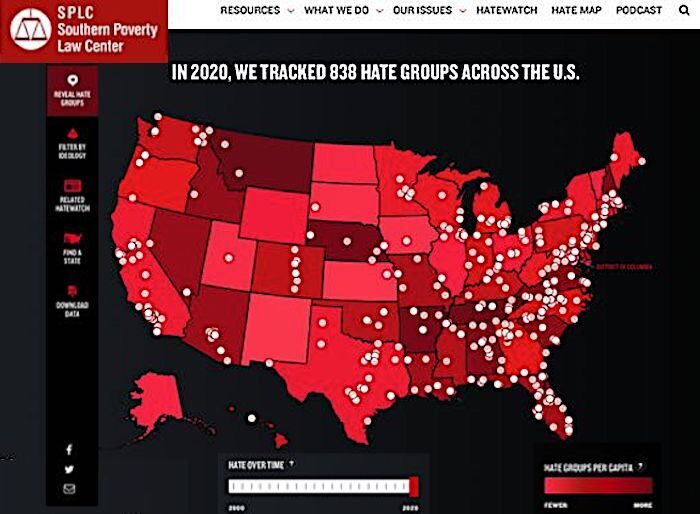
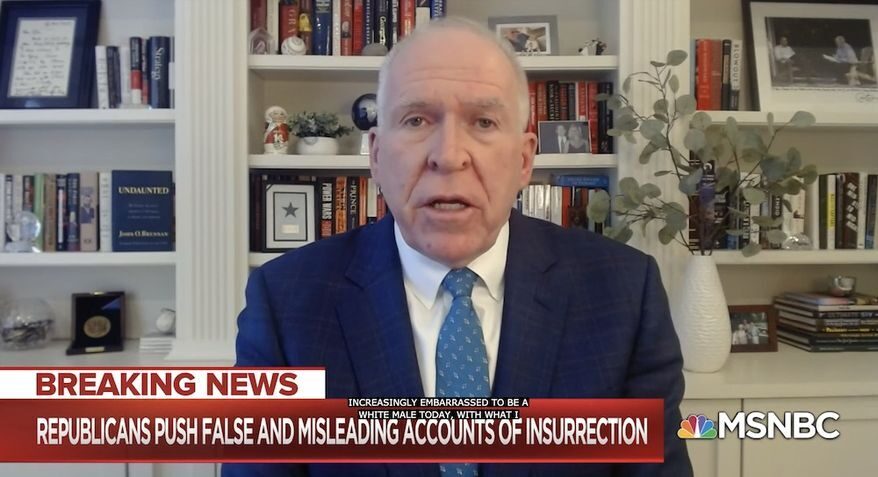
"Separating hate groups from their online funding sources will prevent their ideas from reaching a wider audience, and it will disrupt their networks. Some technology companies have taken steps in the right direction, but both government and internet companies must do far more to combat extremism and hate,"While government and Big Tech should combat organizations that pose a concrete terrorism threat, the SPLC's recommendations are riddled with far-left bias and blindness to any violent threat from leftist radicals associated with antifa or Black Lives Matter. The SPLC paints the Right with a broad terrorism brush while consciously ignoring any threats from the Left.

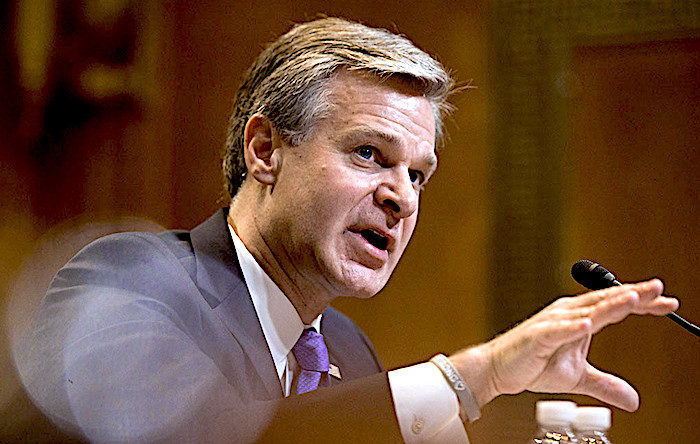
"We're not serious about attacking extremism if we care about some government buildings being attacked but not others. We're not serious about attacking domestic extremism if we only focus on white supremacy movements, which isn't the only ideology that's responsible for murders and violence," Sen. Chuck Grassley (R-Iowa) said when questioning Wray.It seems repressive tolerance is here to stay for at least the near future...
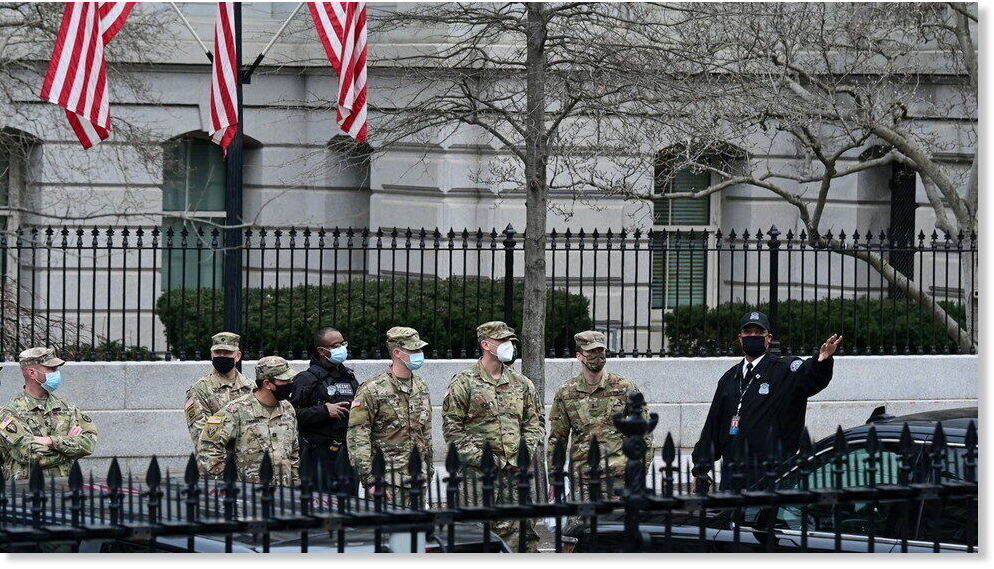
The FBI director claims his agency has no interest in partisan matters and looks at "ideology" only as a "further piece of the case," but he also pointed to "racially motivated violent extremists" as making up "the biggest chunk" of people committing crimes related to domestic terrorism. It is these "racially motivated violent extremists," he said, that were behind the January 6 attack, along with "militia violent extremists."
Sen. Rick Durbin (D-Illinois) directly shot back at claims that left-wing groups are as equal a threat as more conservative-leaning extremists.
"Let's stop pretending that the threat of Antifa is equivalent to the white supremacist threat. Vandalizing a federal courthouse in Portland is a crime. It should be prosecuted to the full extent of the law," he said. "But it is not equivalent to a violent attempt to overthrow the results of elections, nor is it equivalent to mass shootings targeting minority communities."
Not all Republicans were interested in highlighting groups beyond perceived "white supremacists" during their time questioning Wray. Sen. Lindsey Graham (R-South Carolina) actually suggested enlarging the FBI to combat the threat of domestic terrorism, asking Wray to submit a list of expansions his agency needs to combat a problem that, according to the director, has "grown dramatically." Graham even suggested "international" terrorists could work to "infiltrate" domestic terrorist groups within the US to commit acts of terror, especially with the 20th anniversary of 9/11 coming this year.
"We need more agents, we need more analysts, we need more data analytics," Wray told Graham, to which the senator told him to "put pen to paper" and officially request additional resources.


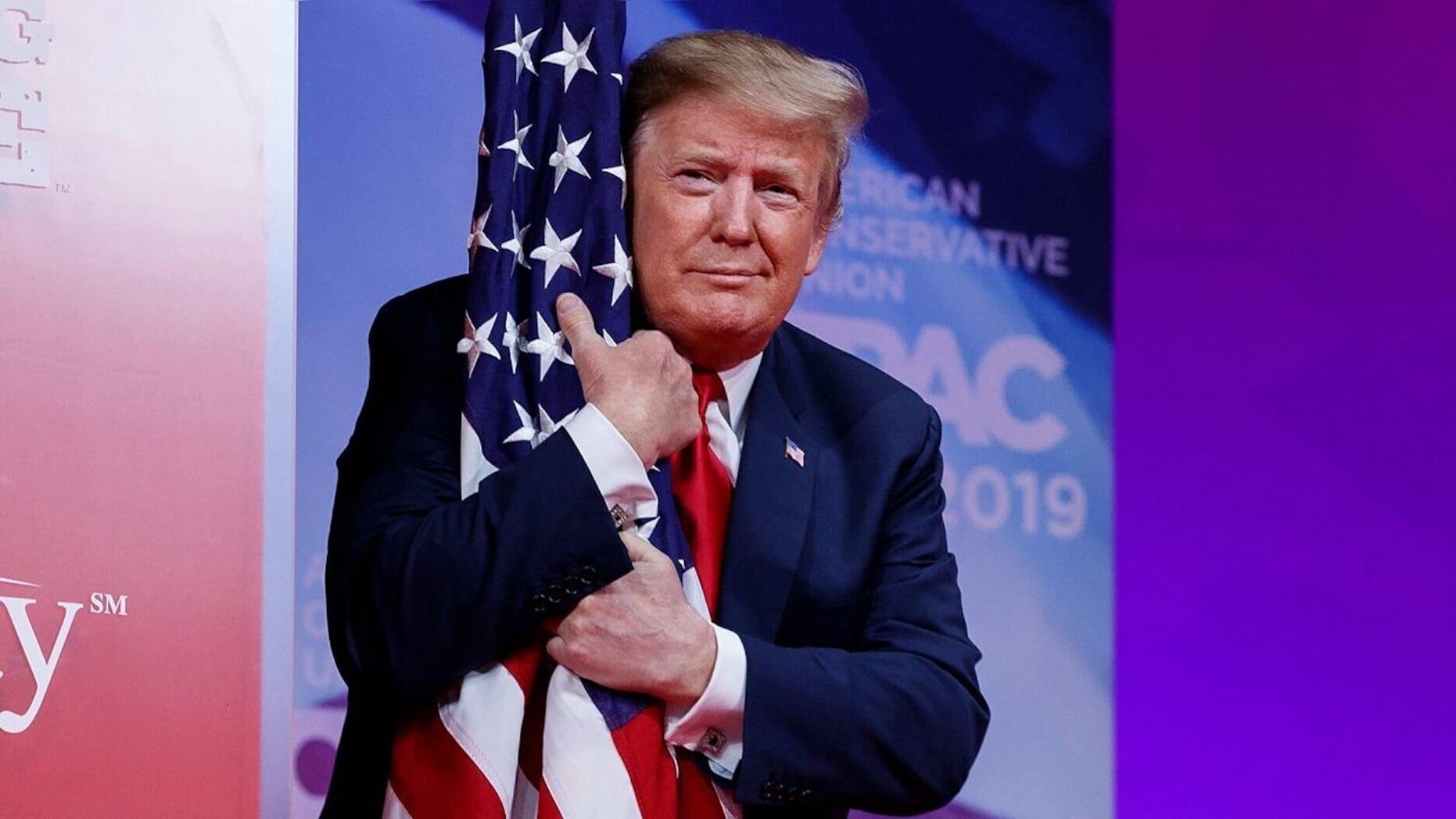
Trump stopped short of declaring he will run for office again, but he set off a huge ovation by hinting at a 2024 run. "Who knows? Who knows? I may even decide to beat them for a third time," Trump said, alluding to his 2016 victory, his disputed loss in 2020, and the next election 2024.Trump also spoke at CPAC about Big Tech. Also from RT:
Trump made it clear that he will seek to remain a powerful force in Republican politics. "I stand before you today to declare that the incredible journey we began together... four years ago is far from being over," he said. "This movement is just getting started, and in the end, we will win."
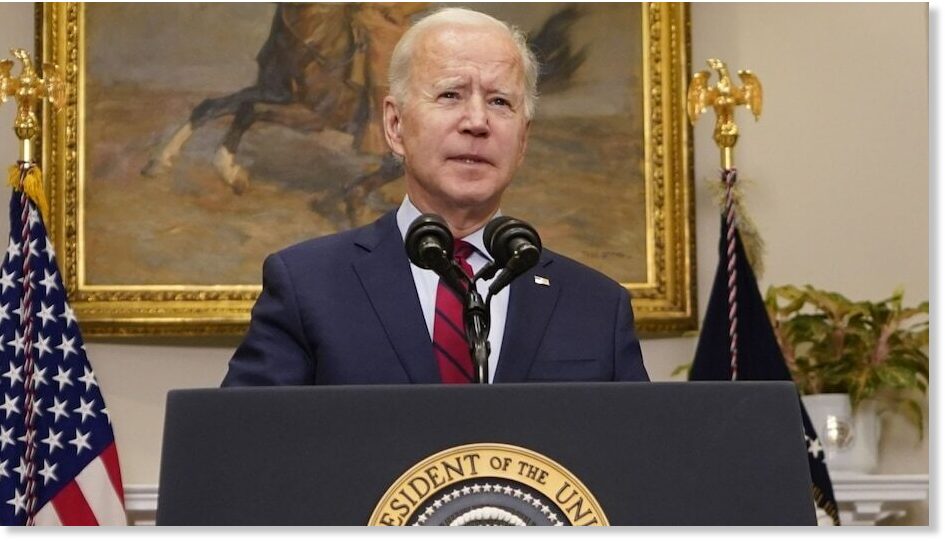
Trump took aim at President Biden, labeling the Democrat's first 30 days in office "the most disastrous first month" of any president in modern history. Continuing his wide-ranging onslaught against the president, he argued that the new administration has quickly taken the country further left than advertised, describing Biden's presidential campaign as "all lies." Trump accused the Democratic Party of being "anti-jobs, anti-family, anti-economy, anti-energy and anti-women and anti-science."
The former president blasted Biden's immigration reforms aimed at dismantling some of his own hard-line policies, calling them "not just illegal," but also "immoral" and "a betrayal of our nation's core values." Among other things, Trump criticized Biden for immediately ending the travel ban that blocked entry for most people from Iran, Libya, Somalia, Syria, Yemen, Venezuela and North Korea. The Republican also took a swipe at the Biden administration for rejoining the Paris climate accord, arguing that Biden should have negotiated a better deal if he was hellbent on returning to the agreement.
"In one short month, we've gone from America first to America last," Trump charged.
On the issue of school reopenings, Trump accused Biden of caving to pressure from teacher unions, urging the Democratic administration to immediately get them reopened. Accusing Biden of "killing" over 40,000 jobs with the cancellation of the Keystone pipeline, Trump argued that the the US will lose its energy independence under the new administration. "You're going to see costs go like you've never seen them before," he said.
"The time has come to break up Big Tech monopolies and restore fair competition," Trump said on Sunday at the CPAC in Orlando. "Republicans, conservatives must open our platforms and repeal section 230 liability protections," he added.If only there were a President who would do, while in office, what Trump talks about once he's no longer in office. Too much to ask?
While in the past the public had a chance to hear both sides of the argument before making an informed decision, Big Tech censorship disproportionately targeted conservatives, depriving them of the right to be heard, Trump argued.
"You would win, you would lose... But now there is no debate, because they refuse allow our side to even speak or to be heard."
If the power of Big Tech cannot be curbed at federal level immediately, Trump urged "every state in the union where we have the votes" to "punish Big Tech with major sanctions whenever they silence conservative voices." He noted that Texas and Florida "are doing this" already.
Florida Governor Ron DeSantis has been championing a bill seeking to rein in tech companies by allowing users to bring a "cause of action" against platforms violating Florida law. The bill, if it becomes law, would bar platforms from rapidly changing their policy and enforcing it selectively against users. Under the law, consumers would have the right to "opt-out" from algorithms that shadow-ban certain information. "As these companies have grown and their influence expanded, Big Tech has come to look more like Big Brother with each passing day," DeSantis said, as he voiced support for the bill in early February.
Texas Governor Greg Abbott earlier this month announced that his office was working on a bill to "prevent social media providers like Facebook & Twitter from canceling conservative speech." The bill will reportedly give the state more leverage to regulate social media companies, and allow Texans, yanked off social media platforms over political or religious views, the right to take Twitter and Facebook to court.
Trump made his comments on Silicon Valley giants and the censoring of conservative voices - including his own social media accounts - after calling for reforms to ensure "fair, honest and secure elections." For instance, he said, the US must end mass mail-in voting, require voter identification, verify that each voter is a legal citizen and provide chain-of-custody protection for all ballots.
"All the election-integrity measures in the world will mean nothing if we don't have free speech," he stressed.
Comment: SPLC has consistently assumed the moral authority to smear and lambaste conservatives. The above is a prime example of 'creating guilt' by the trick of 'same sentence' association. SPLC is very, very good at feeding the Democratic hate machine - which may be why it is still around.