Science & TechnologyS


Cassiopaea

Milky way could be spreading life from star to star

milky way
For almost two centuries, scientists have theorized that life may be distributed throughout the Universe by meteoroids, asteroids, planetoids, and other astronomical objects. This theory, known as Panspermia, is based on the idea that microorganisms and the chemical precursors of life are able to survive being transported from one star system to the next.

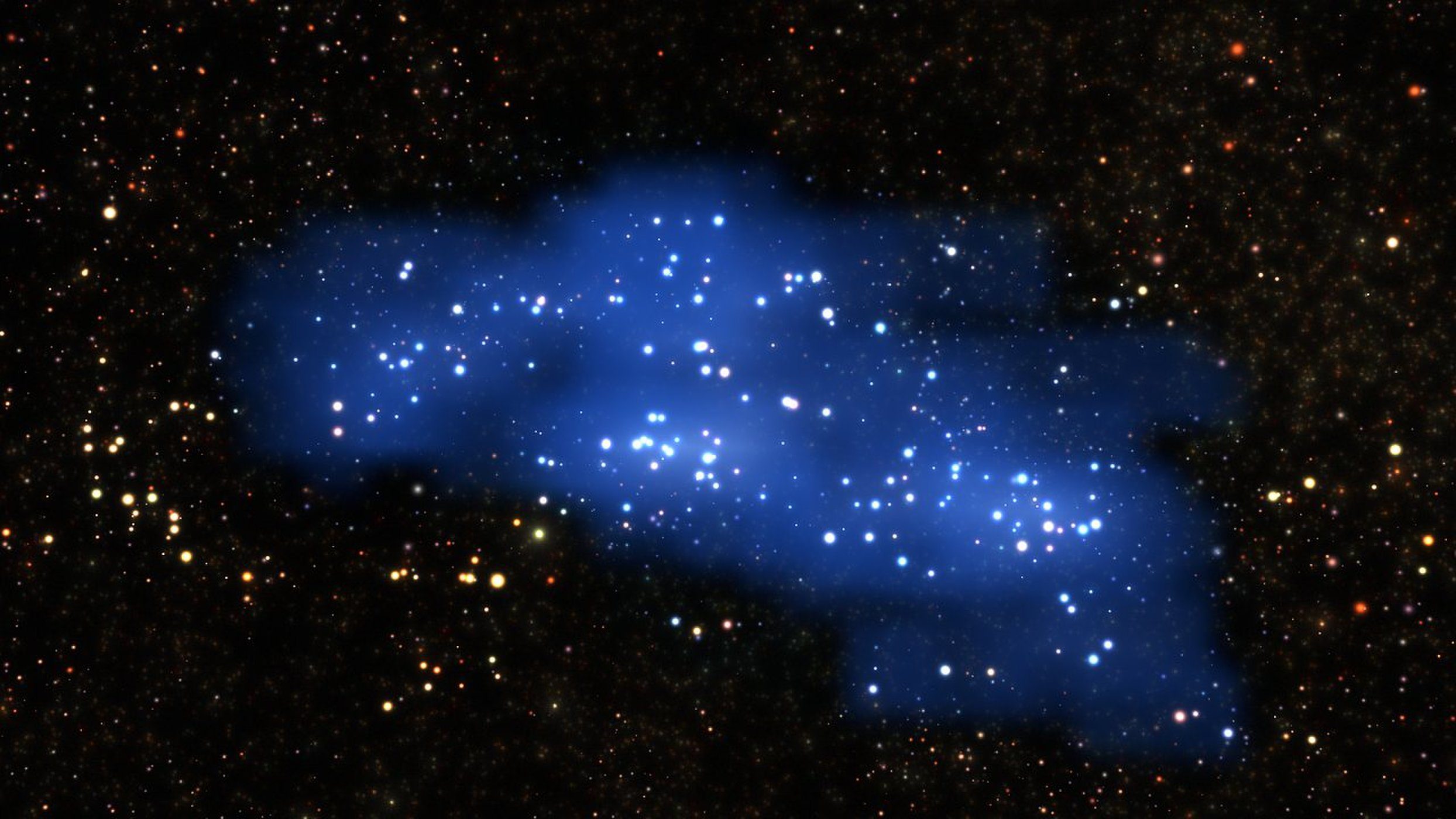
Expanding on this theory, a team of researchers from the Harvard Smithsonian Center for Astrophysics (CfA) conducted a study that considered whether panspermia could be possible on a galactic scale. According to the model they created, they determined that the entire Milky Way (and even other galaxies) could be exchanging the components necessary for life.

The study, "Galactic Panspermia", recently appeared online and is being reviewed for publication by the Monthly Notices of the Royal Astronomical Society. The study was led by Idan Ginsburg, a visiting scholar at the CfA's Institute for Theory and Computation (ITC), and included Manasvi Lingam and Abraham Loeb - an ITC postdoctoral researcher and the director of the ITC and the Frank B. Baird Jr. Chair of Science at Harvard University, respectively.

Comment: See also: And check out SOTT radio's:


Galaxy

Cosmic uncertainty: Scientists wondering is the speed of light really constant?

speed of light physics
© Henrik Sorensen/Getty
The universe's ultimate speed limit seems set in stone. But there's good reason to believe it might once have been faster - and may still be changing now

The speed of light in a vacuum is the ultimate cosmic speed limit. Just getting close to it causes problems: the weird distortions of Einstein's relativity kick in, so time slows down, lengths go up, masses balloon and everything you thought was fixed changes. Only things that have no mass in the first place can reach light speed - photons of light being the classic example. Absolutely nothing can exceed this cosmic max.

We have known about the special nature of light speed since an experiment by US physicists Albert Michelson and Edward Morley in the 1880s. They set two beams of light racing off, one parallel and one at right angles to the direction of Earth's rotation, assuming the different relative motions would mean the light beams would travel at different speeds - only to find the speed was always the same.

Comment:


Fireball 5

Earth just narrowly dodged bulk of Draconids meteor storm

DRACONID METEOR OUTBURST
Here it is, showing Earth shooting the gap between two filaments of comet dust
On Oct. 8-9, Europeans outdoors around midnight were amazed when a flurry of faint meteors filled the sky. "It was a strong outburst of the annual Draconid meteor shower," reports Jure Atanackov, a member of the International Meteor Organization who witnessed the display from Slovenia. Between 22:00 UT (Oct. 8) and 01:00 UT (Oct. 9), dark-sky meteor rates exceeded 100 per hour. In eastern France, Tioga Gulon saw "1 to 2 meteors per minute," many of them shown here in an image stacked with frames from his video camera:

"It was a rare and impressive event," says Atanackov.

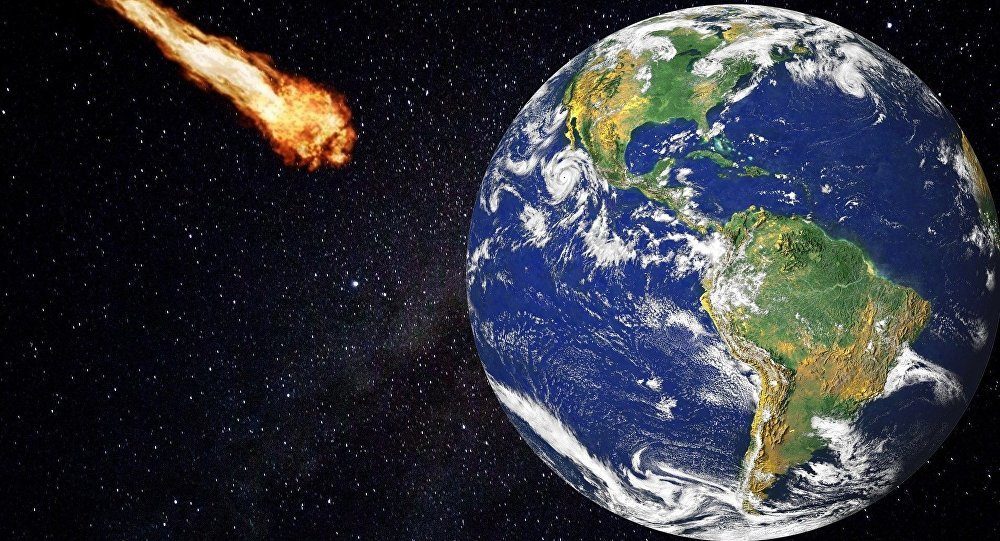
It could easily have been 10 times more impressive. In fact, Earth narrowly dodged a meteor storm.

The European outburst occurred as Earth skirted a filament of debris from Comet 21P/Giacobini-Zinner. If that filament had shifted in our direction by a mere 0.005 AU (~500,000 miles), Earth would have experienced a worldwide storm of 1000+ meteors per hour. These conclusions are based on a computer model of the comet's debris field from the University of Western Ontario's Meteor Physics Group.

Comment: We've been relatively lucky up until this point, but there will become a time when the meteor threat will become very real indeed:


Telescope

19 more mysterious deep-space 'fast radio bursts' detected

The Australian Square Kilometre Array Pathfinder (ASKAP) Telescope
© ASKAPThe Australian Square Kilometre Array Pathfinder (ASKAP) Telescope
A huge haul of newfound fast radio bursts (FRBs) may help astronomers finally start to get a handle on these mysterious and powerful blasts from deep space.

A new study reports the detection of 19 previously undiscovered FRBs, including the closest one to Earth and the brightest one ever seen. The results boost the total tally significantly; just three dozen or so FRBs had been known previously, with the first detection coming in 2007.

FRBs are brief (millisecond-long) but intense emissions of radio light, which can pack as much energy as our own sun produces over the course of nearly a century. Their source is the topic of much discussion and debate. For example, some researchers have suggested that FRBs could be generated by advanced alien civilizations, though most astronomers favor natural explanations, such as fast-spinning neutron stars.

Comment: Further reading


Brain

US military project: Drones operated by mind control

dronesoldier
© Reuters
But a direct man-machine interface is a long way off.

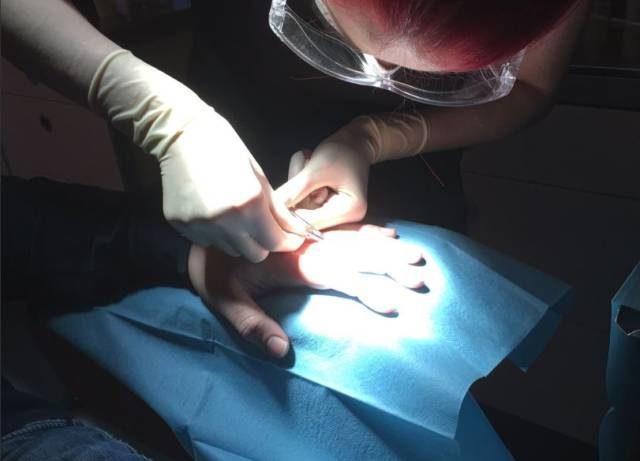
The U.S. Defense Advanced Research Projects Agency has tested an implant that allows an operator to simultaneously control, with their mere thoughts, up to three unmanned aerial vehicles. The technology could one day lead to a direct interface between human beings and UAVs.

But full mind-control for drones is still a long way off. Loosely controlling one small UAV is one thing. Directly controlling several sophisticated drones, with full two-way communication, is quite another.

The mind-control trials took place in Pittsburgh between June 2016 and January 2017, according to DARPA. Using what the agency called a "bidirectional neural interface," a volunteer named Nathan Copeland was able to simultaneously steer a simulated lead UAV and maintain formation of two additional simulated aircraft in a flight simulator, said Tim Kilbride, a DARPA spokesperson.

Eye 1

Lab-grown retinas reveal how color vision develops

Retinas
© Medium
Biologists at Johns Hopkins University grew human retinas from scratch to determine how cells that allow people to see in color are made.

The work, set for publication in the journal Science, lays the foundation to develop therapies for eye diseases such as color blindness and macular degeneration. It also establishes lab-created "organoids" as a model to study human development on a cellular level.

"Everything we examine looks like a normal developing eye, just growing in a dish," said Robert Johnston, a developmental biologist at Johns Hopkins. "You have a model system that you can manipulate without studying humans directly."

Johnston's lab explores how a cell's fate is determined - or what happens in the womb to turn a developing cell into a specific type of cell, an aspect of human biology that is largely unknown.

Here, he and his team focused on the cells that allow people to see blue, red and green - the three cone photoreceptors in the human eye.

Dig

Gargantuan 70 million y.o. dino skeleton found in the Gobi Desert

dinosaur bones
© CCO
The fossil is believed to be the remains of a sauropod dinosaur, a member of the huge herbivorous species that lived on our planet millions of years ago.

A team of Japanese and Mongolian scientists has discovered a skeleton of a giant dinosaur in Gobi Desert in Mongolia, the Japan-based news agency Jiji reports.

The fossil is thought to belong to a 70 million-year-old sauropod dinosaur. Sauropods were long-necked, four-legged plant eaters that inhabited the Earth in the Jurassic and Cretaceous periods. This genus includes the largest creatures ever to walk the Earth; in particular, the colossal Argentinosaurus, which scientists believe to have been over 36 meters long and over 21 meters tall.

Stop

Soyuz-FG launch vehicle assembly suspended as part of investigation into MS-10 failed liftoff

Soyuz-FG launch
© Sputnik / Alexey Filippov
All works with the Soyuz-FG booster that has been prepared for the launch of the Progress MS-10 cargo spacecraft have been suspended because it may have the same defects as the Soyuz-FG that failed on Thursday and it may help the investigation into the incident, a source in the space industry told Sputnik on Saturday.

"The Soyuz-FG rocket designed for the launch of Progress MS-10 has been already assembled into a stack [the first and second stages of the rocket] at the Baikonur [cosmodrome]... A considerable number of checks have already been made. All works with the rocket have been suspended and not because launches have been forbidden - it is not prohibited to make preparations after all - but because it may have the same defects as the rocket that malfunctioned and it could help the investigation," the source said.

The Progress MS-10 cargo spacecraft is still being prepared for the launch to the International Space Station (ISS) in November after the failed liftoff of Soyuz MS-10, however, the stowage of cargo has been suspended, a source in the space industry told Sputnik on Saturday.

Comment: See: More ISS trouble: Russian and American astronauts dodge death in rare Soyuz rocket launch accident, successfully land in Kazakhstan


Star

A star is born: CA astronomers witness birth of binary star system for 1st time

Supernova
© SDSS/ Caltech/ KeckThe three panels represent moments before, during and after the faint supernova.
A group of astronomers observing the strange quiet death of a massive star, which exploded in a "peculiar" fashion some 920 million light years from Earth, also witnessed the birth of binary star system for the first time.

Astronomers from the California Institute of Technology and Carnegie Science Institute published their findings in the journal Science on Thursday. In the study, they describe the strange event in which the huge star exploded in a surprisingly faint and rapidly fading supernova - in stark contrast to the dramatic bang which exploding stars usually produce.

The star was at least eight times the mass of our sun, yet it only ejected one-fifth of our sun's mass during the explosion. Usually, a star's core collapses inward before exploding completely in a powerful, violent, blast.

The event was captured by the Palomar Observatory, which conducts a nightly survey of the sky in the search of supernovae.

Microscope 1

Trillions of health-protecting viruses make up your virome

viruses genome
© vrx/Shutterstock.comEvery surface of our body - inside and out - is covered in microorganisms: bacteria, viruses, fungi and many other microscopic life forms.
If you think you don't have viruses, think again.

It may be hard to fathom, but the human body is occupied by large collections of microorganisms, commonly referred to as our microbiome, that have evolved with us since the early days of man. Scientists have only recently begun to quantify the microbiome, and discovered it is inhabited by at least 38 trillion bacteria. More intriguing, perhaps, is that bacteria are not the most abundant microbes that live in and on our bodies. That award goes to viruses.

Comment: