Science & TechnologyS

Satellite

UK MoD report warns future International space station nukes may hit Earth

Space Station
© CC0
The warning comes as part of the so-called Doomsday predictions, that more nations will possess nuclear weapons, chemical weapon bans will not work and terrorists will obtain sophisticated missiles.

A UK Ministry of Defense (MoD) think tank has warned of "space-based weapons systems" with nuclear capabilities that could be deployed to space stations orbiting Earth by 2050, according to The Sun.

In the Future Starts Today report, the Development Concepts and Doctrine Centre also suggested that in the next thirty years, the space outposts will be equipped with nuclear electromagnetic pulse (EMP) weapons capable of detonating in the air rather than on the ground.

"Electromagnetic pulses can shut down anything running on electrical power, meaning lights, communications and heating systems would all stop working in an instant," the survey said.

Cassiopaea

'Kilonovae' explosions could be flinging gold and platinum across the universe

kilo nova precious metals gold
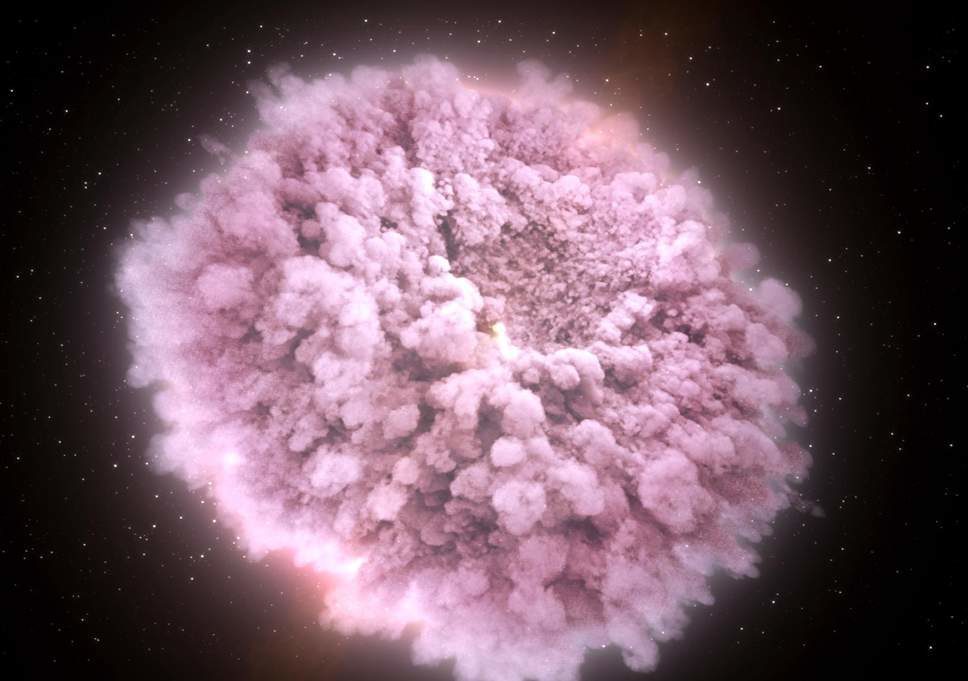
© NASA Goddard Space Flight Center/CI LabThis illustration shows the hot, dense, expanding cloud of debris stripped from two neutron stars just before they collided. Within this neutron-rich debris, large quantities of some of the universe's heaviest elements were forged, including hundreds of Earth masses of gold and platinum
Such kilonovae could shed light on some of the most spectacular parts of space

Vast explosions, throwing out gold, platinum and many of the world's most precious elements, could be happening throughout the universe.

Nasa scientists have spotted what they think are immense explosions caused by neutron stars colliding into each other in distant space.

When that catastrophic event happened, it sent an intense jet of of high-energy particles through space that made their way past the scientists who spotted them using Nasa's array of space telescopes.

Camcorder

Southern Ocean's 'headless chicken monster' captured on video for the first time

headless chicken monster
© The Australian Antarctic Division
Australian scientists, using specialist equipment, have reported disturbing findings made three kilometers below the surface of the Antarctic's Southern Ocean: the discovery of a 'headless chicken monster.'

"Some of the footage we are getting back from the cameras is breathtaking, including species we have never seen in this part of the world," Australian Antarctic Division Program Leader Dirk Welsford said.

The monster, alternatively known as the 'Spanish Dancer', or Enypniastes eximia, is a deep-sea swimming sea cucumber typically found bottom-feeding in certain parts of the world. The creature has previously only been filmed much farther north in the Gulf of Mexico.

Car Black

China set to open world's longest sea bridge connecting Hong Kong and Macau

Bridge
© AFP / Anthony WallaceA section of the Hong Kong-Zhuhai-Macau Bridge is seen from Lantau island in Hong Kong.
A $20 billion sea-crossing bridge, connecting mainland China to Hong Kong and Macau is to finally open on Tuesday. The six-lane bridge has been constructed in just nine years.

The 55-kilometer long bridge (34 miles) will cut travel time from Hong Kong to Zhuhai (in China's southern Guangdong province) from three hours to 30 minutes. It is a key element of Beijing's plan for a Greater Bay Area covering 56,500 square kilometers across southern China. The long-awaited bridge will encompass 11 cities that are home to a combined 68 million people.

Hong Kong's transport secretary Frank Chan said: "With the bridge, the travel time between Hong Kong and the Western Pearl River Delta region will be shortened significantly, thereby bringing the Western Pearl River Delta region within three hours' drive from Hong Kong."

Fire

World's oldest fossils aren't actually fossils, new research suggests

stromatolites
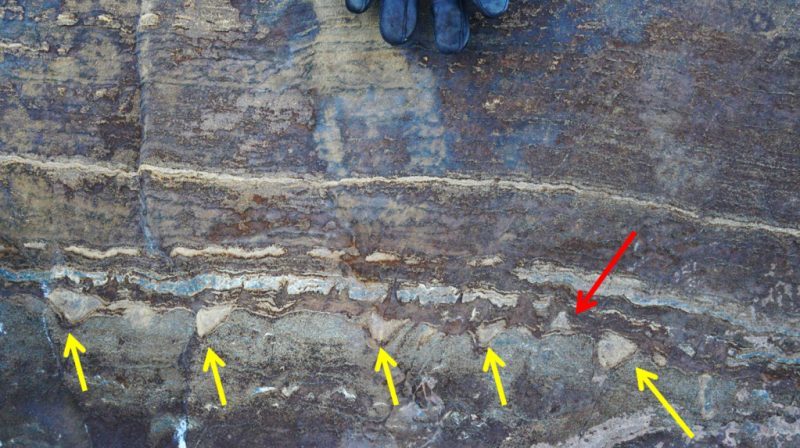
© Abigail AllwoodSigns of life? Or just normal geology? New research suggests the latter.
Two years ago, researchers from the University of Wollongong in Australia shook the science world by claiming to have discovered 3.7 billion-year-old fossils in a rock formation in Greenland, a finding that pushed back the origin of life on Earth by 200 million years. New research is now casting doubt on this discovery, with scientists saying the rock structures are of non-biological origin.

In the original 2016 study, geologist Allen Nutman and colleagues identified cone-like structures, ranging between 1 and 4 centimeters in length, in 3.7-billion-year-old rock found in the Isua formation in southwest Greenland. These structures, the researchers said, were evidence of stromatolites-sedimentary formations created by the layered growth of microbial organisms in shallow waters. At the time, it was considered the oldest evidence of life on Earth, demonstrating the rapidity with which life emerged after the formation of our planet some 4 billion years ago. The finding carried profound implications not just for our situation here on Earth, but for other habitable planets in the galaxy.

The apparent stromatolites were identified in badly deformed "metamorphic" rocks, which have been heated, twisted, crushed, and contorted over the vastness of geologic time. Despite this, Nutman's team said they were able to see the signs of sedimentary history within the rocks, including the alleged stromatolites. No organic compounds or biomarkers (so-called "chemical fossils") were found, but the conical-shaped structures and finely layered textures were interpreted as the remnants of ancient microbial life. At the same time, Nutman ruled out other possibilities, such as weirdly folded rock.

Comment: Mainstream geologists operate on the premise of gradualism, that the processes on our planet occur in a gradual manner (which is probably why the 'tectonic compression' hypothesis was proposed). However, what if these scientists were to consider the well documented fact that our planet regularly undergoes cataclysmic upheavals (aka: catastrophism) and that these unusual patterns could be the result of rock being super heated (due to immense volcanic activity or cometary bombardment) where it begins to behave like a like a liquid, like lava, hence the "waves" of "heated, twisted, crushed, and contorted" rock?

The debate continues, but by ignoring a fundamental component in the history of our planet the scientists are missing a glaring piece of the puzzle.


Blue Planet

Climate change likely killer of "specialized" Australian marsupial lion

Thylacoleo Carnifex
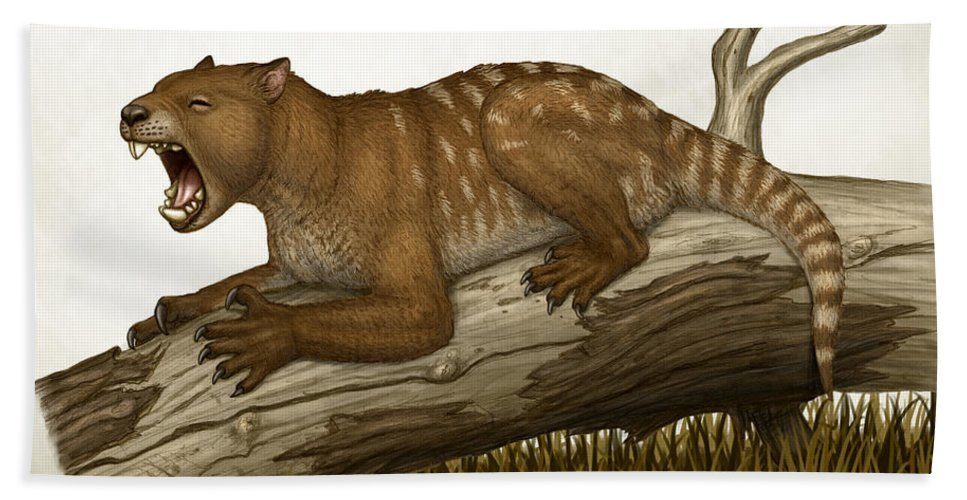
© Heraldo MussoliniHorizontal Beach Towel featuring the digital art Thylacoleo Carnifex, A Marsupial by Heraldo Mussolini
The extinction of one of Australia's top predators, Thylacoleo carnifex - aka the marsupial lion - was likely a result of changing weather patterns and loss of habitat rather than human impacts, new research has found.

Palaeontologists from UNSW Sydney, University of Queensland and Vanderbilt University (Tennessee) addressed the question about the demise of the marsupial lion by looking into the powerful carnivore's chemistry.

By studying the chemical signature preserved within fossil teeth, the team was able to determine that the marsupial lion hunted primarily in forests, rather than open habitats. This is supported by features of the skeleton that indicate it was an ambush hunter, relying on catching its prey unaware rather than running them down across an open landscape.

Comment: The 'drying out' of Australia began 350,000 years ago and helped bring about the demise of Thylacoleo Carnifex; then. 10,000 years later. Aboriginal stories, backed up by science, reveal dramatic rises in sea levels; and in 2018, Australia's climate is shifting once again, with brutally cold winters and extreme drought during summer. When we consider the wealth of evidence on the greatest drivers to Earth's climate, it's quite clear that these shifts are a cyclical occurrence and are the norm.

See also: Also check out SOTT radio's: Behind the Headlines: Earth changes in an electric universe: Is climate change really man-made?


Frog

Rethinking evolution: Researchers find evidence of rapid genome adaptation of Burmese pythons

burmese python

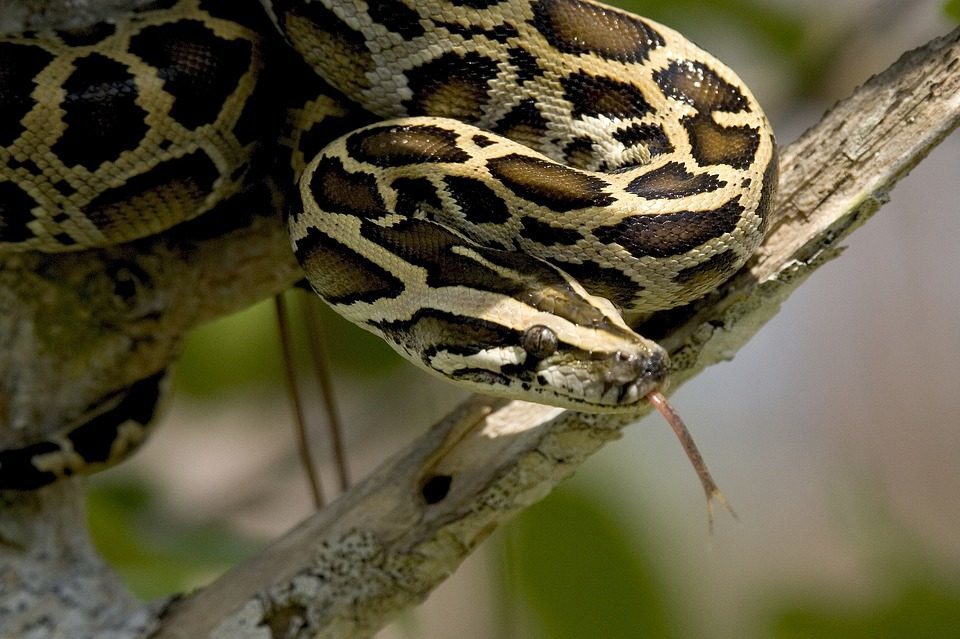
Florida has become a haven for invasive species in the United States, but perhaps the most well-known of the state's alien residents is the Burmese python. These giant snakes, native to Southeast Asia, have become well-established over the past few decades and even flourish in their new environment.

"In Burmese pythons, we observed the rapid establishment and expansion of an invasive population in Florida, which is quite ecologically distinct from Southeast Asia and likely imposes significant ecological selection on the invasive Burmese python population," said Todd Castoe, biology professor at The University of Texas at Arlington and director of the Castoe Lab. "This situation had all of the hallmarks of a system where rapid adaptation could occur, so we were excited to test for this possibility using cutting-edge genomic approaches."

Comment: The neo-Darwinist view of evolution as a long and slow process of random mutation and selection over millions of years doesn't account for many scientific observations, including the above. It seems the evolution can happen in much more rapid spurts in response to environmental pressures in real time, and doesn't require natural selection to allow for genetic mutations to spread throughout a population over the course of many generations. This is truly fascinating, but no-doubt angers many of the materialists crowd as it throws a rather large wrench into the "it's all random chance" narrative.

See also:


Question

Holobiont: Are you and your microbes a community or a single entity?

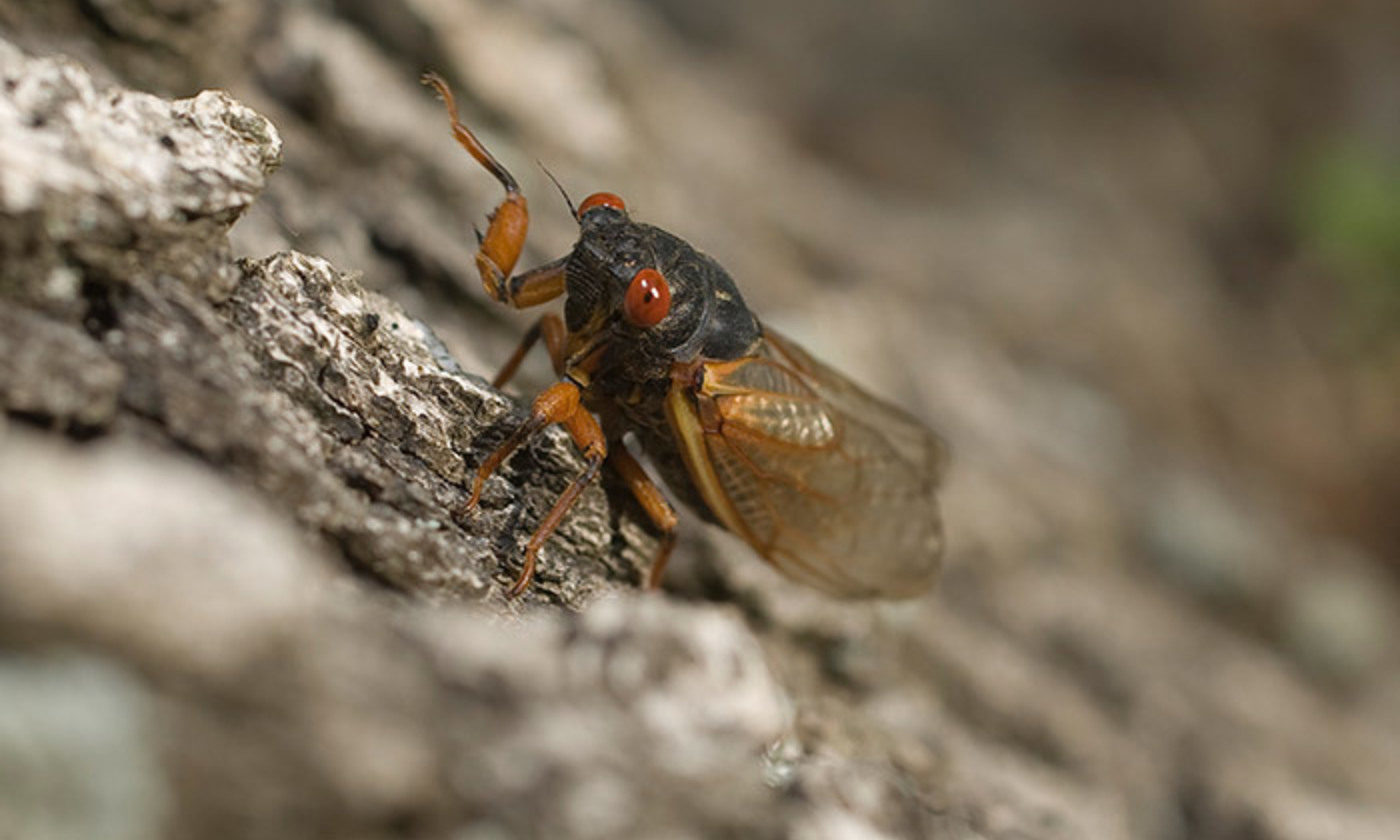
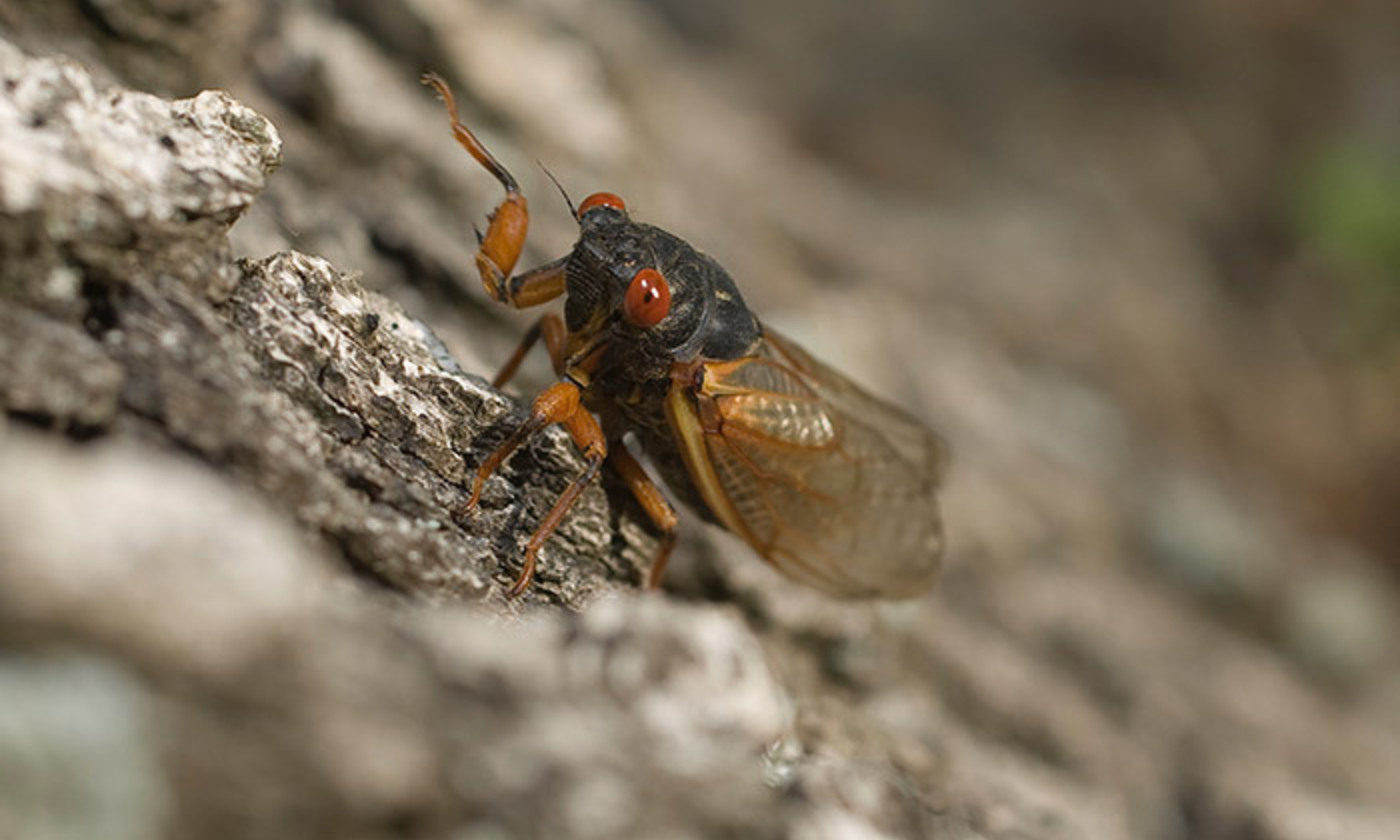
cicada
© Photo courtesy Wikimedia.Cicada, North Carolina, May 2011.
Cicadas might be a pest, but they're special in a few respects. For one, these droning insects have a habit of emerging after a prime number of years (7, 13, or 17). They also feed exclusively on plant sap, which is strikingly low in nutrients. To make up for this deficiency, cicadas depend on two different strains of bacteria that they keep cloistered within special cells, and that provide them with additional amino acids. All three partners - the cicadas and the two types of microbes - have evolved in concert, and none could survive on its own.

These organisms together make up what's known as a holobiont: a combination of a host, plus all of the resident microbes that live in it and on it. The concept has taken off within biology in the past 10 years, as we've discovered more and more plants and animals that are accompanied by a jostling menagerie of internal and external fellow-travellers. Some of the microorganisms kill each other with toxins, while others leak or release enzymes and nutrients to the benefit of their neighbours. As they compete for space and food, cohabiting microbes have been found to affect the nutrition, development, immune system and behaviour of their hosts. The hosts, for their part, can often manipulate their resident microbiota in many ways, usually via the immune system.

You yourself are swarming with bacteria, archaea, protists and viruses, and might even be carrying larger organisms such as worms and fungi as well. So are you a holobiont, or are you just part of one? Are you a multispecies entity, made up of some human bits and some microbial bits - or are you just the human bits, with an admittedly fuzzy boundary between yourself and your tiny companions? The future direction of medical science could very well hinge on the answer.


Info

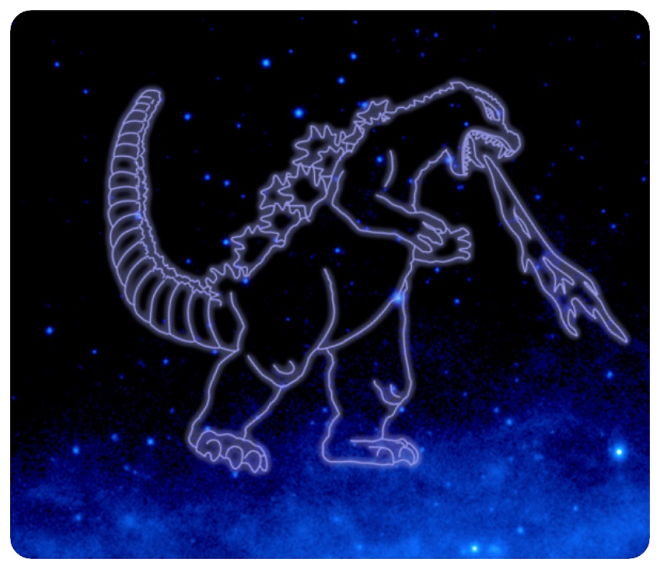
King of the Monsters Godzilla, gets its own constellation

Godzilla
© SoraNews24
Mt. Fuji constellation joins the kaiju in the gamma-ray-filled heavens.

When Godzilla made his screen debut in 1954, he was, like most Japanese media of the era, designed just for Japan. But in the decades since, the King of the Monsters has expanded his dominion, appearing in theaters around the world.

That international recognition even earned the kaiju his own star on the Hollywood Walk of Fame, but now Godzilla finds himself among not just movie stars, but celestial ones as well, as NASA has announced a Godzilla constellation.
Godzilla Constellation3
© PR Times, NASA

Satellite

Space junk from Iridium satellite crashes into Californian orchard

space junk iridium
When a farmer in Hanford, California took a casual stroll out to his walnut orchard recently, the last thing he expected to find was a piece of space junk. But that's precisely what he got. There, amongst the trees, was a large hunk of mangled metal, charred and scrapped as though it had been through Hell.

Indeed, the object had endured incredible heat and destructive forces, but not from the underworld. The dome-shaped chunk was actually a piece of space junk, having made it all the way to the ground despite the intense friction it faced in the atmosphere. After a bit of searching, it has now been identified.

According to local news reports, the farmer contacted his local sheriff's department to aid him in figuring out what the object was. Law enforcement examined the strange item but had little clue, so they eventually reached out to nearby Vandenberg Air Force Base, which was able to identify it as a fuel tank from a satellite.

Comment: While the threat of space junk seems to be a relatively common occurrence, one wonders whether our changing atmosphere is leading to an increase in the number of bits of scrap which make impact with the ground: However, there is a much more pressing concern, also concerning debris from outer space, which poses a risk to the entire planet