Science & TechnologyS


No Entry

Russia completes trials of new 'Penicillin' anti-artillery system - can pinpoint mortar origin coordinates in seconds without radar

1B75 Penicillin
© Defense Ministry / ZvezdaA 1B75 Penicillin with mast being erected.
Russia has completed trials of its new system, which swiftly detects enemy mortar and artillery fire and provides targeting information for counter-fire. Unlike Western counterparts, it does not use radar to do the job.

The development of the 1B75 Penicillin was first revealed last year. It's a counter-artillery system similar in purpose to the US AN/TPQ-37 Firefinder. The system detects enemy mortar and artillery fire and pinpoints origin of the shells, allowing troops to retaliate with deadly precision. What makes the Russian product stand out is that it does not use radar to track the projectiles and instead relies on other signals.


Comment: There's a reason so many countries are choosing Russian arms over American. The Russian engineers actually know what they're doing. See also: Russian defense ministry releases video of short-range anti-ballistic missile launch


Rocket

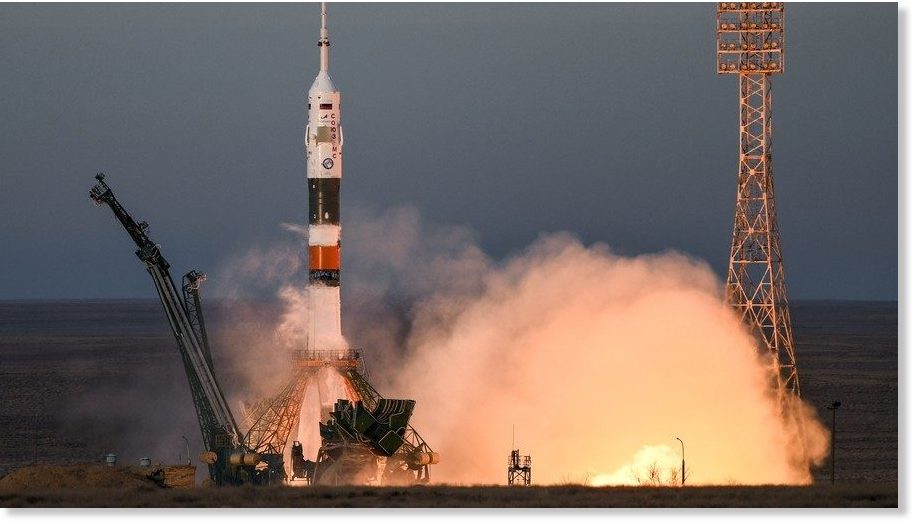
Soyuz rocket propels ISS crew into space in first manned flight since nearly catastrophic launch failure

Soyuz takeoff
© Sputnik / Grigory Sysoev
A Soyuz spacecraft with three crew onboard blasted off to the International Space Station (ISS) Monday. It is the first manned space mission since the October drama, which ended in an emergency landing after a failure mid-flight.

The Soyuz MS-11 carried Russian cosmonaut Oleg Kononenko, Canadian David Saint-Jacques and NASA's Anne McClain from Earth to dock with the ISS later on Monday. Kononenko and Saint-Jacques were the backup crew members for the previous MS-10 mission which ended with a booster separation failure.


Comment: See also:


Cow Skull

Elephant-sized mammal dating back to dinosaur era throws theory of evolution into disarray

dicynodont
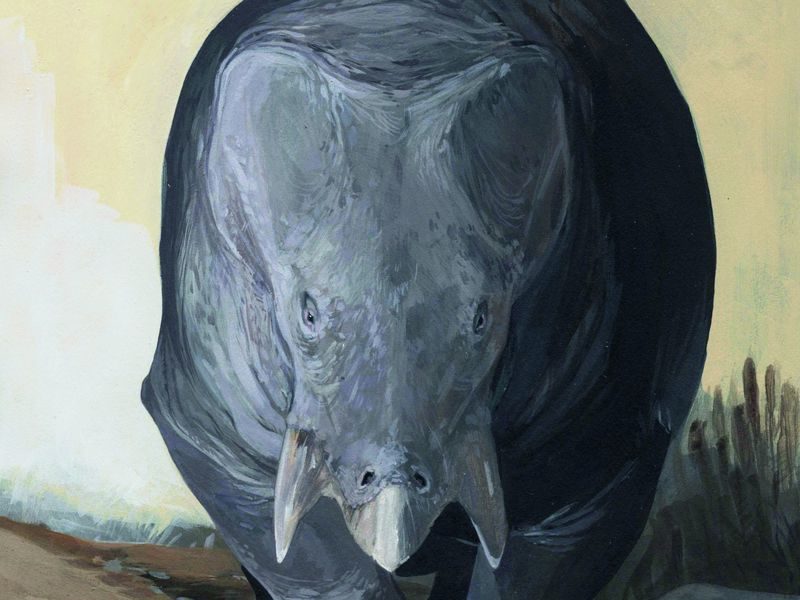
© (Karolina Suchan-Okulska)Dicynodont
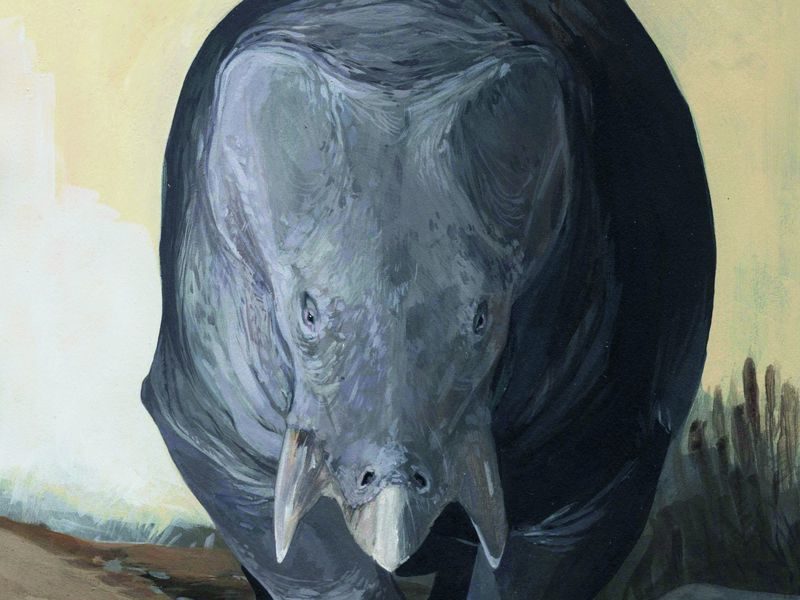
During the age of the dinosaurs, the story often told is that the thunder lizards ruled the earth, growing to the size of cars and busses while the ancestors of mammals and other animals were tiny little insect-eating fuzzballs, scurrying around during the night to avoid the reptilian teeth. But the fossil of an African elephant-sized creature found in southern Poland upends that narrative, reports Gretchen Vogel at Science magazine.

The beast, named Lisowicia bojani, looked something like a cross between rhinoceros and a turtle, weighing in at nine tons. The creature is a dicynodont, one of the first groups of animals to eat plants. It's also part of a broader group of creatures called synapsids, which includes the direct ancestors of mammals, making it something of a cousin to the earliest mammal ancestors, or proto-mammals. The most intriguing thing about the creature, however, is that it dates to the Late Triassic period about 201 to 240 million years ago when dinosaurs first began their reign. It was believed that by that period most other creatures had shrunk in size to hide from the giants, including dicynodonts, which maxed out at the size of a dog, but L. bojani shows that's not the case. The research appears in the journal Science.

Stephen Brusatte, a vertebrate paleontologist at the University of Edinburgh not involved in the study, tells George Dvorsky at Gizmodo that the find is a big deal.

Comment: There seems to be a relentless stream of recent discoveries throwing many of the mainstream theories of evolution into disarray: Could perhaps part of the reason for their massive size be due to the planet harboring a very different environment than it does today? Also check out SOTT radio's: The Truth Perspective: Are Cells the Intelligent Designers? Why Creationists and Darwinists Are Both Wrong


Telescope

NASA Curiosity rover discovers another shiny Mars object

shiny object mars rover curiosity
© NASAThe rock has been named "Little Colonsay"
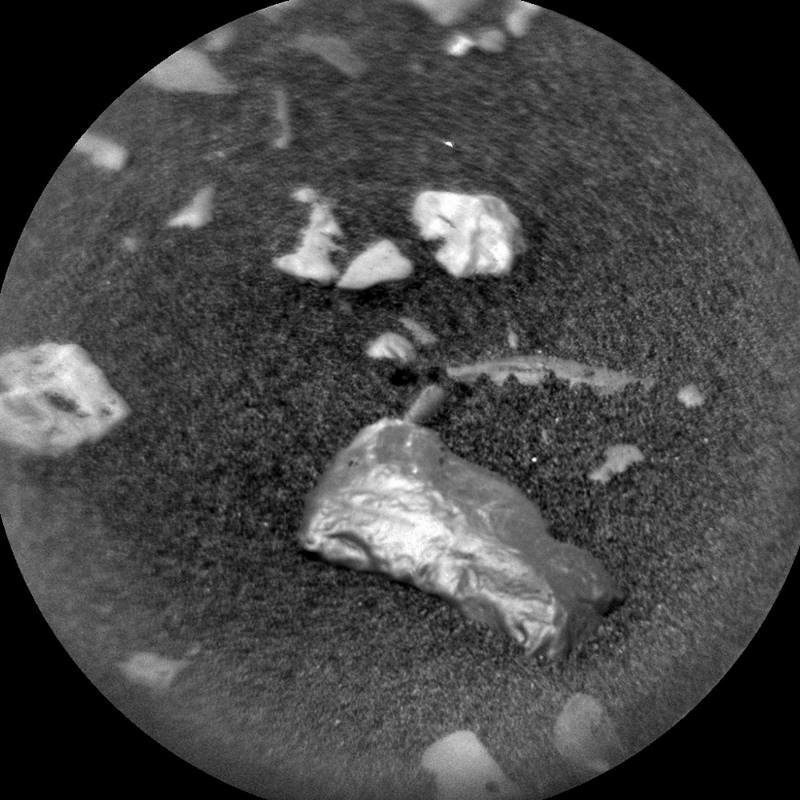
A couple days ago, Curiosity woke up to the song Please would you be my neighbor from Mr. Rogers, that being a greeting for the newly arrived InSight rover. Following that, NASA researchers explain, Curiosity got to work at Mars' Highfield drill site, where it will dump a sample. The rover, which has been rolling around Mars since 2012, previously detected four interesting rocks, including one that is atypically smooth and shiny.

The rock has been named Little Colonsay and it is believed to be a meteorite. Scientists will only confirm that speculation once Curiosity manages to analyze the rock, though. That's where its ChemCam instruments come in; using a laser, spectrograph, and more, the rover will be able to provide researchers with an answer about the shiny rock's nature.

Comment: Curiosity discovers unidentified, metallic object on Mars


Ladybug

Bee-brained: Are insects 'philosophical zombies' with no inner life?

bee brained
© Mark Moffatt/Minden/National GeographicHoneybees (Apis mellifera) in the hive, Würzburg, Germany.
René Descartes's dog, Monsieur Grat ('Mister Scratch'), used to accompany the 17th-century French philosopher on his ruminative walks, and was the object of his fond attention. Yet, for the most part, Descartes did not think very highly of the inner life of nonhuman animals. '[T]he reason why animals do not speak as we do is not that they lack the organs but that they have no thoughts,' Descartes wrote in a letter in 1646.

Followers of Descartes have argued that consciousness is a uniquely human attribute, perhaps facilitated by language, that allows us to communicate and coordinate our memories, sensations and plans over time. On this view, versions of which persist in some quarters today, nonhuman animals are little more than clever automata with a toolkit of preprogrammed behaviours that respond to specific triggers.

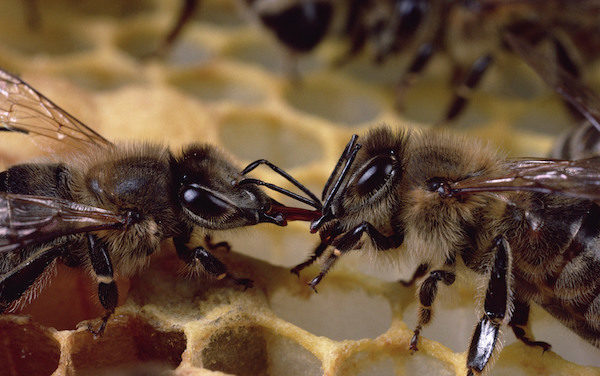
Insects such as bees and ants are often held up as the epitome of the robotically mechanistic approach to animal nature. Scientists have long known that these creatures must possess a large behavioural repertoire in order to construct their elaborate homes, defend against intruders, and provision their young with food. Yet many still find it plausible to look at bees and ants as little more than 'reflex machines', lacking an internal representation of the world, or an ability to foresee even the immediate future. In the absence of external stimuli or internal triggers such as hunger, it's believed that the insect's mind is dark and its brain is switched off. Insects are close to 'philosophical zombies': hypothetical beings that rely entirely on routines and reflexes, without any awareness.

Microscope 1

A bold new strategy for stopping the rise of superbugs

E coli Bacteria
© REUTERSE.coli colonies
The British chemist Leslie Orgel reputedly once said that "evolution is cleverer than you are." This maxim, now known as Orgel's Second Rule, isn't meant to imply that evolution is intelligent or conscious, but simply that it's inventive beyond the scope of human imagination. That's something people who fight infectious diseases have been forced to learn again and again.

Over the past 90 years, scientists have discovered hundreds of antibiotics-microbe-killing drugs that have brought many pernicious diseases to heel. But every time researchers identify a new drug, bacteria inevitably evolve to resist it within a matter of years. We thrust; they parry. Now, with the flow of new antibiotics having dried up for decades, our stalemated duel with infectious bacteria threatens to end in outright defeat. Superbugs are ascendant around the world, including those that resist all commonly used drugs.

Info

Electric pulse bandages dramatically reduce healing time

Eletric Bandage
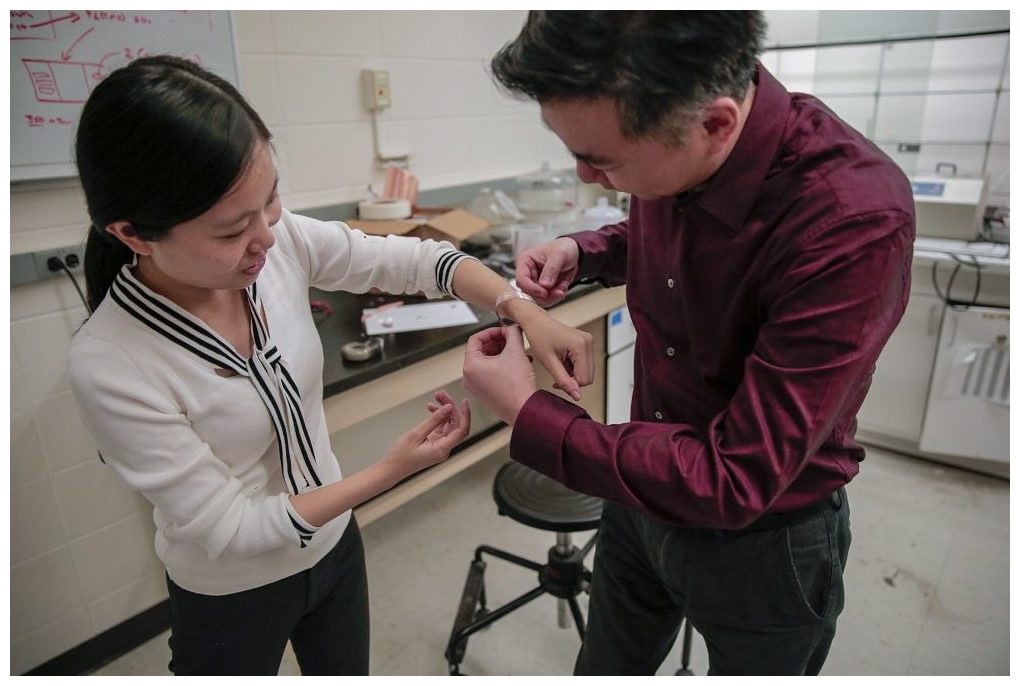
© Sam Million-WeaverMaterials science and engineering professor Xudong Wang fits a new wound dressing around the wrist of graduate student Yin Long. The device stimulates healing using electricity generated from the body’s natural motions.
A new, low-cost wound dressing developed by University of Wisconsin-Madison engineers could dramatically speed up healing in a surprising way.

The method leverages energy generated from a patient's own body motions to apply gentle electrical pulses at the site of an injury.

In rodent tests, the dressings reduced healing times to a mere three days compared to nearly two weeks for the normal healing process.

"We were surprised to see such a fast recovery rate," says Xudong Wang, a professor of materials science and engineering at UW-Madison. "We suspected that the devices would produce some effect, but the magnitude was much more than we expected."

Wang and collaborators described their wound dressing method today (Nov. 29, 2018) in the journal ACS Nano.

Comet 2

A very close encounter: Small comet 46P/Wiranen to fly by earth in mid-December

Comet 46P/Wirtanen
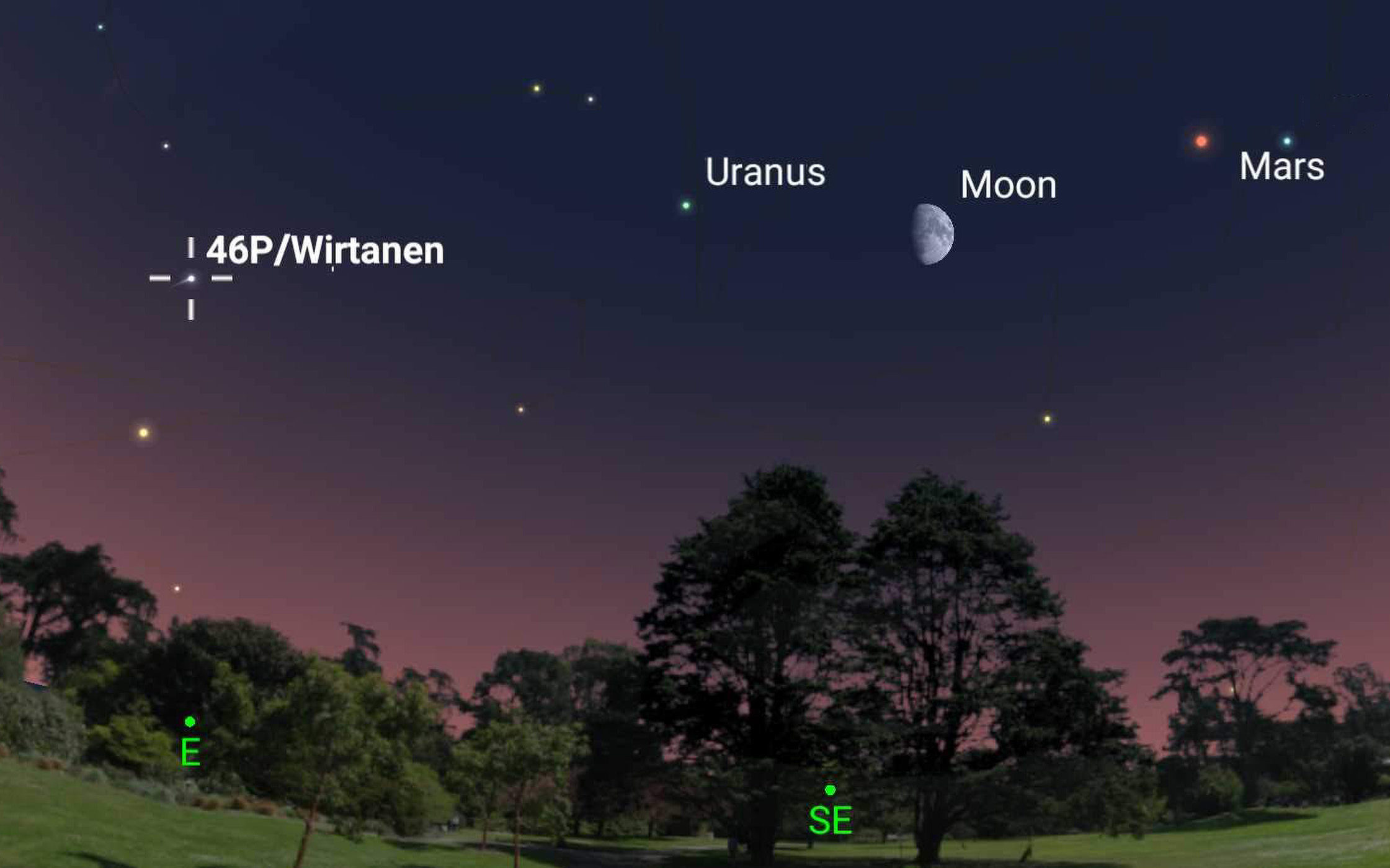
© SkySafariComet 46P/Wirtanen will be closest to Earth on Dec. 16, 2018. Look for it above the eastern horizon after dusk all month long! It will be bright enough to see with the naked eye, and will look even more spectacular with binoculars and telescopes.
As you read this, a small comet is on its way toward making a very close pass of Earth in mid-December - its best appearance over a period of four centuries.

Comet 46P/Wirtanen was one of three comets discovered by astronomer Carl Wirtanen at Lick Observatory in 1948, and it has been missed only once since then (in 1980, when it was too close to the sun to see). It is also a member of the Jupiter "family" of comets - comets with relatively short orbital periods of 20 years or less, with aphelia (their farthest point from the sun) near the orbit of Jupiter.

There are currently over 400 Jupiter-family comets known, most of which are generally faint as they pass by. This is chiefly due to the rapid depletion of their volatile material through numerous trips into the inner solar system, which is an artifact of their short orbital periods. 46P/Wirtanen is a good example; it has always been nothing more than a small, dim object in the night sky, never getting brighter than ninth magnitude - smaller magnitudes are brighter - and usually accessible only to those using moderately large telescopes.

Comment: These 'close encounter's' and sightings of meteors and fireballs are becoming uncomfortably common...


Alarm Clock

The insect apocalypse is here

bees
Sune Boye Riis was on a bike ride with his youngest son, enjoying the sun slanting over the fields and woodlands near their home north of Copenhagen, when it suddenly occurred to him that something about the experience was amiss. Specifically, something was missing.

It was summer. He was out in the country, moving fast. But strangely, he wasn't eating any bugs.

For a moment, Riis was transported to his childhood on the Danish island of Lolland, in the Baltic Sea. Back then, summer bike rides meant closing his mouth to cruise through thick clouds of insects, but inevitably he swallowed some anyway. When his parents took him driving, he remembered, the car's windshield was frequently so smeared with insect carcasses that you almost couldn't see through it. But all that seemed distant now. He couldn't recall the last time he needed to wash bugs from his windshield; he even wondered, vaguely, whether car manufacturers had invented some fancy new coating to keep off insects. But this absence, he now realized with some alarm, seemed to be all around him. Where had all those insects gone? And when? And why hadn't he noticed?

Satellite

Lasers & space weapons? How US might try to counter invincible Russian & Chinese hypersonic missiles

Laser Weapon System
© Wikipedia / US Navy / US Missile Defense Agency WikipediaFILE PHOTO. Laser Weapon System (LaWS) seen abroad USS Ponce (L) and Multiple Kill Vehicle (MKV) during hover test.
The testing of hypersonic weapons this year by Moscow and Beijing sent US military bigwigs into panic mode, as they found their missile defenses to be porous. RT looks at what - if anything- the US hopes can respond to those arms.

The American missile defense system, strategically placed all around the globe, has been the centerpiece of the "defensive" capabilities of Washington for years. The system relies on anti-aircraft missiles, supposed to shoot down incoming hostile projectiles. But the emergence of unconventional weaponry -namely the hypersonic missiles- has raised demand for new, equally unconventional defense systems.

Apart from hitting an incoming projectile with an intercepting one, the anti-missile research and development in the US revolved around two main ideas - using lasers and hitting hostile missiles with a kinetic device. The US military-industrial companies have been recycling the two concepts for years, fielding several prototypes that never entered full-scale production.

The most destructive intercontinental and medium-range ballistic missiles reach high altitudes and travel in space for the large part of their flight. While sub-orbital, a missile releases its warheads -as well as decoys- and adjusts them to stay on target. That's when the space-based kinetic weaponry is supposed to get them.

Comment: It's a sign of how rotten the US military has become that it can no longer produce competitive - or even viable - weaponry, even though it's spending more than its rivals combined: Also check out SOTT radio's: Behind the Headlines: Putin The World To Rights: Russia's New Nuclear Weapons And The End of 'Unipolarity'