
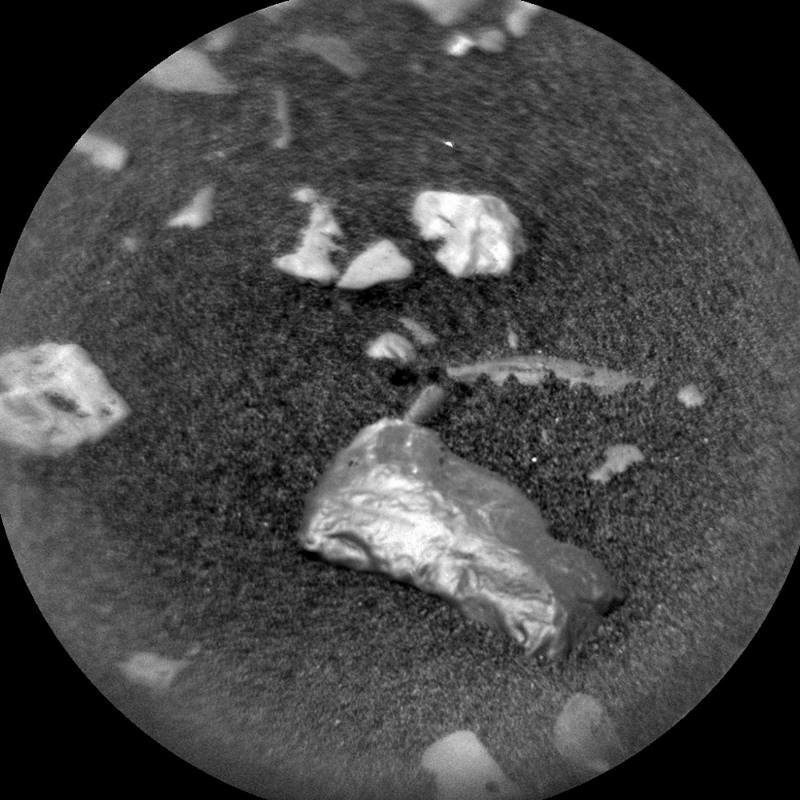
© NASAThe rock has been named "Little Colonsay"
The rock has been named Little Colonsay and it is believed to be a meteorite. Scientists will only confirm that speculation once Curiosity manages to analyze the rock, though. That's where its ChemCam instruments come in; using a laser, spectrograph, and more, the rover will be able to provide researchers with an answer about the shiny rock's nature.
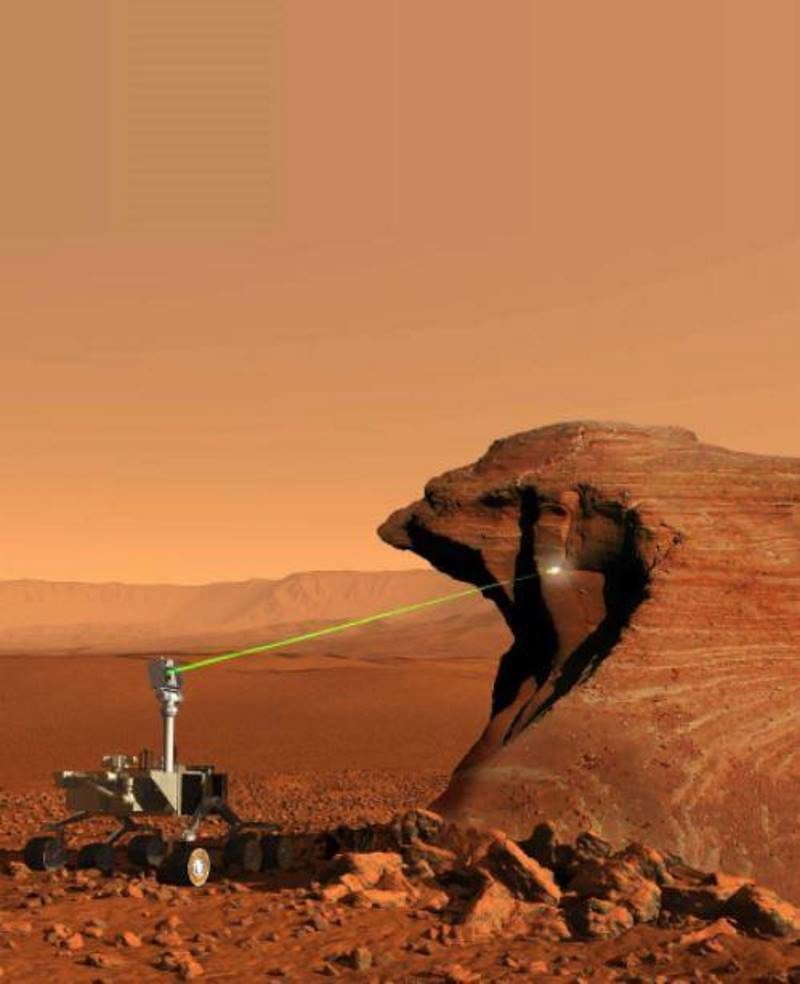
© NASAChemCam uses its laser to clear away dust from Martian rocks and a remote camera to acquire extremely detailed images
Researchers believe Little Colonsay is a meteorite due to its shiny appearance, but "looks can be deceiving," the team points out. In addition to those two rocks, Curiosity will study another pair of targets called Eildon and Forres. These two samples will be added to the grey Jura bedrock database before Curiosity leaves the Highfield site next week.
This isn't the first shiny object Curiosity has discovered on Mars. Back in 2014, for example, the Curiosity rover found a giant shiny rock believed to be an iron meteorite. A similar discovery was made in 2015, that time featuring a shiny meteorite composed of nickel-iron.





Comment: Curiosity discovers unidentified, metallic object on Mars