Science & TechnologyS


Galaxy

Mysterious neutrinos get new mass estimate

map of galaxies
© Daniel Eisenstein and the SDSS-III collaborationPhysicists used this three-dimensional map of galaxies in the universe, created by the Baryon Oscillation Spectroscopic Survey, to estimate a limit on how massive the lightest neutrino particle can be. Each dot in the image represents a single galaxy.
Neutrinos, some of nature's weirdest fundamental particles, are nearly massless — emphasis on nearly. They were predicted to be completely massless, but experiments roughly 20 years ago found they surprisingly do have some mass. Just how much has remained a mystery. Now a new calculation based on cosmological observations places an upper limit on how heavy the lightest kind of neutrino can be.

There are many strange things about neutrinos: their unexpected heft, for one thing, and that they rarely interact with other matter and are passing through our bodies by the billions each moment. Perhaps the oddest aspect of these particles is their tendency to switch identities, cycling between the three possible "flavors," or types. In fact, it was the observation of this shape-shifting ability in the first place that told scientists the three neutrino flavors must have different masses — which means, of course, that all of their masses cannot be zero.

Scientists would desperately like to know what they actually weigh, which would be a vital clue about why they have mass, given that they do not seem to acquire it the way other particles do: through the Higgs field (associated with the Higgs boson, which was discovered in 2012). "Understanding why particles have mass is something very fundamental in how we understand physics," says physicist Joseph Formaggio of the Massachusetts Institute of Technology. "What neutrinos pose is the possibility that the mechanism we think gives rise to masses for all the particles may not apply, for some strange reason, to neutrinos. I find that exciting."

Comment: See also:


Info

Brainwaves detected in lab-grown mini-brains

A cross-section of a brain organoid
© Muotri Lab-UCTVA cross-section of a brain organoid, showing the initial formation of a cortical plate. Each colour marks a different type of brain cell.
Researchers have grown human mini-brains on a lab bench that are so advanced that AI rated their brainwaves on the same level as those of a premature baby.

It's a stunning finding that left the scientists wondering if it was real.

"We couldn't believe it at first - we thought our electrodes were malfunctioning," says lead researcher Alysson Muotri, a neuroscientist and stem cell researcher at the University of California San Diego in the US.

"Because the data were so striking, I think many people were kind of sceptical about it, and understandably so."

The study is a major advance in the field of brain "organoids", pea-sized versions of our most precious organ that are being co-opted in the race to find treatments for epilepsy, dementia and cancer.

Mini-brains are typically grown from human skin cells that are magicked into a kind of master cell, called an induced pluripotent stem (IPS) cell. With further coaxing, IPS cells can become any type of cell in the body, including brain cells.

These mini-brains are already complex. They have message-sending neurons and the glial cells that support them. They also grow recognisable brain parts such as the cortex, cerebellum and even the retina.

Until now, however, the chatter between brain cells has been pretty low level, causing something of a headache for researchers.

Microscope 1

Can new species evolve from cancers? Maybe

parasites myxosporeans
© Ivan FialaThe parasites called myxosporeans live in fish during one stage of their life and in aquatic worms during another. If a new theory is right, they had a bizarre origin: as a form of transmissible cancer that evolved into its own species of animal.
Researchers agree it's a long shot, but transmissible cancers could theoretically evolve into independent species. Certain weird parasites might be living proof.

Aggressive cancers can spread so fiercely that they seem less like tissues gone wrong and more like invasive parasites looking to consume and then break free of their host. If a wild theory recently floated in Biology Direct is correct, something like that might indeed happen on rare occasions: Cancers that learn how to roam between hosts may gradually evolve into their own multicellular species. Researchers are now scrutinizing a peculiar group of marine parasites called myxosporeans to see whether they might be the first known example.

Even among microscopic parasites, myxosporeans are enigmatic. They were first discovered nearly two centuries ago, and more than 2,000 species are recognized today. Their complex life cycles make study particularly difficult: It wasn't until the 1980s that scientists realized the ones found in fish were the same species as those found in worms, and not completely different classes of parasite. And while most parasites are content merely to snuggle into their animal host's tissues, myxosporeans often take up residence inside a host's own cells.

Dig

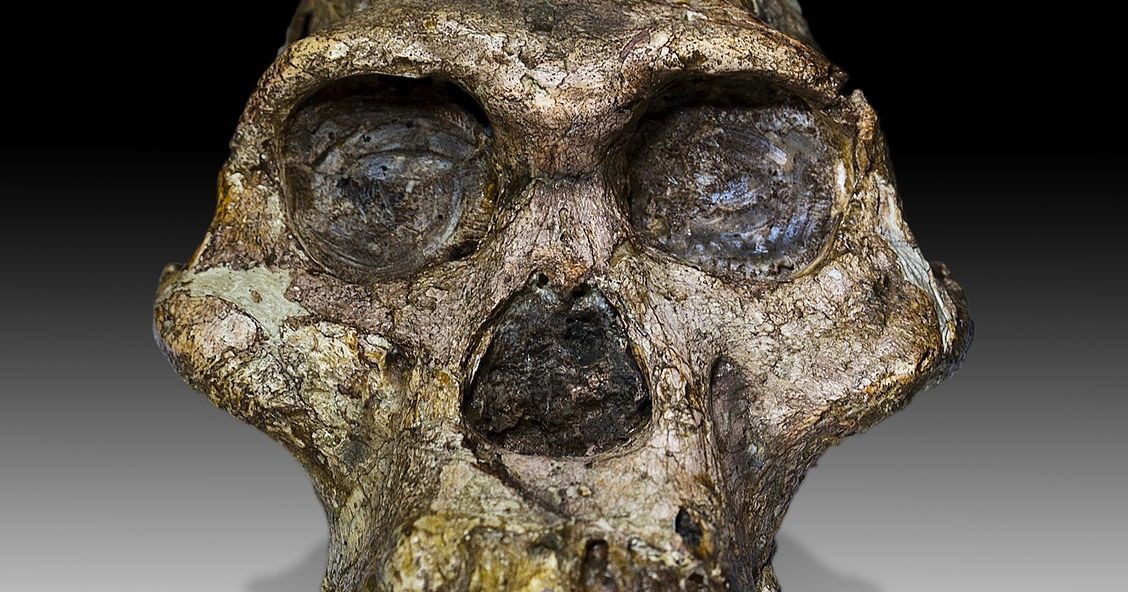
Skull of 3.8 million-year-old Australopithecus discovered in Ethiopia challenges understanding of evolutionary process

human ancestor
© PAExperts recreated the face the early ape-like human ancestor after the 3.8-million-year-old fossil was found
Scientists have recreated the face of an early human ancestor after a "remarkably complete" skull dating back 3.8 million years was discovered in Ethiopia.

Researchers said the find at the Woranso-Mille palaeontological site was a "game changer" in the understanding of human evolution.

The fossil, referred to as MRD, was found at the located in the Afar region of Ethiopia in February 2016 and represents a time interval between 4.1 and 3.6 million years ago when such fossils are extremely rare.

It sheds new light on what Australopithecus anamensis, a species widely accepted to have been the ancestor of Australopithecus afarensis, represented by the famous Lucy fossil - looked like.

Comment: These findings not only 'challenge' researchers understanding of evolution, but also, as noted above, similar discoveries have cast serious doubt over whether they are indeed ancestors of humans at all: Unlikely that South African fossil species is ancestral to humans

See also: And check out SOTT radio's:


Water

Chemists discover water microdroplets spontaneously produce hydrogen peroxide

water droplet
Water is everywhere on Earth, but maybe that just gives it more space to hide its secrets. Its latest surprise, Stanford researchers report Aug. 26 in Proceedings of the National Academy of Sciences, is that microscopic droplets of water spontaneously produce hydrogen peroxide.

The discovery could pave the way for greener ways to produce the molecule, a common bleaching agent and disinfectant, said Richard Zare, the Marguerite Blake Wilbur Professor in Natural Science and a professor of chemistry in the Stanford School of Humanities and Sciences.

"Water is one of the most commonly found materials, and it's been studied for years and years and you would think that there was nothing more to learn about this molecule. But here's yet another surprise," said Zare, who is also a member of Stanford Bio-X.

Comment: The mysteries of water abound: Also check out SOTT radio's: The Health & Wellness Show: Water: What Do We Really Know?


Better Earth

Ancient die-off greater than the dinosaur extinction detected in rocks in Canada

Hudson Bay
© Malcolm HodgskissRocks from the Belcher Islands in Hudson Bay, Canada, from which doctoral candidate Malcolm Hodgskiss collected barite samples dating 2.02 to 1.87 billion years old.
Clues from Canadian rocks formed billions of year ago reveal a previously unknown loss of life even greater than that of the mass extinction of the dinosaurs 65 million years ago, when Earth lost nearly three-quarters of its plant and animal species.

Rather than prowling animals, this die-off involved miniscule microorganisms that shaped the Earth's atmosphere and ultimately paved the way for those larger animals to thrive.

"This shows that even when biology on Earth is comprised entirely of microbes, you can still have what could be considered an enormous die-off event that otherwise is not recorded in the fossil record," said Malcolm Hodgskiss, co-lead author of a new study published in Proceedings of the National Academy of Sciences.

Comment: See also: And check out SOTT radio's:


Microscope 2

Salk scientists develop new genome-editing tool that could treat disorders caused by gene mutations

Neuron targeted using SATI technology.
Neuron targeted using the SATI technology.
The ability to edit genes in living organisms offers the opportunity to treat a plethora of inherited diseases. However, many types of gene-editing tools are unable to target critical areas of DNA, and creating such a technology has been difficult as living tissue contains diverse types of cells.

Now, Salk Institute researchers have developed a new tool — dubbed SATI — to edit the mouse genome, enabling the team to target a broad range of mutations and cell types. The new genome-editing technology, described in Cell Research on August 23, 2019, could be expanded for use in a broad range of gene mutation conditions such as Huntington's disease and the rare premature aging syndrome, progeria.

"This study has shown that SATI is a powerful tool for genome editing," says Juan Carlos Izpisua Belmonte, a professor in Salk's Gene Expression Laboratory and senior author of the paper. "It could prove instrumental in developing effective strategies for target-gene replacement of many different types of mutations, and opens the door for using genome-editing tools to possibly cure a broad range of genetic diseases."

Techniques that modify DNA — notably the CRISPR-Cas9 system — have generally been most effective in dividing cells, such as those in the skin or the gut, using the cells' normal DNA repair mechanisms. The Izpisua Belmonte lab previously showed that their CRISPR/Cas9-based gene-editing technology, called HITI (for homology-independent targeted integration), could target both dividing and non-dividing cells. Protein-coding regions function like recipes for making proteins, while areas called non-coding regions act as chefs deciding how much food to make. These non-coding regions make up the vast majority of DNA (~98%) and regulate many cellular functions including turning genes off and on, so could be a valuable target for future gene therapies.

Comment: Most of the genetic manipulation technology is taking place with little to no health and safety regulatory oversight - is the world ready for the unintended consequences? See:


Dig

Kola borehole: World's deepest artificial hole dug by the Soviets in the 1970's

kola borehole
© Rakot13/CC BY-SA 3.0The Kola Superdeep Borehole can still be visited today and is hidden underneath this rusty lid
EARTH'S deepest artificial hole stretches 40,000 feet below the surface - but it's only covered by a rusty metal lid.

Russia's Kola Superdeep Borehole was created by the Soviets in the name of science so they could learn more about what's really under our feet and dig to depths unknown.

The project to drill into the Earth's surface began near Murmansk in the 1970s, when Soviet scientists wanted to learn more about the Earth's crust.

Over two decades, they managed dig more than 7.5 miles down into the Earth.

However, in 1992 they had to stop drilling because the temperature was around 180 degrees Celsius, which was far hotter than the scientists predicted it would be.

Comment: See also:


Rocket

Top secret USAF spaceship breaks own record, mysterious 719-day mission

X-37B spaceplane
© USAFX-37B spaceplane
The ultra-top-secret US Air Force X-37B spaceplane has broken the record for the longest time in space for a terrestrial aircraft, with an immense 717 days and counting.

Built by Boeing, the 29-feet long and 9.6-feet high craft has been shrouded in mystery and speculation since its first mission in 2010.

With a wingspan of nearly 15 feet, the craft is launched vertically into space while strapped to a rocket, but lands rather traditionally on a runway. The current record-breaking mission (OTV-5) was launched in September 2017 by a SpaceX Falcon 9 rocket. Like each of its predecessor missions, it has broken the previously held records for time spent in orbit.

What initially began as a NASA investigation into developing cheaper reusable space shuttles is now an ultra-secretive US military project.


Coffee

Sense of smell requires optimized, scalable network circuitry

smell cell
© Living Waters, via Illustra Media
The ability to detect and respond to molecules in the air — olfaction — is one of the most complex of our senses. It requires sorting, analyzing, and prioritizing a torrent of input data quickly. If you saw the animation "A Pacific Salmon's Sense of Smell" from Illustra Media's documentary Living Waters, you got a feel for the complexity of neural wiring and organs that process the inputs. Here, we look at new findings about what it takes to run an olfactory function.

What Is Known

At Cold Spring Harbor Laboratory, winners of a NIH award for innovative neuroscience research have been creating models of olfaction. At Medical Xpress they explain what is known about the sense of smell:
Generally, scientists know that odor particles first enter through the nasal cavity, where odorant receptors expressed by olfactory receptor neurons in the sensory tissue bind to them. The olfactory bulb, a structure located in the forebrain of mammals, then processes information sent up from the receptors. Afterwards, the bulb sends out this information to several higher processing brain areas, including the cerebral cortex. There, the olfactory output messages are further analyzed and broadcast across the brain before they're conveyed back to the bulb in a feedback loop. [Emphasis added.]
What Is Not Known

The same research team recently found that "it's probable that the entry-level of olfactory inputs and the further processed bulb outputs care about different aspects of smell." Previous models, they say, have not stood up to further testing. For instance, combining odorants should predict neural responses, but they often do not.
When it comes to smell, "we don't really know what the brain is looking for, and we don't know what physical or chemical features, if any, the brain extracts," Albeanu said.
Their latest paper in Current Biology, "Scaling Principles of Distributed Circuits," sounds more like a title about computer science than physiology, but it concerns primarily the problem of modeling olfaction as a signal-processing circuit. They found mathematical relationships between the incoming neural signals and the glomeruli that receive them, deducing that the ability to discriminate odors corresponds to the circuit size. The system grants scalability to the olfactory system across species: the more incoming neurons, the more glomeruli there are to process the inputs.