
People generally balk at the idea of scientists experimenting with and manipulating certain pillars of physical reality, whether that be gene splicing, artificial intelligence, or nuclear fusion.
But in the last couple of decades, a new twist on this modern Island of Dr. Moreau-style narrative has surfaced in the form of scientists experimenting on high-velocity elementary particles (such as the CERN Hadron Collider) and other quantum enigmas.
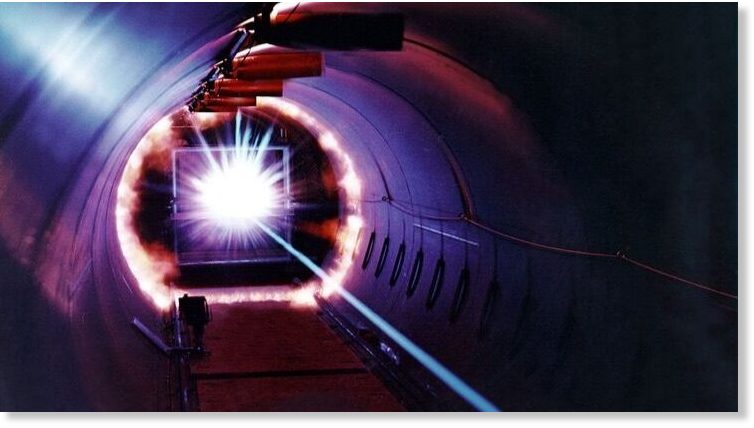
Laser physicists recently chortled "hold my beer" in announcing that they are developing a laser so powerful it can shred all matter, including the very electrons and nuclei that constitute the fabric of reality itself.
Earlier this month, the physics journal Physical Review Letters published a paper discussing how new technology could allow a high-velocity laser to pierce "through [the] fabric of the Universe." The trick, according to a researcher at the Université Paris-Saclay, is to anchor and focus the laser using a mirror made of plasma.


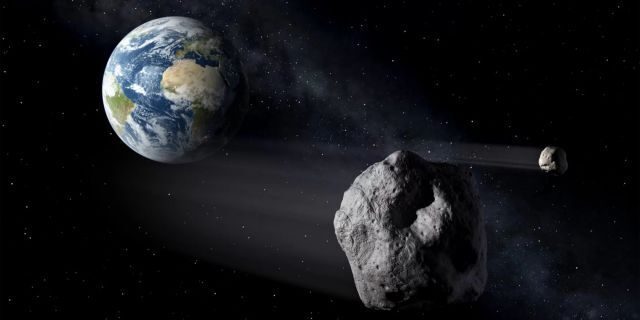

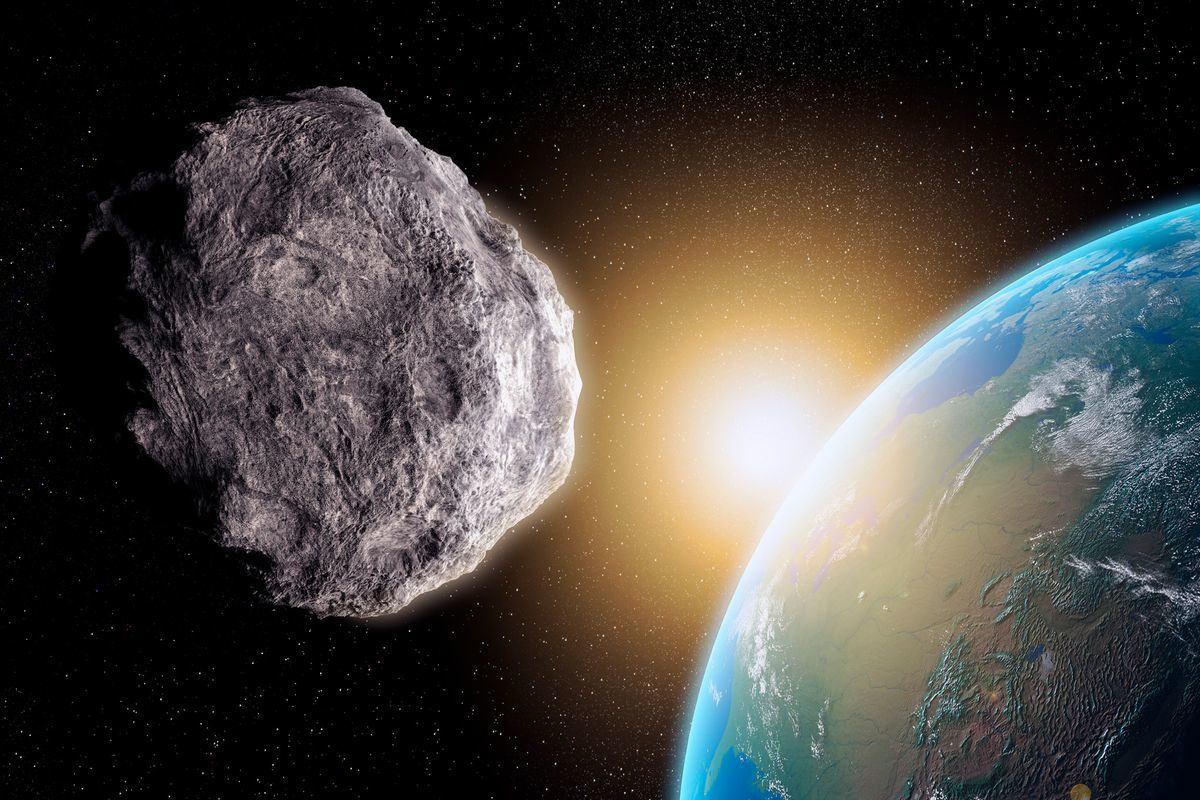










Comment: As noted in Earth enters densest stream of deadly Taurid meteor cluster this June: And if something even as small as the Tunguska asteroid struck over a major city it would cause mass mortality; the situation could be particularly dire if it was part of a swarm.
For more on the current threat, see:
- NASA chief: Risk of asteroid impact not being taken seriously, international cooperation needed to meet cosmic threat
- Chelyabinsk meteor: A wake-up call for humanity
- Chelyabinsk to Cuba: The Meteor Connection
- Coming to a city near you soon? Chelyabinsk meteor shockwave compilation
- Are they finally taking the threat seriously? NASA teams with 'international partners' to plan asteroid impact exercise
And for an idea on the previous cataclysms humanity has endured:- Did Earth 'Steal' Martian Water?
- Of Flash Frozen Mammoths and Cosmic Catastrophes
- Meteorites, Asteroids, and Comets: Damages, Disasters, Injuries, Deaths, and Very Close Calls
Also check out SOTT radio's: