Science & TechnologyS


Meteor

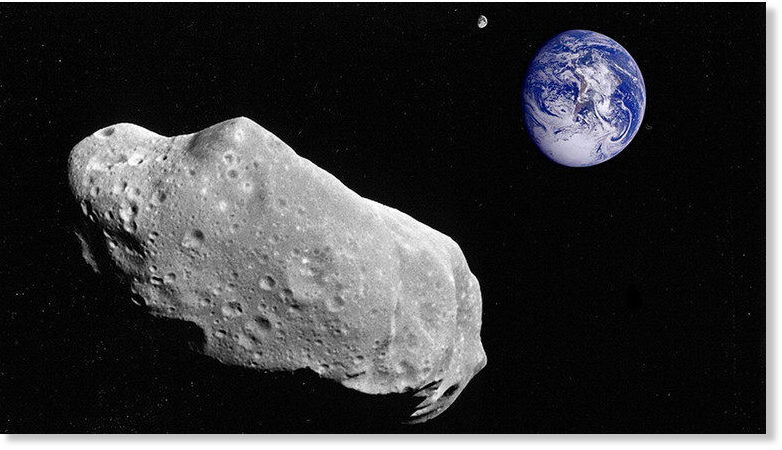
Asteroid due to speed past Earth today will come almost as close as the moon

asteroid
© Pixabay / urikyo33
Once again, an asteroid is set to make a high-speed, "close" flyby of the Earth, coming within a minimum distance of 487,000 km, which is slightly more than the average orbit of the moon.

Asteroid 2019 UM12, measuring up to 69 meters (230ft) in diameter and traveling at speeds of over 30,700 mph, will come closest to us at 17:41 UTC on November 7. Only discovered by NASA on October 24, the space rock has never passed through this neck of the cosmic woods before and likely won't ever again.

Thankfully, folks operating powerful telescopes didn't need that much of a heads-up to capture 2019 UM12 in all its glory.

Evil Rays

Forget about 5G, China has now begun development of 6G

Move over, 5G.
© ReutersMove over, 5G.
The world has barely started using 5G, the latest generation of wireless connectivity, but China is already looking ahead to 6G.

China's science and technology ministry announced yesterday (Nov. 6) that it has formed two teams to oversee the research and study of 6G, marking the official start of a state-backed effort to accelerate the development of the technology, according to the notice (link in Chinese). One team consists of government departments who will be in charge of pushing through the execution of 6G technology, while the other consists of 37 experts from universities, science institutions and corporations, who will provide technical advice for the government's major decisions on 6G.

5G and 6G refer to the fifth and sixth generation of mobile wireless networks. While 5G is known to have data transmission speeds at least 10 times greater than 4G, rolled out in 2009, it's too early to say what 6G could be, or what sorts of technologies it would advance.

Butterfly

Complex society discovered in birds for the first time

bird
© (SonjaBrenner/iStock)
It has long been thought that one of the reasons we humans developed large brains was to allow us to maintain complex social structures. But the social system of a small-headed guineafowl now suggests that large brains are not necessarily a requirement for complex multi-levelled societies.

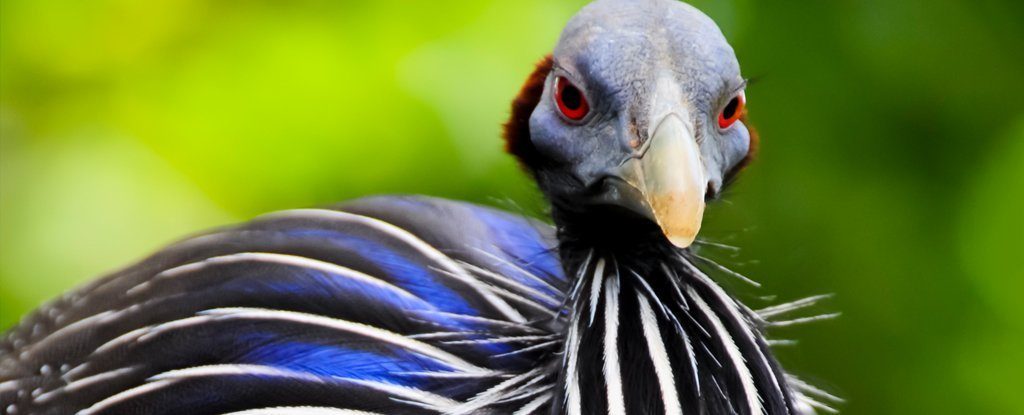
Even amongst a crowd, vulturine guineafowl (Acryllium vulturinum) can find their friends, and keep track of their social status with hundreds of other individuals - a feat previously only known in mammals.

Named for their bare head and neck, these strikingly red-eyed and blue-breasted social birds are found in Northeast Africa. They are often observed hanging out in groups, which in itself isn't unusual for birds. What's different here is that these groups also have consistent associations with other groups, adding an entire social tier to their bird society.

Comment: It's becoming increasingly clear that science's understanding of the function of the brain is sorely lacking: It's also notable that there have been a number of discoveries revealing much more complexity throughout the animal kingdom than previously assumed - although should we really be so surprised?: And for fascinating discussion on the above, check out SOTT radio's: The Truth Perspective: Unlocking the Secrets of Consciousness, Hyperdimensional Attractors and Frog Brains


Comet 2

Interstellar comet 2I/Borisov is still not acting very alien

2I/Borisov
© NASA, ESA, and D. Jewitt (University of California, Los Angeles)The interstellar comet 2I/Borisov, an alien visitor from another star. The pointy ears are a dead giveaway. Credit:
When I was younger, aliens on TV and movies weren't terribly, well, alien. They were mostly people with makeup on, maybe a mask or wings or horns, or an endless variety of humans with forehead and nose ridges.

I'm starting to think 2I/Borisov is a fan of old sci-fi.

That's the interstellar comet discovered in September, screaming through the solar system on a trajectory that left little doubt it came from deep space, literally from another star. We're not sure precisely where it came from, but the idea is that it was a frozen dirt- and ice-ball orbiting another star and got ejected into the galaxy at large, possibly by encountering a planet in its home system. It's been barreling through space ever since, and just happened to be on a path that takes it relatively close to the Sun.

Comment: See also: And check out SOTT radio's:


Attention

Permafrost coastlines' contribution to climate change possibly underestimated

Shoreline retreat and erosion along Arctic coasts
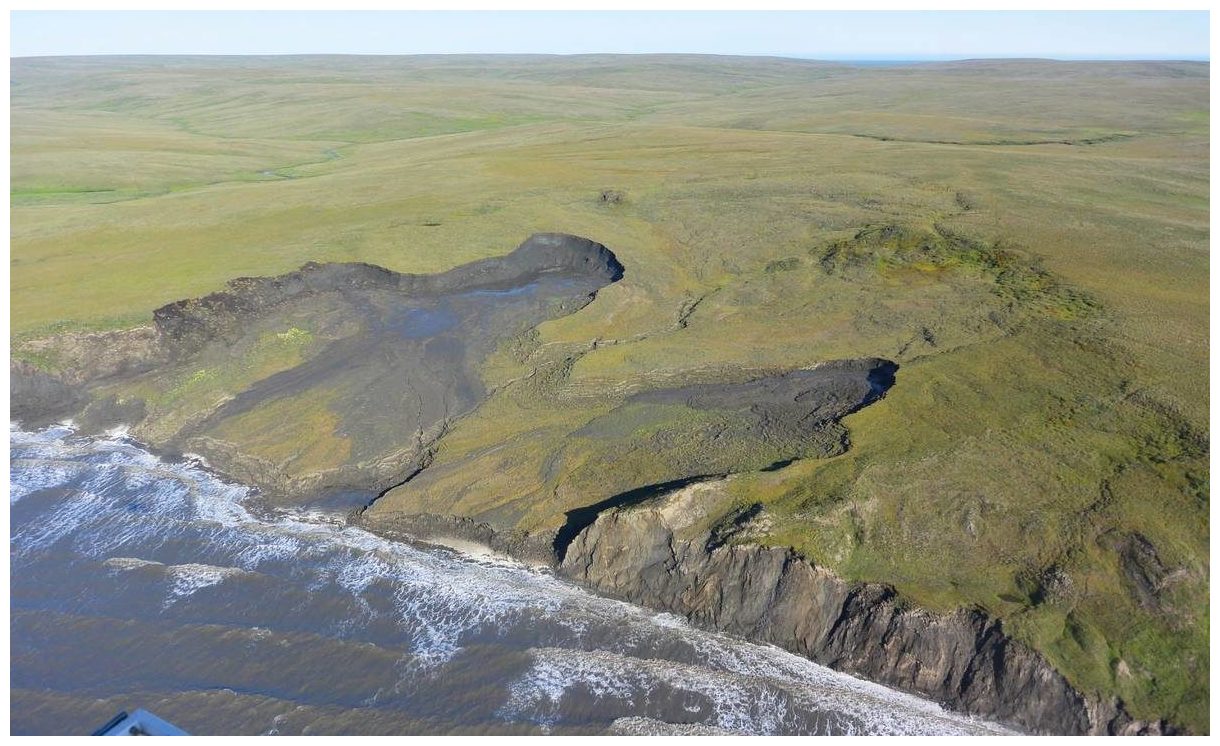
© G. Tanski, Vrije Universiteit AmsterdamShoreline retreat and erosion along Arctic coasts (Qikiqtaruk- Herschel Island, Yukon Territory, Canada) rapidly mobilize organic carbon from permafrost deposits, which can be transformed quickly into carbon dioxide or methane.
Permafrost coasts make up about one third of the Earth's total coastline. As a result of accelerated climate change, whole sections of coastline rapidly thaw, and erode into the Arctic Ocean. A new study published in the journal Geophysical Research Letters now shows that large amounts of carbon dioxide are potentially being produced along these eroding permafrost coastlines in the Arctic.

"Carbon budgets and climate simulations have so far missed coastal erosion in their equations even though it might be a substantial source of carbon dioxide," says George Tanski of Vrije Universiteit Amsterdam, lead author of the study. "Our research found that the erosion of permafrost coastlines can lead to the rapid release of significant quantities of CO2, which can be expected to increase as coastal erosion accelerates, temperatures increase, sea ice diminishes, and stronger storms batter Arctic coasts."

The study was carried out during Tanski's time at the Alfred Wegener Institute, Helmholtz Centre for Polar and Marine Research (AWI), and the GFZ German Research Centre for Geosciences. Co-Authors come from AWI, GFZ, and the Universities of Hamburg and Potsdam. The study is part of the Nunataryuk research project, coordinated by AWI. The project aims to analyse permafrost thaw, understand its impacts on indigenous communities and other populations, and develop mitigation and adaptation strategies.

Bulb

Phillip E. Johnson's seminal book 'Darwin on Trial' is as fresh and relevant as ever

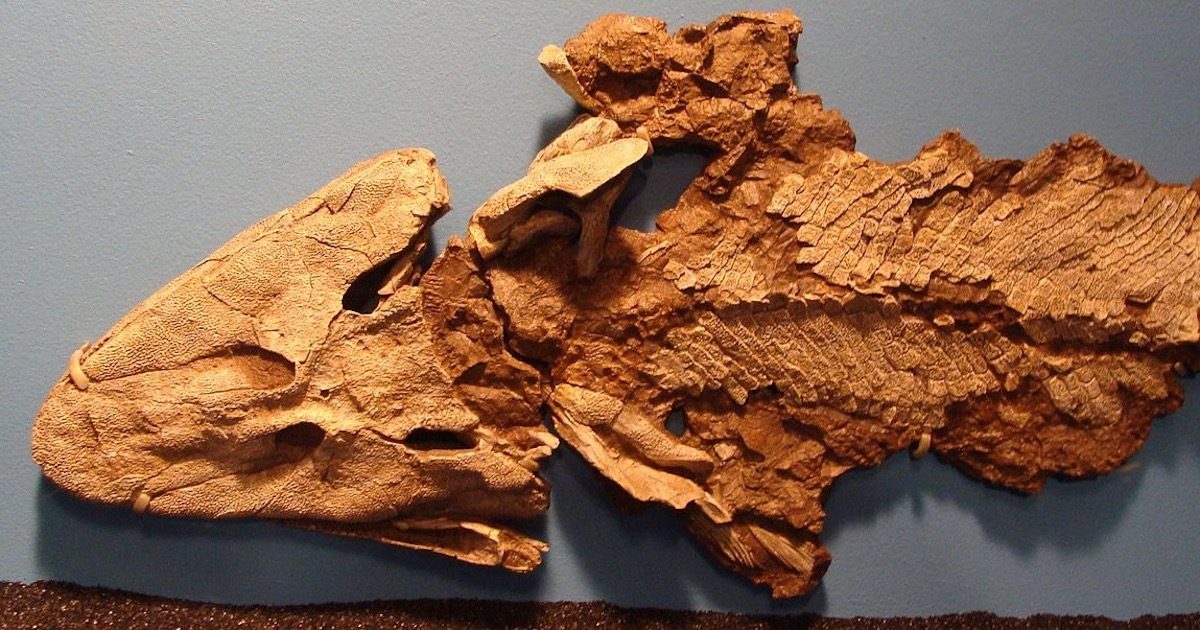
fossil
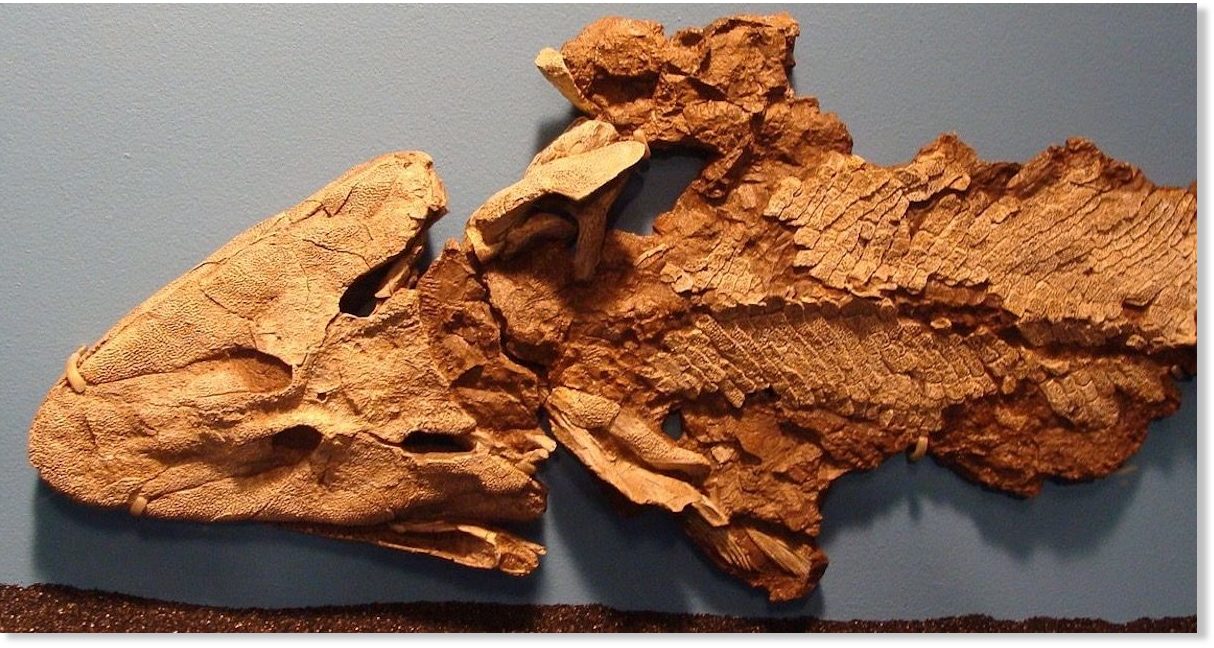
© Tiktaalik, Field Museum, by Eduard Solà [CC BY-SA 3.0], via Wikimedia Commons.
Editor's note: Phillip E. Johnson, Berkeley law professor and author of Darwin on Trial and other books, died on November 2. Evolution News is sharing remembrances from Fellows of Discovery Institute. Dr. Behe's most recent book is Darwin Devolves. The following essay appeared originally as the Foreword to the 20th Anniversary edition of Darwin on Trial.
Twenty years can be a virtual eternity in modern science, so rapidly do new discoveries accumulate. Twenty years ago the idea of determining the entire DNA sequence of even a tiny living organism such as a bacterium, let alone the genetic endowment of a large animal such as a mammal, seemed a dream. Yet shortly before I wrote this foreword, the 1000th kind of bacterial genome was sequenced. The DNA code of humans was completed a decade ago. That of other familiar creatures, such as dog, rice, mosquito, and more, are also now public knowledge.

It's not only the genome sequences of organisms that has been brought to light in the past two decades. DNA is the "instruction manual" that tells cells how to go about building pieces of molecular machinery that actually run the cell. But, like trying to picture the end result of an instruction manual written in a foreign language, it is usually not very straightforward for a scientist to determine what kind of machines are going to result simply by looking at the DNA instructions. However, by performing clever laboratory experiments, investigators can probe the machinery directly. In the past two decades whole new classes of molecular machines have been discovered. One of the most interesting is a class of RNA molecules that helps regulate DNA. RNA (as you of course remember from your high school biology class) is a chemical "cousin" of DNA, and an "intermediate" between the information coded in DNA and its translation into proteins, which are the usual components of molecular machines. But other roles have been discovered for RNA including, most surprisingly, the ability to decide when some DNA genes are turned on and off.

In other areas of biology besides the micro-world, too, discoveries have been pouring in. New fossil finds, new ways that the brain communicates, and more, have dazzled the scientific community and the world.

Evil Rays

China begins research on 6G telecoms technology

telecoms technology 6G
China has officially started researching sixth-generation telecoms technology, state media reported on Thursday, a move it described as aiming to promote the latest wireless innovation.

Chinese government ministries and research institutes met this week in a "kick-off" meeting to establish a national 6G technology research and development group, according to a report by the Science and Technology Daily, which is published by China's Ministry of Science and Technology.

Technologies related to ultra-fast mobile services have become a key conflict point between the United States and China in recent months.

Comment: Let's not let a little thing like understanding the dangers of 5G technology get in the way before moving towards even less understood 6G tech!


Robot

AI failures will be 'CATASTROPHIC' for humanity - tech entrepreneur tells Boom Bust

ai tech
© Pixabay / Gerd Altmann
The adoption and integration of Artificial Intelligence (AI) technologies is becoming more commonplace in homes across the globe. However, rapid development raises concerns over safety.

This comes after researchers found that Apple Siri, Amazon Alexa and Google Home are vulnerable to hack attacks with lasers that can inject inaudible and invisible commands to cause them to unlock doors in the users' homes, as well as locate, unlock and start vehicles.

Author and tech entrepreneur Alex Salkever joins Boom Bust to talk about the future of consumer security, saying "It's pretty clear that Google, Amazon and all other big folks are not doing enough..."

Dig

'Largest trove of mammoths bones ever found', unearthed in central Mexico

Mammoth
Mammoth skeletal remains, pictured in this handout photograph released by Mexico's National Institute of Anthropology (INAH), were found at a site where President Andres Manuel Lopez Obrador's government is building a new airport
Archaeologists said Wednesday they have made the largest-ever discovery of mammoth remains: a trove of 800 bones from at least 14 of the extinct giants found in central Mexico.

Moreover, they believe they have made the first-ever find of a mammoth trap set by humans, who would have used it to capture the huge herbivores more than 14,000 years ago, said Mexico's National Institute of Anthropology and History (INAH).

"This is the largest find of its kind ever made," the institute said in a statement.

The skeletal remains were found in Tultepec, near the site where President Andres Manuel Lopez Obrador's government is building a new airport for Mexico City.

Comment: What other evidence have they found for them to suspect the find involved some kind of mammoth trap? Could this just be an area for processing large amounts of meat?

See also:


Info

Fossil discovery reveals apes first walked upright on two legs in Europe, not Africa

Fossil Ape Bones
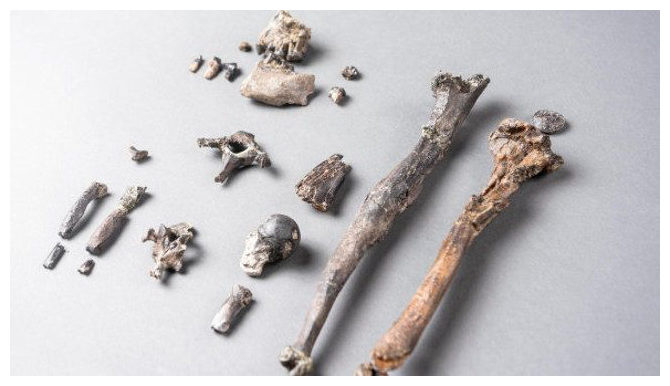
© CHRISTOPH JÄCKLEThe 21 bones of the most complete partial skeleton of a male Danuvius.
Walking on two feet could have evolved earlier than current estimates, according to analysis of 11.6-million-year-old fossils from a newly discovered great ape species, Danuvius guggenmosi.

The discovery reveals a possible common ancestor of humans and great apes, write Madelaine Böhme from Eberhard-Karls University in Tübingen, Germany, and colleagues in the journal Nature.

It also contests theories about how hominin bipedalism evolved, they suggest. "Ever since Darwin, the early evolution of humans and our cousins, the great apes, has been intensely debated," says Böhme.

How humans came to walk on two legs is central to these debates, she adds, and several ideas have been put forward over the past 150 years.