Science & TechnologyS

Fireball 2

Hungry, happy microbes 'dance' on meteor meal

Metallosphaera sedula meteors microbes
© Milojevic et al,SEM image showing Metallosphaera sedula cells colonizing the surface of the NWA 1172 particles.
Extremophiles are models for early life on Earth, and we just discovered that one in particular thrives on material from off-world.

Scientists have discovered that a single-celled organism, a descendant of some of the earliest living creatures on Earth, is able to colonize a meteorite, growing and synthesizing nutrients. Their experiment, published on Monday in the journal Scientific Reports, may give us a way to look for the signatures of past life on other planets.

"This process was very enigmatic and exciting, how the chemical energy of a stone fragment can be transformed into the biochemical energy of a living entity," said Tetyana Milojevic, the first author of the study. "To find an answer to understand this process, I think it's a great moment."

Attention

2019 science: Absolutely no climate alarm

No alarm on every aspect: stable polar ice, normal sea level rise, no consensus, growing snow cover, less tropical storms, tornadoes, shrinking deserts, global greening, predictions wrong, models flawed, climate driven by sun, ocean cycles, biodiversity, warmer 1000 years ago...etc...

Global Temperatures
© No Tricks Zone
2019 saw a great amount of new science emerge showing that there's nothing alarming or catastrophic about our climate.

Some 2019 scientific findings

Need to make a presentation showing there is no climate alarm? The following findings we reported on in 2019 will put many concerns to rest.

Hundreds of peer-reviewed papers ignored by media

What follows are some selected top science-based posts we published here at NoTricksZone in 2019. These new findings show there is absolutely no climate alarm.

Hundreds of new peer-reviewed papers, charts, findings, etc - which the IPCC, activists and media ignore and even conceal. No wonder they've gotten so shrill.

Fireball 3

What's up? Both US and Russia have developed plans to deal with incoming asteroids

Asteroid/Earth
© Unknown
When the Russians take decisive action, it is usually for a reason. As you will see below, the Russians have suddenly decided that now is the time to create an organization that will be tasked with detecting, tracking and potentially destroying incoming asteroids. Are they doing this now because they have finally decided that this is a good idea, or has something gotten their attention? Of course they are not likely to publicly admit if they have come to the conclusion that a gigantic space rock is heading directly toward us. Just like the U.S. government, the Russian government is very interested in maintaining social order, and so they would probably delay telling the public about a potential asteroid impact for as long as possible.

In life, what people do is far more important than what they say, and the new center that the Russians have just created will not just be watching giant space rocks. According to Futurism, this new organization will be in charge of making sure "they don't collide with Earth."

Arrow Up

A machine figured out Rubik's Cube all by itself

Competition
© Getty ImagesRubik's Cube Championship
Unlike chess moves, changes to a Rubik's Cube are hard to evaluate, which is why deep-learning machines haven't been able to solve the puzzle on their own. Until now.

Yet another bastion of human skill and intelligence has fallen to the onslaught of the machines. A new kind of deep-learning machine has taught itself to solve a Rubik's Cube without any human assistance.

The milestone is significant because the new approach tackles an important problem in computer science โ€” how to solve complex problems when help is minimal.

First some background. The Rubik's Cube is a three-dimensional puzzle developed in 1974 by the Hungarian inventor Erno Rubik, the object being to align all squares of the same color on the same face of the cube. It became an international best-selling toy and sold over 350 million units.
deepcube diagram
© unknown

Jet4

The hidden military use of 5G technology

5G Technology
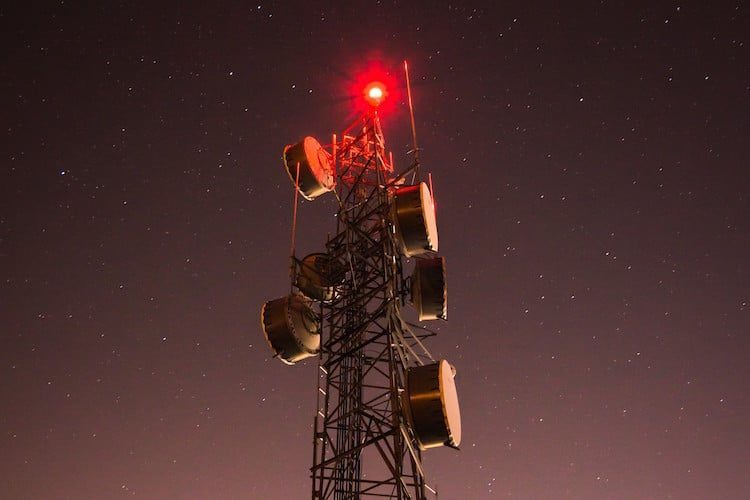
At the London Summit, the 29 member countries of NATO agreed to "guarantee the security of our communications, including 5G". Why is this fifth generation of mobile data transmission so important for NATO?

While the earlier technologies were perfected to create ever more advanced smartphones, 5G is designed not only to improve their performance, but mainly to link digital systems which need enormous quantities of data in order to work automatically. The most important 5G applications will not be intended for civil use, but for the military domain.

The possibilities offered by this new technology are explained by the Defense Applications of 5G Network Technology, published by the Defense Science Board, a federal committee which provides scientific advice for the Pentagon -

Comment: See also:


Nebula

First chip-to-chip quantum teleportation achieved could lead to breakthroughs in super computing

Quantum
The development of technologies which can process information based on the laws of quantum physics are predicted to have profound impacts on modern society.

For example, quantum computers may hold the key to solving problems that are too complex for today's most powerful supercomputers, and a quantum internet could ultimately protect the worlds information from malicious attacks.

However, these technologies all rely on 'quantum information', which is typically encoded in single quantum particles that are extremely difficult to control and measure.

Scientists from the University of Bristol, in collaboration with the Technical University of Denmark (DTU), have successfully developed chip-scale devices that are able to harness the applications of quantum physics by generating and manipulating single particles of light within programmable nano-scale circuits.

Comment: See also:


Microscope 1

10 things we learned about human beings in 2019

human
Humans are incredible living machines, with legs strong enough to run marathons and brains smart enough to know that invisible dark matter exists. Our bodies make sure we hear the correct frequencies, send the right immune cells to a paper cut and know when to stop drinking water. But there's still much to untangle about our human bodies, so all the time, we are discovering new organs and new secrets about how all of our nooks and crannies keep us going. This past year, new discoveries revealed an invisible network of immune cells, a "Jell-O" violin in our ears and how the oldest people in this world survived to such extreme ages.

"Jell-O" hearing

hearing
© MIT Micromechanics Group
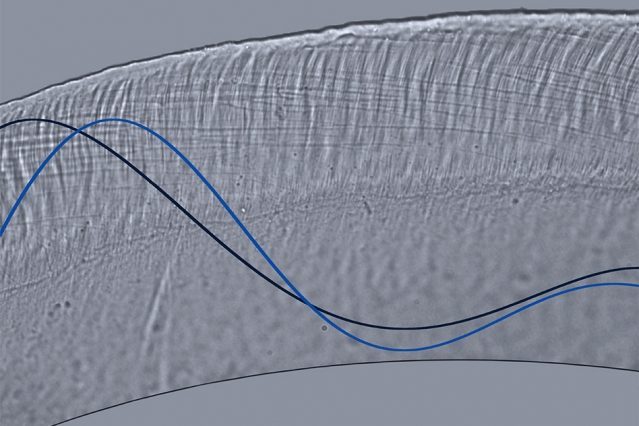
Humans might hear so well because of a tiny "Jell-O" violin that sits inside the ears. The thin, blob of tissue, otherwise known as the tectorial membrane, is made up of 97% water. This tissue helps to bring sound waves from the ear to nerve receptors, which then translate that vibration into an electrical signal the brain can read. New research conducted on mice has found that this ear Jell-O helps the cochlea โ€” a cavity in the inner ear that contains these nerve receptors โ€” separate high frequencies from low frequencies. It does so by changing its stiffness, based on water flow that runs through its tiny pores, similar to what happens when you tune a violin or guitar. [Read more about the 'Jell-O' Violin]

Blue Planet

Why bringing back bison could help restore America's lost prairie

Bison
Bison at Nachusa Grasslands, an area of restored prairie in Illinois.
Once upon a time, vast expanses of North America were covered in wild prairie, shimmering oceans of grass festooned with wildflowers and teeming with animal life.

Today, less than 15% of tallgrass prairie remains, most of it converted to farmland or lost to development. But as conservationists work to revive this iconic landscape, they are increasingly looking for help from an unusually hairy ally.

Up to 30 million bison once grazed the North American grasslands, shaping their environment in the process. By the start of the 20th century, the continent's biggest land mammals had been hunted almost out of existence. But scientists say that reintroducing bison can once more shape the grasslands, and help restore the diverse wildlife that makes these environments so special.

Comment: See also:


Nebula

Low magnetic field strength linked to both extinctions and evolution

Earth's field
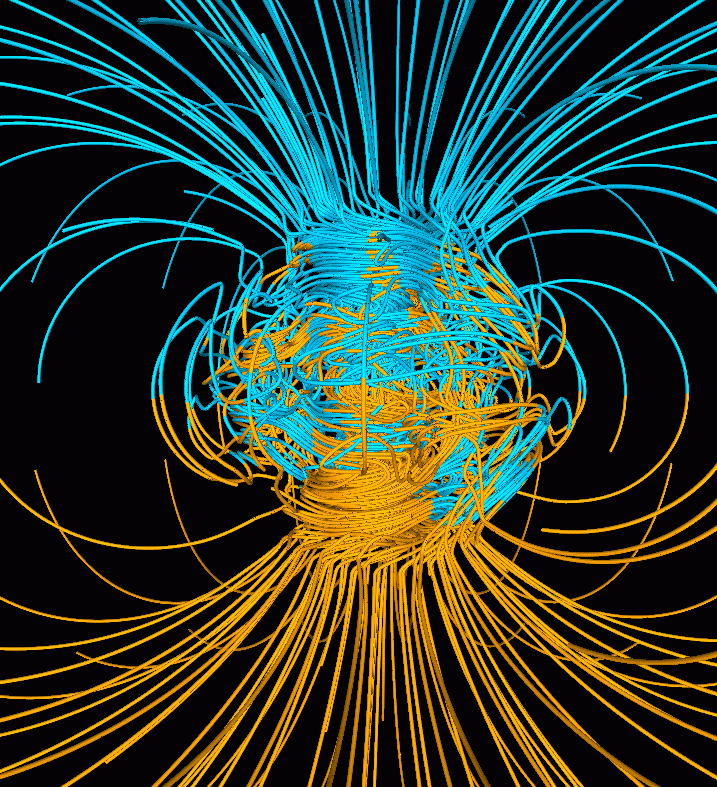
© WikipediaComputer simulation of the Earth's field in a period of normal polarity between reversals.[1] The lines represent magnetic field lines, blue when the field points towards the center and yellow when away. The rotation axis of the Earth is centered and vertical. The dense clusters of lines are within the Earth's core.[2]
New paper confirms what I said in both Not by Fire but by Ice and Magnetic Reversals and Evolutionary Leaps, that low magnetic-field strength during magnetic reversals can trigger both extinctions and evolution.

Unfortunately, magnetic-field strength is now declining rapidly.**

_______

New fossil finds, improved fossil dating, knowledge of the past strength of Earth's magnetic field, and refinements in the human evolutionary tree, suggest a link between ultraviolet radiation (UVR), magnetic field strength, and mammalian evolution, says a new paper by Channell and Vigliotti.

The earth's magnetic field shields us from galactic cosmic rays and solar wind, and from harmful UVR. During magnetic reversals, that protection declines.

Over approximately the last 200,000 years, evolutionary changes corresponding to low geomagnetic-field strength support the proposition that UVR that can affect mammalian evolution by influencing DNA and Y chromosomes.

Comment: See also: And check out SOTT radio's:


Attention

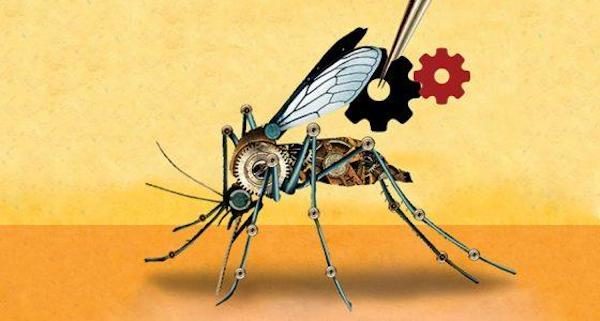
Despite biotech firm's assurances genetically modified mosquitoes are breeding in Brazil

GM Mosquito
© Zero Hedge
An experimental trial to reduce the number of mosquitoes in a Brazilian town by releasing genetically modified mosquitoes has not gone as planned. Traces of the mutated insects have been detected in the natural population of mosquitoes, which was never supposed to happen.

The deliberate release of 450,000 transgenic mosquitoes in Jacobina, Brazil has resulted in the unintended genetic contamination of the local population of mosquitoes, according to new research published in Scientific Reports. Going into the experimental trial, the British biotech company running the project, Oxitec, assured the public that this wouldn't happen. Consequently, the incident is raising concerns about the safety of this and similar experiments and our apparent inability to accurately predict the outcomes.

Comment: Gene edit gone terribly wrong in Brazil, but hey, let's do it again!
A team of scientists from Yale University and several scientific institutes in Brazil monitored the progress of the experiment. What they found is alarming in the extreme. After an initial period in which the target mosquito population markedly declined, after about 18 months the mosquito population recovered to pre-release levels. Not only that, the paper notes that some of the mosquitos likely have "hybrid vigor," in which a hybrid of the natural with the gene-edited has created "a more robust population than the pre-release population" which may be more resistant to insecticides, in short, resistant "super mosquitoes."