Science & TechnologyS


Comet

Super-Kamiokande: A neutrino detector

Neutrino detector
© (Institute for Cosmic Ray Research), The University of TokyoThe neutrino detector Super-Kamiokande. Kamioka Observatory, ICRR
A golden chamber buried under a mountain in Japan contains water so pure it can dissolve metal, and it's helping scientists detect dying stars

Hidden 1,000 metres under Mount Ikeno in Japan is a place that looks like a supervillain's dream.

Super-Kamiokande (or "Super-K" as it's sometimes referred to) is a neutrino detector. Neutrinos are sub-atomic particles which travel through space and pass through solid matter as though it were air.

Studying these particles is helping scientists detect dying stars and learn more about the universe. Business Insider spoke to three scientists about how the giant gold chamber works — and the dangers of conducting experiments inside it.

Beaker

DNA tests can't tell you your race

Russell Lee/Farm Security Administration/Office of War
© Spanish-American familyA Spanish-American family photographed in New Mexico in 1940. Today, they'd be categorized as Latinx, even if their origins are more complex.
It's always a mess when Latinx folks take DNA tests. Things go alright, until we get to the "ancestry" portion, which some commercial genetic tests label as "ethnicity."

People who identify as Latinx claim ancestry from all over: indigenous Americans, Spanish colonists, enslaved Africans, Middle Eastern people, miscellaneous Europeans, and even Asians.

This can lead to unexpected DNA results. My grandfather is Mexican, but fair-haired and blue-eyed (we sometimes call people who look like him bolillo, which means "white bread"). When he got his report back from FamilyTreeDNA, he found out he had more North American ancestry than expected. Abuelo made some weird comments — but my friend's brother's reaction was much worse. Also Mexican, he came into the living room with his tests results printed out. "I found I'm 3 percent black," he said. "What's up my n*****s?"

Thankfully, his family quickly corrected him: "You just can't say that word!" But to correct him more fully, they would need to let him know that a DNA test, no matter how sophisticated, can't tell him what his race is.

Attention

Skynet going live soon? - Brain-like functions emerging in a metallic nanowire network

Nanowire Network
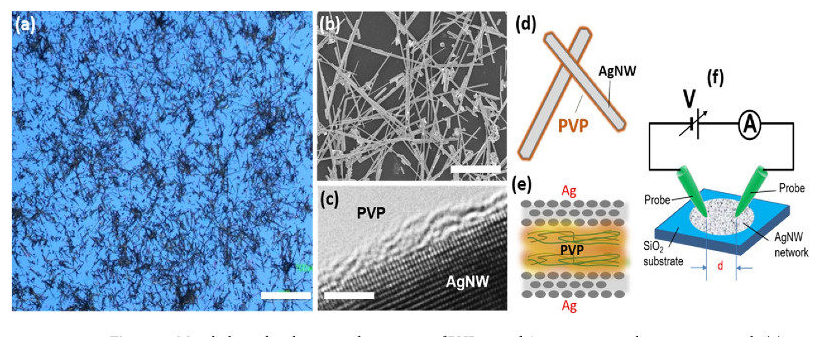
© NIMSMorphological and structural properties of PVP-coated Ag nanowires and nanowire network. (a) Optical micrograph image of nanowire network layout after drop-cast deposition on a SiO2 substrate. (b) SEM image of nanowire interconnectivity in a selected area of the network. (c) HR-TEM image showing the atomic planes of the [100] facet of a Ag nanowire with the nanometric PVP layer embedded on the lateral surface of the nanowire. Figures (d,e) sketch the detail of the insulating junctions formed by the polymeric PVP layer between the Ag surfaces of overlapping nanowires. (f) Scheme of the measurement system. Two tungsten probes, separated by distance d = 500 μm, act as electrodes, contacting the nanowire network deposited on SiO2. The scale bars for figures (a–c) are 100 μm, 10 μm and 2 nm, respectively.
An international joint research team led by NIMS succeeded in fabricating a neuromorphic network composed of numerous metallic nanowires. Using this network, the team was able to generate electrical characteristics similar to those associated with higher order brain functions unique to humans, such as memorization, learning, forgetting, becoming alert and returning to calm. The team then clarified the mechanisms that induced these electrical characteristics.

("Emergent dynamics of neuromorphic nanowire networks" Adrian Diaz-Alvarez, Rintaro Higuchi, Paula Sanz-Leon, Ido Marcus, Yoshitaka Shingaya, Adam Z. Stieg, James K. Gimzewski, Zdenka Kuncic, and Tomonobu Nakayama; Journal: Scientific Reports [October 17, 2019];

Magic Hat

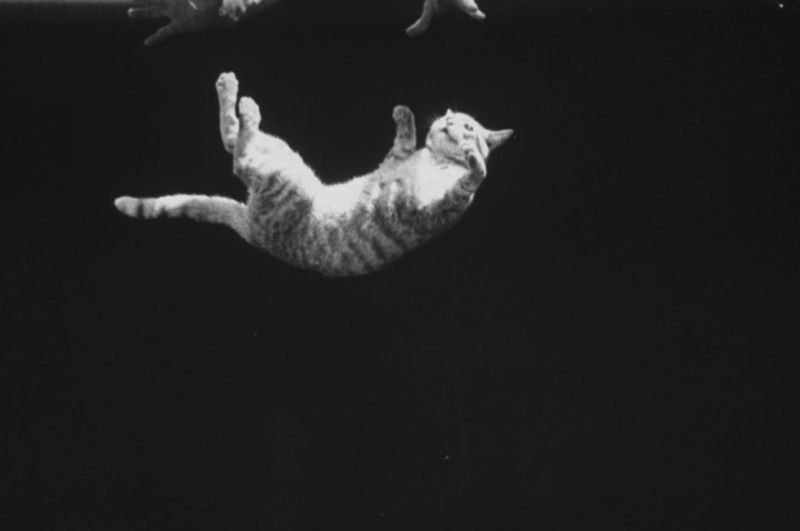
Falling Felines: The surprisingly complicated physics of why cats always land on their feet

falling felines, cats land on thier feet
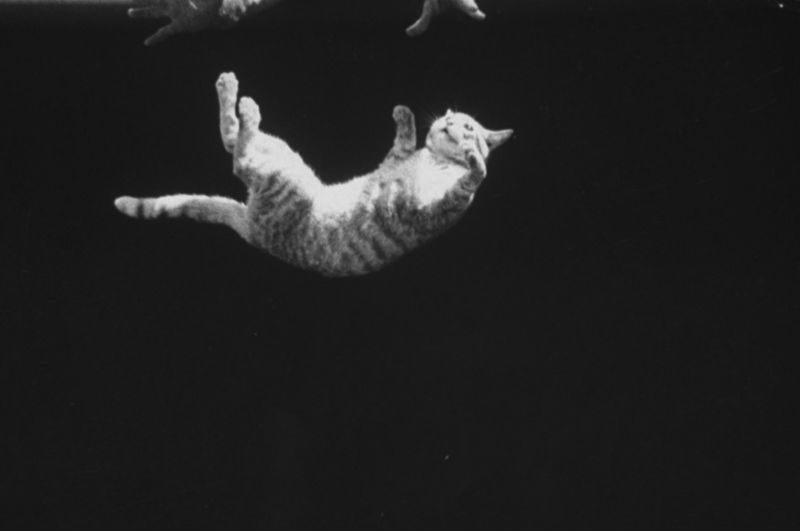
A cat being dropped upside down to demonstrate a cat's movements while falling
Scientists are not immune to the alluringly aloof charms of the domestic cat. Sure, Erwin Schrödinger could be accused of animal cruelty for his famous thought experiment, but Edwin Hubble had a cat named Copernicus, who sprawled across the papers on the astronomer's desk as he worked, purring contentedly. A Siamese cat named Chester was even listed as co-author (F.D.C. Willard) with physicist Jack H. Hetherington on a low-temperature physics paper in 1975, published in Physical Review Letters. So perhaps it's not surprising that there is a long, rich history, spanning some 300 years, of scientists pondering the mystery of how a falling cat somehow always manages to land on their feet, a phenomenon known as "cat-turning."

"The falling cat is often sort of a sideline area in research," physicist and cat lover Greg Gbur told Ars. "Cats have a reputation for being mischievous and well-represented in the history. The cats just sort of pop in where you least expect them. They manage to cause a lot of trouble in the history of science, as well as in my personal science. I often say that cats are cleverer than we think, but less clever than they think." A professor at the University of North Carolina, Chapel Hill, Gbur gives a lively, entertaining account of that history in his recent book, Falling Felines and Fundamental Physics.

Over the centuries, scientists offered four distinct hypotheses to explain the phenomenon. There is the original "tuck and turn" model, in which the cat pulls in one set of paws so it can rotate different sections of its body. Nineteenth century physicist James Clerk Maxwell offered a "falling figure skater" explanation, whereby the cat tweaks its angular momentum by pulling in or extending its paws as needed. Then there is the "bend and twist" (not to be confused with the "bend and snap" maneuver immortalized in the 2001 comedy Legally Blonde), in which the cat bends at the waist to counter-rotate the two segments of its body. Finally, there is the "propeller tail," in which the cat can reverse its body's rotation by rotating its tail in one direction like a propeller. A cat most likely employs some aspects of all these as it falls, according to Gbur.

Comment: A couple of demonstrations of cat physics:

The slow motion flip:


Gravity defying cat:


Magnify

'Impossible to open by itself': Display dome covering Chelyabinsk meteorite mysteriously lifts up

Chelyabinsk meteorite
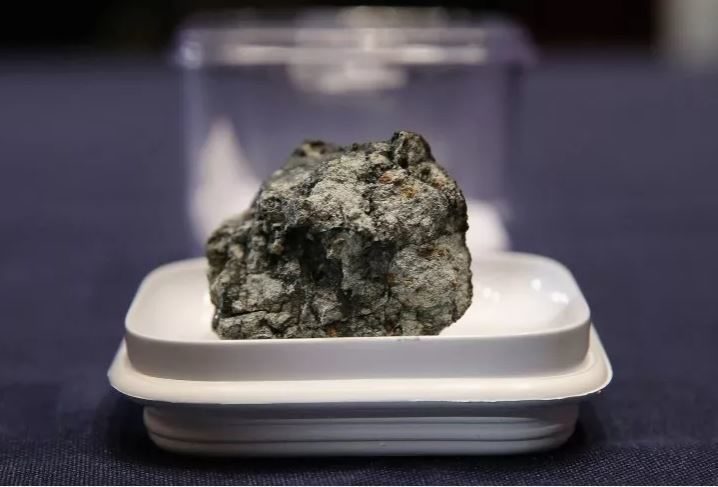
© Chip Somadevilla/Getty ImagesA piece of the Chelyabinsk meteorite is displayed in the Longworth House Office Building on Capitol Hill June 17, 2015 in Washington, DC in this illustrative image.
Compared with the celestial bodies that constantly whizz past the Earth, the meteorite that landed in Chelyabinsk in 2013 was quite small - 17 metres in diameter. However, this small guy caused damages in excess of $15 million and injured 1,500 people.

Visitors and staff to a historical museum in the Russian city of Chelyabinsk were shocked after they witnessed a display dome covering the Chelyabinsk meteorite lift off, sparking fears that the celestial body wanted to escape. The incident occurred on 14 December during the day.

Footage from CCTV cameras posted online shows visitors to the museum roaming around exhibits with the chunk of the Chelyabinsk meteorite in the middle of the hall. At some point, the lid covering the space rock lifts off. Security staff ran to the scene and closed the dome after an alarm went off.


Blue Planet

Forces from Earth's spin may spark earthquakes and volcanic eruptions

New research suggests forces pulling on Earth's surface as the planet spins may trigger earthquakes and eruptions at volcanoes
mount etna
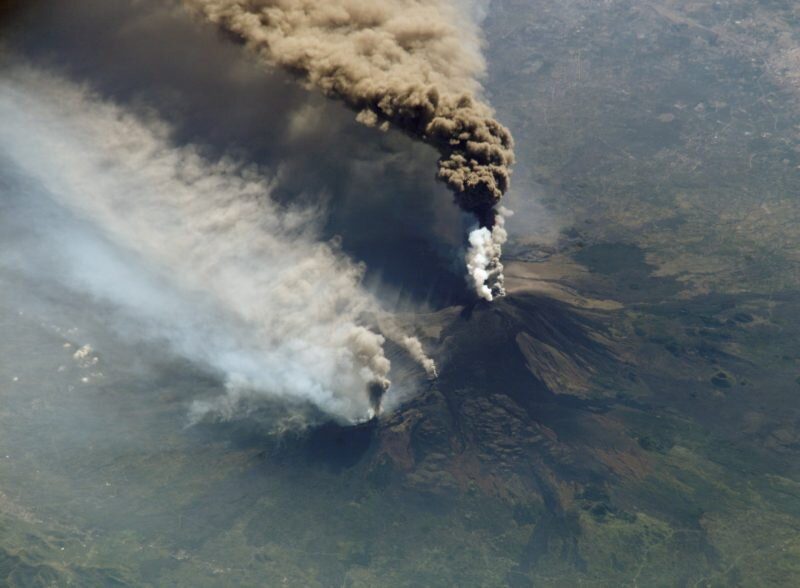
© NASAAn image of an eruption at Mount Etna on October 30, 2002 from the International Space Station. The eruption, triggered by a series of earthquakes, was one of the most vigorous in years. Ashfall was reported in Libya, more than 350 miles away.
Seismic activity and bursts of magma near Italy's Mount Etna increased when Earth's rotational axis was furthest from its geographic axis, according to a new study comparing changes in Earth's rotation to activity at the well-known Italian volcano.

Earth's spin doesn't always line up perfectly with its north and south poles. Instead, the geographic poles often twirl like a top around Earth's rotational axis when viewed from space. Every 6.4 years, the axes line up and the wobble fades for a short time — until the geographic poles move away from the spin axis and begin to spiral once again.

This phenomenon, called polar motion, is driven by changes in climate due to things like changing seasons, melting ice sheets or movement from tectonic plates. As polar motion fluctuates, forces pulling the planet away from the sun tug at Earth's crust, much like tides due to the gravitational pull from the sun and moon. The tide from polar motion causes the crust to deform over the span of seasons or years. This distortion is strongest at 45 degrees latitude, where the crust moves by about 1 centimeter (0.4 inches) per year.

Now, a new study published in AGU's journal Geophysical Research Letters suggests that polar motion and subsequent shifts in Earth's crust may increase volcanic activity.

Comment: Not news to regular SOTT readers!

Let's see if they can reach the next step of realizing climate is cosmically-driven...


Info

Unique interaction in Earth's magnetosphere causes new type of auroras

New Type of Aurora
© CCO
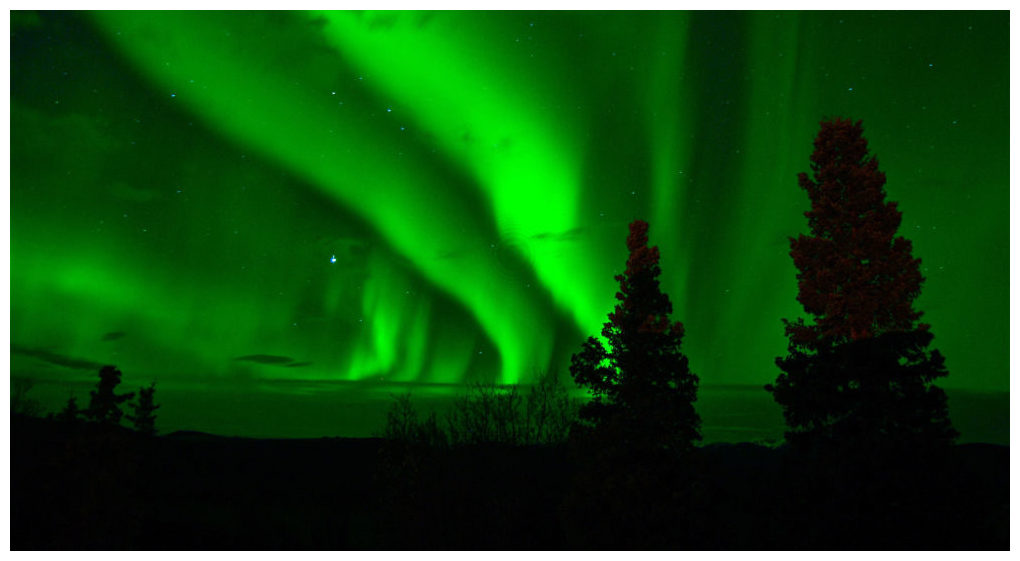
The colourful lights adorning the skies at the North and South Poles have always been thought of as being the result of solar particles sneaking through the magnetic field of our planet and colliding with gases in the atmosphere. However, the aurora borealis spotted three years ago over the Arctic was caused by something else.

NASA intern Jennifer Briggs, studying physics at Pepperdine University, has discovered a new type of polar lights, or auroras, that was caused solely by a crunch in the Earth's magnetic field. The physicist noticed an anomaly when studying footage filmed from an island in Norway three years ago and satellite data with the help of NASA scientists, The Business Insider reports.

This aurora borealis did not have energised particles from the sun dance colliding with atmospheric gases thereby producing the magic-looking lights, like other phenomena of the kind. When it was spotted, the sun was not showing any heightened activity, for example, eruptions. This made them conclude that the lights were caused by a mysterious compression of the Earth's magnetic field, shrinking suddenly and rapidly.

Chalkboard

New way to solve quadratic equations

Quadratic Equations
© The Great Courses Plus
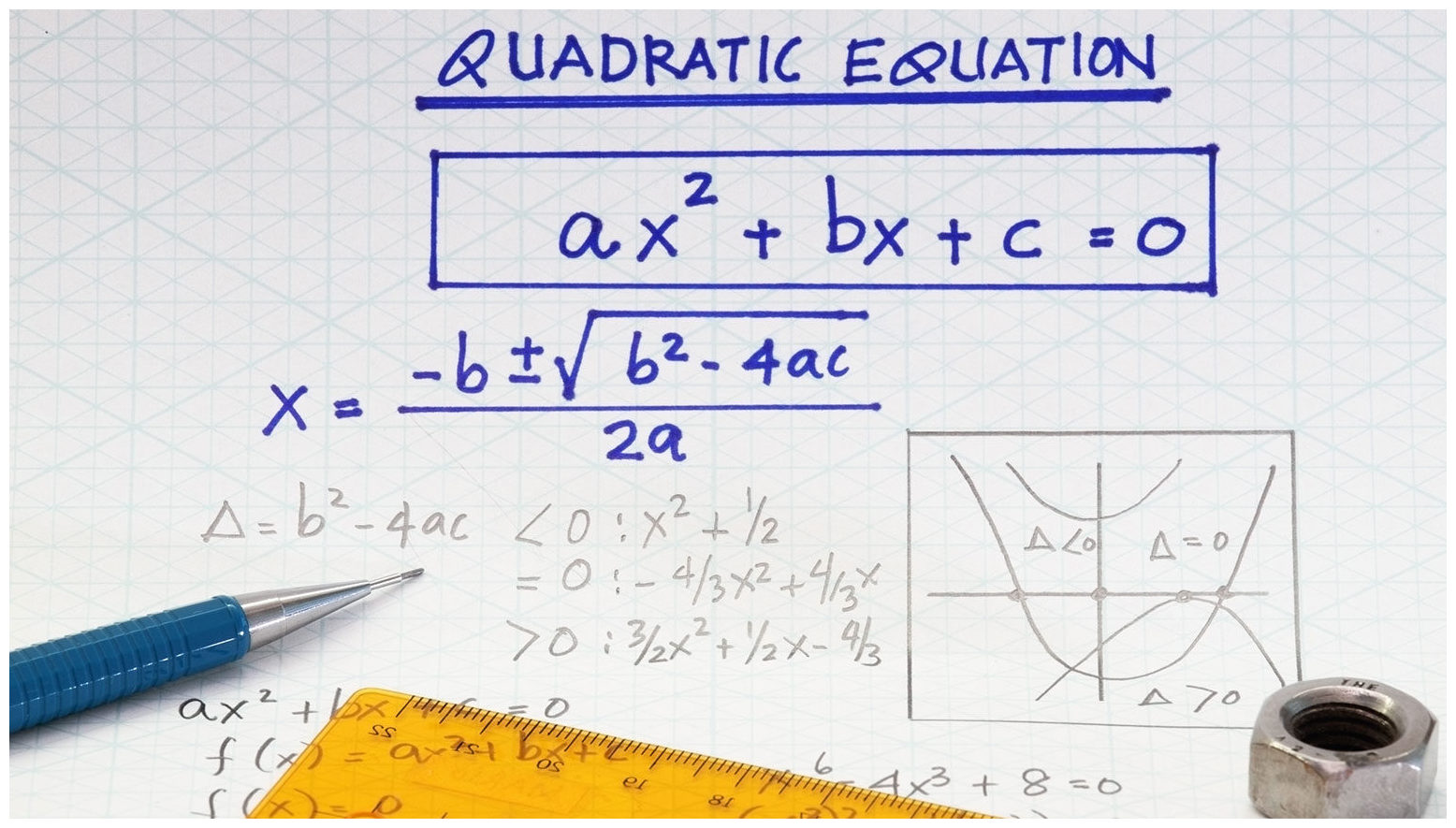
If you studied algebra in high school (or you're learning it right now), there's a good chance you're familiar with the quadratic formula. If not, it's possible you repressed it.

By this point, billions of us have had to learn, memorise, and implement this unwieldy algorithm in order to solve quadratic equations, but according to mathematician Po-Shen Loh from Carnegie Mellon University, there's actually been an easier and better way all along, although it's remained almost entirely hidden for thousands of years.

In a new research paper, Loh celebrates the quadratic formula as a "remarkable triumph of early mathematicians" dating back to the beginnings of the Old Babylonian Period around 2000 BCE, but also freely acknowledges some of its ancient shortcomings.

"It is unfortunate that for billions of people worldwide, the quadratic formula is also their first (and perhaps only) experience of a rather complicated formula which they must memorise," Loh writes.

That arduous task - performed by approximately four millennia worth of maths students, no less - may not have been entirely necessary, as it happens. Of course, there have always been alternatives to the quadratic formula, such as factoring, completing the square, or even breaking out the graph paper.

Info

'Ring of Fire' solar eclipse on Boxing Day 2019

Dec 2019 Eclipse
© Accu Weather
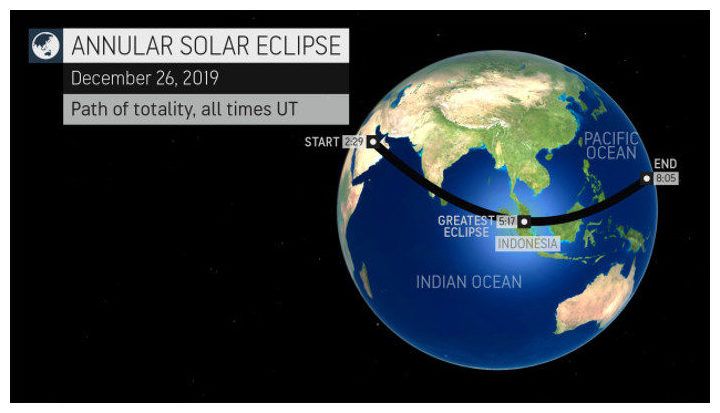
Saturday's solstice may have marked the shortest day of the year across Asia, but Thursday may be the darkest day of the year as a solar eclipse causes the day to turn dark.

Most of Asia will experience a partial solar eclipse on Thursday, as well as some parts of eastern Africa and northern Australia, but a small area will experience an annular solar eclipse, sometimes called a 'ring of fire' eclipse. This includes part of the Middle East, southern India, northern Sri Lanka, and part of the Philippines.

The best time to view the eclipse will be in the early morning in the Middle East, mid-morning in India and Sri Lanka, and early afternoon in Indonesia, but precise times will vary from location to location.

A solar eclipse happens when the moon passes directly between the Earth and the sun, but the type of eclipse that unfolds depends on how far away the moon is from the Earth.

When an eclipse happens when the moon is near perigee, the point in its orbit when it is closest to the Earth, the moon appears large enough to cover the entire face of the sun, resulting in a total solar eclipse.

But on Thursday, the moon will be near apogee, the point in its orbit when it is farthest away from the Earth. As a result, the moon will not quite be large enough to cover the entire sun, leaving behind a ring of light.

This ring of sunlight around the moon during the height of an annular solar eclipse is how it earned the nickname of a 'ring of fire' eclipse.

Gold Seal

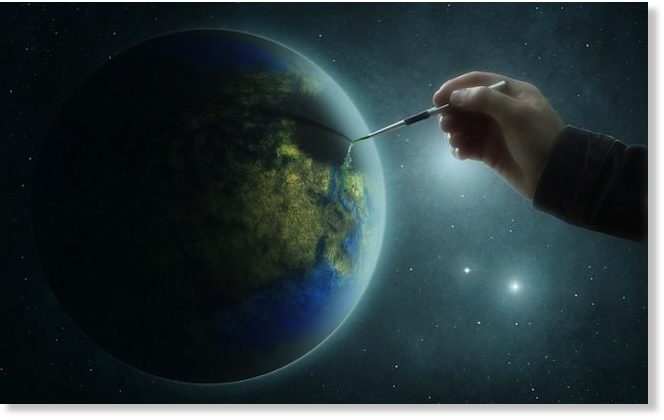
Intelligent design 3.0 and advancing the tipping point

intelligent design
After the Discovery Institute staff Christmas lunch last week, Stephen Meyer sat down with me for a quick video discussion of an extensive research project that, until now, has been deliberately kept from public. It's Intelligent Design 3.0, an effort not to make the scientific case for ID directly but, instead, to use design insights to open up avenues for new scientific discoveries. It is being supported by the Center for Science & Culture, thanks to the generosity of our donors: